workloads
workloads at Beyond Market Intelligence is a file of 21 stories. The newest of them: “Python 3.15 JIT Benchmarks Show Real Progress for Targeted Workloads”, “Securing AI in the Cloud Means Securing Kubernetes First”, and “How Uber Gives Multiple Orchestrators Control Over Scaling Without Conflict”. The same three Python workloads keep showing up in the JIT benchmarks, and for Python 3.15, they finally show real progress. Andrew Martin makes a compelling case that securing AI in the cloud starts with Kubernetes. Acme AI is the next-generation, AI-powered spreadsheet platform built to replace Excel and redefine how analysts, data scientists, and enterprise teams work… The list below is every workloads story on Beyond Market Intelligence, newest first.
Python 3.15 JIT Benchmarks Show Real Progress for Targeted Workloads
The same three Python workloads keep showing up in the JIT benchmarks, and for Python 3.15, they finally show real progress. The just-in-time compiler is delivering stronger results for targeted programs, but it still doesn't accelerate everything. That honesty matters. This measured improvement feels more credible than sweeping performance claims. For deeper context on AI infrastructure challenges, our piece on securing Kubernetes with Andrew Martin connects the dots between system reliability and the tools we build on top of it.

Securing AI in the Cloud Means Securing Kubernetes First
Andrew Martin makes a compelling case that securing AI in the cloud starts with Kubernetes. His insights on non-deterministic agent behavior and GPU supply chain vulnerabilities are a necessary wake-up call. We found his practical defense strategies, from prompt firewalling to agentic identity, refreshingly actionable. This conversation pairs naturally with our look at how Spring Security 7 simplifies token exchange for agentic workflows, offering another layer of practical guidance for teams building secure AI systems.

How Uber Gives Multiple Orchestrators Control Over Scaling Without Conflict
Uber has solved a tricky Kubernetes problem by separating scaling intent from execution. Its new ServiceScale controller lets multiple orchestrators manage the same workloads without stepping on each other, critical for regional failover without idle capacity. Engineers Egor Grishechko and Srikar Paruchuru explain how. It's a practical, human-centered approach to infrastructure that prioritizes outcomes over complexity. For more on how major platforms rethink their tech stacks, see Cloudflare's blog on migrating to EmDash.

Unlock Deeper TPU Insights: Cycle-Level Profiling Now Available in XProf
For developers wrestling with TPU workloads, opaque blocks in trace captures have long been a frustration. Google's addition of a Kernel Profiling suite to XProf changes that. This open-source profiler now exposes cycle-level details for custom Pallas kernels, turning what was once a black box into a map of precise execution paths. It's a practical step toward finer-tuned performance work. Claudio Masolo's report is worth your attention, especially if you're already exploring how AI tools reshape developer workflows.

Simplify EKS Management: Elastic Beanstalk Now Runs on Shared Clusters
AWS has added Cluster Mode to Elastic Beanstalk, letting it run applications on EKS clusters the service creates and manages. That is a practical step for teams wanting Kubernetes without the operational overhead. The catch: clusters are tied to subnet sets permanently, and direct access stays service-controlled. AWS also recommends separate clusters for untrusted or regulated workloads, and the new mode adds EKS and Auto Mode fees that EC2 discounts will not touch.

Orchestrate AI Agents: Google Open-Sources AX for Enhanced Efficiency
Google has open-sourced AX, an orchestrator designed to keep autonomous AI agents from idling away resources. By treating agents as stateful actors on its Agent Substrate runtime, AX suspends tasks during downtime and resumes them on demand, trimming latency without sacrificing performance. The control plane's Kubernetes-style primitives make managing agent workloads feel familiar, not foreign. It's a practical step toward efficient, scalable AI operations.
Kubernetes 1.37 arrives with a sharper focus on AI workloads
Kubernetes 1.37, named "Garhwal," lands with a clear focus on stability, security, and AI/ML workloads. The Stable Metrics API is a welcome step, giving teams reliable data for smarter scaling decisions. Meanwhile, the Rootless Kubelet reaching beta signals a serious commitment to safer, more contained operations. This release feels less about flash and more about hardening the foundation. For those wrestling with evolving AI/ML job demands, our related article on navigating that skill shift is worth a look.
Dropbox's Riviera Platform Expands to Power AI Workflows at Scale
Dropbox has quietly turned Riviera into something far more useful than a file preview tool. The platform now processes over 300 formats and 100 transformation capabilities, handling hundreds of thousands of operations per second. That scale matters for teams feeding AI workflows that need reliable, asynchronous content extraction. Riviera's expansion into Search, Sign, and Dash shows a clear understanding of what modern data work demands. If you're navigating similar infrastructure decisions, our piece on real-world computer vision deployments offers practical context worth exploring.
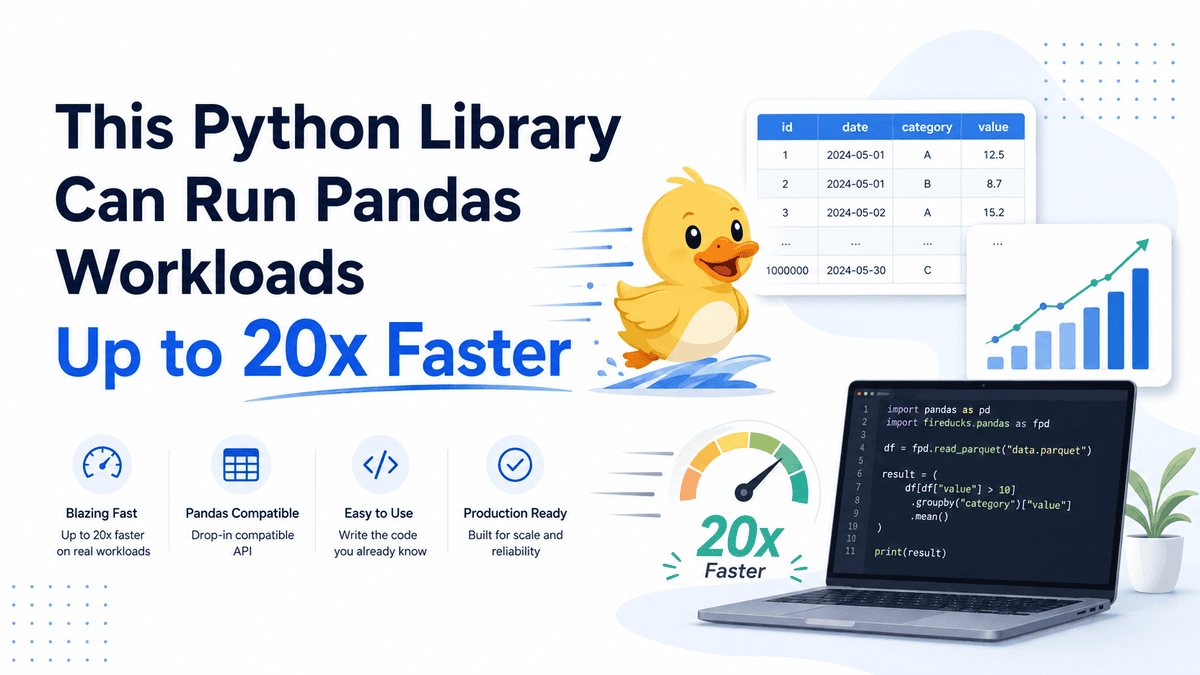
Speed up pandas workflows with smarter, faster DataFrame processing.
If you've ever watched a pandas script crawl through a DataFrame, you know the frustration. FireDucks takes that same workload and runs it up to 20 times faster. It achieves this through lazy execution, compiler optimization, and multithreaded processing, turning what feels like waiting into near-instant results. We find that shift genuinely exciting. For those ready to push their Python skills further, our guide on advanced coding techniques pairs perfectly with what FireDucks makes possible. Explore the benchmark and see the difference for yourself.

Bring AI Workloads Home with Browser-Native Performance and Privacy
The cloud isn't the only place for serious AI workloads. In this presentation, James Hall makes a compelling case for moving real work directly into the browser. He walks through practical strategies using WebGPU, Transformers.js, and DuckDB to achieve near-native performance without leaving JavaScript behind. What stands out is his focus on minimizing data privacy risks and building solid evaluation suites. For anyone feeling stuck in centralized workflows, this is a practical look at reclaiming control.
Uber's GitFarm centralizes Git operations to transform monorepo scale.
Uber's GitFarm takes a different route to managing monorepos: it centralizes Git operations as a service, removing the need for local clones across thousands of repositories. By leaning on prewarmed checkouts and ephemeral sandboxes, the platform cuts resource use and startup lag for automation services. That's a practical answer to a scaling problem many teams feel deeply. For more on handling heavy workloads, our piece on Modal's sandbox rebuilds offers a useful parallel worth exploring.
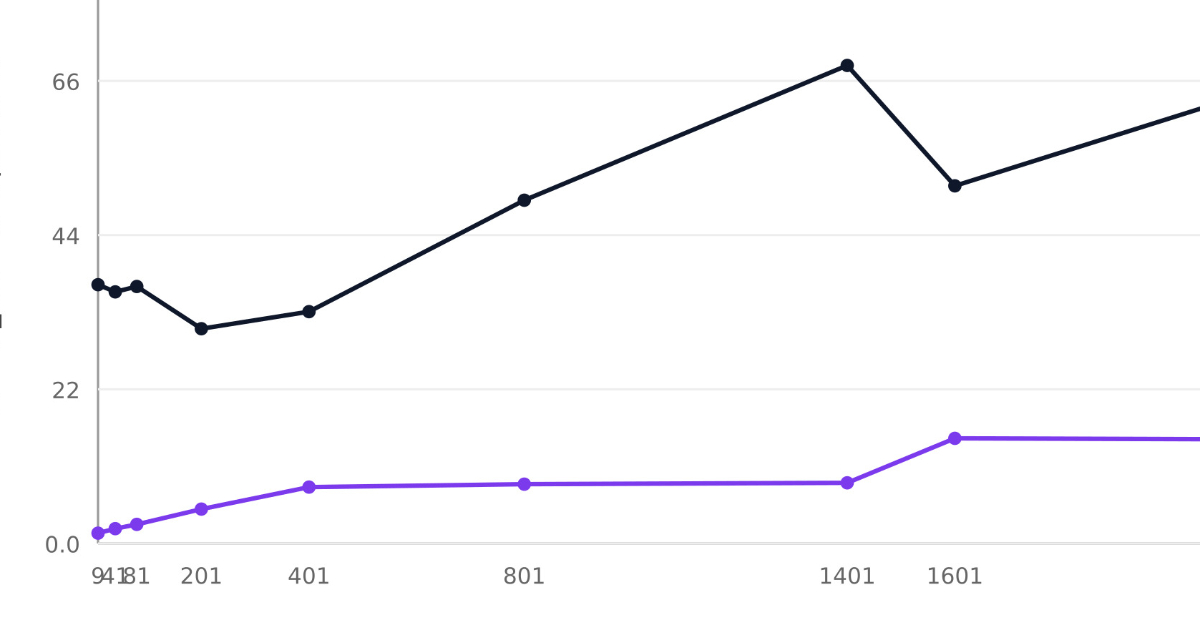
Single runtime outperforms multi-system stacks for live data workloads
Harper is pushing back on the multi-system stack, and the argument is hard to ignore. By keeping application code and data together in a single runtime, the database platform reports notably better performance on live, personalized workloads compared to a Vercel-based setup. Version 5.2 adds a record cache and greater throughput per node. That is a practical step toward less complexity. For readers tracking how modern architectures evolve, our related piece on Cloudflare's CMS migration offers another angle worth exploring.

Docker Rebuilds Its Desktop Foundation for a Faster Container Workflow
Docker's new virtualization layer is a smart move for developers who feel the drag of third-party components they can't tune. By rebuilding the VMM in-house for Docker Desktop 4.86, Docker takes direct control over container workloads, promising a performance boost that feels less like a patch and more like a deliberate step forward. It's available now in public beta on Mac and Windows, so you can test its edge without waiting for a formal release.

DynamoDB Unifies Data and Vector Search Without a Separate Database
DynamoDB now lets developers store embeddings right alongside their application data and run approximate nearest-neighbor queries without spinning up a separate vector database. That's a meaningful simplification for teams building semantic search features. Filtered similarity searches and configurable indexes make it practical, not just theoretical. It's the kind of move that reduces operational overhead while keeping workflows familiar. If you're exploring how far native database capabilities can stretch, this is worth a look.

Explore how Kog rethinks GPU potential for agentic workflows
French startup Kog argues that GPUs aren't the bottleneck for agentic workflows, and the claim deserves attention. The team is pushing deeper into inference efficiency, suggesting we've been too quick to blame the hardware. That's a refreshing counterpoint to the usual narrative. If true, it could reshape how we think about scaling AI agents. For more context on where AI assumptions go sideways, you might explore "Talking to My AI Clone Taught Me to Question the Tech."
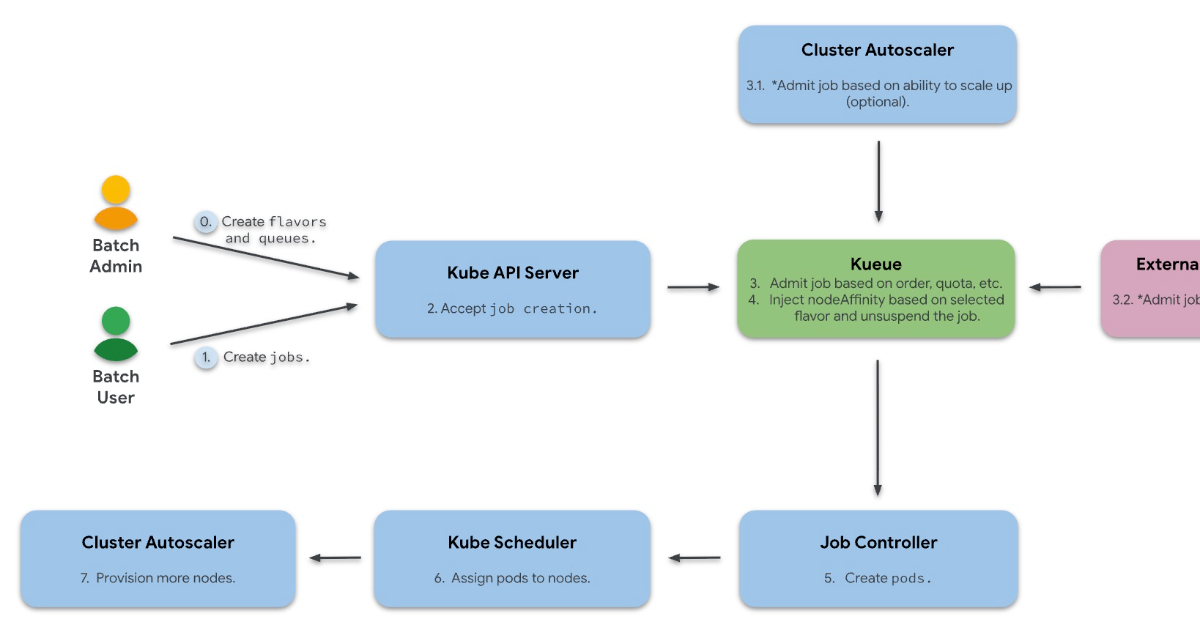
Netflix Migrates Batch Workloads to Open-Source Kueue, Retiring In-House System
Netflix has moved most of its batch workloads onto Kueue, an open-source cloud-native job queueing system that outgrew its in-house solution. The migration wasn't just about swapping tools; it let the company map existing capabilities while gaining new features that would've been costly to build internally. That's a pragmatic win. For those tracking similar infrastructure shifts, our piece on Cloudflare's EmDash migration offers another look at how open-source adoption pays off. Kueue's trajectory suggests the future of data management is increasingly shared, not siloed.
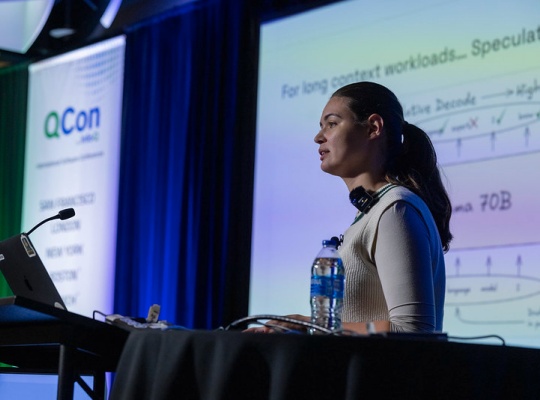
Designing Smarter Inference for High-Volume Workloads at Lower Cost
Meryem Arik's guide cuts straight to a question most teams avoid: how do you make AI inference genuinely cheap when the workload is massive but patience is on your side? Her answer isn't a single trick but a series of deliberate trade-offs across hardware, runtimes, and queue design. For engineering leaders tired of ballooning costs, her approach reframes non-real-time processing as a strategic advantage. It's practical, clear, and refreshingly grounded.

From NASA to nanosecond data: Direct-access Valkey cuts latency and cost.
Dumanshu Goyal doesn't just tweak a database; he rethinks the path data takes. His talk, *From ms to µs*, draws a sharp lesson from NASA's Space Shuttle: every layer of proxy adds hidden CPU costs and widens tail latencies. The fix is direct-access Valkey architectures, which deliver microsecond responses while shrinking both risk and infrastructure bills. It's a practical, no-hype case for simplifying your data layer.
Finding the Right Compute for Your AI Inference Workloads
Sourcing compute for inference workloads is a puzzle most teams know well, and this post gets straight to the point. The ask for real experiences with services like RunPod or Vast.ai is smart; those pain points are where practical answers live. It's a grounded way to cut through the noise. We appreciate the directness here, and the survey feels like a natural next step for anyone who's been there.
Bring AI coding agents to your machine learning projects in the cloud.
The question of running AI coding agents against a remote GPU is the right one to ask. You want the flexibility of your local editor with the horsepower of the cloud, and that setup absolutely exists. The key is using a platform that treats the remote machine as a seamless extension of your workspace. Docker Cloud Sandboxes offer a consistent environment for this, and exploring that approach is a solid starting point for building your ML workflow without leaving your preferred tools behind.

Securing AI in production: Google's three-layer blueprint for GKE
Google Cloud's new GKE Security Blueprint arrives at a necessary moment. Moving AI from prototype to production has outpaced traditional security thinking, and that gap demands more than patchwork fixes. The three-layer approach, covering infrastructure, model integrity, and application security, offers a practical path forward. It's not about hype; it's about making production safer. For teams wrestling with these challenges, this guidance feels timely. If you're exploring how AI reshapes expectations, our piece on verifying AI's understanding during tax season pairs well with this conversation.