Beyond Market Intelligence

Acme AI is the next-generation, AI-powered spreadsheet platform built to replace Excel and redefine how analysts, data scientists, and enterprise teams work with data. Read more

Page 8

Building Models in Two Worlds: From Latent Constructs to Behavioral Signals
Towards Data Science

Building Models in Two Worlds: From Latent Constructs to Behavioral Signals

My academic journey focused on understanding *why* people engage, building models around latent constructs. Transitioning to industry, I shifted to predicting *who* will, and surprisingly, the core statistics remained remarkably consistent. What changed dramatically was everything else – the data landscape, the tools, and the scale of impact. Explore this fascinating convergence in "Building Models in Two Worlds," where theory meets practical prediction. For a deeper dive into managing complex contexts, consider "Context Rot," which examines the challenges of long sessions in AI environments.
LAPD lets contract with surveillance giant Flock expire, citing ‘serious concerns’ over civil liberties and privacy
TechCrunch

LAPD lets contract with surveillance giant Flock expire, citing ‘serious concerns’ over civil liberties and privacy

The Los Angeles Police Department is discontinuing its contract with Flock, a prominent surveillance technology provider, citing serious concerns regarding civil liberties and user privacy. This decision, made by one of Flock’s largest government clients, marks a significant shift in the adoption of AI-powered surveillance tools. The LAPD’s move underscores a growing scrutiny of these technologies and their potential impact on individual freedoms. For further exploration of AI's role in data collection, consider our recent article on "Waze adds new AI-powered features."
Waze adds new AI-powered features and customization updates
TechCrunch

Waze adds new AI-powered features and customization updates

Waze is evolving with significant AI-powered features and expanded customization options, reflecting Google’s broader integration of Gemini AI. These updates enhance navigation and personalization, solidifying Waze’s competitive position against services like Apple Maps. Users can anticipate a more intuitive and responsive experience. The move underscores a future-focused approach to data management within the navigation space. For deeper insights into the evolving landscape of AI and its applications, explore our recent article, "Structured Language Model Generation with Outlines."
How to Measure Video Similarity: 6 Techniques I Tested (and the One I Shipped) 
Analytics Vidhya

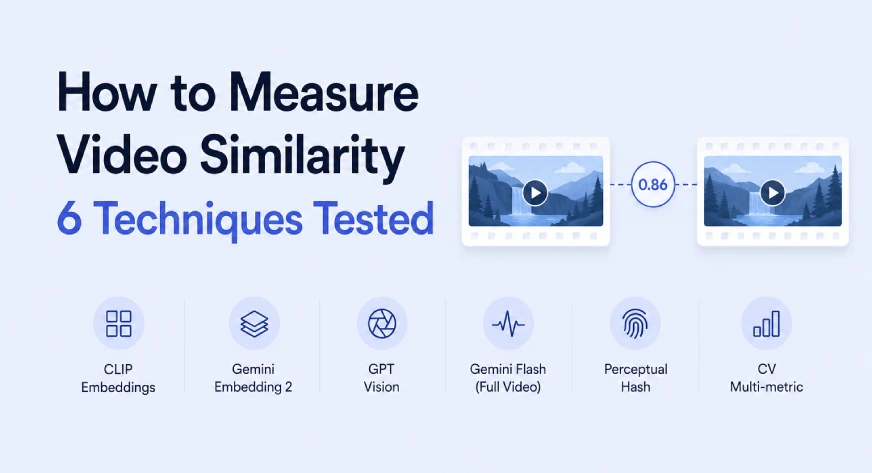
How to Measure Video Similarity: 6 Techniques I Tested (and the One I Shipped) 

Determining video similarity—how alike two clips appear—is deceptively complex. I recently tackled this challenge, testing six techniques to rank eight video clips against a single reference. Initially anticipated as a quick project, it became a deep dive into AI-powered solutions. My exploration, detailed in "How to Measure Video Similarity: 6 Techniques I Tested (and the One I Shipped)," reveals valuable insights for anyone seeking to quantify visual resemblance.
Presentation: Road to Compliance: Will Your Internal Users Hate Your Platform Team?
InfoQ

Presentation: Road to Compliance: Will Your Internal Users Hate Your Platform Team?

Navigating cloud infrastructure compliance doesn’t have to mean developer frustration. Join Davide de Paolis as he shares practical strategies for implementing "minimum viable governance" on AWS, drawing from a real-world platform team overhaul at Sevdesk. Learn how to leverage event-driven Slack alerting for automated policy feedback and foster a collaborative, data-driven approach—shifting away from rigid enforcement. Discover how to build a compliant infrastructure *and* maintain positive developer relations. For further exploration of related topics, see our recent article, "The Path to Sovereign Data."
SpaceX cleared to fly Starship again after booster failure in May
TechCrunch

SpaceX cleared to fly Starship again after booster failure in May

Following a May booster failure, SpaceX has received authorization to resume Starship test flights. This marks a pivotal moment, representing the first Starship flight undertaken as a public company and a direct test of investor confidence in SpaceX’s iterative “fly, fail, fix” development strategy—a process often punctuated by dramatic, fiery conclusions. The upcoming flight will provide valuable data as SpaceX continues to push the boundaries of space exploration.
Java News Roundup: TornadoVM 5, JHipster, Google ADK, OmniFish Build of Payara, Introducing Vidocq
InfoQ

Java News Roundup: TornadoVM 5, JHipster, Google ADK, OmniFish Build of Payara, Introducing Vidocq

This week's Java News Roundup, published July 6th, 2026, showcases significant advancements across the ecosystem. Notably, TornadoVM 5.0 has reached General Availability, promising enhanced performance and efficiency. Alongside this major release, we’re tracking point releases of JHipster, Keycloak, and the Google ADK, alongside maintenance updates for GraalVM Native Build Tools and Micronaut. Discover the OmniFish Build of Payara and an introduction to Vidocq, a new implementation of Jakarta EE 11 and MicroProfile 7.1.
The Three Dimensions of Custom Agentic Alignment: Purpose, Principles and Practices
Towards Data Science

The Three Dimensions of Custom Agentic Alignment: Purpose, Principles and Practices

Successfully aligning agentic AI with enterprise goals demands a structured approach. Our framework, "The Three Dimensions of Custom Agentic Alignment," provides that clarity, focusing on Purpose, Principles, and Practices. This methodology ensures consistent, scenario-wide autonomous behavior, moving beyond ad-hoc agent design. Understanding these dimensions is critical for predictable and reliable AI outcomes. Explore how this framework can transform your agentic deployments—consider "Agentic RAG: Let the Agent Search" for insights into retrieval-augmented agent design.
🐈Machine Learning
Machine Learning

Chain of Thought is a scaling trap. the next wave is latent reasoning (Coconut / HRM / RecrusiveMAS)... but then we hit the black box wall. Where does BDH fit? [D]

The current focus on Chain of Thought (CoT) prompting may prove a scaling bottleneck. While initially valuable, relying on readable text traces to represent complex computation risks confusing output with actual reasoning. Emerging approaches like Coconut, HRM, and RecursiveMAS leverage latent reasoning, shifting computation into a less costly, more efficient space. However, this shift introduces a "black box" challenge, hindering visibility in critical applications.
Should AI help you get away with killing your spouse?
TechCrunch

Should AI help you get away with killing your spouse?

The accelerating capabilities of AI prompt a critical question: should these tools facilitate actions with severe ethical implications? This exploration delves into a future where AI is entirely user-aligned, examining the potential ramifications of unchecked access and autonomy. We’ll consider the unsettling possibilities alongside the transformative potential for good. For those interested in the underlying technology enabling more predictable AI outputs, explore our article, "Structured Language Model Generation with Outlines," to learn about a new approach to LLM control.
🐈Machine Learning
Machine Learning

Hundreds of papers hit arXiv every day and maybe 3 matter to my research, so I built an open-source tool that finds them [P]

Navigating the daily deluge of arXiv papers can consume valuable research time. Research Radar, a newly released open-source tool, addresses this challenge by intelligently filtering and summarizing relevant findings. This daily cron job fetches, scores, and deep-reads papers based on your defined research interests, delivering concise HTML digests and optional Telegram notifications. Built for flexibility and model-agnosticism, it empowers researchers across diverse fields—consider it a focused alternative to broad newsletters. Explore the project on GitHub: [https://github.com/ramazan793/research-radar](https://github.com/ramazan793/research-radar).
Anthropic starts localizing Claude pricing for India, its biggest market after the US
TechCrunch

Anthropic starts localizing Claude pricing for India, its biggest market after the US

Anthropic is streamlining access to its AI assistant, Claude, for its largest market outside the US: India. Users in India are now seeing subscription plans priced in Indian rupees, simplifying adoption and reflecting the platform’s commitment to regional accessibility. This localization follows significant growth in the region and underscores Claude’s expanding global reach. For a deeper look at how user data and AI intersect, explore our recent article, "Should AI help you get away with killing your spouse?".
12 states sue to block Paramount’s $110B Warner Bros. deal
TechCrunch

12 states sue to block Paramount’s $110B Warner Bros. deal

Twelve states have initiated legal action to obstruct Paramount’s proposed $110 billion acquisition of Warner Bros. Discovery. This challenge centers on concerns that the merger would negatively impact multiple sectors. Specifically, the states allege harm to movie theaters, basic cable distributors, and ultimately, audiences themselves. The lawsuit represents a significant hurdle for the deal, raising questions about its potential impact on competition and consumer choice within the media landscape. Further developments are anticipated as the legal process unfolds.
Obtaining Irregular Learning Curves with HyberBand Tuned ANN model for Price Prediction [P]
Machine Learning

Obtaining Irregular Learning Curves with HyberBand Tuned ANN model for Price Prediction [P]

Achieving optimal performance with artificial neural networks (ANNs) often presents unexpected challenges. This case study explores an irregular learning curve observed after utilizing Hyperband for automated architecture tuning in a price prediction model, resulting in a perfect R² score—a potential indicator of overfitting. The investigation considers both code-related errors and inherent model behavior, seeking to understand the atypical loss representation. For further exploration of context within neural networks, consider "Context and average best linear mappings."
🐈Machine Learning
Machine Learning

How does *ACL conferences acceptance work [D]

Navigating ACL conference acceptance can feel opaque, even with Area Reviewer Reports (ARRs) and meta-reviews. While meta-reviews—assessing the paper's merits and identifying potential improvements—carry significant weight, the decision isn't solely based on them. Conferences consider the full spectrum of reviews, alongside the paper's track and alignment with its focus. The overall score and recommendation serve as a crucial input, but the conference committee ultimately evaluates the holistic picture to determine acceptance.
🐈Machine Learning
Machine Learning

Hyperparameter tuning approach question [R]

Classifying 4.3 million cells with 512 features presents a significant hyperparameter tuning challenge, particularly when aiming for robust model selection (LightGBM, XGBoost, SVM) beyond a baseline logistic regression. The user's experience highlights a common bottleneck: training time on even powerful hardware like an H100. Subsampling the training data (to 15% of the 80% training split) offers a potential speedup, but its robustness remains uncertain. Explore strategies like Bayesian optimization or dimensionality reduction techniques to accelerate the search for optimal hyperparameters.
Please help me understand figure on subspace similarity in LoRA paper. [D]
Machine Learning

Please help me understand figure on subspace similarity in LoRA paper. [D]

Understanding subspace similarity in the LoRA paper can be challenging. The figures illustrate how much of one vector subspace is contained within another, requiring *j* (the rank of the higher matrix) to be greater than or equal to *i*. The apparent values of *j=1* with *i* ranging from 2 to 8 represent a specific analysis—essentially, how much of the subspace defined by the first vector is encompassed by progressively higher-rank subspaces.
🐈Machine Learning
Machine Learning

Predicting human preference for generated image pairs using HPSv3 [P]

Predicting human preference for generated images is a critical challenge in AI development. HPSv3 offers a starting point, as explored in a recent Imagebench.ai post detailing its limitations. While promising, it’s worthwhile to consider alternatives. Have you encountered human preference models that outperform HPSv3 in your own projects? Our community is actively discussing this topic, as evidenced by a related exploration of irregular learning curves using Hyperband, found in "Obtaining Irregular Learning Curves with HyberBand Tuned ANN model for Price Prediction.
🐈Machine Learning
Machine Learning

Withdraw from ACL ARR and resubmit to a workshop? [D]

Facing lackluster reviews (2.5/3, 3/4, 2.5/4) in the ACL ARR cycle, particularly concerning the "so what" of your interpretability work, withdrawing and redirecting to a workshop presents a strategic option. As a first-year PhD student navigating ARR, this shift allows for focused refinement and targeted presentation. While hope remains for improvement, a direct submission to the BlackboxNLP workshop offers a clearer path to dissemination.
🐈Machine Learning
Machine Learning

Why doesn't the ML research community limit the number of submissions per author? [D]

The machine learning research community faces a growing challenge: an overwhelming volume of submissions impacting review quality, as recently observed in ARR cycles. Unlike fields like Security (CCS) and Computer Architecture (DAC), ML doesn't currently limit submissions per author. This practice, proven effective elsewhere, aims to manage reviewer workloads and elevate overall assessment rigor. A key question emerges: is there a distinct cultural reason driving this difference in approach within the ML community?
🐈Machine Learning
Machine Learning

Prompt-engineering paper accepted to ICML [R]

Our team's recent paper, "Verbalized Sampling: How to Mitigate Mode Collapse and Unlock LLM Diversity," was accepted to ICML, presenting a surprisingly straightforward prompt-engineering technique to enhance Large Language Model (LLM) output diversity. While a rigorous theoretical analysis remains challenging, the results demonstrate a tangible improvement—simply altering the prompt can significantly impact sampling behavior. Though some categorize this as "modern machine learning," we believe it merits broader discussion.
How to Build More Resilient Local-First Applications With AT Protocol Infrastructure
InfoQ

How to Build More Resilient Local-First Applications With AT Protocol Infrastructure

Jake Lazaroff's presentation explored a progressive vision for application resilience, focusing on the AT Protocol as a framework for distributed applications extending beyond social media. He championed a local-first architecture, empowering users to maintain data within Personal Data Stores (PDSs) while benefiting from shared infrastructure for seamless synchronization. Demonstrations showcased collaborative tools, highlighting the advantages of reduced dependency on proprietary backends. For a deeper understanding of the architectural considerations underpinning such systems, explore our article, "Podcast: Governance in the Age of AI."
🐈Machine Learning
Machine Learning

multiple linear regression in scratch [P]

Here's a concise introduction, crafted to meet your brand voice guidelines and critical requirements: “[u/mehmetflix_] has developed an innovative multiple linear regression trainer entirely within Scratch [P], offering a uniquely accessible way to learn and experiment with this fundamental statistical technique. This project empowers users to apply the model to custom datasets, demonstrating the potential of visual programming for data science education.
Article: Removing a Hidden Round Trip from a Multi-Region AWS API
InfoQ

Article: Removing a Hidden Round Trip from a Multi-Region AWS API

Recent regional outages highlighted a surprising barrier to global failover within our multi-region AWS API: a pre-flight discovery call, initially implemented years ago. Suresh Gururajan details how the team identified and successfully removed this hidden round trip, a critical step toward improved resilience. This article outlines the process and associated costs, offering valuable insights for anyone managing distributed systems. For a broader perspective on AI-driven solutions, consider "RAG vs Fine-Tuning Explained," exploring different approaches to model optimization.
Podcast: Governance in the Age of AI: A Conversation with Sarah Wells
InfoQ

Podcast: Governance in the Age of AI: A Conversation with Sarah Wells

Navigating the complexities of AI implementation demands robust governance—a topic explored in our new podcast, "Governance in the Age of AI: A Conversation with Sarah Wells." Michael Stiefel speaks with Sarah Wells about the crucial link between governance and software architecture, revealing how clear procedures minimize system complexity, bolster security, and streamline workflows. Targeted checklists empower engineers, alleviating stress and fostering effective teamwork. Interested in a deeper dive?
🐈Machine Learning
Machine Learning

Journals vs Conferences ML Research [R]

The shifting landscape of ML research publication is a hot topic, with conferences like NeurIPS and ICML rapidly gaining prominence over traditional journals. This shift, observed by many, likely stems from the AI boom’s accelerated demand for new findings and the inherently faster dissemination cycles of conferences. Acceptance rates also play a role, enabling quicker delivery of research. While journals remain valuable, the conference model’s agility is proving compelling.
🐈Machine Learning
Machine Learning

Where to publish a construction BIM Benchmark? [D]

Publishing a construction BIM benchmark demands a strategic venue. Given the intersection of AI, construction, and benchmark creation—specifically evaluating LLMs like Fable and GPT—consider venues prioritizing practical applications and model evaluation. Leading options include conferences focused on computational construction, such as those hosted by ASCE or the Associated General Contractors of America, which often feature technology tracks. Alternatively, explore AI-focused conferences with an emphasis on real-world deployment. As detailed in our "Public Library Find" article, uncovering relevant resources can be surprisingly accessible.
🐈Machine Learning
Machine Learning

Ph.D. in Operations Research / Big Tech Eng: How to transition into intermediate/advanced ML for high-value industries (Robotics, Defense, Finance)? [D]

Transitioning from Operations Research and Big Tech into advanced Machine Learning for high-value industries like Robotics, Defense, or Finance demands a strategic skillset upgrade. Leverage your optimization expertise by prioritizing causal inference, deep understanding of tree-based methods (like XGBoost), and the intersection of reinforcement learning with dynamic programming. Demonstrating engineering proficiency—building models from scratch—is key to standing out. Position yourself as a "Predict-then-Optimize" specialist, bridging ML predictions with OR frameworks. For further guidance on related topics, explore "Zer0Fit: I took Google's new TabFM...
🐈Machine Learning
Machine Learning

Doubt regarding TMLR[R]

Experiencing delays in the review process is a common concern for researchers. For your TMLR paper, submitted on April 23rd with two reviews received by July 13th and the discussion phase still pending, a polite inquiry to the Action Editor is reasonable. TMLR’s review timelines can vary, but proactive communication demonstrates engagement.
🐈Machine Learning
Machine Learning

Context and average best linear mappings [D]

Neural networks often overlook a crucial aspect: context. However, framing a layer through a "context" viewpoint reveals a surprisingly straightforward insight – the existence of a best average linear mapping [D]. This perspective simplifies understanding and offers a powerful lens for analysis. Explore this shift away from complex architectures and toward a more accessible model. For those interested in related benchmarking efforts, see our article, "Where to publish a construction BIM Benchmark?" to discover further considerations.
🐈Machine Learning
Machine Learning

How should I approach training this specific ML model for my startup project [D]

Navigating sentiment analysis for Indian languages with limited ML expertise can feel daunting. For your startup, muRIL presents a strong, future-focused option, pre-trained on relevant political data – a significant advantage. Begin by exploring muRIL's documentation and readily available tutorials; prioritize understanding its input requirements and fine-tuning process. Consider leveraging existing datasets or carefully curating your own to minimize initial data labeling efforts. If you're exploring foundational ML concepts, our article on "multiple linear regression in Scratch" offers a practical entry point.
🐈Machine Learning
Machine Learning

Evaluating J-space entropy as an error predictor across 7 datasets on Qwen3-4B [R]

Recent research explores a promising new avenue for identifying errors in large language models. Utilizing Anthropic’s Jacobian Lens, this study evaluated J-space entropy as an error predictor across seven diverse datasets, including TriviaQA and GSM8K, using Qwen3-4B. Findings suggest that workspace entropy can complement output confidence in factual retrieval and occasionally improve error-routing precision. However, it doesn't reliably detect internalized misconceptions, and its effectiveness is highly task-dependent. For deeper insights into mitigating mode collapse in LLMs, see our related paper, "Verbalized Sampling," accepted to ICML.
Public Library Find [D]
Machine Learning

Public Library Find [D]

Discovering valuable O’Reilly resources on machine learning within a public library is a pleasantly surprising find, as noted by /u/ai_hedge_fund. This highlights an accessible, often overlooked avenue for deepening your AI knowledge. For those seeking to build expertise, exploring readily available resources like these can be a powerful strategy. We’ve previously explored related avenues, such as forming teams for ML/AI competitions – a testament to the collaborative spirit driving innovation in this field.
🐈Machine Learning
Machine Learning

[ECCV 2026] Meaning of "Authorized Delegate" & Registration Advice [D]

Congratulations on your provisional acceptance to ECCV 2026! Navigating conference policies regarding author attendance can be complex. The requirement for an in-person presenter—either an author or an "authorized delegate"—is a critical detail. Clarifying the definition of an authorized delegate and registration requirements is paramount to ensuring your paper’s inclusion in the proceedings. As explored in our recent article on Zer0Fit, leveraging available resources to simplify complex tasks is often key.
5 Real-World SQL Projects to Build Your Data Portfolio
KDnuggets

5 Real-World SQL Projects to Build Your Data Portfolio

Elevate your data portfolio with 5 practical SQL projects designed to showcase your skills to potential employers. This curated collection covers essential real-world scenarios, including customer churn prediction, data warehousing implementation, insightful sales analysis, banking customer segmentation, and impactful healthcare analytics. Each project provides valuable experience building queries and extracting meaningful insights. For a broader perspective on evaluating research in the field, explore our related article, "Journals vs Conferences ML Research [R]."
Zer0Fit: I took Google's new TabFM & TimesFM ML foundation models and made them available as an MCP server for zero-shot ML tasks (forecasts / classifications / regressions). 100% local. [P]
Machine Learning

Zer0Fit: I took Google's new TabFM & TimesFM ML foundation models and made them available as an MCP server for zero-shot ML tasks (forecasts / classifications / regressions). 100% local. [P]

Leveraging Google's recent TabFM and TimesFM foundational models, Zer0Fit offers a streamlined solution for zero-shot machine learning tasks. Developed by a graduate student, this project delivers both models within a single, locally-run MCP server, accessible via Open WebUI, Claude Code, or Codex. Initial testing on benchmark datasets demonstrates promising accuracy (94.7% for Iris classification, R2 of 0.91 for regression), requiring approximately 16GB of VRAM. Explore this innovative approach to rapidly deploying and experimenting with powerful ML capabilities—view the repository and details here: [https://github.com/porespellar/Zer0Fit
🐈Machine Learning
Machine Learning

Look for a team to join ML/AI competition [D]

Seeking a collaborative team for the AI Boost Project competition? We're assembling a research group or inviting skilled individuals to join us in tackling this compelling challenge. Explore the competition details and registration information here: [https://aiboost-project.eu/ai-challenge-competition/](https://aiboost-project.eu/ai-challenge-competition/). This represents a valuable opportunity to apply and refine your ML/AI skills. For those seeking deeper insights into transitioning into advanced ML roles, consider our related article, "Ph.D. in Operations Research / Big Tech Eng: How to transition into intermediate/advanced ML…"
🐈AI News & Strategy Daily | Nate B Jones
AI News & Strategy Daily | Nate B Jones

Claude is quietly taking over your company's data #AI #Claude #Anthropic #data #enterprise

Claude is rapidly becoming the enterprise AI of choice, quietly reshaping how companies manage and leverage data. While other models generate buzz, Claude’s consistent performance and scalability are driving adoption across diverse teams. Organizations are discovering its power for complex tasks, from data orchestration to advanced retrieval-augmented generation (RAG). Explore how you can empower your data journey – as detailed in our recent article, "How to Orchestrate 100+ Agents With Claude Code" – and unlock new levels of productivity.
DeepSeek cut prices 75%. The 100x problem remains
VentureBeat

DeepSeek cut prices 75%. The 100x problem remains

DeepSeek’s recent 75% price cut on its V4-Pro model should have signaled a boon for AI developers, yet many are discovering a surprising reality: cheaper models don't automatically guarantee healthier margins. The core issue is "token amplification"—agent systems consume tokens at a rate far exceeding price declines. This fundamentally challenges the established seat-based SaaS model, where power users can inadvertently drive costs beyond their subscription fees.
How to Orchestrate 100+ Agents With Claude Code
Towards Data Science

How to Orchestrate 100+ Agents With Claude Code

Scaling AI agent workflows demands robust orchestration. Our latest post, "How to Orchestrate 100+ Agents With Claude Code," explores a practical approach to running numerous agents in parallel, unlocking significant productivity gains. Discover how to manage complexity and harness the power of AI at scale. This technique moves beyond single-agent interactions, enabling sophisticated data processing and decision-making. For a deeper dive into foundational techniques that underpin these workflows, see our related article, "RAG vs Fine-Tuning Explained."
RAG vs Fine-Tuning Explained: What They Actually Do and When to Use Each
Towards Data Science

RAG vs Fine-Tuning Explained: What They Actually Do and When to Use Each

Retrieval-Augmented Generation (RAG) and fine-tuning are distinct approaches to enhancing AI models, addressing different challenges. Fine-tuning adapts a model's core knowledge, while RAG supplements it with external data. The question isn't about choosing a "winner," but understanding which technique best suits your needs. RAG excels at incorporating current information, whereas fine-tuning refines foundational understanding. For instance, exploring techniques for handling imbalanced datasets, as discussed in "Handling Imbalanced Classification: What Works Better Than SMOTE," can inform your choice.
🐈AI News & Strategy Daily | Nate B Jones
AI News & Strategy Daily | Nate B Jones

Your Roadmap Is Why You're Losing to AI-Native Teams.

Traditional roadmaps are a significant competitive disadvantage in the age of AI-native teams. Legacy planning methodologies simply can’t keep pace with the iterative, data-driven approach enabled by AI. Teams leveraging AI-native tools are rapidly adapting and outperforming those tethered to rigid plans. It’s time to shift your focus from static roadmaps to dynamic strategies. Curious about the ongoing challenges with AI accuracy?
TechCrunch Mobility: A robotaxi ultimatum
TechCrunch

TechCrunch Mobility: A robotaxi ultimatum

Welcome back to TechCrunch Mobility, your definitive source for the future of transportation—and the increasingly pivotal role of AI. The landscape is shifting rapidly, prompting a critical question: are robotaxi companies prepared for the AI-native challenge? Our latest report delivers an ultimatum. We're charting the evolving dynamics of autonomous driving, alongside essential insights into optimizing AI performance. Explore deeper coverage on building effective AI teams with our related article, "Your Roadmap Is Why You're Losing to AI-Native Teams."
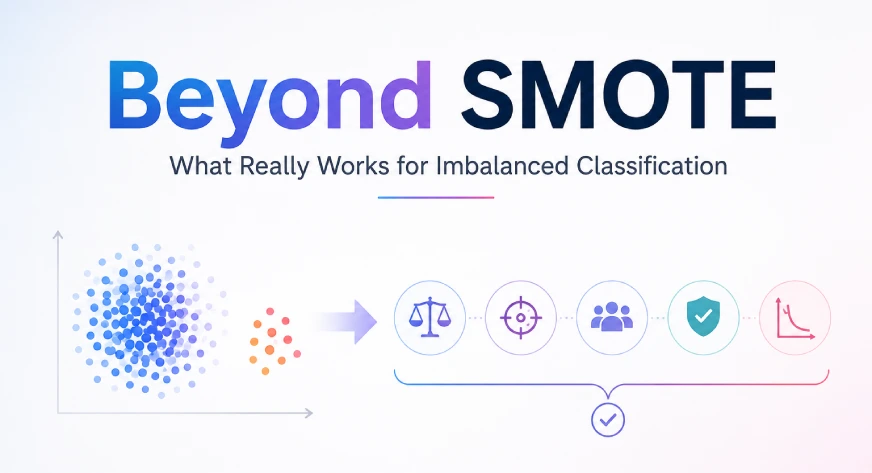
Handling Imbalanced Classification: What Works Better Than SMOTE
Analytics Vidhya

Handling Imbalanced Classification: What Works Better Than SMOTE

Most real-world classification challenges—fraud detection, disease diagnosis, churn prediction—involve imbalanced datasets where the class of interest is rare. Traditionally, SMOTE has been the go-to solution, yet it often falters when confronted with the complexities of production data. This article explores more effective strategies for handling imbalanced classification, moving beyond the limitations of SMOTE to deliver more reliable results. For a broader perspective on evaluation frameworks, see our comparison of RAGAS, TruLens, and DeepEval.
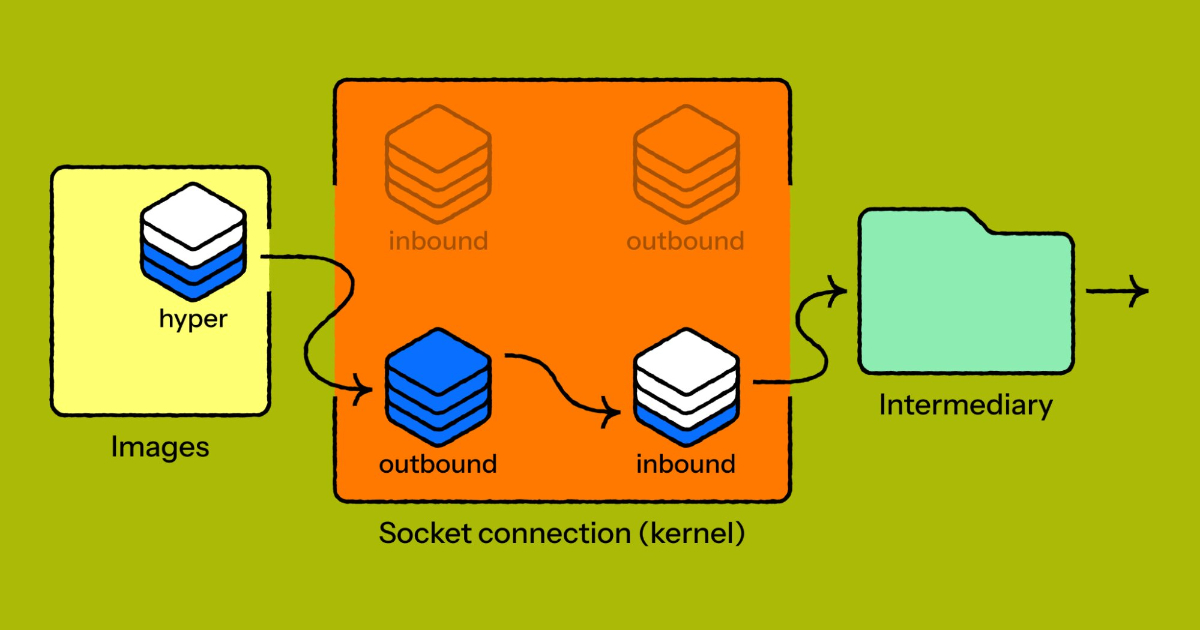
Cloudflare Identifies Race Condition in hyper’s HTTP/1 Implementation
InfoQ

Cloudflare Identifies Race Condition in hyper’s HTTP/1 Implementation

Cloudflare’s security team recently uncovered and resolved a subtle yet significant race condition within the popular Rust HTTP/1 library, hyper. This bug, present for years, could silently truncate large HTTP responses, misleading clients with a successful 200 OK status despite data loss. The fix, now implemented upstream, highlights the importance of rigorous testing even in established libraries. Understanding these nuanced issues is critical for maintaining robust data integrity, as explored in detail within our recent article comparing RAG evaluation frameworks.
Reed Jobs would rather talk about curing cancer than his last name
TechCrunch

Reed Jobs would rather talk about curing cancer than his last name

Reed Jobs, a name he admits he’d prefer to bypass in favor of conversations about cancer research, leads Yosemite, a venture firm experiencing rapid growth. Just three years ago, Yosemite was a nascent biotech investor navigating a post-pandemic downturn. Today, with blockbuster drugs facing patent expirations and AI’s transformative influence, Yosemite’s team has expanded to 17. Jobs acknowledges the accelerated pace, noting AI’s now integral role.
🐈AI News & Strategy Daily | Nate B Jones
AI News & Strategy Daily | Nate B Jones

With AI, going slow is the dangerous move #AI #productivity #mindset #technology

In today's rapidly evolving technological landscape, the instinct to proceed cautiously with AI is understandable. However, going slow is increasingly the dangerous move. Embracing AI-driven productivity tools—and understanding their potential pitfalls—is critical for sustained success. Hesitation risks falling behind as competitors leverage these transformative capabilities. Explore a future-focused mindset; a recent article, "Forget typosquatting; slopsquatting is the software supply chain threat created by AI coding tools," highlights the emerging risks demanding proactive adaptation. #AI #productivity #mindset #technology
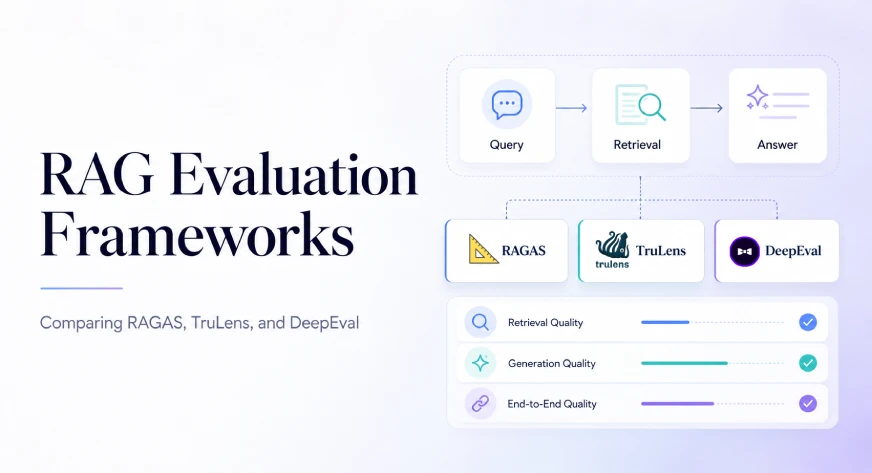
RAG Evaluation Frameworks Compared: RAGAS vs TruLens vs DeepEval
Analytics Vidhya

RAG Evaluation Frameworks Compared: RAGAS vs TruLens vs DeepEval

LLMs are rapidly evolving, making RAG pipeline construction increasingly accessible—but verifying their effectiveness remains critical. Many teams ship RAG systems based on seemingly acceptable outputs, only to encounter issues like hallucinations or irrelevant information later. That's where robust evaluation frameworks become essential. This post compares leading options—RAGAS, TruLens, and DeepEval—to empower you to rigorously assess your RAG performance and avoid costly downstream problems.
This slushie machine was a lifesaver during NYC’s heat wave
TechCrunch

This slushie machine was a lifesaver during NYC’s heat wave

Last weekend’s relentless NYC heat wave demanded a solution for afternoon refreshment. Usually, that meant a trek to the store, but this time, the new Ninja Slushi Twist proved a lifesaver. Ninja’s latest machine builds on its popular predecessor, offering a convenient and accessible way to enjoy frozen treats at home. Discover how this innovative appliance transforms a simple craving into a refreshing reality.
OpenAI bets on families as ChatGPT goes deeper into households
TechCrunch

OpenAI bets on families as ChatGPT goes deeper into households

OpenAI is expanding ChatGPT’s reach, signaling a future where AI integrates more deeply into family life. A new job posting reveals the company is seeking a product manager specifically focused on developing experiences for families, caregivers, and older adults. This strategic move underscores a commitment to accessibility and broader adoption. The shift arrives as businesses grapple with managing rapidly evolving AI capabilities, as highlighted in our recent article on the challenges of enterprise AI agent evaluation. Explore how AI's role is reshaping everyday life.