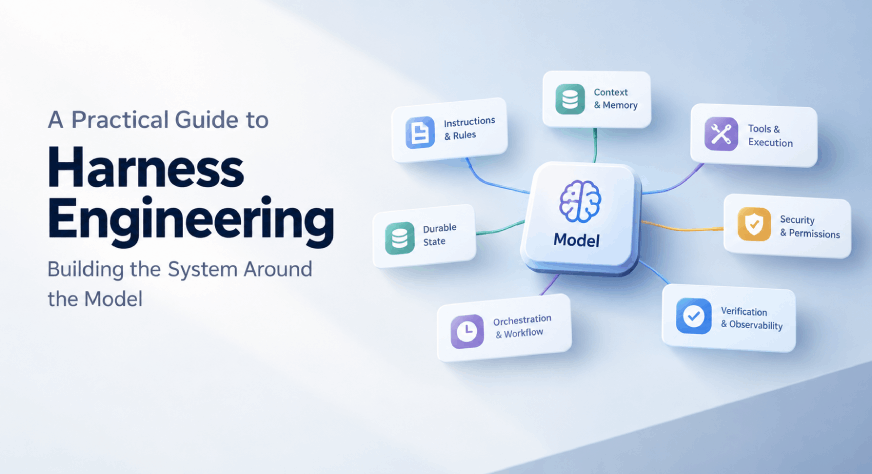
The gap between what an AI model can do and what a working feature requires is wider than most people realize. A model can generate a function in seconds, but that code is useless if it doesn't understand the project structure, locate the right files, execute tools safely, and verify its own output. This is the core insight from the recent work on what's being called harness engineering, and it reframes the entire conversation around AI-assisted development. The model is not the product; the system around the model is.
This matters because the industry has spent the last year celebrating raw model capability while ignoring the infrastructure needed to make that capability reliable. As we explored in our coverage of When Closed Code Won't Open, Can AI Do the Heavy Lifting, the real bottleneck isn't generating code, it's integrating that code into a context the developer can trust. The harness engineering approach directly addresses that bottleneck by treating the model as a component within a larger system that handles context, safety checks, and validation loops. It's a shift from asking "can the model write this function?" to "can the system deliver this feature without breaking anything?"
The practical implication for anyone building with AI is straightforward: stop optimizing solely for model performance and start designing the scaffolding around it. That means investing in project understanding layers, safe tool execution protocols, and automated verification steps that run after every change. These are not glamorous problems, but they are the difference between a demo that impresses and a tool you can actually use in production. The same principle applies to governance, as we discussed in Agentic AI Demands Smarter Governance to Tame Silent Failures. Without the system around the model, failures don't announce themselves; they quietly corrupt the output until the developer discovers the damage hours later.
What makes harness engineering compelling is that it reframes AI adoption as an engineering discipline rather than a magic trick. It acknowledges that the model is fallible and that the only way to compensate is through deliberate system design. The takeaway is simple: if you're evaluating AI coding tools, ask less about the model's benchmark scores and more about how the tool structures its context, validates its output, and recovers from mistakes. Those details will determine whether the tool saves you time or costs you more of it. The question worth watching is whether the industry will embrace this unglamorous but necessary work, or continue chasing model improvements while ignoring the harness that makes them useful.