A Beginner’s Guide to Working with Claude Design
Our take
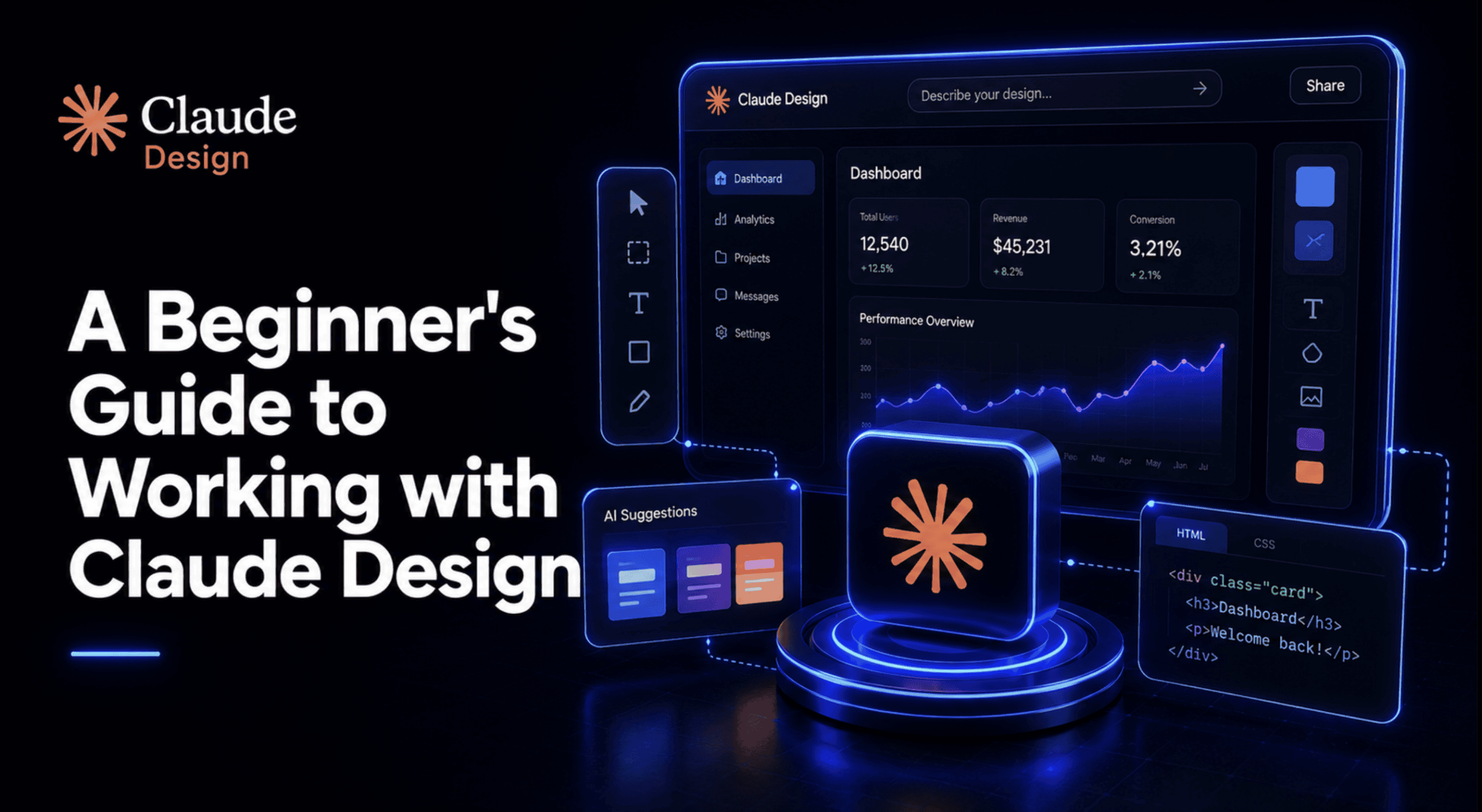
Anthropic’s Claude Design represents a significant, if early, step toward a more intuitive and interactive future for AI-powered design and prototyping. The fact that it can generate interactive prototypes with working navigation, embedded video, voice input, and even 3D elements, all from a textual prompt, is compelling. While generative AI has made impressive strides in image and video creation, the ability to build functional prototypes – even in a research preview state – signals a shift beyond static outputs. It’s a move towards tools that can genuinely assist in the iterative design process, a process that has traditionally been highly manual and reliant on specialized software. This development builds upon the already impressive capabilities of Claude Opus, demonstrating Anthropic’s commitment to expanding the utility of large language models beyond purely textual applications. Understanding the underlying machine learning landscape is becoming increasingly important; our recent piece on 7 Machine Learning Algorithms That Still Matter highlights the fundamental building blocks that power these advancements, and Claude Design is a fascinating example of how these algorithms are evolving.
The emergence of Claude Design also needs to be viewed within the broader context of increased competition in the AI space. Microsoft’s recent moves, as outlined in Microsoft is openly competing with OpenAI, Anthropic more than ever, underscore the rapid acceleration of innovation and the drive to offer comprehensive AI solutions. It’s not just about replicating OpenAI’s successes; it’s about forging distinct paths and addressing different user needs. Runway’s experience, detailed in Runway couldn't fix a bug in its AI video model, so it turned the bug into a feature, reminds us that even the most sophisticated AI systems can encounter unexpected challenges. The ability to adapt and even leverage those challenges – as Runway did – is a hallmark of innovative development, and Anthropic’s approach with Claude Design appears similarly pragmatic, recognizing that research previews are inherently iterative and experimental.
The current limitations of Claude Design, being a research preview, are important to acknowledge. The quality of the generated prototypes will likely vary depending on the complexity of the prompt and the specificity of the desired functionality. It's unlikely to replace professional design tools entirely, at least not in the near term. However, its potential as a rapid prototyping tool – allowing designers and product managers to quickly visualize and test ideas – is undeniable. Imagine being able to sketch out an app interface with basic functionality in minutes, simply by describing it to Claude Design. This could significantly accelerate the early stages of product development, reducing the need for lengthy design iterations and allowing teams to focus on refining the user experience. The accessibility offered by a tool like this democratizes the prototyping process, enabling individuals without extensive design skills to bring their ideas to life.
Looking ahead, the key question is how Anthropic will evolve Claude Design beyond its research preview stage. Will it integrate more seamlessly with existing design workflows? Will it offer greater control over the generated prototypes, allowing users to fine-tune the design and functionality? The ability to handle complex design systems and adhere to brand guidelines will be crucial for broader adoption. Furthermore, exploring how Claude Design can leverage user feedback to continuously improve its prototypes will be essential. The convergence of generative AI and design tools promises to reshape the creative landscape, and Claude Design’s trajectory will be a compelling indicator of this transformative shift.
Read on the original site
Open the publisher's page for the full experience