7 Machine Learning Algorithms That Still Matter
Our take
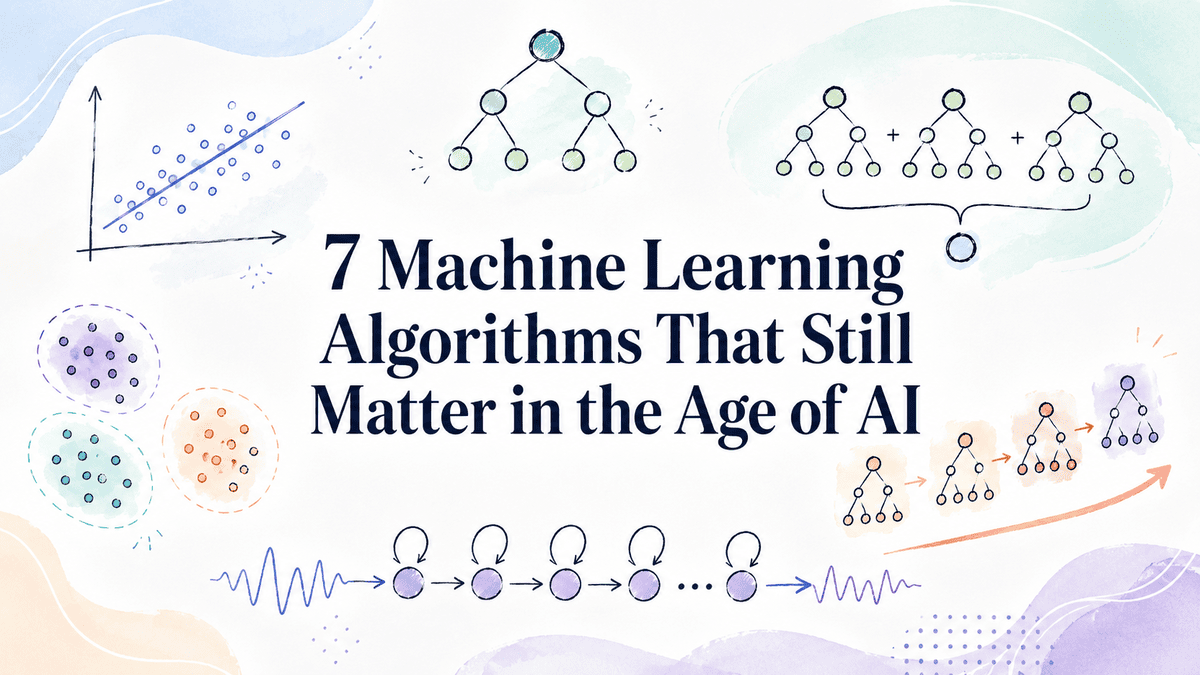
The recent surge in attention surrounding Large Language Models (LLMs) and generative AI has understandably captivated the data science community. However, as a recent article, "7 Machine Learning Algorithms That Still Matter," rightly points out, the foundational building blocks of machine learning shouldn’t be sidelined in the rush to adopt the latest trends. It’s easy to get swept up in the hype, as evidenced by Microsoft’s increasingly aggressive moves to compete with OpenAI and Anthropic [Microsoft is openly competing with OpenAI, Anthropic more than ever], but a solid understanding of algorithms like linear regression, decision trees, and support vector machines remains critical for any data scientist. This piece serves as a valuable reminder that while LLMs offer exciting possibilities, they are often built upon, and should be considered alongside, these more established techniques. Furthermore, understanding these fundamentals allows for a more nuanced approach to problem-solving and model selection, preventing reliance on black-box solutions without a clear grasp of underlying principles. The focus on practical Python code is particularly helpful, providing a tangible resource for reinforcing these core concepts.
The emphasis on revisiting these "classic" algorithms is particularly relevant given the current landscape of AI-assisted software development. The shift towards leveraging AI as an amplifier, rather than a complete replacement for human expertise, necessitates a strong base of understanding [AI-Assisted Software Development: Team Profiles and Capabilities for Putting Research into Action]. Simply plugging an LLM into a problem without considering the data, the underlying assumptions, or potential biases can lead to unreliable or even harmful outcomes. Moreover, the complexities of deploying and managing AI solutions, even those utilizing LLMs, often require knowledge of infrastructure and optimization techniques—areas where traditional machine learning principles remain highly applicable. We’ve also seen cloud providers like AWS making advancements that directly impact model deployment, for example, offering greater flexibility in code storage [AWS Lambda's Self-Managed Code Storage Lifts the Account Quota, Not the Function Size Limit], highlighting the ongoing importance of understanding the full lifecycle of a machine learning project, from data preparation to model serving.
The article’s timing couldn’t be better. While LLMs are generating a lot of buzz, many data scientists are realizing that their true power lies in integration with more traditional methods. It’s not about replacing established algorithms, but rather about augmenting them. For instance, a carefully chosen traditional model might be used for feature engineering before feeding data into an LLM, or LLMs could be employed to generate synthetic data for training a simpler, more interpretable model. The ability to critically evaluate and combine different approaches is a hallmark of a skilled data scientist, and a strong foundation in core algorithms is essential for developing that critical thinking ability. Neglecting these fundamentals in favor of chasing the latest trends is a recipe for superficial understanding and ultimately, less effective solutions.
Looking ahead, we should expect to see a greater convergence of LLMs and traditional machine learning techniques. The challenge will be to develop frameworks and tools that seamlessly integrate these approaches, allowing data scientists to leverage the strengths of both without sacrificing clarity or control. A crucial question worth watching is how effectively educational programs and professional development initiatives adapt to this evolving landscape, ensuring that the next generation of data scientists possesses both the excitement for innovation and a solid grounding in the fundamentals that underpin it all.
Read on the original site
Open the publisher's page for the full experience