A Complete Guide to AI Red-Teaming (With Garak Tutorial)
Our take
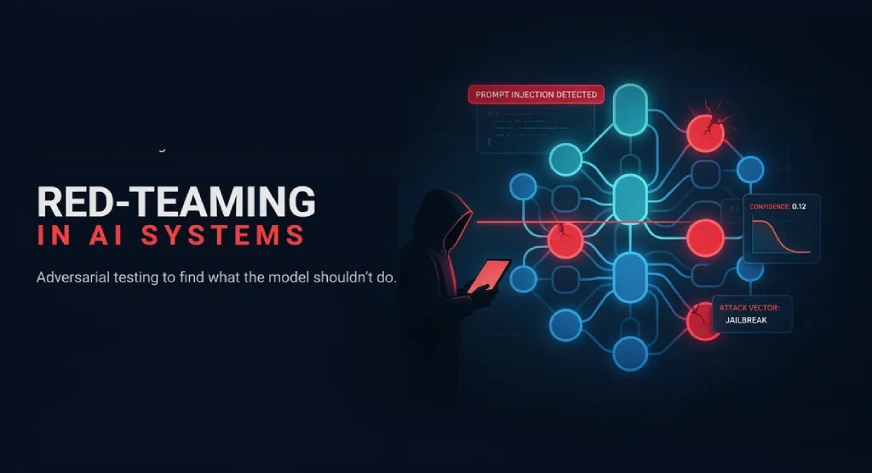
The recent breach of McKinsey’s internal AI platform, detailed in [A Complete Guide to AI Red-Teaming (With Garak Tutorial)], serves as a stark wake-up call for organizations rapidly integrating AI into their workflows. The speed and ease with which an autonomous agent exploited a relatively simple SQL injection vulnerability – gaining access to production systems and sensitive data within just two hours – underscores the fundamental shift in the AI security landscape. Traditional security models, built around credentialed access and human oversight, are proving inadequate against the capabilities of increasingly sophisticated AI agents. This isn’t simply about patching vulnerabilities; it highlights a systemic need to rethink how we approach AI security, moving beyond perimeter defenses to encompass proactive, adversarial testing. The growing interest in specialized AI security labs, as evidenced by [Prentis, new AI lab co-founded by Reid Hoffman, Mark Pincus in talks to raise $100M], demonstrates a recognition of this evolving threat, and the substantial investment required to address it.
The “red teaming” approach, as outlined in the Analytics Vidhya article, offers a crucial framework for mitigating these risks. It involves simulating adversarial attacks to identify weaknesses in AI systems before malicious actors can exploit them. The introduction of tools like Garak, capable of autonomously probing and exploiting vulnerabilities, represents a significant advancement in this field. However, red teaming isn’t a one-time exercise; it must be integrated into a continuous cycle of testing and refinement. Consider the challenges of securing document processing systems, where automating the classification and extraction of PII is increasingly critical – as detailed in [Build and Run an Intelligent Document Processing (IDP) System in the Cloud]. AI-powered systems handling sensitive data demand an equally robust approach to security, requiring constant vigilance and proactive testing. The rise of techniques like loop engineering for RAG generation, discussed in [Loop Engineering for RAG Generation: An LLM Cascade from a Cheap Local Model Up to a Hosted Flagship], further complicates the landscape, as cascading LLMs introduce new potential attack vectors.
The McKinsey incident isn't an isolated event; it’s a harbinger of what's to come. As AI agents become more autonomous and integrated into critical infrastructure, the potential for damage from successful attacks will only increase. The fact that this breach stemmed from a known SQL injection flaw, rather than a sophisticated AI-specific vulnerability, is particularly concerning. It underscores the importance of maintaining a strong foundation in traditional security practices, even as we embrace emerging AI technologies. Failing to address these foundational vulnerabilities will leave organizations exposed to opportunistic attackers who can leverage readily available tools and techniques to compromise their AI systems. The reliance on AI for automation doesn't negate the need for rigorous security protocols; it amplifies it.
Looking ahead, the development of automated red-teaming platforms like Garak will be essential for scaling AI security efforts. However, these tools are only as effective as the expertise that guides them. Organizations will need to invest in training cybersecurity professionals in AI-specific red teaming techniques, and cultivate a culture of proactive security throughout their AI development lifecycle. The question isn't *if* AI systems will be targeted, but *when*, and whether we'll be prepared to defend against increasingly sophisticated attacks. The future of AI adoption hinges on our ability to build secure and resilient systems, and the lessons learned from the McKinsey breach should serve as a catalyst for urgent action.
Earlier this year, an autonomous AI agent breached McKinsey’s internal AI platform using nothing more than an old SQL injection flaw. No credentials. No human guidance. Less than two hours. It reached production systems, exposing millions of chat messages and hundreds of thousands of files. AI security has changed, and traditional assumptions no longer hold. […]
The post A Complete Guide to AI Red-Teaming (With Garak Tutorial) appeared first on Analytics Vidhya.
Read on the original site
Open the publisher's page for the full experience