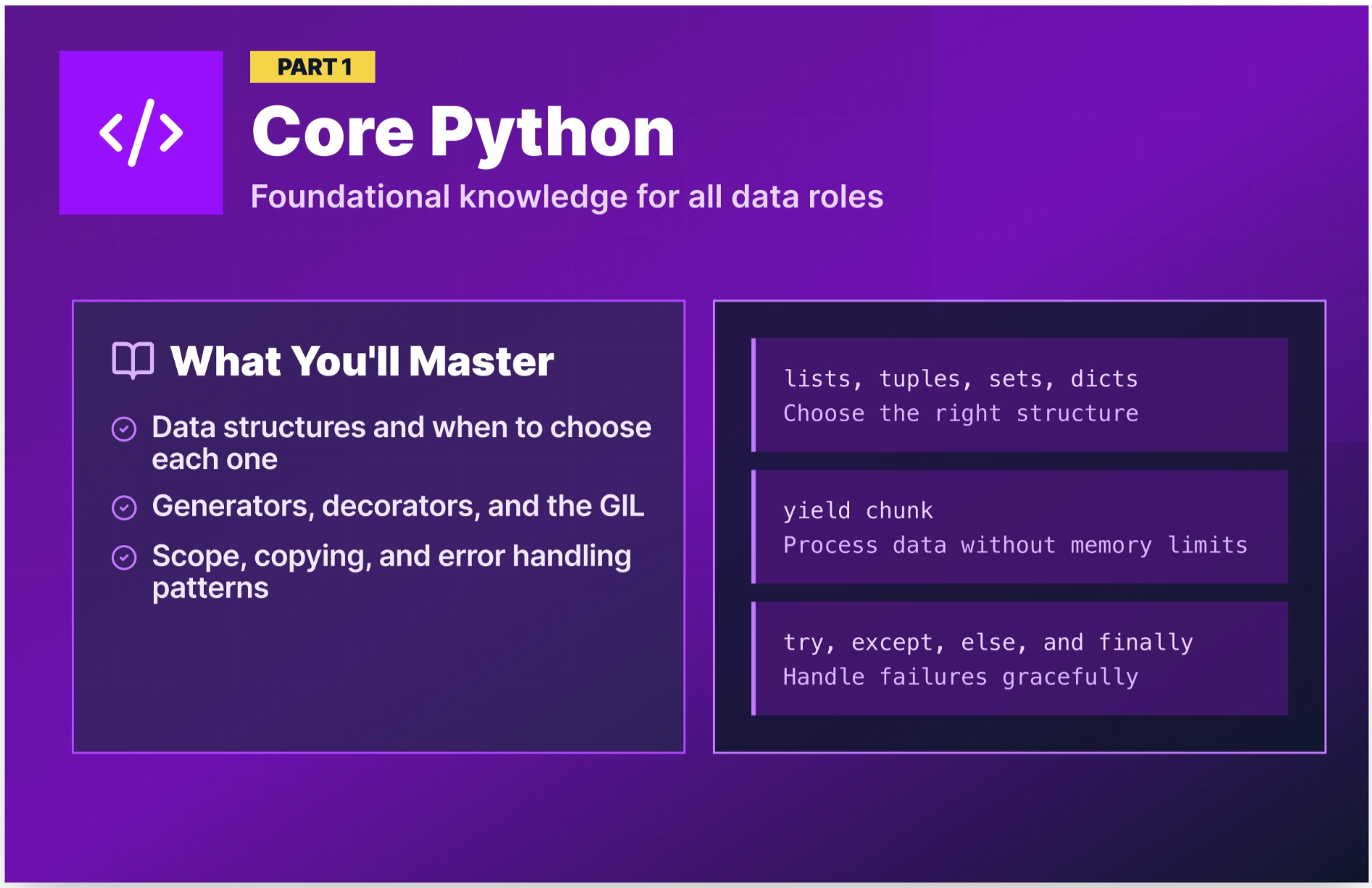
We think this collection of Python interview questions gets something right that most prep materials miss: it treats the interview as a demonstration of real work, not a trivia contest. The authors have organized questions by role, paired each one with a working code example, and explained what the interviewer is actually evaluating. That last part matters most. When a hiring manager asks a candidate to explain how they'd handle a missing value in a DataFrame, they aren't testing whether the person remembers the syntax for `dropna`. They are testing how that candidate thinks about data integrity, edge cases, and the trade-offs between speed and accuracy. This guide acknowledges that distinction, and it shifts the preparation from memorization to understanding.
For anyone preparing for a data role interview, the practical implication is straightforward: stop drilling on abstract algorithm puzzles and start practicing the kind of code you will write on the job. The Bureau of Labor Statistics projects 34 percent growth for data scientists through 2034, and Python holds the top spot on the TIOBE index. That means more candidates will be competing for more roles, and the interviews will need to separate people who can talk about data from people who can manipulate it effectively. A question about pandas merges or SQL-style joins in Python is not just a technical filter. It is a test of whether you can combine datasets without losing information or introducing errors. The code example and the explanation together give you a model for how to reason out loud during the interview.
The structure by role is also a practical concession to reality. A machine learning engineer and a business intelligence analyst use Python differently, even when both work with data. The guide respects that difference by letting readers focus their study where it will be tested. That is not just efficient; it is honest about what the interview process demands. Candidates who use this resource will spend their time on the functions, libraries, and logic patterns that actually come up in their target roles. They will arrive better prepared not because they memorized more, but because they practiced the right things.
The real test, of course, comes when the interviewer asks a question that is not in the guide. That is where the explanation sections become valuable. If you understand why a certain approach works, you can adapt it to a new problem. The code examples are the starting point, but the reasoning is what carries you through the unexpected. That is the skill worth developing, and this guide provides a credible path to build it.