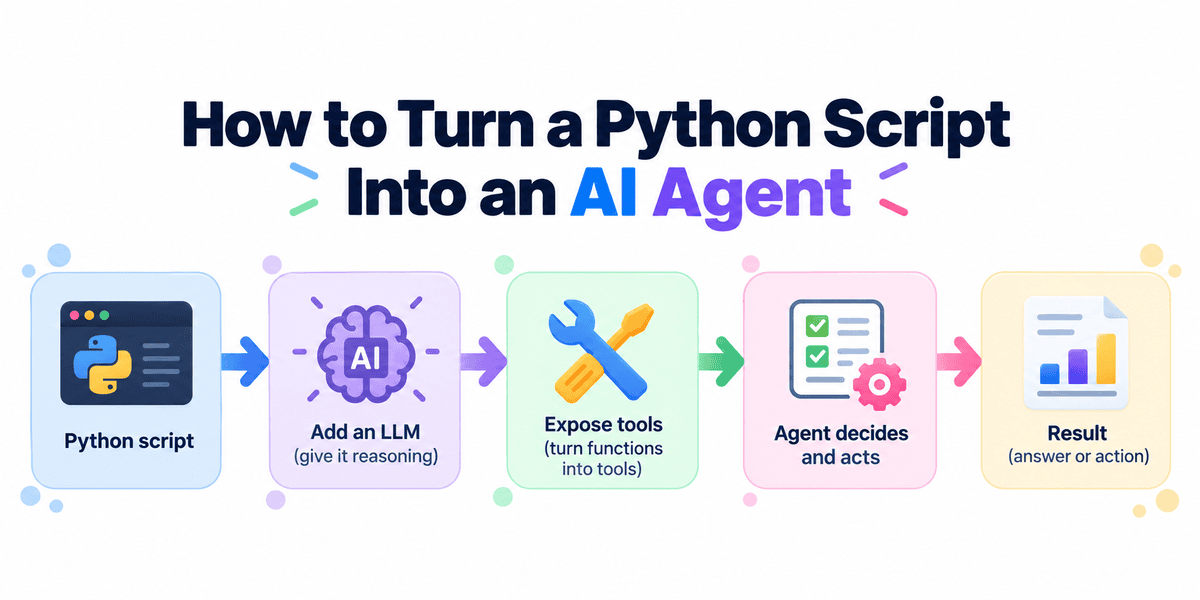
The spreadsheets we wrestle with daily were never designed for the work we now ask of them. They are static containers for dynamic problems, which is why the idea of building an AI agent to automate multi-step workflows feels less like a novelty and more like a necessary evolution. The tutorial on using Python and the OpenAI Agents SDK to construct such an agent is a practical acknowledgment that the future of data management is not about better formulas, but about delegating the process entirely. We are moving from a world where we direct every cell to a world where we direct the outcome.
This shift is part of a broader conversation we have been tracking closely. When we see how DoorDash leverages AI for efficiency to clean up thousands of stale flags, it is the same principle applied at scale. DoorDash did not build a cleverer dashboard; they built a multi-agent system to handle the grunt work of governance. Similarly, the concept of Architecture as Code at Morgan Stanley shows that the most efficient way to manage complexity is to encode the rules into the system itself. Our take is that the Python agent tutorial is the same idea, but for the individual developer. It is the entry point to a philosophy where automation is not an afterthought but the foundation. The practical takeaway here is direct: if you can describe the steps, you can automate them. The SDK's tool calling is not magic; it is a structured way to give an LLM agency, and that agency is what turns a chat interface into a worker.
For our readers, the question is not whether to learn this, but when. The barrier to entry is lower than you think. You do not need a team of machine learning engineers to start. You need a Python environment, an API key, and a clear understanding of a repetitive task you are tired of doing manually. This is the most human-centered part of the story. It is not about replacing people; it is about removing the drudgery that makes them resent their tools. As we have argued with the death of the button, the best interface is the one that fades away. An AI agent that handles the multi-step workflow is exactly that: an interface that requires no clicks, only intent. It is a direct response to the complexity that has been piling up in our spreadsheets and our APIs.
What we would tell a reader who asks for advice is simple: start with a process that has a clear, measurable end state. Do not try to automate your entire job on day one. Pick one task that takes you thirty minutes a week and build a tool that does it in thirty seconds. The confidence to handle bigger problems comes from solving the small ones. The specific detail to watch is how the OpenAI Agents SDK handles error recovery and state management. That is where most of these projects stall. If the agent can gracefully handle a missing field or an unexpected API response, you have a production tool. If not, you have a clever demo. The difference between those two outcomes is the difference between a workflow you trust and a toy. That is the line we are all trying to cross.