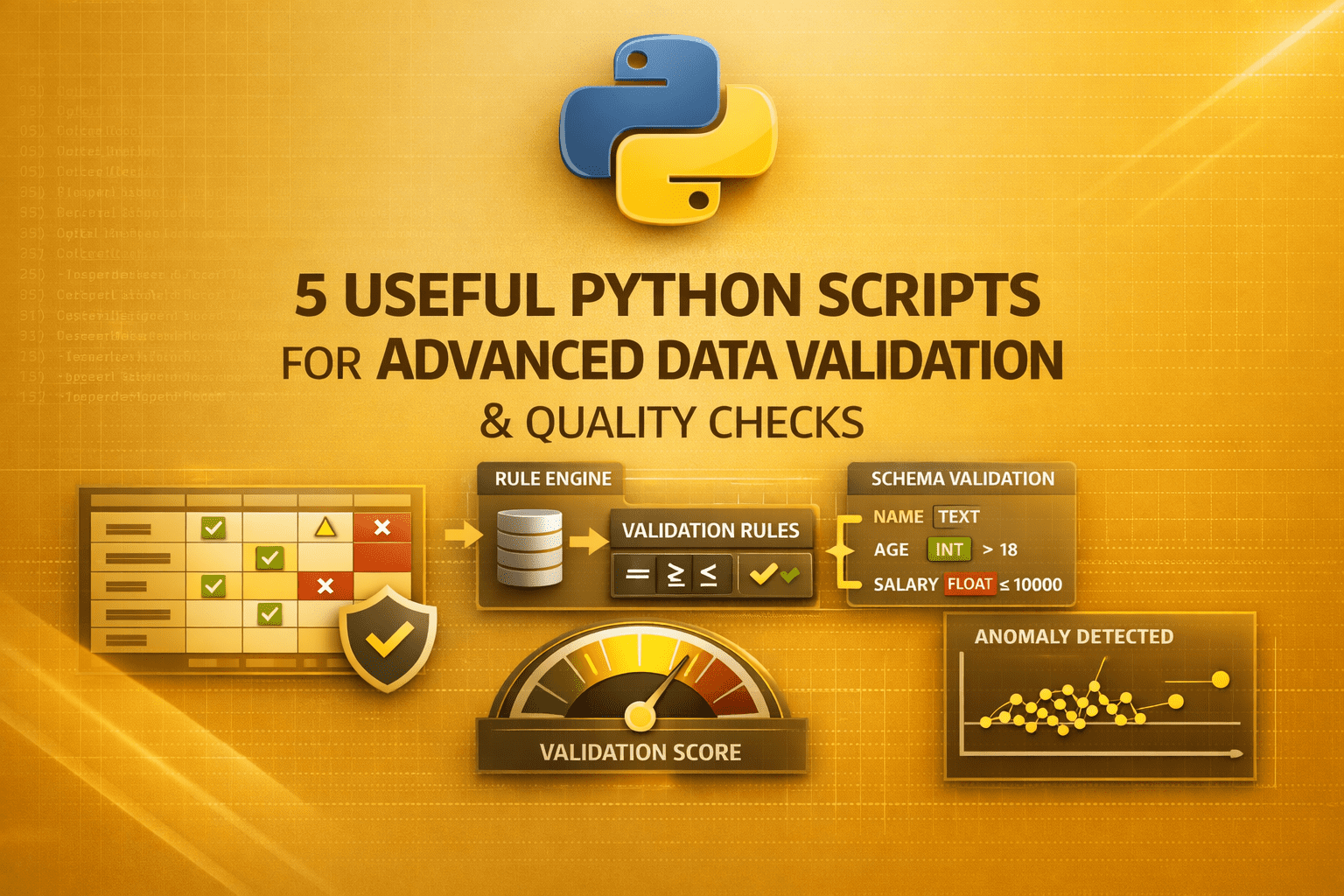
Data quality is the quiet bottleneck in every ambitious data project, and these five Python scripts deserve attention because they treat validation as a discipline rather than an afterthought. Missing values, schema mismatches, and the other silent killers of analysis don't announce themselves, but they compound quickly, turning a promising workflow into a house of cards. What we appreciate here is the emphasis on automation as a relief valve, not a replacement for human judgment. The scripts are smart because they are specific: they target recurring failure points with precision, giving teams a repeatable process instead of a one-off fix.
For the reader staring down a messy dataset, this means the path to clean data is no longer a matter of luck or late-night manual checks. When you automate quality checks, you shift your energy from hunting for problems to acting on what the data tells you. That is the real transformation on offer. The practical takeaway is straightforward: adopt these scripts as a baseline, not a finish line. Run them early, run them often, and let them absorb the tedium of verification while you focus on interpretation and decisions. The scripts do not eliminate the need for domain expertise, but they remove the friction that keeps good analysis stuck in the mud.
What makes this approach feel aligned with where data work is heading is its humility. There is no grand claim that automation solves everything, just a clear-eyed recognition that consistency beats brilliance when the stakes are routine. The schema mismatch example is telling: a simple check can save hours of downstream confusion, yet so many teams only discover this after the damage is done. These scripts are a small investment with outsized returns, and that is the kind of math we can all get behind.
So here is the concrete point: start with one script, the one that addresses your most frequent data failure, and integrate it into your next pipeline run. See how much mental overhead disappears. Then add the next, and the next. Before long, you will have built a habit that makes clean data the default, not the exception. That is the clear path worth walking, and it begins with a few lines of Python and a willingness to stop trusting the data at face value.