Understanding the Impact of AI on Job Markets
Our take
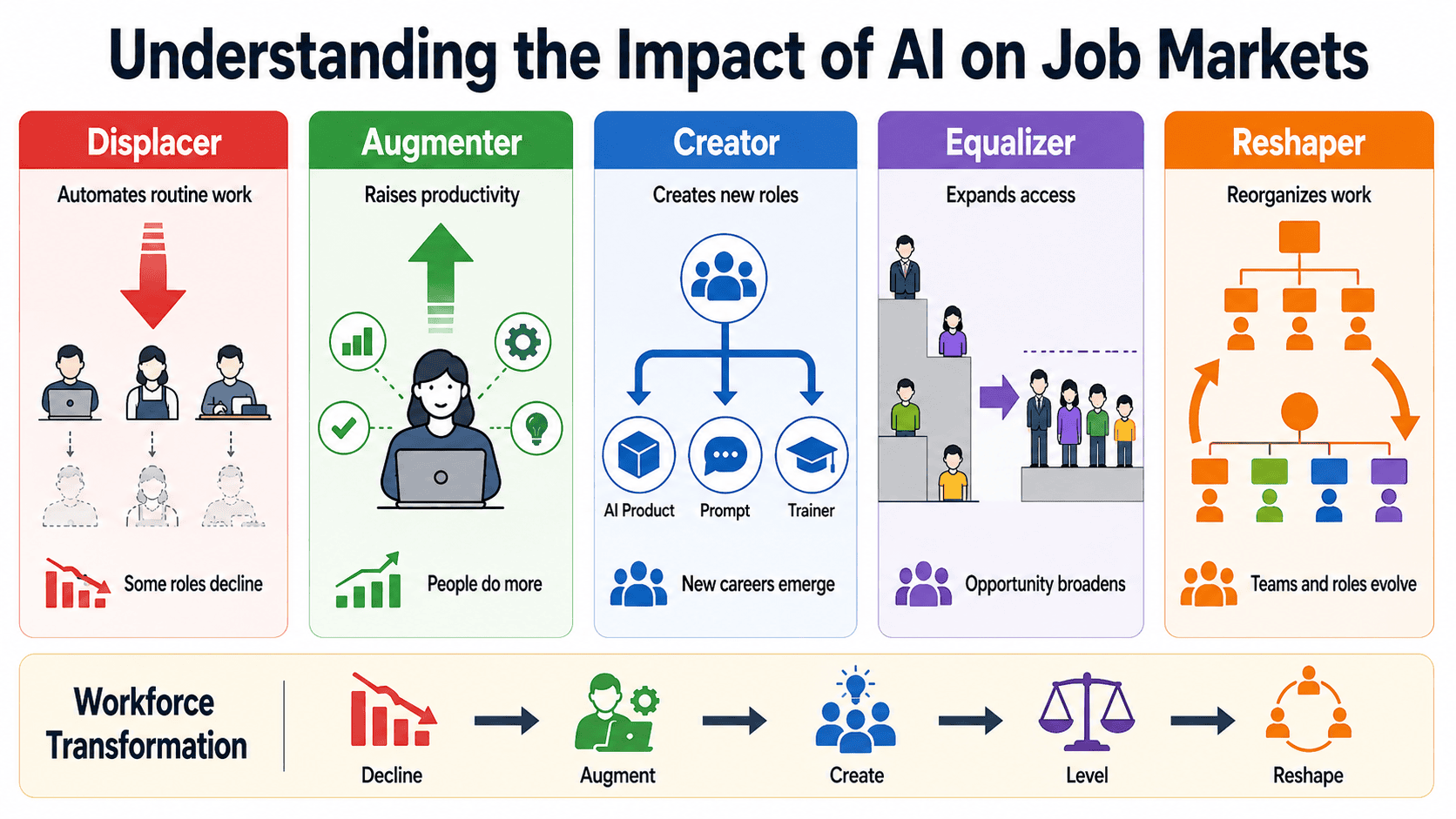
The recent article exploring the impact of AI on job markets rightly highlights a shift already underway, and one that demands careful consideration. While anxieties surrounding AI-driven job displacement are understandable, the narrative shouldn’t solely focus on job losses. It’s more nuanced; AI is fundamentally reshaping *how* work is done, creating new roles while altering the requirements of existing ones. The automation of routine tasks, as the article points out, frees up human capital for higher-level strategic thinking and creative problem-solving. This transition, however, requires a proactive approach to reskilling and upskilling the workforce. We’ve seen similar shifts throughout history with technological advancements, and this is another inflection point. Our own work in exploring how [R] Using AI as a spatial software generator to create 3D objects that are inherently programmable demonstrates the potential for AI to not just automate, but to *augment* human capabilities in unexpected ways, fundamentally changing the skillset needed to succeed. This is about partnership, not replacement.
The thinning of entry-level hiring, another key observation, presents a particularly interesting challenge. Traditionally, entry-level positions served as crucial training grounds, providing individuals with foundational skills and experience. If AI significantly reduces the need for these roles, we need to explore alternative pathways for onboarding and developing talent. This might involve more robust apprenticeship programs, intensive bootcamps focused on AI-related skills, or even a reimagining of higher education curricula. The work AWS is doing with [AWS Introduces Specification Driven Composition for Flexible Data Workflows] underscores the growing importance of defining clear intentions and workflows—a skill that will be increasingly valuable as AI takes on more operational tasks. Understanding how to specify and manage these AI-driven processes becomes a core competency, irrespective of the specific role. It's not about *doing* the task, but about *directing* the AI to do it effectively.
The broader significance of this shift lies in its potential to unlock unprecedented levels of productivity and innovation. By automating repetitive tasks and providing powerful analytical tools, AI empowers individuals to focus on activities that require uniquely human skills – creativity, critical thinking, emotional intelligence, and complex communication. However, realizing this potential requires a conscious effort to address the challenges associated with the transition. We can’t simply assume that the market will self-correct. Companies and institutions need to invest in reskilling initiatives, and individuals need to be proactive in developing the skills that will be in demand in the future. Our article [Mastering the AI Project Cycle: From Concept to Production] reinforces this, highlighting that building successful AI systems requires more than just model selection; it demands a structured approach to development, deployment, and ongoing management, a process that will require new skill sets.
Ultimately, the impact of AI on job markets will depend on how we choose to respond. Ignoring the changes or clinging to outdated models will only exacerbate the challenges. Embracing a future-focused mindset, investing in human capital, and fostering a culture of continuous learning will be critical to navigating this transformative period. A key question to watch is how educational institutions adapt their curricula to prepare the next generation for a workforce increasingly shaped by AI – will they prioritize foundational skills alongside AI literacy, or will they fall behind in equipping individuals with the tools they need to thrive?
Read on the original site
Open the publisher's page for the full experience