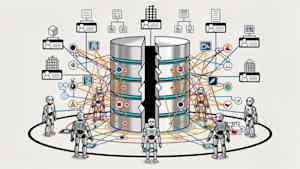
Dun & Bradstreet's recent overhaul of its Commercial Graph, which encompasses a staggering 642 million businesses, is a pivotal moment in the evolution of data management for AI-driven environments. This transformation comes as organizations increasingly integrate AI agents into workflows spanning credit assessments, procurement, and supply chain operations. Historically, D&B's systems were designed with human analysts in mind, catering to their unique needs for nuanced decision-making and the ability to navigate complex relationships between entities. However, as AI agents began to take on roles traditionally held by humans, it became clear that the existing architecture was inadequate, leading to a significant reengineering of their data infrastructure. This shift underscores a broader trend in the industry, where legacy systems are being challenged by the demands of modern AI capabilities, a theme echoed in other sectors, such as in Spotify’s AI bet: more of everything, less of what you want, where traditional models are reshaped to meet new consumer needs.
The challenges faced by D&B are emblematic of a larger issue affecting enterprises transitioning to AI-driven processes. The fragmented nature of their legacy systems—comprised of siloed databases and custom integrations—was ill-suited for the agile, instantaneous queries demanded by AI agents. As Gary Kotovets, D&B's Chief Data and Analytics Officer, points out, the architecture that served humans well for decades was simply not built with machine intelligence in mind. The company’s decision to migrate to a unified cloud infrastructure and develop a new data fabric layer represents a crucial step towards creating a more dynamic and flexible data environment. This move not only addresses the immediate needs of AI but also sets a precedent for other organizations grappling with similar transitions. For instance, many companies still rely on outdated frameworks that could hinder their AI aspirations, as highlighted in the recent article about Trump Mobile confirms it exposed customers’ personal data, including phone numbers and home addresses, where data management failures led to significant repercussions.
Moreover, the concept of "Know Your Agent," which D&B implemented to ensure machine accountability, reflects a growing recognition of the complexities involved in machine identity verification. This approach not only safeguards the integrity of the data being accessed but also aligns with the evolving regulatory landscape that increasingly emphasizes data accountability. As organizations consider deploying AI agents, they must prioritize robust data foundations and ensure that their systems can elegantly handle relationships that shift over time. This necessity for adaptability is becoming a core requirement across industries, suggesting that the insights gained from D&B's experience could serve as a valuable roadmap for businesses navigating the complexities of AI integration.
Looking ahead, the implications of D&B's rebuild extend far beyond their own operations. As more enterprises recognize the importance of a solid data foundation for AI, we may see a significant transformation in how data architectures are designed and implemented. The demand for dynamic relationships and entity consistency checks will likely drive innovation in data management practices, pushing organizations to rethink traditional approaches. As we continue to observe these developments, a key question emerges: how will organizations balance the need for rapid AI deployment with the foundational work required to support it effectively? The answers will shape the future of data management and the role of AI within it.