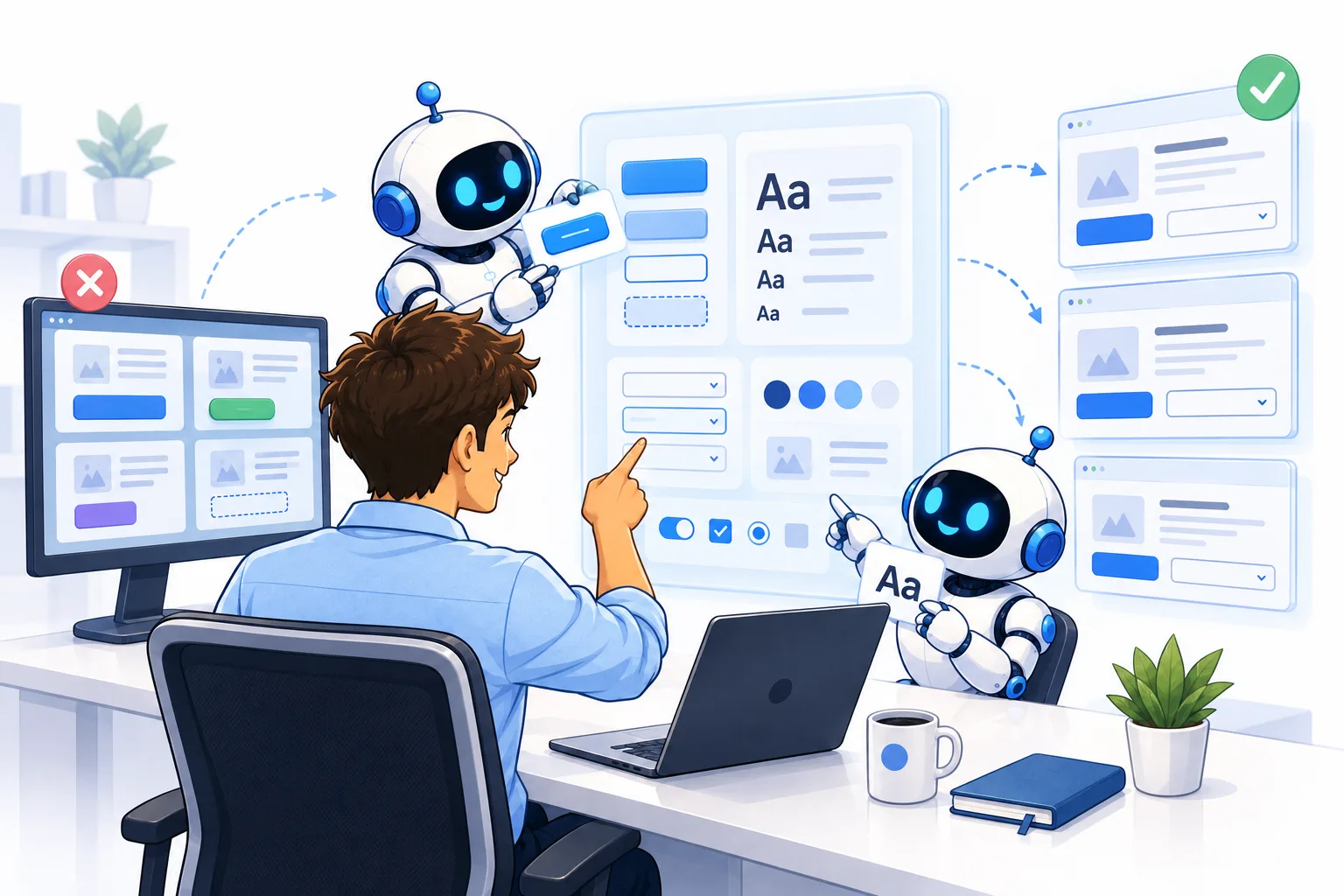
Consistency is the quiet enemy of polish. You can have the most functional app in the world, but if every button sits at a different angle or the color palette shifts from screen to screen, users feel it. They may not name it, but they notice. That is why the idea of teaching Claude Code to enforce design consistency feels less like a convenience and more like a relief. Practical ways to embed design skills into your coding workflow are walked through, and that is where the real value sits. It is not about making AI generate prettier mockups; it is about making the tool respect the rules you already set.
This approach matters because it shifts the burden of memory. Human teams already know what the design system should be. The problem is that attention slips during a late-night bug fix or a rushed feature cutover. Claude Code, when taught your constraints, becomes a second pair of eyes that never gets tired. It is the difference between hoping someone notices a misaligned grid and knowing the tool will flag it before it ships. For readers who have spent years wrestling with spreadsheets and dashboards that slowly drift into visual chaos, this is the same battle. You can see the same principle in how Exploring Real-World Computer Vision: Deployments, Edge Models, and Current Challenges highlights the gap between a model that works in a notebook and one that survives contact with messy production data. Consistency is not a feature; it is a baseline.
What stands out here is the emphasis on documentation and repeatability. You are not being asked to hand over your design instincts to a model. It is asking you to encode them. That is a subtle but important distinction. You remain the authority; Claude Code just becomes more reliable at applying your judgment. This mirrors the logic in Explore the Forrester Function: Beyond Mathematics, a Tool for Machine Learning, where the point is not that the function is complex, but that understanding its shape helps you make better decisions about your model. Both stories reward people who stop treating tools as black boxes and start treating them as collaborators with defined boundaries.
The practical takeaway is straightforward: start small. Pick one recurring pattern in your app, whether it is button spacing, font hierarchy, or error message tone, and document it clearly for Claude Code. Then let it enforce that rule while you focus on the harder problems. If you are skeptical, test it against a project you already consider finished. You will likely find a few places where the AI catches something you missed, not because it is smarter, but because it is more patient. And that is the point. The future of design tools is not about generating more; it is about maintaining what you have built with less effort. Watch how quickly your team adopts a tool that quietly removes friction instead of adding another dashboard to check. That is the metric that matters.