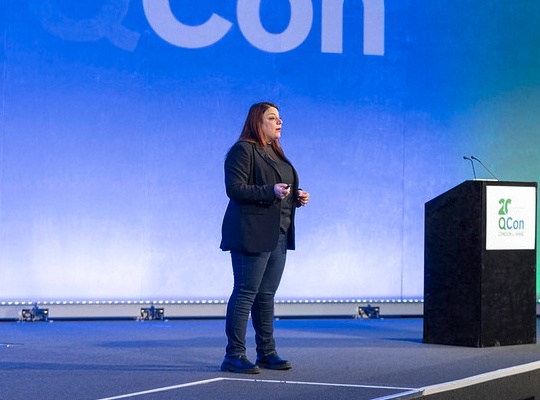
The most important decision a technical leader makes isn't which tool to adopt. It's whether the team is ready to use it at all. Vanessa Formicola makes this case persuasively by calling out "wishful architecture", the habit of designing systems that assume ideal conditions, then wondering why they fail in practice. Her argument reframes the staff-plus role from tool-picker to conditions-designer, and it's one of the more grounded takes on engineering leadership we've seen. Too many organizations chase technical sophistication while ignoring the human and structural realities that determine whether that sophistication survives first contact with reality. This matters because the cost of ignoring it isn't just a failed rollout; it's the erosion of trust between teams and the technology they're asked to champion.
Formicola's framework accounts for organizational maturity, reward structures, geopolitical climate, and team dynamics. That's a lot of variables, but the practical implication is straightforward: a technically elegant solution deployed into a team that lacks the maturity to maintain it, or whose incentives reward firefighting over prevention, will fail elegantly. Consider the recent Canva trims 22% of workforce as growth recalibrates in tough market. That move wasn't about bad technology; it was about organizational conditions shifting faster than the engineering structure could adapt. Leaders who design for static conditions are designing for obsolescence. The same principle applies at the architecture level. When we covered Inside the architecture that lets a 2.8T model run efficiently, the lesson wasn't just about scale, it was about the operational discipline required to keep that scale stable. That discipline is a condition, not a tool.
The takeaway here is specific and actionable: stop auditing your tech stack and start auditing your team's readiness. Before you pick a new framework, ask whether your reward structure incentivizes long-term maintenance or short-term heroics. Ask whether your team has the cognitive bandwidth to absorb change while handling existing obligations. Ask whether geopolitical or market shifts are about to pull the rug out from under your assumptions. Formicola's point is that these aren't soft skills, they're engineering constraints as real as memory limits or latency budgets. The leaders who treat them as secondary will keep solving the same problems twice. The ones who design for the conditions their teams actually live in will build systems that last longer than the next quarterly roadmap. That's the difference between architecture that works and architecture that wishes.