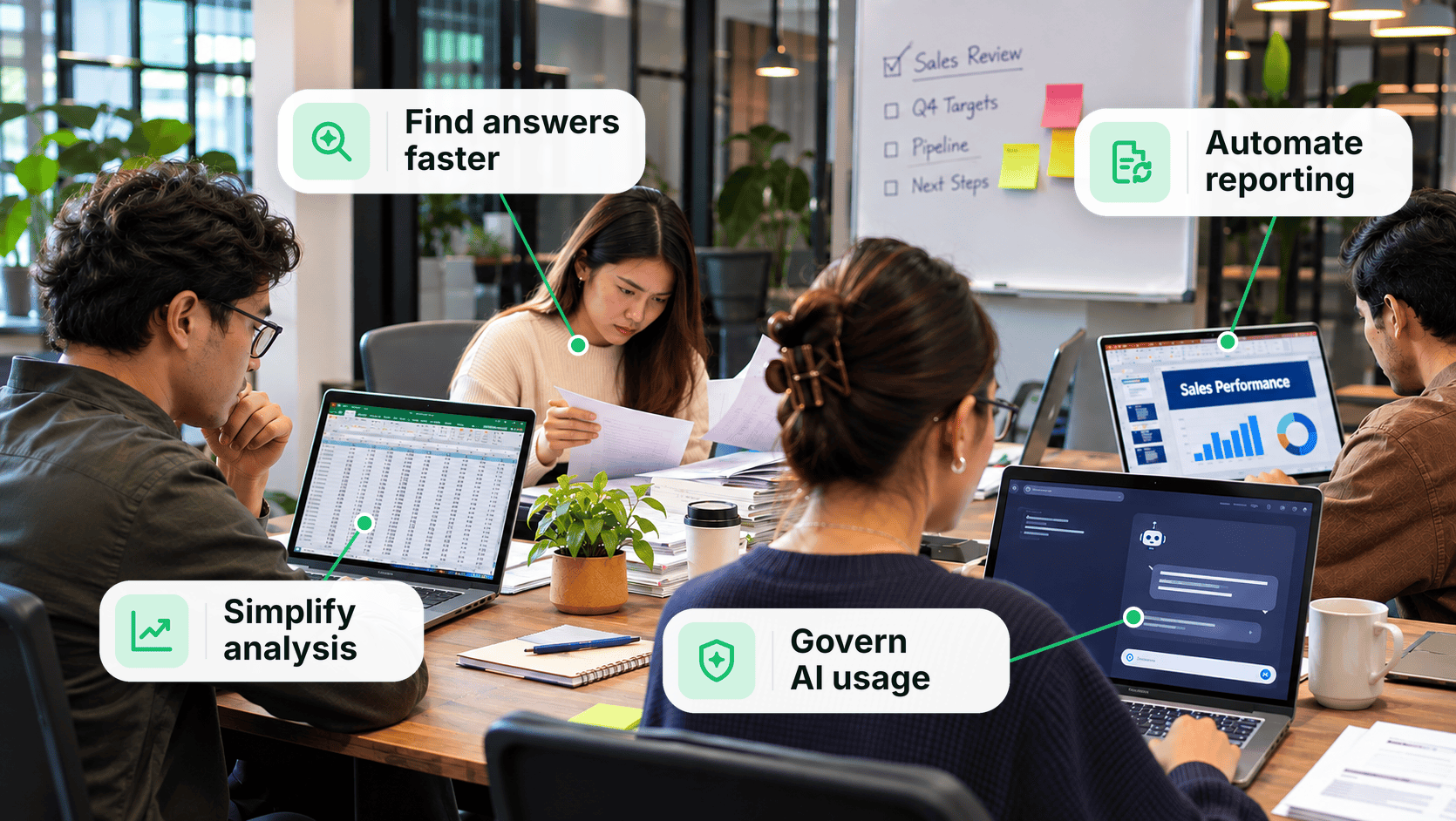
Enterprise business intelligence has long been a discipline reserved for specialists, analysts who can wrangle complex queries, data teams that build and maintain dashboards, and executives who wait days for reports that arrive already stale. That model is breaking, and the shift toward AI-driven BI is not just an incremental improvement; it represents a fundamental rethinking of who gets to ask questions of data and how quickly they get answers. The promise here is that AI can make enterprise BI genuinely accessible, automating the grunt work of reporting while surfacing insights that would otherwise remain buried in spreadsheets.
This matters because the gap between having data and using it effectively has always been more about friction than capability. When a product manager needs to understand customer churn trends or a supply chain lead wants to forecast inventory needs, the current workflow often involves submitting a request, waiting for a data team, and receiving a static report that raises more questions than it answers. AI-driven BI collapses that timeline. It lets users pose natural language questions, receive automated analyses, and drill into results without needing to know SQL or dashboard design. The governance piece is critical here, without proper controls, democratized access can lead to conflicting numbers and bad decisions. But with the right frameworks in place, this approach shifts the bottleneck from data access to decision-making itself.
The broader context is telling. Consider how Nominal's valuation triples to $3B as AI reshapes hardware engineering, where AI is transforming complex engineering workflows in much the same way it is now transforming business intelligence. Both cases share a common thread: AI is not replacing the expert but removing the friction that keeps the expert from doing their best work. Meanwhile, the controversy around Explore how Medium's new app brings AI directly into the writing process reminds us that every application of AI carries risks around trust and authenticity. In BI, those risks are less about authorship and more about accuracy, if an AI tool surfaces an insight, how does a leader know it is correct? The answer lies in transparent governance: lineage tracking, audit trails, and human-in-the-loop validation.
The practical takeaway for enterprise leaders is straightforward: start experimenting with AI-driven BI now, but treat it as a co-pilot, not a replacement. The tools are mature enough to handle routine reporting and anomaly detection, freeing analysts to focus on strategic questions. The open question is whether organizations will invest in the governance infrastructure needed to make this shift safe. Without that investment, the speed of AI-generated insights will outpace the ability to verify them, and speed without trust is just noise. The detail to watch is how vendors handle explainability: can they show not just the answer, but the reasoning path that produced it? That will separate the tools that empower decisions from those that simply produce them.