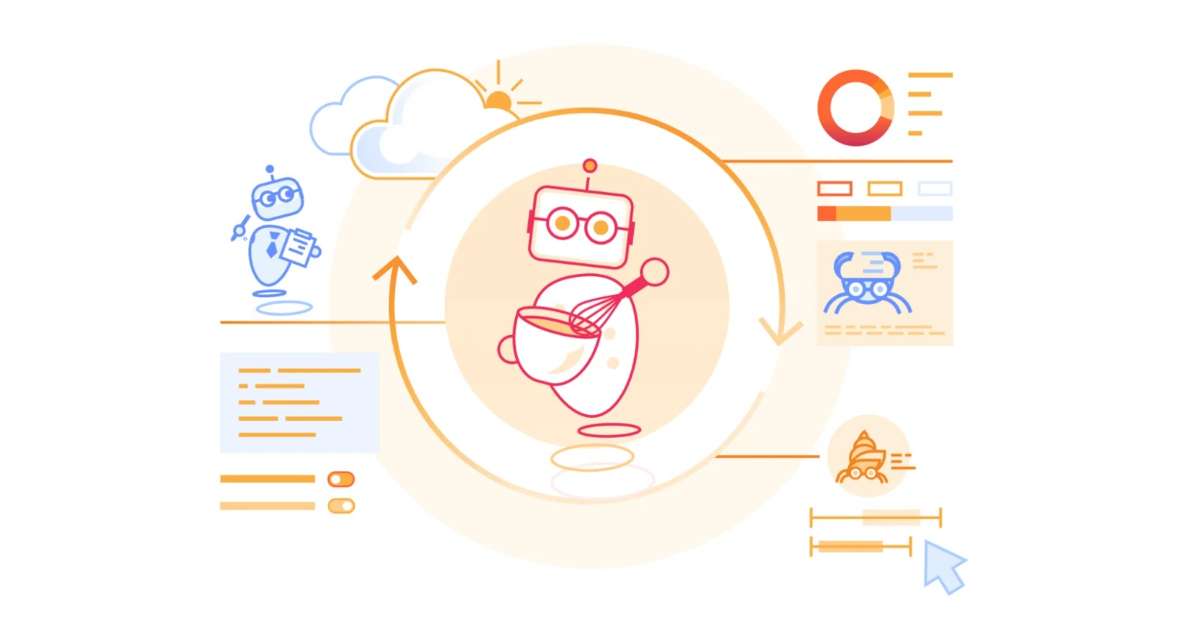
The Agent Development Lifecycle is a direct challenge to the idea that our current software engineering practices are simply in need of a tune-up. Cloudflare is essentially saying that the traditional SDLC, which we have all navigated for decades, is not built for a world where AI agents are writing, testing, and deploying code. They are not just adding a few automation tools; they are proposing a new operating model. The bottlenecks we all know, the endless test suites, the manual deployment checklists, and the dreaded context-switching for maintenance, are symptoms of a system designed for human speed and human limitations. This move acknowledges that the bottleneck has shifted; it is no longer about writing code, but about managing the flow of work through a pipeline that includes autonomous actors.
For our readers who are evaluating AI tools, this is the first time a major infrastructure player is addressing the *operational* reality of AI-generated code, not just the *generation* of it. The traditional SDLC assumes a human is in the loop at every stage, reviewing every commit and understanding every dependency. But when an agent writes a function, that assumption breaks down. Cloudflare's focus on automated software factories and dynamic orchestration is an admission that we need to stop pretending we can review everything. The practical implication is significant: the skills that will matter most are not just writing good prompts, but designing systems that can autonomously test, deploy, and observe those agents. This is about shifting from being a developer who writes code to an architect who defines the boundaries and rules for a fleet of AI workers.
This is where the conversation gets interesting, because the security model is the true test of this vision. Anyone can build an agent that writes a patch, but building one that can be trusted to do so without exposing sensitive data or creating a backdoor is the hard part. Cloudflare's emphasis on a security model for autonomous agents is not just a feature; it is the foundational requirement that will determine whether this lifecycle is a productivity boon or a liability. We would tell a reader who is considering adopting this approach to focus less on the speed of the factory and more on the guardrails. The real question is not, "Can my AI write a feature?" but rather, "How do I know it didn't accidentally rewrite my authentication middleware?" The observability piece is not just about tracking metrics; it is about having the forensic capability to understand *why* an agent made a specific change.
The concrete point to watch is how Cloudflare handles the "rollback" scenario. In a world of dynamic orchestration, a single bad agent action could cascade across multiple services before a human even notices. We would advise our readers to watch for how this lifecycle handles the detection and automatic rollback of a flawed agent-generated change. If the security model and observability can provide a seamless, automated way to reverse an agent's work without downtime, then this is a genuine step forward. If not, we are simply trading one set of operational headaches for a new, more complex set. The promise is a future where we manage intent, not implementation, but the execution will depend on how gracefully the system fails. That is the detail we will be tracking.