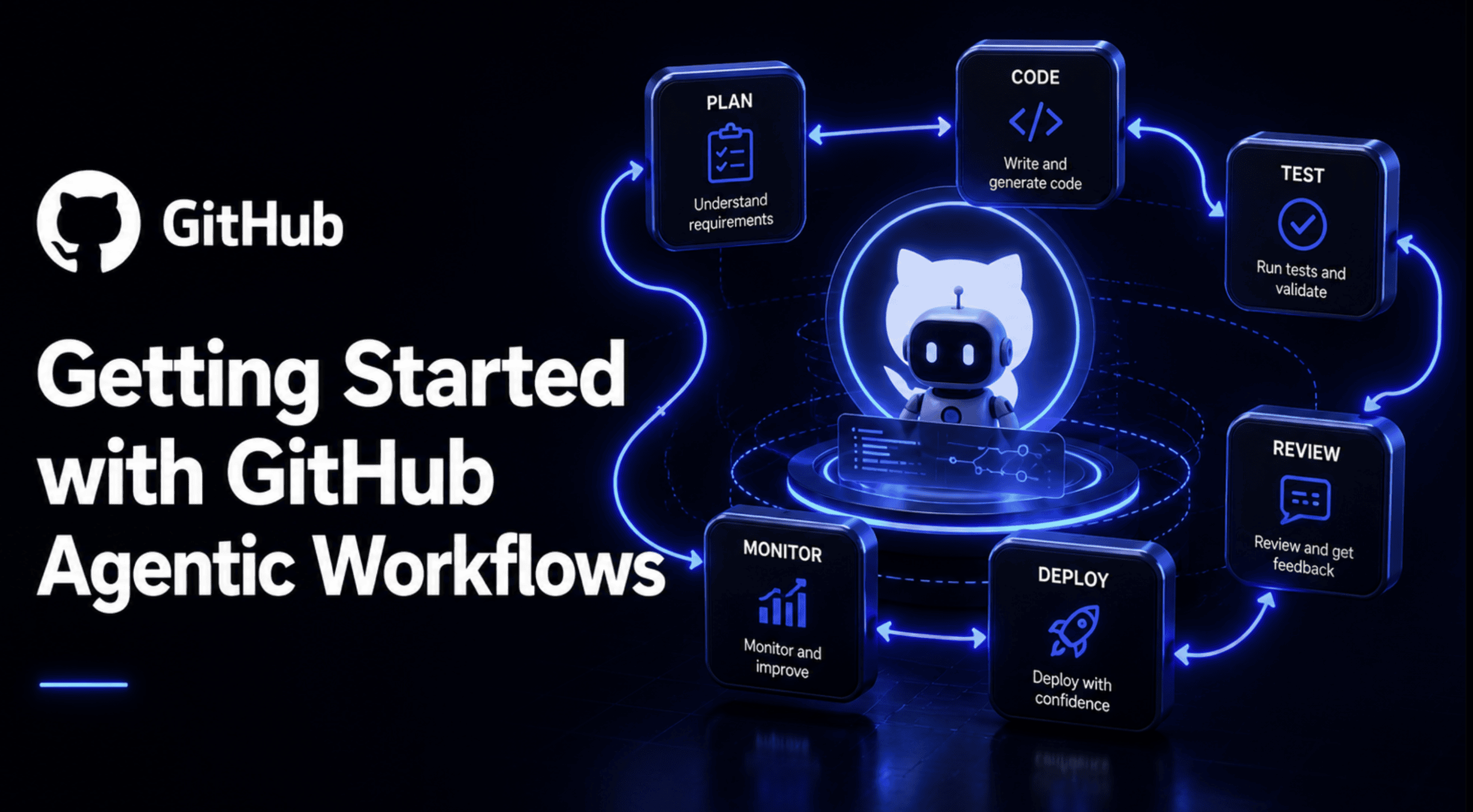
GitHub Agentic Workflows have arrived in public preview, and for anyone who has spent years wrestling spreadsheets into submission, this feels less like a feature drop and more like a quiet invitation to rethink the entire job. The pitch is straightforward: instead of you steering every step of a data pipeline or a code review process, you describe the outcome and let the workflow handle the orchestration. That is a meaningful shift from the traditional model where automation meant hardcoding every condition and hoping nothing changed. We have been here before with visual automation tools and low-code platforms, but the agentic angle changes the relationship. You are not building a flowchart; you are setting an objective and letting the system figure out the path. That is both the promise and the tension.
The practical takeaway for our readers is that the barrier to entry just got lower, but the cognitive load moved upstream. You still need to understand what a good result looks like, and you still need to define the guardrails. The difference is that you no longer have to anticipate every edge case in advance. That is genuinely useful for teams who have been held back by the rigidity of traditional workflow tools. It also connects directly to the broader themes we have been tracking around Unlock LLM Training: A Practical Guide to Distributed Algorithms, because the same principle applies there: distributed systems and agentic workflows both reward clear intent over micromanaged instructions. And if you have been exploring Unlocking MCP: A Visual Guide to Empower Your Workflow, you already know that the hard part is not the tooling, it is designing the interaction between human judgment and machine autonomy. GitHub is now asking you to trust that balance with production code.
Our honest take is that this is not about replacing the developer or the analyst. It is about removing the friction between the moment you have an idea and the moment the system acts on it. For teams still working in traditional spreadsheets or static dashboards, the jump to agentic workflows can feel intimidating, but it should not. The skills you already have, breaking problems into steps, defining acceptance criteria, testing outcomes, transfer directly. What changes is the execution layer. You are moving from writing instructions to writing intentions. That is a more natural way to work, but it requires a new kind of discipline. You have to be explicit about what success looks like, because the agent will not ask for clarification in the way a human teammate would.
The one thing we would tell a reader asking whether to jump in now is this: start with a narrow, reversible task. Do not try to automate your entire release pipeline on day one. Pick a single, well-understood process, define the guardrails, and let the agent show you where it surprises you. That is the actual value. The surprises are where the learning happens, and they are also where the risk lives. Watch how the public preview handles failures, because that will tell you more about production readiness than any demo. The specific detail to keep an eye on is how GitHub handles the handoff between human approval and automated action. That boundary will define whether agentic workflows become a trusted assistant or just another tool that needs constant supervision. For now, the door is open, and the smartest move is to walk through it with your eyes open.