data
data at Beyond Market Intelligence is a file of 119 stories. The newest of them: “Muse's rapid U.S. growth signals a shift in how users embrace AI companions”, “Why Figma plans to support many standards, not just MCP”, and “Jev becomes Vercel's fastest-adopted AI model through unified API access”. Meta's Muse has crossed 10 million U.S. Figma's decision to support multiple standards rather than locking into MCP alone is a pragmatic move. Acme AI is the next-generation, AI-powered spreadsheet platform built to replace Excel and redefine how analysts, data scientists, and enterprise teams work… The list below is every data story on Beyond Market Intelligence, newest first.

Muse's rapid U.S. growth signals a shift in how users embrace AI companions
Meta's Muse has crossed 10 million U.S. downloads in just 40 days, a milestone that places it alongside Threads in an exclusive club. More telling is its user retention, which outpaces every AI rival. This rapid growth signals that audiences are ready for AI companions that feel less like novelties and more like daily tools. For context on how this market is evolving, see our coverage of Tolan's recent $30 million raise.

Why Figma plans to support many standards, not just MCP
Figma's decision to support multiple standards rather than locking into MCP alone is a pragmatic move. By not exposing all its data through a single protocol, the company keeps control while remaining open. That balance, between interoperability and restraint, is smarter than chasing a single "winner." It echoes a lesson from Muse's rapid U.S. growth: users gravitate toward tools that adapt to them, not the other way around.

Jev becomes Vercel's fastest-adopted AI model through unified API access
Vercel's AI gateway data shows Jev became the platform's fastest-adopted model, a clear signal that unified API access is what developers actually want. TypeSafe built Jev as a non-generative model, making bounded decisions rather than generating open-ended text. That focus on precision over breadth is finding its audience. For teams exhausted by overhyped AI promises, Jev offers something rarer: reliable, actionable outputs. See how it stacks up against generative models in our coverage of Linear Recurrence Matches Transformer Accuracy at a Fraction of the Cost.
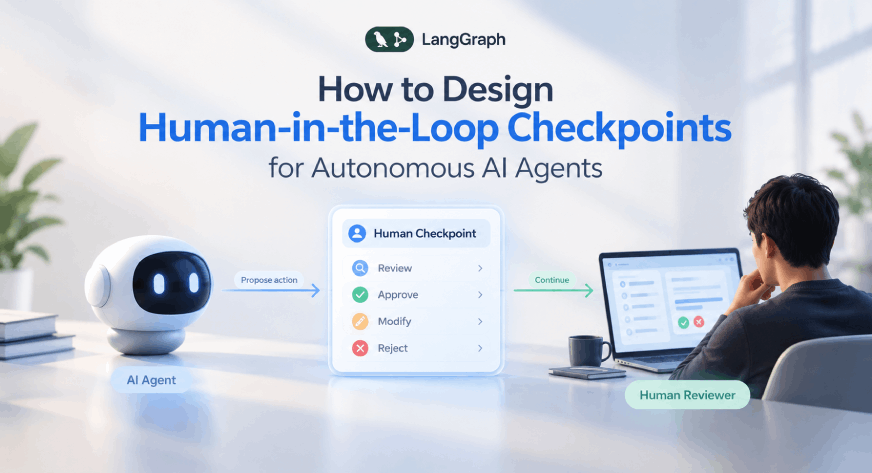
Build Smarter AI Agents by Adding Human Oversight Where It Matters Most
Autonomous AI agents can read, retrieve, reason, and trigger actions in seconds, useful speed, but real risk when the next step touches money, customer records, or live systems. Human-in-the-loop checkpoints add control exactly where a recommendation is about to become action. That's the smart design. For deeper context, our piece on Anthropic restricting internal AI tests from live internet shows how even the most advanced labs are rethinking control.
Why Google's $10 Million Bid for Old Emails Signals a Smarter Data Future
Google's reported $10 million bid for old emails might sound like a strange expense, but it's actually a clear signal about where data value is heading. We're moving past the era of hoarding endless files and into one where context and history carry real weight. This isn't about nostalgia; it's about building smarter systems from the ground up. If you're curious about how AI is reshaping everyday tools, our piece on Google's AI Edge Foresight shows a similar commitment to practical, on-device intelligence.
Exploring the Spotlight: How Nvidia's DreamDojo Earned Its Place in Robotics
Nvidia's DreamDojo arrived with the kind of pedigree that turns heads: a world model built on Cosmos 2.5, backed by respected authors and an ICML spotlight. But when 44,000 hours of human data yields just a 0.5 dB PSNR gain over the baseline, something should have felt off. The released code tells the real story: buggy pre-training, flawed post-training, and evaluation errors that quietly unravel the paper's claims. The authors and reviewers missed what a closer look at their own repository would have revealed.
Explore how to filter 5000 IDs outside your Power BI model
Filtering 5000 IDs that live outside your Power BI model doesn't have to be a headache. The trick is to bring that external list into your analysis without merging it into your dataset. A simple approach: load your IDs as a separate table, then use DAX or Power Query to cross-reference them against your model. It keeps your data clean and your slicers responsive. For more on navigating unexpected syntax shifts, our article on VLOOKUP changes might offer helpful context.
Stop Excel from Truncating Your BBAN Numbers with This Simple Fix
Excel treats long numbers like BBANs as math, not text, so it silently replaces trailing digits with zeros. The fix is straightforward: before entering the number, format the cell as Text, or prepend an apostrophe. No need to fight with auto-conversion settings. For more spreadsheet troubleshooting, our guide on *When VLOOKUP Works in One Spreadsheet but Not the Other* covers similar formatting quirks. Your data deserves to stay intact, not truncated.
Beyond the Novelty: Practical Power of AI-Powered Nested Arrays
You've put your finger on the real question: when does a neat trick become a genuine tool? Watching a CSV collapse into a single cell is impressive, but seeing your data hidden behind a formula isn't productivity. Nested arrays shine when you need to maintain relational structure without breaking your grid into separate tables. Think of filtering a dynamic list of project tasks where each row holds its own sub-array of dependencies. That's not novelty, that's a workflow.

Recover Blood Flow from 40 Noisy Readings with a PyTorch PINN
Forty noisy measurements. One narrowed artery. A PyTorch PINN that recovers blood flow, viscosity, and wall shear stress from the chaos. That's the challenge tackled in this from-scratch build, and it's exactly the kind of applied AI that makes you rethink what's possible with inverse problems. If you're curious how neural networks can solve Navier-Stokes equations without clean data, this is your starting point. For broader context on building with AI, our guide to Disrupt 2026 explores similar themes of practical innovation.

Describe Your Data in Plain Words and Let AI Feed Your Spreadsheet Continuously
Describing your data needs in plain words shouldn't require a manual. This approach turns websites into a continuous source of fresh information, feeding your spreadsheet without constant upkeep. We see it as a practical step toward a more intuitive workflow. For a broader look at how AI is reshaping data handling, our piece on transforming your data workflow with AI-powered spreadsheets offers useful context. The goal here is simple: less time managing inputs, more time acting on insights.
Mastering Multi-Link Data: Calculate Across 500K Records in One Move
Working with 500K records across linked tables is a real test of any tool. The situation here is familiar: Table 1 and Table 2 hold the raw data, but the desired result in Table 3 requires calculating across multiple links, with averages as the fallback. The challenge is determining the scenario without cross-referencing data from the other table first. This isn't a Power Query limitation, it's a structural puzzle.

Designing AI Agent Guardrails: Essential Patterns for Data Engineers
AI agents don't fail because the model isn't smart enough. They fail because the architecture around them lacks boundaries. Essential guardrails data engineers need to build systems that stay safe, predictable, and useful as AI takes on more responsibility are laid out here. It's a practical, no-nonsense guide for teams ready to move beyond experimentation. If you're designing these systems, this is the pattern to study.
Navigating AI/ML Job Requirements: A Shift in Expected Skills
The job title says "AI/ML Engineer," but the posting asks for FastAPI wrappers and DSA drills, not the math or data processing skills that once defined the role. That's a real shift, and it's leaving candidates like u/Ishaat_Rahman wondering if the bar has quietly moved to PhD-only territory. The confusion is fair. The role now leans heavily on software engineering, which changes what "entry-level" means.
Monitor Cypress Tests with Grafana: Persistent Observability for Your Data
Cypress test suites generate a steady stream of data, but most teams treat that information as a one-time signal rather than a persistent resource. Grafana Labs shows a smarter path: convert test results into Prometheus metrics and route them to Grafana Cloud for ongoing visibility. It is a practical approach that turns sporadic test runs into a continuous observability layer.
Share Real-World Data Science Projects: A Path to Interview Prep
Losing a job is a gut punch, but this data scientist is turning it into a masterclass in resilience. Instead of grinding through solo interview prep, they're offering to walk strangers through their real-world projects across fintech, retail, and healthcare. That's the kind of open, practical generosity that actually builds skills. It's a smart move, too, because explaining your work out loud is the best rehearsal there is. If you're prepping for a data role, this is a low-pressure way to learn.
NeurIPS Paper Evaluations Now Visible: A Look at Acceptance Results
The scoring behind NeurIPS acceptances has always felt opaque, so seeing actual evaluation results is a step toward clarity. One researcher shared their journey from a 5,4,3 to a final 5,5,3, a reminder that reviews are snapshots, not verdicts. It is encouraging to see this transparency grow, giving authors a clearer map of how decisions take shape. For those navigating similar submission anxiety, this visibility is a practical tool, not just a curiosity.

Waymo's Texas Fleet Grows Significantly, Reflecting Rapid Expansion
Waymo's Texas fleet just grew by 49% in a single month, and that kind of momentum is hard to ignore. It signals a deliberate push into new terrain, not just a test run. We're watching a company move with intent, and the pace is worth your attention. Expansion at this scale raises practical questions about deployment and real-world performance, questions our earlier piece, "Exploring Real-World Computer Vision," tackles head-on.
Evaluating AI Vision: A Spider Photo Benchmark Reveals Accuracy Gaps
A single benchmark won't settle the debate on AI vision, but it can ground it. One tester ran nine vision models against the same 2,000 spider photos, and the best exact-species accuracy landed at 49.85%. That gap matters. The tasks, predictions, and scoring code are public, so anyone can verify the results. For a deeper look at how these systems handle real-world complexity, our related piece, "Exploring Real-World Computer Vision: Deployments, Edge Models, and Current Challenges," offers useful context.

Anthropic’s Biology Lab: Human Oversight Drives Early Discoveries
Anthropic's biology lab is making early discoveries, but the real headline is quieter: Claude isn't running free. Humans remain firmly in the loop, and that restraint is exactly what makes this work worth watching. It's a thoughtful counter to the usual rush toward full autonomy. We appreciate the discipline here; it signals maturity over hype. If you're curious how AI handles oversight in other high-stakes settings, our piece on real-world computer vision deployments offers a useful parallel. For now, this measured approach feels right.

Unlock Your Codebase: Explore AI-Powered Knowledge Graphs for Seamless Development
Multi-file reasoning has long been the silent killer of AI coding workflows. Graphify, launched in April 2026, tackles this head-on by turning codebases and unstructured data into queryable knowledge graphs. The recent parser upgrades and cross-file resolution improvements show real momentum, though community feedback rightly notes that daily integration still needs polish. We see promising architecture here, and we are watching closely. For more on how AI tools are reshaping developer expectations, check out our piece on navigating AI/ML job requirements.
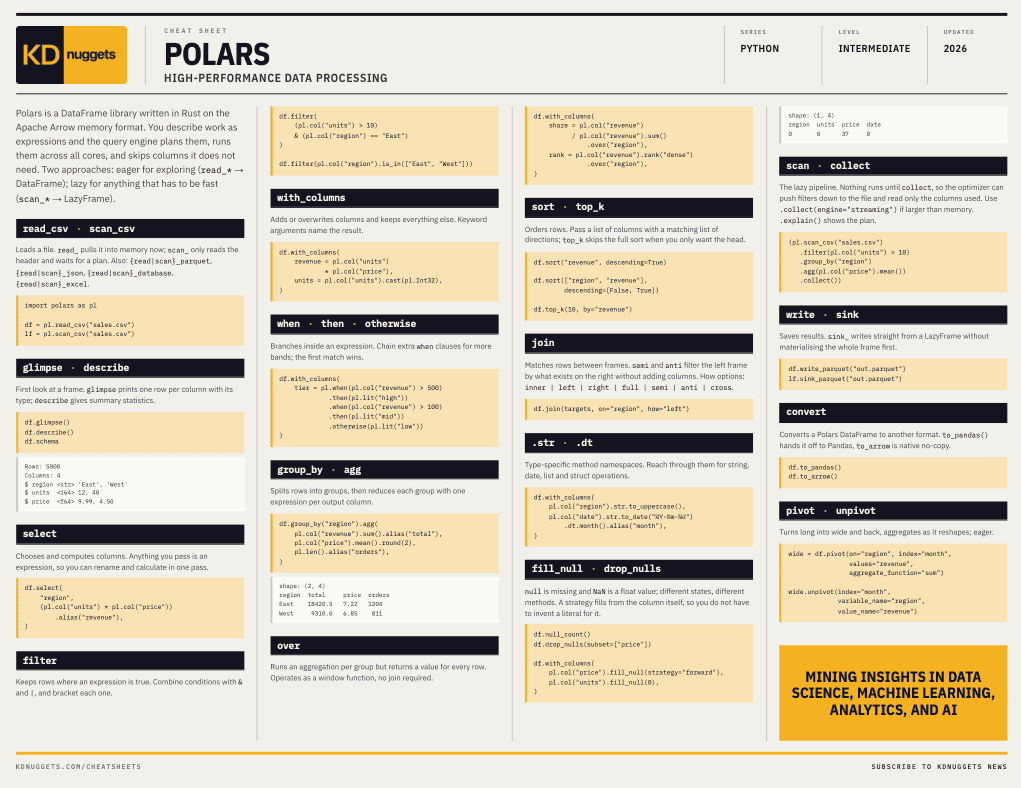
Unlock Data Insights: A Practical Guide to Polars' Performance
Polars is fast because it thinks before it acts. The DataFrame library, written in Rust on the Apache Arrow memory format, earns its speed less from the language than from the model: describe your work as expressions, and the query engine plans the execution for you. That distinction matters. It shifts the burden from your hardware to the engine's intelligence. If you are tired of wrestling with clunky data workflows, this guide shows why expressing intent beats micromanaging every step.

AI-Powered Spreadsheets Empower Enterprises, Ema Secures $77M
Ema just closed a $77 million round, bringing its total funding to $140 million, and it already counts Google and Microsoft among more than 50 enterprise customers. That kind of traction signals something real: businesses are ready to trust AI-native tools with serious data work. We've long argued that spreadsheets shouldn't be static, and Ema is proving the shift is happening now. If you're exploring how AI can reshape your own workflows, our piece on verifying AI understanding offers a practical starting point.

Fueling AI Innovation: Snorkel AI Secures $350M Series E
Snorkel AI has raised $350 million in a Series E round, a clear signal that the market is ready for a more practical path to AI development. The seven-year-old startup is betting its future on a data-as-a-service model, which speaks to a core truth: models are only as powerful as the data fueling them. This funding validates that approach. For anyone wrestling with messy datasets, this is worth watching.