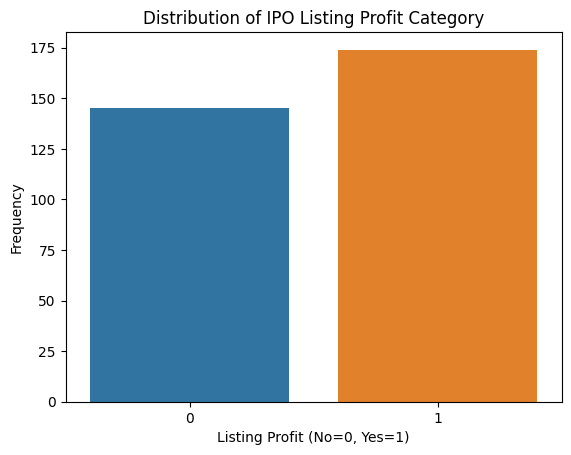
There is a better way to approach IPO listing day than crossing your fingers and hoping the market smiles on you. The guesswork that plagues so many investment firms is not a necessary cost of doing business; it is a problem that accessible machine learning can address with surprising practicality. For a firm juggling dozens of public offerings each year, the difference between a disciplined, data-informed strategy and a series of hopeful bets is the difference between steady returns and expensive, repeated misses.
The core insight here is not that AI will hand you a crystal ball. It won't. What it offers is a structured way to evaluate the signals that already exist before the opening bell rings. The company sets a price, investors subscribe, and the market makes its judgment, but between those steps lies a wealth of information that a human team, no matter how sharp, will struggle to synthesize at scale. Machine learning excels at exactly this kind of pattern recognition. It can process historical listing data, market conditions, and subscription behavior to give you a probabilistic view of where a stock might land. That is not magic. It is a tool, and it is one that is becoming more accessible to firms that do not have a dedicated data science department sitting in the corner.
What this means for you is a shift in how you allocate your research time and capital. Instead of spending your best hours debating the same public information as everyone else, you can let the model surface the outliers, the listings where the risk profile looks meaningfully different from the crowd. You are not replacing your analysts; you are giving them a sharper filter. The practical benefit is that you can focus your human judgment on the deals that actually warrant it, rather than spreading your team thin across every offering that hits the pipeline. That is not a futuristic vision; it is a workflow that is within reach today if you are willing to explore the tools that are already out there.
The takeaway is straightforward: the firms that treat machine learning as an accessible, practical layer in their IPO process will make fewer reactive decisions and more deliberate ones. They will still be wrong sometimes, because every listing is unique and the market can always surprise. But they will be wrong less often, and that margin is what compounds over a year of dozens of listings. Stop treating the listing day move as a coin flip. Start treating it as a prediction problem that you can actually work on.