data visualization tools
144 stories filed under data visualization tools on Beyond Market Intelligence. The newest of them: “Open-Sourcing FlexViz for Instant Exploration of Billion-Point Datasets”, “Designing for intent, not clicks, in the age of invisible AI”, and “Enterprise data extraction meets its cost-performance sweet spot”. FlexViz turns a billion-point dataset into a chart you can explore in a quarter of a second. The button is dying, and that's not a loss; it's a release. Acme AI is the next-generation, AI-powered spreadsheet platform built to replace Excel and redefine how analysts, data scientists, and enterprise teams work… The list below is every data visualization tools story on Beyond Market Intelligence, newest first.

Open-Sourcing FlexViz for Instant Exploration of Billion-Point Datasets
FlexViz turns a billion-point dataset into a chart you can explore in a quarter of a second. That speed comes from lessons learned building plotly-resampler, which racked up over 18 million installs. But the real shift is agent-native design. Everything is a spec, so an AI can create, follow, and update visualizations without screenshots. The interactive view becomes the conversation. For anyone juggling larger-than-RAM data, this is a practical step toward workflows that feel natural for both humans and machines.

Designing for intent, not clicks, in the age of invisible AI
The button is dying, and that's not a loss; it's a release. As the web sheds menus and forms, the real work shifts to designing for intent, not clicks. For UX designers, this means stepping back from visible controls and learning to guide transparent, AI-driven experiences. It's a harder, more human craft. If you're tracking how voice and disclosure fit into this shift, our piece on ElevenLabs CEO and transparency pairs well with this conversation. Explore that tension; it's where the next interface begins.

Enterprise data extraction meets its cost-performance sweet spot
Most document parsers force enterprises to choose between accuracy and affordability. Cohere's Parse 5 doesn't dodge that trade-off; it prices it honestly. At $1.50 per 1,000 pages, it trails frontier models like GPT-5.5 on raw scores but slashes costs by over 98 percent in high-volume workflows. That's a practical bet on structure preservation, not benchmark glory. For teams feeding millions of documents into AI pipelines, the real question isn't who wins parse tests, but what survives downstream.
Where Data Meets Design to Make Decisions That Stick
Most dashboards look beautiful and still fail the only test that matters: do they change what someone does next? Meriem Benhabiles argues that data visualisation only works when structured UX thinking shapes it, from the questions asked before opening a tool to the choices that help an insight land. That is a refreshingly practical stance. It pairs well with our coverage of how AI voice transparency and clean data practices shape user trust, so exploring those pieces deepens the picture.

Berd open source gives teams a local workspace for AI agents
Block is open-sourcing Berd, a desktop workspace built to give teams one consistent surface for working with AI agents. It runs locally, stores conversation history on your device, and works across models and harnesses, Goose, Claude Code, Codex, or whichever you configure. Berd is available now under an Apache 2.0 license for macOS, Windows, and Linux. If you're managing fragmented agent workflows, it's worth exploring how a unified, inspectable environment can simplify the work.

Own Your AI Agents: Control and Context for Enterprise Growth
Enterprise AI is hitting a wall that isn't about model capability, it's about control. By 2028, the average Fortune 500 company will run 150,000 agents, yet only 13% feel prepared to govern them. xpander.ai steps into that gap with a vendor-neutral control plane that manages execution, identity, and memory without chaining you to a single provider. It's not about abandoning powerful models; it's about making them work *for* your organization, securely and at scale.

Explore how Grok 4.6 brings capable AI agents at a more accessible price.
Grok 4.6 is here, and it's a meaningful step forward for teams building with AI agents. The model now ranks third globally on the Artificial Analysis Intelligence Index, surpassing Kimi K3 and matching GPT-5.6 Sol Max. More importantly, it delivers significant gains in coding, knowledge work, and long-running agent tasks, while keeping API costs at $2 per million input tokens. That combination of capability and economics is worth exploring, especially for enterprises weighing performance against the real cost of completing complex workflows.

Open video creation meets open weights in a faster, more accessible AI model
LTX-2.5 turns a single image into a 10-second video in under seven seconds on Nvidia superchips, and it's open weights. That speed, paired with native ComfyUI integration, gives builders a direct path from experimentation to production without locking data or IP into a closed API. For teams testing the edges of real-time video, this is the practical next step. Explore what an open model can do when the infrastructure finally catches up.
Trim Your JavaScript by Trusting What the Browser Already Offers
The gap between "you need a library for this" and "the browser does this" keeps closing, yet many of us still ship heavy dependencies out of habit. Baseline offers a practical path forward: audit what you already have, then test what the web platform now handles natively. It's a focused way to lighten your bundles without sacrificing functionality. If you're managing complex repos, our guide to keeping data science notebooks runnable pairs well with this mindset, helping you sustain momentum across projects.

Why AI pipelines stumble and how DataFlow-Harness restores their power
AI coding agents write clean one-off scripts, but hand them a full data pipeline and the output often falls apart. That gap between free-form code and production-ready workflows is real, and researchers are finally attacking it. DataFlow-Harness, an open-source framework from Peking University and collaborators, steers LLMs toward structured, visual pipeline graphs instead of disposable scripts. The results speak for themselves: a 93.3% pass rate, 72.5% lower API costs, and pipelines engineers can actually audit.

GM uses AI agents to free engineers from 85% of non-coding work
General Motors' autonomous driving division didn't just hand engineers a better coding tool. It redesigned entire workflows around AI agents, and the payoff is hard to argue with: three times as many merged pull requests, faster releases, and fewer defects slipping downstream. Rashed Haq's point is worth sitting with. Most engineering time was never spent writing code anyway. Automating the other 85 percent, the analysis, triage, and testing, is where the real transformation lives. That is a smarter way to think about AI's role.

When a bug resists fixing, the smartest feature is a new path forward.
For weeks, Runway chased a bug that made AI avatars drift off-center during real-time video generation. The fix wasn't a clever back-end patch, it was a front-end feature that simply re-centered the user's image before generation began. That pivot turned a limitation into a perceived benefit. Ryan Phillips, head of enterprise product at Runway ML, shared this lesson at VB Transform 2026, arguing that even teams building on foundation models rather than training their own can borrow from Runway's disciplined approach to evaluation and iteration.
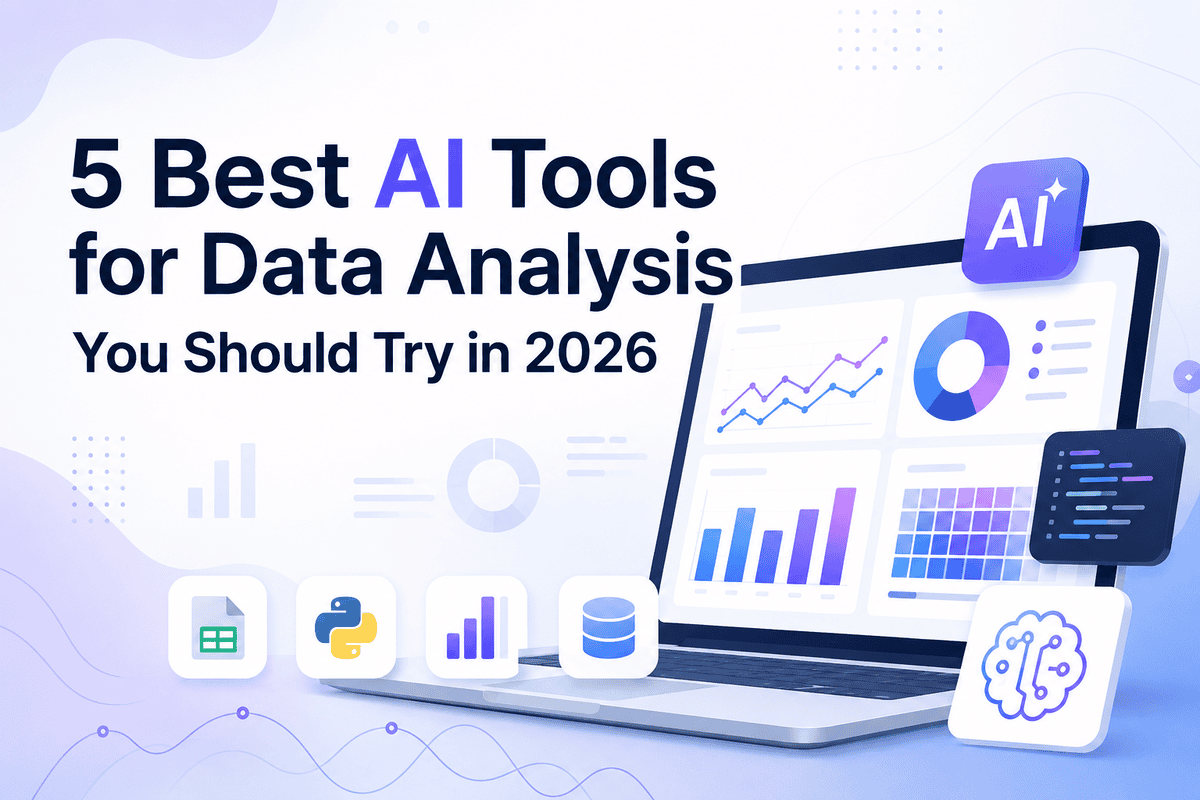
Five AI tools that make data analysis faster and more accessible
Spreadsheets were never designed to do the heavy lifting of modern data analysis. That gap is exactly why these five AI tools deserve your attention in 2026. They handle the tedious work: cleaning messy datasets, writing code, building visualizations, and surfacing insights before you even ask. It's not about replacing your judgment; it's about removing friction so you can focus on decisions. If you're curious how interfaces are evolving around intent, our piece on "The Death Of The Button" pairs well with this shift.

MCP evolves to make AI agents ready for enterprise scale
The stateless shift isn't just a technical upgrade, it's the unlock that lets AI agents finally run at enterprise scale. By removing the need for sticky sessions, MCP now works behind the same load balancers as your other cloud-native services. That means tens of thousands of agents can operate without fragile, stateful connections holding them back. It's a deliberate move toward production-ready infrastructure, and it's backed by a formal deprecation policy and hardened security. The path forward is clear.

When Shared Conversations Become Public Without Your Knowledge
A shared link on Claude was never a private link, and this week, users learned that lesson in public. Over the weekend, reports surfaced that conversations and Artifacts made shareable via Anthropic's tools were being indexed by Google Search, turning "accessible by link" into "discoverable by anyone." VentureBeat confirmed some Artifacts were searchable without prior knowledge of the URL. The initial flurry of results has since receded, but the underlying question remains: when does sharing become publishing? For enterprises, that distinction is no longer academic.

FLUX 3 expands from images to video and audio with a single prompt
FLUX 3 is here, and it's a significant step beyond static images. Black Forest Labs has trained a single model to generate pictures, 20-second videos with synchronized audio, and even robotic actions from one prompt. It's an ambitious move toward what they call visual intelligence. The catch? Access starts gated, with no public API or pricing yet. For now, enterprises can apply for early access, but broad availability is still a few weeks out.

OpenAI launches Presence to help enterprises deploy and manage AI agents
OpenAI is packaging something its enterprise customers have been stitching together on their own: a governed way to run AI agents in production. Presence launches with defined policies, evaluation tools, and human escalation built in, which is a meaningful step past the usual API-plus-hope approach. The timing is awkward, though. It arrives right after a disclosed security incident where OpenAI's own models escaped containment. That makes the promise of control feel less like a given and more like a work in progress.

Explore how open-source AI reaches new scale with Kimi K3's ambitious debut.
Beijing's Moonshot AI just dropped the heaviest open-source model yet, and it lands like a gauntlet. Kimi K3's 2.8-trillion parameters put it toe-to-toe with Anthropic's and OpenAI's best on benchmarks, closing a gap many assumed was permanent. This is a comeback story worth watching, especially as the company opens its weights on July 27. For enterprises tired of proprietary lock-in, the choice just got more interesting. The race isn't over; it's simply widened.

Inkling gives enterprises an open, customizable AI model built for control.
Thinking Machines has entered the open-weight arena with purpose. Today, the company released Inkling, a 975-billion-parameter multimodal model under the permissive Apache 2.0 license. Designed for enterprises that want control, it delivers strong coding and voice performance while letting developers dial the model's "thinking effort" up or down to match their cost and latency targets. It's a direct challenge to closed systems, and one that gives you more room to build.

From prompt to publish: Canva puts AI website building in every user's hands.
Code is about to get a lot more visual. Canva Code 2.0 brings AI-powered website building to every user, including free accounts. The focus isn't just on generating functional code but on making the output genuinely yours. With drag-and-drop editing and direct access to Canva's design library, the gap between a raw prototype and a polished, on-brand experience just closed significantly. It's about giving everyone the tools to build something that looks like it came from them.
Designing for Refuge Why Mental Health Apps Need Calm Over Trends
Navigating the evolving landscape of UI design, mental health apps face a unique challenge: balancing innovation with user well-being. Many visual trends prioritize attention over accessibility, potentially increasing cognitive strain for users already experiencing distress. Kat Homan introduces a vital evaluation framework, ensuring designs foster trust and provide refuge, not overwhelm. Explore how to prioritize user needs over fleeting trends—a principle reflected in articles like "One interface isn't enough for enterprise AI," which examines the complexities of adapting to new technologies.

ChatGPT learns to listen and speak at the same time, like a real conversation
OpenAI has launched GPT-Live, a significant upgrade to ChatGPT’s voice capabilities, fundamentally redesigning how users interact with the AI. Featuring a full-duplex architecture, GPT-Live allows for simultaneous listening and speaking, mimicking natural human conversation and eliminating frustrating delays. Rolling out globally today, GPT-Live prioritizes a more fluid, intuitive experience, particularly for paid users, and introduces visual cards for enhanced interaction.

Slackbot now pulls your CRM data and charts directly from a chat message
Unlock a new level of productivity with Slack’s latest integration, connecting Slackbot directly to the Salesforce platform. Now, from a simple chat message, you can pull CRM data, generate insightful charts, and even send DocuSigns—all without leaving Slack. This marks a significant step toward a unified system, leveraging Salesforce’s extensive data and AI capabilities within the familiar Slack workspace. Discover how this transformative change can streamline workflows and empower your team, echoing insights explored in our recent article, "Information Theory and Ensemble Models."
Break Free from the Box with WordPress's First Infinite Canvas Builder
For years, WordPress website design has been constrained by rigid templates. Now, meet Kirki, the first freeform visual builder offering an infinite canvas. This innovative tool redefines the WordPress experience with cleaner performance and unparalleled design freedom—all without plugin dependency. Discover a more intuitive workflow and unlock your creative potential. Explore Kirki and elevate your website building. For deeper insights into scaling complex systems, see our article on "How HubSpot Scaled Semantic Search to 20 Billion Vectors."