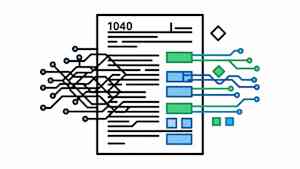
The most instructive detail in Intuit's OBBB workflow isn't the AI itself, it's the sequence. The team used commercial LLMs for document analysis, then switched to a proprietary domain-specific language and custom test framework the moment the work turned from understanding to building. That boundary is the real takeaway for any team operating under regulatory pressure. General-purpose models are excellent at parsing 900 pages of legislative noise and surfacing what matters. But they are not trustworthy code generators in an environment they were never trained on. The TurboTax team understood that distinction early, and it saved them from the trap of treating AI as a universal solution rather than a tool with specific strengths.
The second point worth underlining is the deliberate investment in evaluation infrastructure. Intuit didn't bolt on a generic testing suite and hope for the best. They built a unit test framework that not only flags a failure but isolates the responsible code segment, explains the problem, and lets a developer correct it in-context. That is a fundamentally different posture than "run the tests and see what breaks." It reflects a mature understanding that AI-generated code is only shippable when the verification loop is tight enough to catch errors at the source. For teams in healthcare, finance, or legal tech, this is the difference between experimenting with AI and actually depending on it.
What also stands out is how the team deployed AI across the organization, not just in engineering. Shaw noted that Intuit trained and monitored usage across all functions. That means the people closest to the tax provisions, the subject-matter experts, were using the same tools to distill the law and validate outputs. This is not about replacing judgment with automation. It's about distributing AI fluency so that domain expertise and machine analysis reinforce each other. The human tax expert remains the final check, and that is exactly where the accuracy bar stays high.
Finally, the speed gain was real but not magical. The team compressed months into hours for parsing and reconciliation, but that only worked because they had a consistent anchor: both chambers referenced the same underlying tax code sections. That structural fact gave the LLMs something to reconcile against. Without that anchor, the workflow would have been far messier. The lesson for other teams is straightforward: AI accelerates work when the problem is well-framed and the inputs are reducible to a stable reference point. If you don't have that anchor, build one before you scale your AI usage. That is the concrete, transferable insight from this story, not that AI is fast, but that speed is a byproduct of structure.