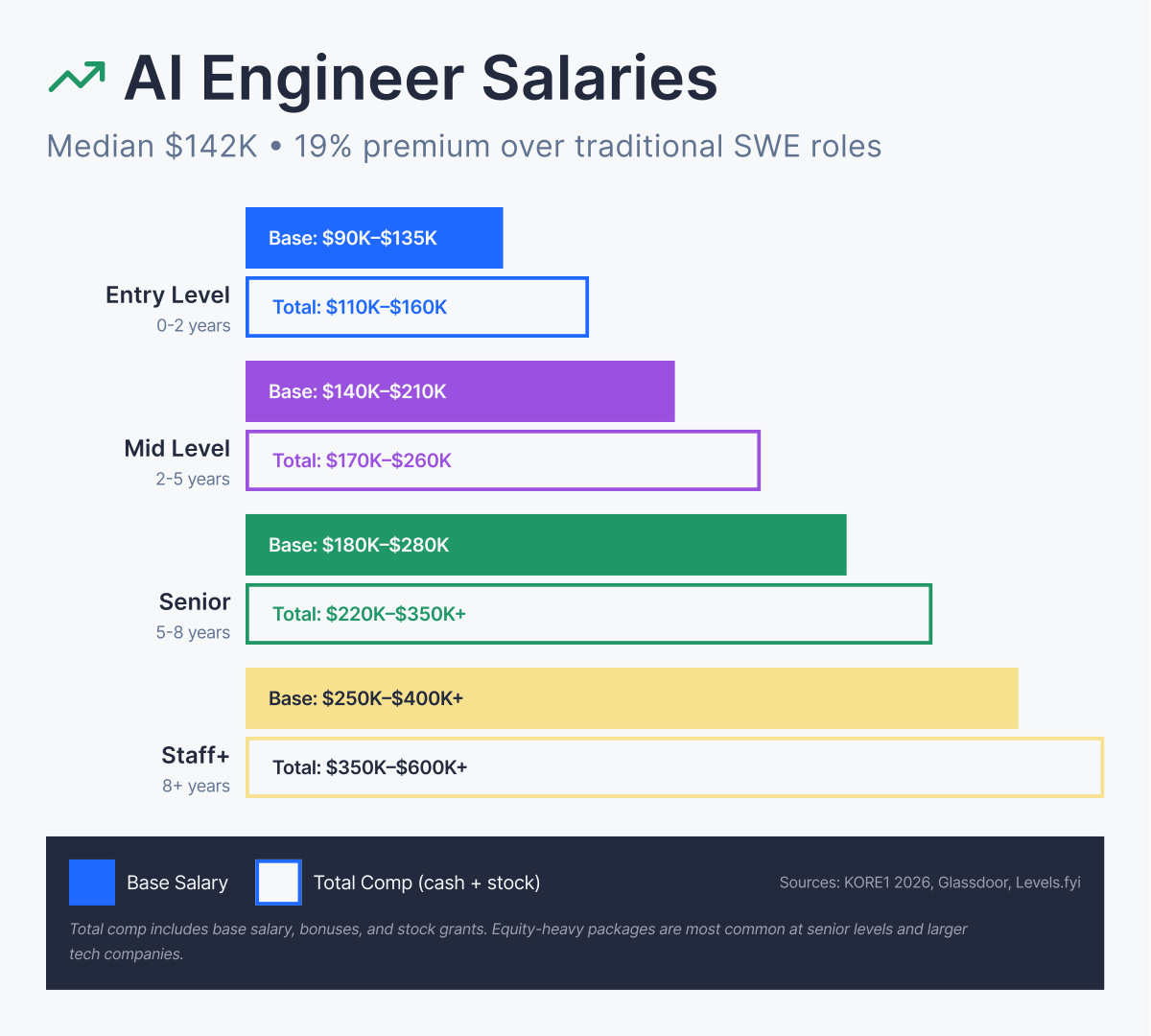
The AI engineer roadmap that promises to take someone from their first LLM prompt to deploying production systems in under a year is ambition codified, not fantasy. We think any professional paying attention to this field should take that timeline seriously, not as a guarantee, but as a realistic target for focused, deliberate effort. The path laid out is honest about what it demands: Python, LLM APIs, RAG, agents, and a commitment of eight to twelve months from scratch. That is a short window for a career pivot that currently pays $130,000 to over $250,000. The salary data is real, but the value proposition is deeper than the paycheck.
What this means for you is a concrete answer to the question most professionals are asking: "Can I learn this, and how long will it actually take?" The roadmap removes the guesswork. Instead of vague advice to "learn AI," it prescribes a sequence of skills that build toward a specific outcome, building the systems that connect large language models to real products. That customer support chatbot that resolves tickets, or the internal search tool that surfaces answers across thousands of documents, is not theoretical. It is what these engineers are paid to ship. The timeline matters because it transforms the decision to transition from a scary unknown into a manageable project. You can block out the months, learn the stack, and emerge ready to deploy.
The emphasis on RAG and agents signals something important about where the industry is heading. Raw prompt engineering is not enough to be production-ready. The real work lies in retrieval, orchestration, and reliability. Production AI systems do not look like a conversational demo. They look like a pipeline that ingests data, retrieves context, reasons over it, and returns an answer that must be correct enough to trust. That is a different skill set from writing clever prompts, and the roadmap acknowledges the gap. It respects the complexity instead of glossing over it.
Our point is this: if you are a spreadsheet user who has felt constrained by manual formulas and static rows, consider what happens when you stop asking your tools to guess what you mean and start building tools that answer the questions no one has time to ask. The roadmap gives you a timeline and a salary range, but the real takeaway is that the barrier to entry is lower than most people assume, and the upside is higher. Your next move is not to wait for a tool to arrive. It is to start learning the stack that builds the tool.