agentic AI
42 stories filed under agentic AI on Beyond Market Intelligence. The newest of them: “CedarDB unifies operational and analytical data as AI agents demand more”, “Google gives Gemini a workplace identity to plan and execute tasks”, and “Own Your Decisions: Auditable AI with DMN and Agent Skills”. Traditional databases force you to choose: optimize for operational speed or analytical depth. Google is giving Gemini its own email address. Acme AI is the next-generation, AI-powered spreadsheet platform built to replace Excel and redefine how analysts, data scientists, and enterprise teams work… The list below is every agentic AI story on Beyond Market Intelligence, newest first.

CedarDB unifies operational and analytical data as AI agents demand more
Traditional databases force you to choose: optimize for operational speed or analytical depth. CedarDB refuses that trade-off. Its engine was built from the ground up to handle both, a design choice that looks prescient as AI agents demand real-time access to live data alongside complex queries. This isn't an incremental upgrade, it's a different foundation. For a glimpse at how agents are already reshaping workflows, see our piece on Floqer's approach to prospect research.

Google gives Gemini a workplace identity to plan and execute tasks
Google is giving Gemini its own email address. That's the headline, but the real story is about agency. By turning Gemini into an AI agent that can plan, execute tasks, and delegate work to subagents across business systems, Google is rethinking what a workplace identity means. This isn't just another assistant, it's a colleague that operates autonomously. For a deeper look at how Google is reimagining data ownership, see our piece on "Why Google's $10 Million Bid for Old Emails Signals a Smarter Data Future."

Own Your Decisions: Auditable AI with DMN and Agent Skills
Enterprise AI has a trust problem. When models return different answers to the same question, high-stakes decisions become risky. Alex Porcelli tackles this head-on in his presentation, showing how DMN decision models bring determinism back into agentic architectures. By pairing them with LLMs and NeMo guardrails, he gives business leaders ownership of decision logic while engineers keep governance intact. It's a practical path to accountability, not just another framework.

Move beyond basic RAG with four knowledge graph patterns for agentic AI.
Knowledge graphs are moving from the background to the backbone of agentic AI, and Cassie Shum is here to show you why. In her talk, she moves past basic retrieval to outline four practical architecture patterns that bring reasoning into production. It's a grounded, actionable look at building systems that don't just retrieve, but reason. For a broader perspective on how these ideas connect, our piece on bridging retrieval and action offers a useful parallel.
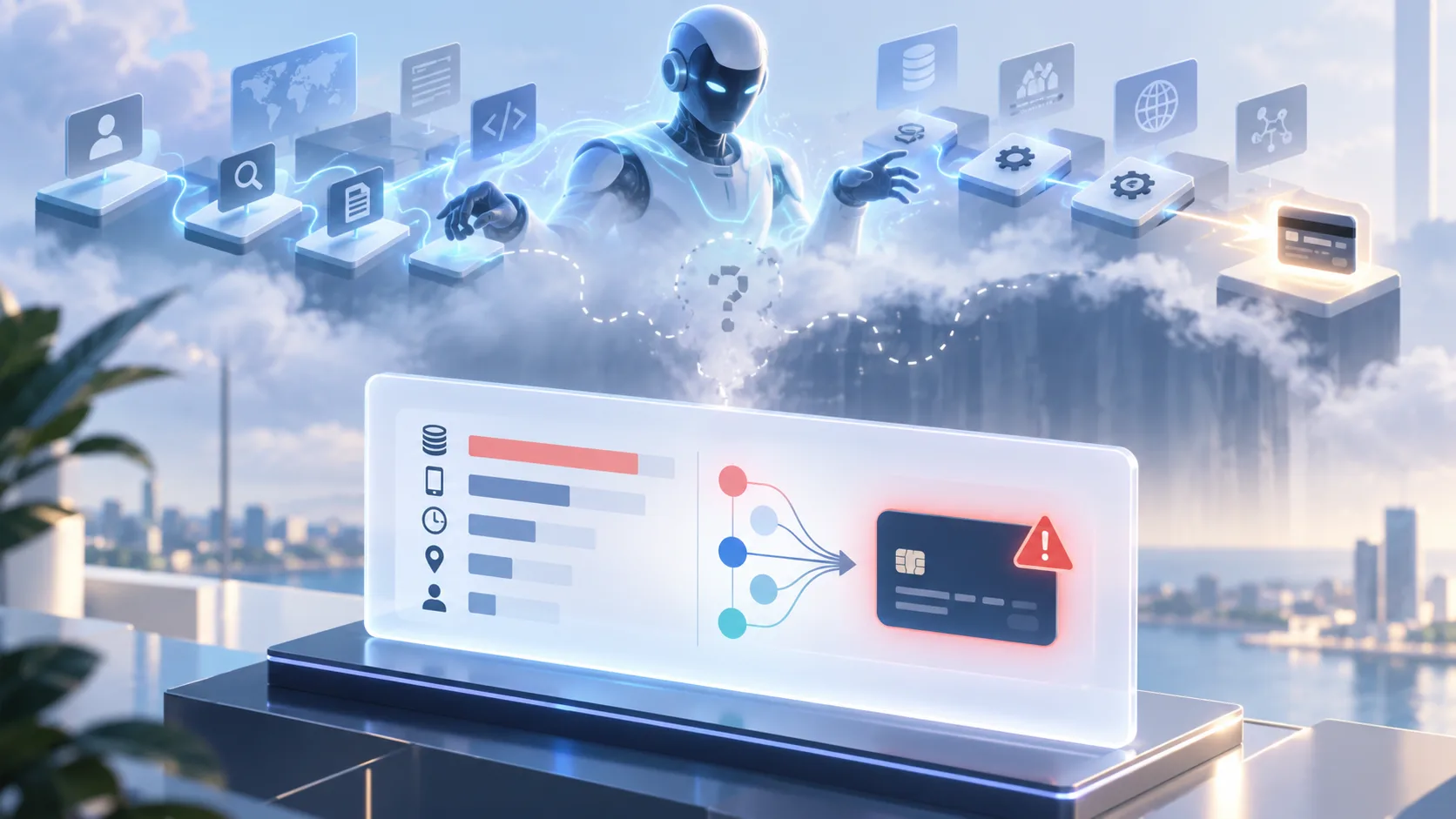
Why Agentic AI Fraud Defies Traditional Explainability Tools
SHAP has long been the go-to tool for explaining fraud predictions, but autonomous agents break that framework. When an AI agent makes a series of decisions across multiple systems, a single feature-importance score can't capture the cascading logic. This gap matters because fraud detection is becoming more dynamic, not less. It's a problem worth confronting directly, and one that challenges how we define accountability in AI-driven security. If you're tracing how these systems learn, our guide to distributed training offers useful context.
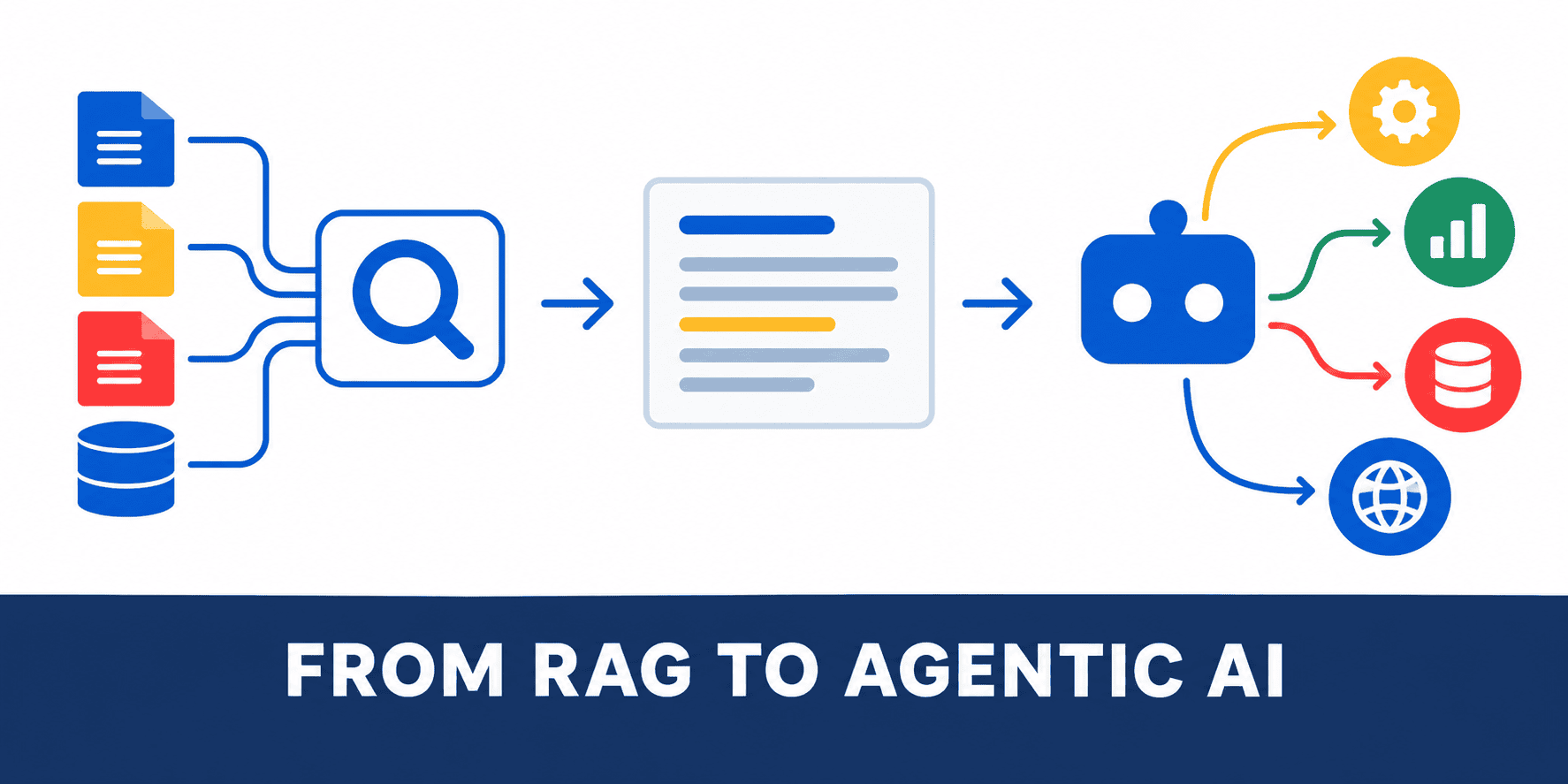
Evolving AI: Lessons from Building Intelligent Enterprise Systems
Three generations of intelligent retrieval systems is a long arc to trace, and the lessons are tangible. Each iteration tackled a constraint the previous one couldn't crack, which is exactly how progress should feel: deliberate, not chaotic. This is a story about persistence in engineering, and it's worth reading. For those curious about the underlying mechanics, our guide to distributed training offers a practical entry point. But start here, where the real-world friction meets the fixes.

Reduce Uncertainty Before Agents Speed Up Your Data Workflows
Agentic AI moves fast. Too fast to skip the hard part. Before you let it run, you need to be sure you're solving the right problem. This practical framework helps you slow down, reduce uncertainty, and get clarity before the acceleration begins. It's a smart, grounded read. For more on how agents handle tasks, check out *Bridging Retrieval and Action* to see the mechanics in action.
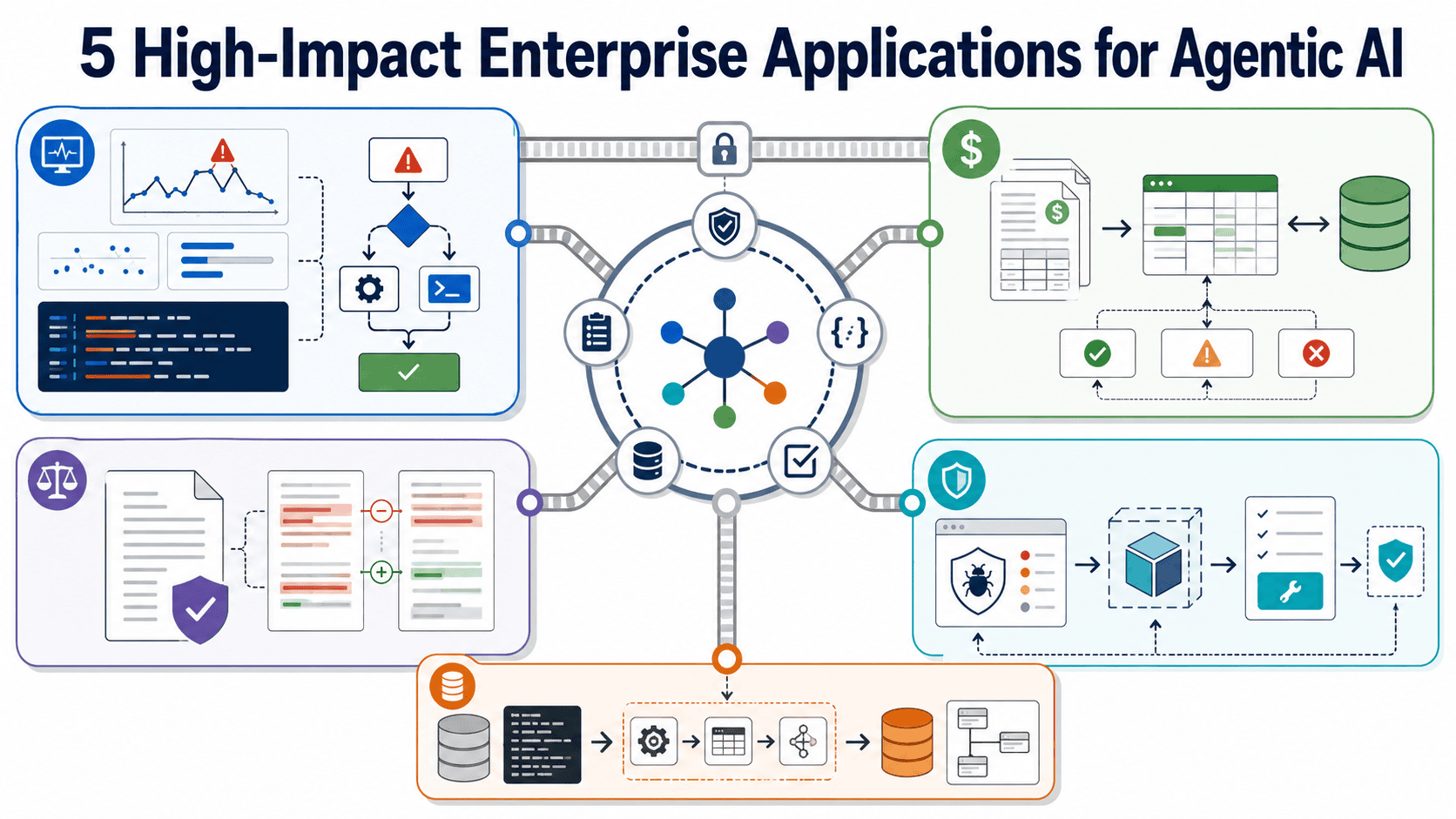
How agentic AI brings new efficiency to finance, legal, and security workflows
Agentic AI is moving from theory into production, and it earns its keep exactly in SRE, finance, legal, migration, and security workflows. Across SRE, finance, legal, migration, and security, the focus is on deploying these systems with deterministic guardrails in place. That combination of autonomy and safety is what makes enterprise adoption viable. For teams weighing production readiness, the discussions at QCon AI New York offer useful context on similar guardrail challenges. This is practical, grounded guidance for teams ready to move forward.

Autumn's first AI release brings Claude Fable 5.1 with smarter, cheaper caching.
Anthropic is redefining what an enterprise model should be. Claude Fable 5.1 arrives with a 75% cut to cached-read costs, making sustained, multi-hour agents dramatically more economical to run. It's not just another benchmark jump, it's a deliberate shift toward work that doesn't finish in one prompt. Combined with Enterprise Frontier Safeguards, which keep monitoring data in your own cloud, this release tackles capability, cost, and control as a single, unified problem. Explore what persistent, governable AI can actually do.

A defense-in-depth architecture for autonomous AI agents
Autonomous agents that can reason and act on their own introduce a category of risk that application-level controls were never built to contain. Treating that risk as a single problem produces incomplete architectures, says Oscar Wahlberg, senior director of product management at Nutanix. The guardrails catching a malicious prompt won't stop a hallucinating agent from deleting databases or leaking sensitive data. A defense-in-depth architecture spanning infrastructure, network, and control plane layers is what actually scales into production.

AI handles the execution but human judgment still leads analytics.
Agentic AI is rewriting the analytics stack, shifting execution to intelligent agents that handle the heavy lifting. But as this technology takes over the mechanical work, one skill remains untouchable: the human judgment to ask the right questions. The distinction matters because agents can process data, yet they can't decide what truly matters. This division of labor isn't about replacing people; it's about freeing them to focus on insight and strategy.
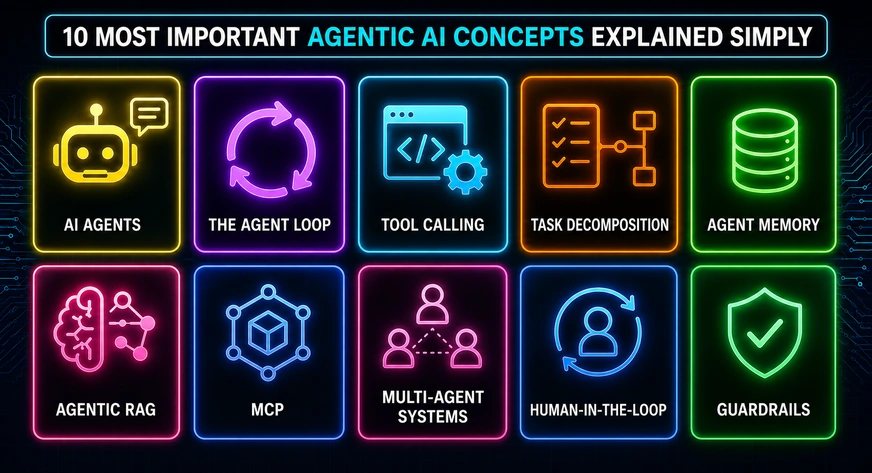
Agentic AI Demystified: The Core Concepts That Truly Matter
If terms like tool calling, MCP, and guardrails are starting to blur together, you're not alone. Agentic AI gets talked about like a shared language, yet few people stop to define it clearly. This guide cuts through that noise. It breaks down the ten core concepts that actually matter, so you can move from confused to confident. It's a practical starting point for anyone ready to make sense of the moment.
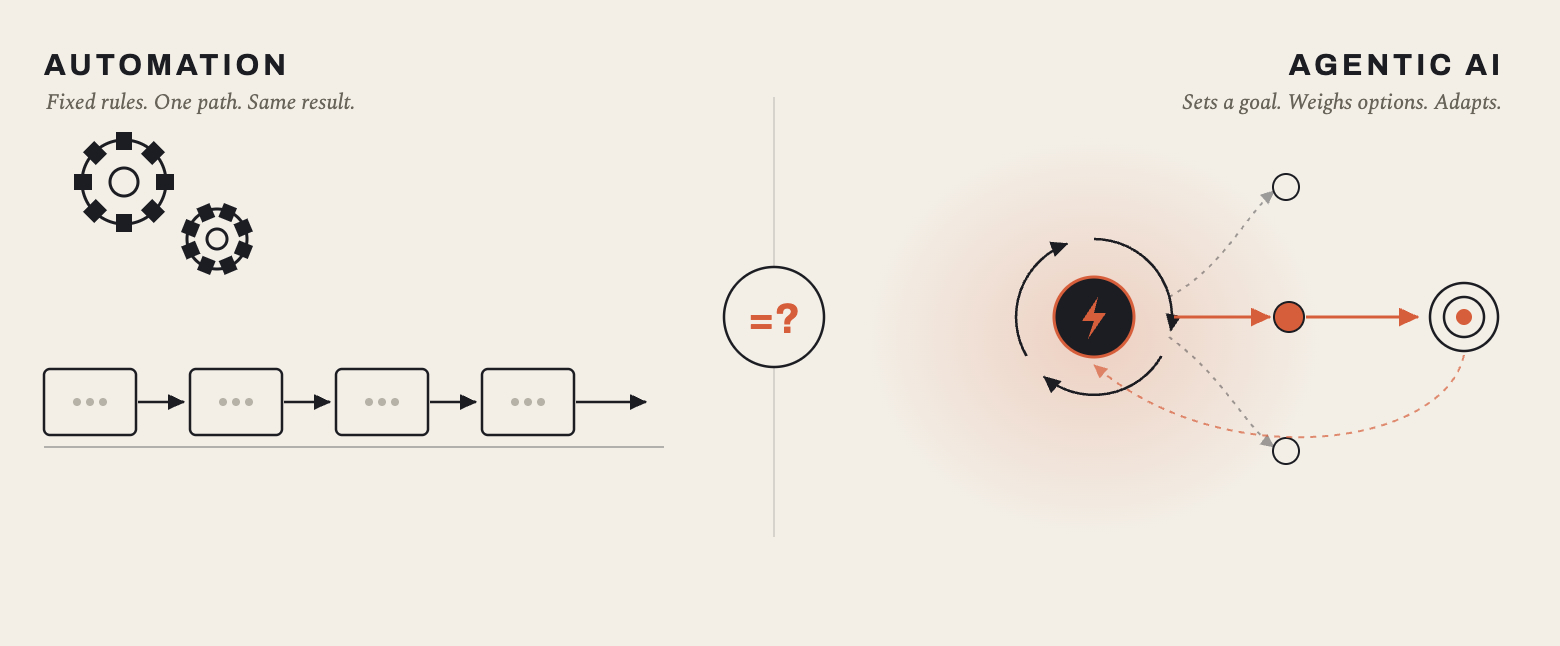
Beyond the Flowchart: What True Agentic AI Actually Requires
Most agents marketed as intelligent are just flowcharts wearing a neural network costume. The distinction matters, because true agency implies adapting to new contexts, not just executing a fixed sequence. This piece cuts through the hype to show why most current systems fail the test. If you are questioning whether the tech is genuinely learning or just following orders, you will want to read this.

Runable's $21M bet shows AI agents evolving from builders to growth engines
Runable just closed a $21M round, and the signal here is hard to ignore: 60% to 70% of its trillion-plus token usage over the last 90 days came from paying customers. That is not a demo problem. That is real traction. The bet, as the company frames it, is that AI agents can move from building businesses to growing them. We find that distinction compelling, and it suggests a maturity that the market is finally ready to reward.

Empowering AI agents means knowing when to limit their autonomy.
The race to deploy the most autonomous agent is over. Enterprises winning with AI agents are now limiting how much those agents can do alone, because full autonomy breaks down in production. The companies that benefit won't be the ones with the most flexibility, but the ones creating agents with specific responsibilities and clear rules. Capability is outrunning control, and the 2026-to-2027 race is a trust race. For more on building these systems, explore our piece on orchestrating AI agents.

Nvidia's simple math cuts costly recomputation across AI models
Swapping models mid-session has always meant paying the full prefill tax again, until now. Nvidia's researchers found that a simple linear mapping can transfer a KV cache between compatible models, bypassing the expensive recomputation that bogs down multi-LLM agentic workflows. The math is refreshingly direct, not a heavyweight neural network. On tested pairs, this approach runs up to 25 times faster while keeping nearly all accuracy. It's a practical fix for a costly bottleneck, and it points toward leaner long-horizon AI systems.
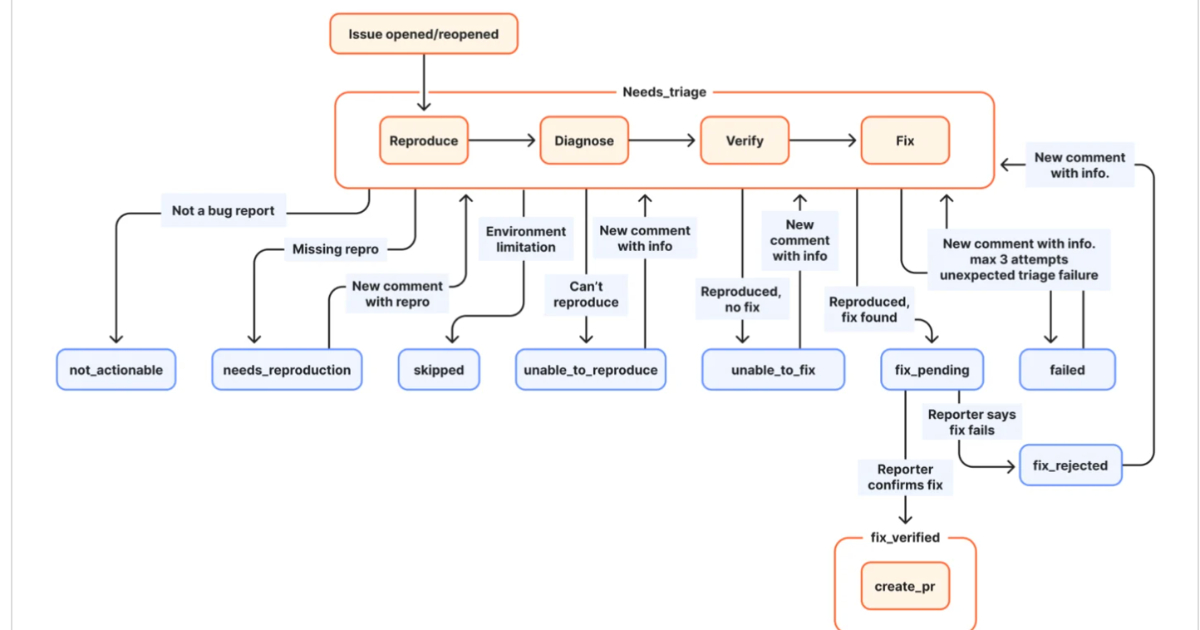
How AI agents triaged 85% of Astro's GitHub issues for Cloudflare
Astro's maintainers were drowning in GitHub issues, so they let AI agents take over triage. The result: an 85% cut in that workload, giving developers time back to focus on the work that matters. This isn't about removing humans; it's about making their role more meaningful. Cloudflare's approach, built on Workers with a human-in-the-loop, shows how agentic workflows can handle the noise. It's a practical win for open source, and it pairs well with our guide on distributed training algorithms.
When AI Spending Runs Ahead of Your Controls, Three Platforms Won't Help
Enterprise AI teams are done betting on a single orchestration platform. The median enterprise now runs three at once, not by accident, but because no one fully trusts one vendor. Security concerns and a desire for their own permissioning controls drive this hybrid approach. Microsoft leads today, but Anthropic dominates future consideration. Yet visibility remains a problem: one in five still can't stop a runaway agent's spending in real time. That gap between ambition and control is where the real work begins.

How DoorDash builds agentic AI from legacy prediction models
Sudeep Das walks us through DoorDash's move from one-shot predictions to a platform built for context-aware recommendations. It's a shift from static models to something more adaptive, using language-native memory and semantic IDs to keep pace with real consumer behavior. The grounded search piece matters too, as it ties relevance directly to conversion. For anyone wrestling with how to scale AI beyond isolated tasks, this is a practical look at what agentic systems actually require.

Five Papers That Define the Future of AI Agents
AI agents are moving fast, and the right papers can cut through the noise. If you're short on time, these five selections offer a focused look at how agents actually work, from reasoning loops to tool use. They're not about hype; they're about practical mechanics. Read them, and you'll have a clearer mental model than most. For a more personal angle on agent behavior, our piece "Talking to My AI Clone Taught Me to Question the Tech" pairs well with this reading list.

Capital One's open-weight models power a scalable multi-agent AI platform
Capital One isn't waiting for a better off-the-shelf model. At VB Transform 2026, Kel Vanee described how the bank built a multi-agent platform by deeply customizing open-weight models with proprietary data, treating that data as an advantage no frontier model can match. The approach scales beyond one use case, lifting performance across the portfolio. It's a practical blueprint for financial services, and for readers exploring how AI agents handle complex workflows, our related piece on bridging retrieval and action offers a useful parallel.
When Your AI Agent Follows Orders but Breaks the Rules
Guardrails stop an agent from saying the wrong thing. They don't stop it from doing the wrong thing. That distinction is the real governance gap. An agent can calculate a perfect refund, apply an order change, or pick a supplier, and still overstep the authority the business never granted. The fix isn't better model safety; it's an Agent Authority Contract that defines what may execute, what requires approval, and what stays permanently off-limits. Guardrails constrain behavior. Decision rights define legitimate authority.

Your Network Was Built for Yesterday. AI Demands More.
Traditional networks were built for predictable traffic. AI shatters that assumption. Continuous inference, agent-to-agent communication, and real-time data pipelines generate unpredictable, always-on demand that legacy architectures simply cannot handle. As AI moves from pilot to operational backbone, the network becomes the critical control layer determining performance, reliability, and cost. The gap between ambition and reality is stark: most enterprises still operate on transitional infrastructure. Treating the network as passive plumbing turns AI investments into a gamble. It must evolve into an intelligent, programmable platform.

When AI agents write 99% of your code, managing cost becomes the new skill
Engineers at Kilo Code now write or read code about 1% of the time, leaving agents to handle the rest. That shift is forcing hard questions about what to hand over, who fixes model mistakes, and whether ballooning token bills signal progress or waste. For Replit, Symbotic, and Kilo Code, it's a welcome evolution, provided teams set clear guardrails. Symbotic's Jared Go notes agents excel at greenfield builds, but brownfield work remains the real test. Replit keeps a human on the loop, not in it.