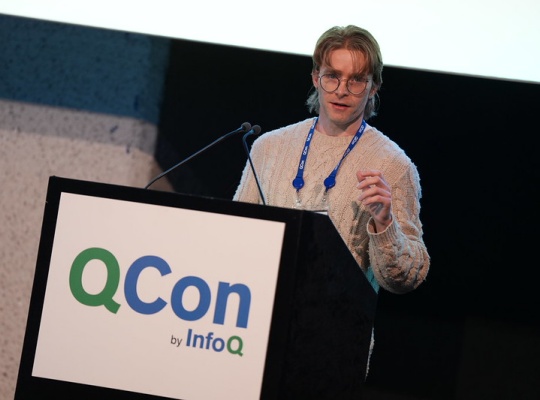
The fragility of cloud-dependent apps has become impossible to ignore, and Alex Good's case for local-first software is a necessary correction to a conversation that has long favored convenience over resilience. His argument is not about rejecting the cloud outright, but about rethinking where your data actually lives and who controls it. By grounding the discussion in a Git-like DAG structure and Automerge, Good offers a technical path that prioritizes durability and user agency, and that is a position worth taking seriously.
For readers who have felt the sting of a failed sync or a service shutdown, the practical implications are immediate. Good's roadmap means your work is no longer held hostage by a server's uptime or a company's roadmap. Data living on-device, with merging handled through a well-understood version control model, shifts the default from "hope the network holds" to "my local copy is the source of truth." This is not a niche concern for developers; it is a fundamental change in how we think about ownership in an increasingly connected world.
The technical details matter here, but so does the philosophy. Rich-text merging, as Good explains, is not just a feature bullet point. It is the difference between a tool that feels responsive and one that fights you the moment you step offline. When your edits and your collaborators' edits can coexist without a central authority babysitting every keystroke, the workflow becomes simpler, not more complex. That simplification is the real promise, and it is one that resonates beyond the engineering team. It is about reducing the cognitive load of constantly worrying about whether your changes will survive the next connection drop.
What stands out in Good's approach is how it reframes the problem. The default assumption has been that the cloud is the destination, and local storage is a fallback. He inverts that, suggesting the opposite: your device is the anchor, and the network is an optional enhancement. That is a more honest reflection of how people actually work, and it opens the door for tools that feel faster, more private, and more reliable. The engineering community has spent years building around the cloud's limitations; local-first is a chance to build around the user's reality instead. For anyone evaluating their own stack, the question is not whether this approach is interesting, but whether you can afford to keep waiting for the next outage to remind you why it matters.