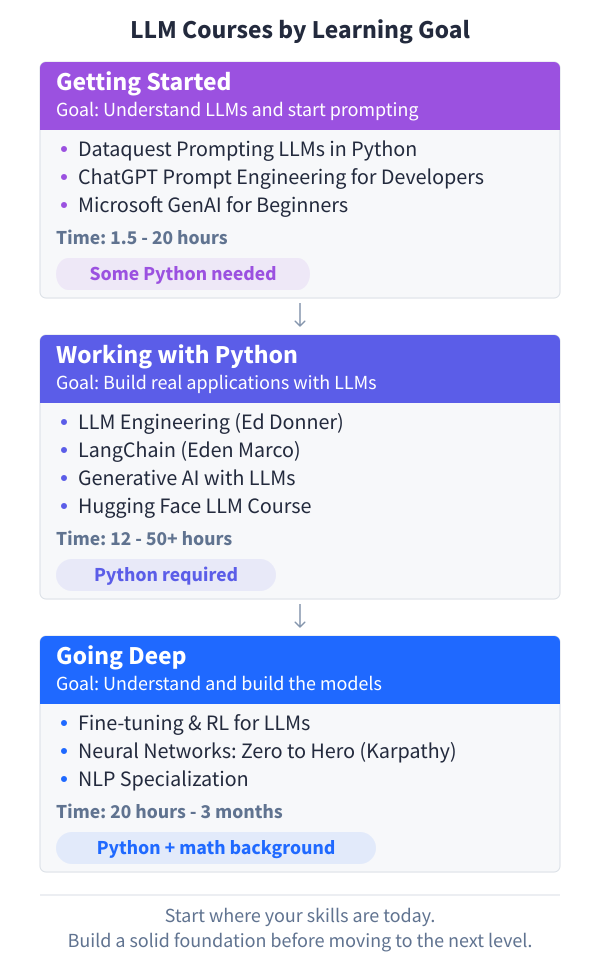
Navigating the current landscape of Large Language Model (LLM) learning can feel overwhelming. The sheer volume of available courses, tutorials, and resources is staggering, and the disparity in content and assumed knowledge is even more concerning. A quick search reveals a bewildering range, from brief introductions to prompt engineering to intensive programs demanding a deep understanding of machine learning frameworks like PyTorch. This fragmentation creates a significant barrier to entry, leaving potential learners unsure where to begin and risking wasted time and effort on programs that aren’t aligned with their goals. We believe a more focused and accessible approach is crucial to empower individuals to effectively harness the power of LLMs, regardless of their current skill level.
The core issue isn’t a lack of resources, but a lack of clarity in defining what an “LLM course” actually *is*. The term has become a catch-all for vastly different learning objectives. Someone interested in leveraging LLMs for content creation or data analysis requires a fundamentally different skillset than someone aiming to build and fine-tune these models from the ground up. This disconnect highlights a need for more granular categorization and transparent descriptions of course content. Exploring the specific skills you want to gain – prompt engineering, fine-tuning, model architecture – should be the starting point, rather than blindly searching for the "best" LLM course. Consider what you want to *do* with LLMs, and then seek out resources specifically tailored to that application.
We envision a future where LLM education is more thoughtfully structured, offering clear pathways for different user profiles. Perhaps tiered programs that build progressively, starting with foundational concepts and branching into specialized areas. Or curated collections of resources, categorized by skill level and intended outcome, allowing users to quickly identify relevant learning materials. This isn't about diminishing the value of in-depth engineering programs; it's about ensuring that individuals don't feel pressured into pursuing them prematurely. Empowering users to find the right fit—whether it's a focused workshop or a comprehensive degree program—is the key to unlocking the transformative potential of LLMs for everyone.
Ultimately, the journey into LLMs should be an exploration, not an endurance test. Don’t feel pressured to master every aspect of the technology. Instead, discover the areas that resonate with your interests and career aspirations. There's a wealth of opportunity available, and the right learning path will make that exploration accessible and rewarding.