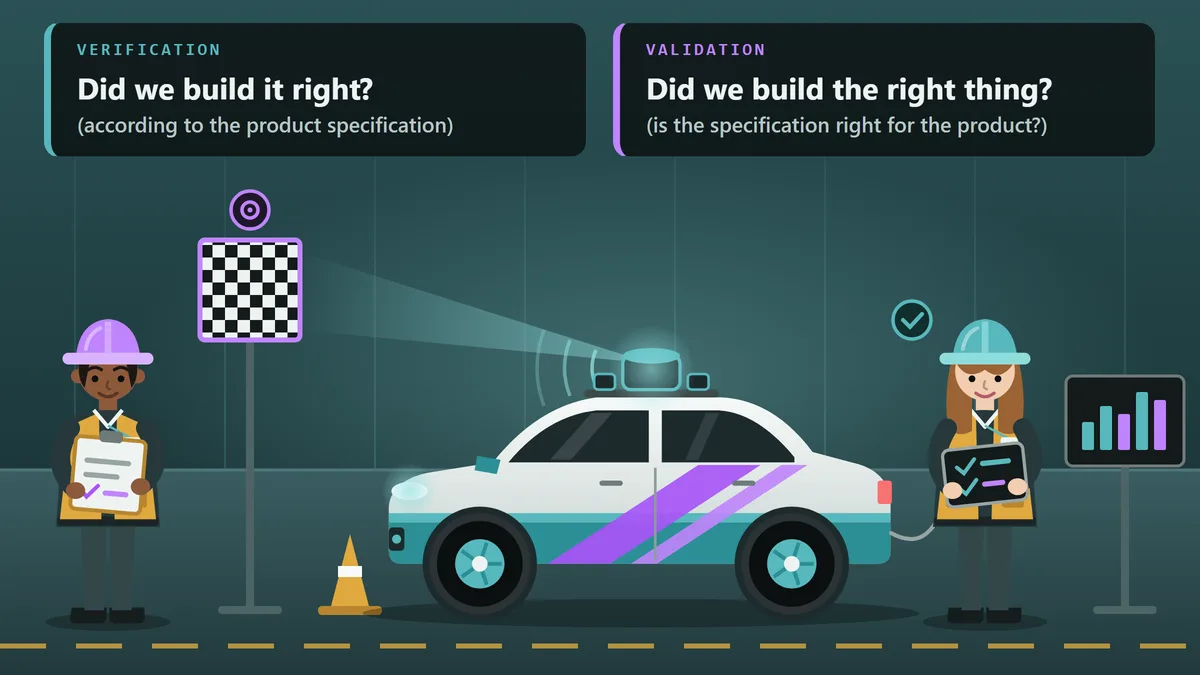
One test run can tell you more about your data than a hundred assumptions. The argument in *Towards Spec-Driven Test Automation: Part 2* is deceptively simple: a single execution, when guided by a clear specification, reveals not just whether your data works, but whether your understanding of it is correct. This cuts against the common instinct to run endless tests and hope for validation. We think the real insight here is that one well-designed run, anchored to a spec, forces you to confront the gap between what you expect and what your data actually does. For anyone managing complex spreadsheets or data pipelines, this is a practical truth worth internalizing.
This matters because most of us treat data testing like a safety net, something to catch errors after the fact. But as 300K lines refactored for $4,000: what a C codebase taught AI agents showed, automation can surface unexpected patterns when it's structured around clear specifications rather than brute force. The C codebase case study demonstrated that even a modest investment in spec-driven work uncovered structural issues that manual review missed. Similarly, Treat Context Like Code to Scale AI Agents With Control argued that managing context with the same rigor as source code prevents the drift that undermines automation. These stories converge on a single point: specification is not bureaucracy, it's the difference between a test that tells you something and one that just runs.
The practical takeaway for spreadsheet users is direct. Instead of building elaborate test suites that cover every edge case, start with one spec-driven run on a representative sample. That single pass will expose mismatches between your data's actual behavior and the assumptions baked into your formulas or models. It forces you to ask: *What does this column actually represent?* *Why does this aggregation produce a null?* These are the questions that transform a routine check into a diagnostic tool. Specification is the lens, not the lock, and we agree.
The open question, then, is how many teams will adopt this discipline. The temptation is to keep adding tests rather than refining the spec. But the evidence from these related cases is clear: context and specification, treated as code, yield control. The next time you run a data test, pay attention to what it proves, not just what it passes. That single run might be the most productive five minutes of your day.