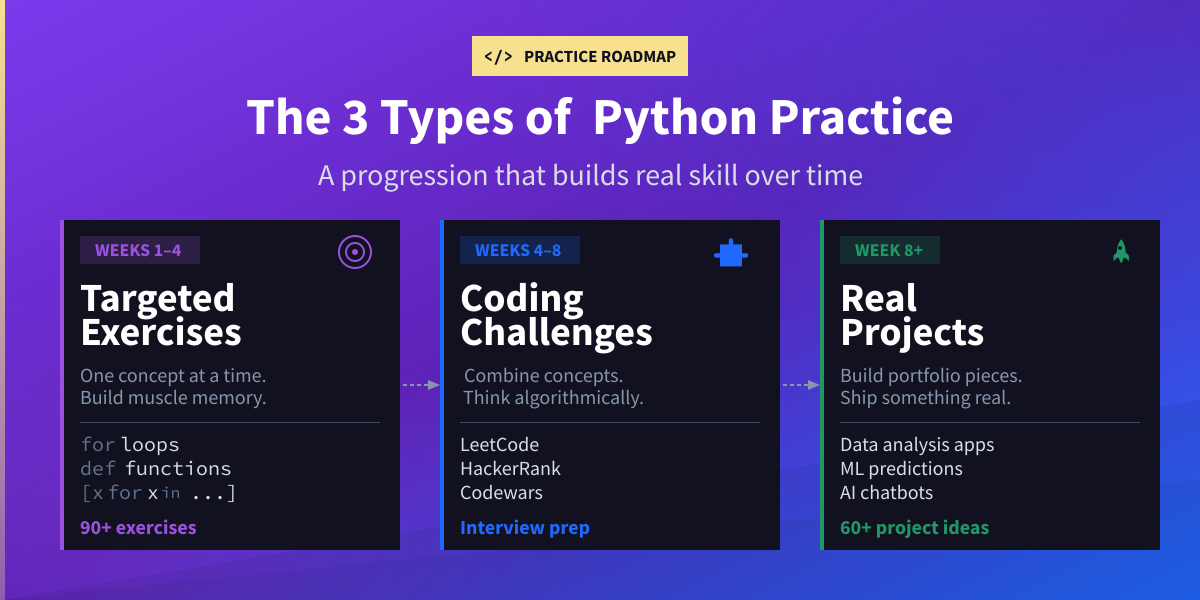
The release of **400+ Python Practice Exercises by Topic (2026)** underscores a vital truth in the world of programming: the most effective way to improve your skills is through consistent practice. With 136 free exercises available alongside 298 premium options, this resource offers a comprehensive platform for learners to engage with Python across various topics and difficulty levels. This approach not only demystifies the language but also breaks down the learning process into manageable components. Furthermore, as highlighted in other discussions, such as Conditional formatting for specific character count, the ability to tackle specific problems is crucial for building confidence and competence in coding.
What makes this offering particularly valuable is its organization by topic and difficulty, which allows users to tailor their learning experience based on their current level of expertise. The guide on how to practice effectively is an essential addition, as it encourages learners to adopt strategies that maximize their growth. This aligns well with the conversations around productivity tools, like those in our article on Does anyone have issue of stock prices stopped updating?, where the emphasis on reliability and efficiency can significantly enhance user experience. By integrating structured practice with practical advice, this resource empowers users to transition smoothly from theory to application.
Moreover, the inclusion of starter projects for those ready to embark on real-world coding challenges adds another layer of engagement. This hands-on approach is vital; it transforms abstract concepts into tangible skills while simultaneously fostering creativity. As noted in our discussions surrounding the mental overload associated with AI and coding, such as in the article Your AI Use Is Breaking My Brain: Why 10 Minutes of Prompting Fries Us, the ability to apply knowledge in practical scenarios can alleviate stress and build confidence. It’s about moving beyond mere problem-solving to cultivating a mindset of innovation and exploration.
The implications of these Python exercises extend beyond individual learners; they signal a shift towards a more accessible, user-centered approach to coding education. In a landscape where traditional educational pathways are often criticized for being rigid and outdated, this model encourages a culture of self-paced learning and exploration. By framing programming as an iterative process, learners are invited to see mistakes not as failures but as essential steps in their journey—a perspective that aligns with the evolving nature of technology and data management.
Looking ahead, the question remains: how will resources like these shape the future of coding education? As more learners embrace flexible, practice-oriented platforms, we may witness a significant transformation in how programming skills are acquired and applied. The ongoing evolution of tools and resources will likely continue to empower users, enabling them to navigate the complexities of technology with confidence and creativity. The future of coding is not just about mastering syntax; it’s about fostering a mindset of exploration and innovation that prepares learners for the challenges and opportunities ahead.