classification
23 stories filed under classification on Beyond Market Intelligence. The newest of them: “Explore Claude Haiku 5.5's faster workflows and 90% lower costs”, “Finding the Right Balance in EEG Data Without Overcomplicating It”, and “Explore Jev AI for precise answers and confidence scores, not just text”. Claude Haiku 5.5 slashes list prices by 90% while adding adaptive thinking and a 1M token context window. Finding the right number of EEG channels isn't about chasing hardware specs, it's about preserving signal quality without drowning in complexity. Acme AI is the next-generation, AI-powered spreadsheet platform built to replace Excel and redefine how analysts, data scientists, and enterprise teams work… The list below is every classification story on Beyond Market Intelligence, newest first.

Explore Claude Haiku 5.5's faster workflows and 90% lower costs
Claude Haiku 5.5 slashes list prices by 90% while adding adaptive thinking and a 1M token context window. That's a dramatic leap from Haiku 4.5, making classification, extraction, and sub-agent workflows far more accessible in Python. Faster workflows at a fraction of the cost invite real experimentation. For deeper context on how AI agents learn from weaknesses, explore our coverage of Google's EnvHarness research.
Finding the Right Balance in EEG Data Without Overcomplicating It
Finding the right number of EEG channels isn't about chasing hardware specs, it's about preserving signal quality without drowning in complexity. A new investigation into sensor reduction, feature ranking, and generalization across unseen participants offers a grounded, practical answer. The work suggests you can often drop channels without losing critical insight. For those exploring how AI reshapes technical workflows, our piece on *Claude Haiku 5.5* shows a parallel drive toward efficiency without compromise.
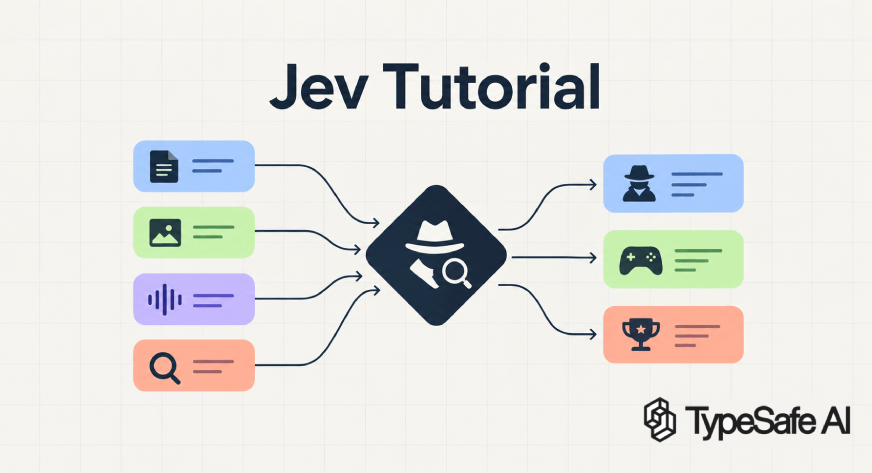
Explore Jev AI for precise answers and confidence scores, not just text
Most AI models generate text, but Jev, TypeSafe AI's System One model, takes a different approach. It returns structured answers with confidence scores, ideal when you need a classification or a simple yes-or-no, not a paragraph. That focus on precision over volume feels genuinely useful for practical workflows. For another take on efficient classification, our guide to Scikit-LLM for few-shot text classification explores a complementary approach worth reading.
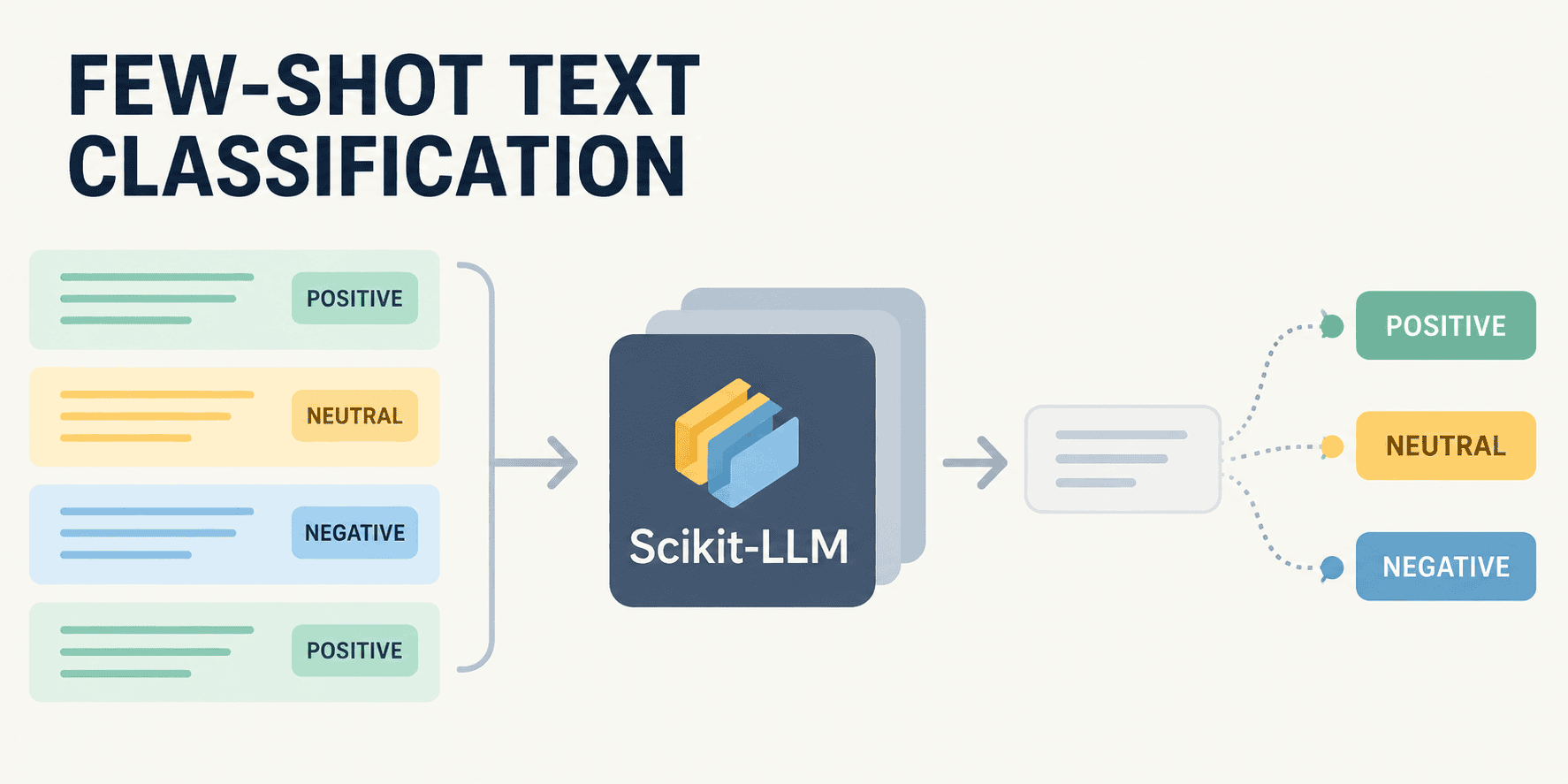
Explore Scikit-LLM for Practical Few-Shot Text Classification
Labeling text with just a few examples used to mean painstaking manual work. Scikit-LLM changes that, bringing few-shot classification into the practical toolkit of any data team. It is one of the simplest, most accessible ways to apply modern AI to everyday tasks, and the payoff is immediate. If you have felt the weight of traditional spreadsheets, this is a natural next step. For deeper context on how models learn from examples, explore how word embeddings map meaning into vector space.

Explore a new open-source library standardizing 3D point cloud models with PyTorch
Point cloud models have long been trapped inside research codebases with custom build steps and shifting checkpoints. Torch-pointcloud changes that. It wraps multiple architectures, PointNet++, KPConv, Point Transformer v3, and more, behind a single `create_model()` factory, reusing core components like KNN and FPS rather than reinventing them. Weights are on Hugging Face, installation uses pre-built wheels, and benchmarks match original metrics. It is still alpha, but the goal is a library you can actually `pip install` and trust.
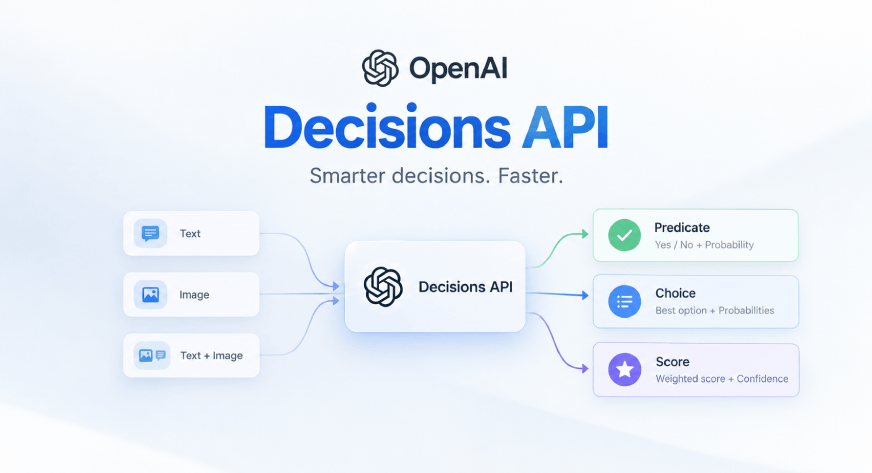
Make Smarter AI Agents That Know When to Escalate and When to Act
A false positive triggers an unnecessary escalation; a false negative lets a genuine issue slip through. That's the high-stakes calculus every decision-making AI agent must master. The new OpenAI Decisions API gives developers a structured way to handle exactly that, knowing when to act and when to hand off. It moves beyond simple classification into practical, context-aware judgment.
Stop Waiting for Answers Your Local Model Already Knows
Waiting seconds for an answer your local model has already figured out hundreds of times is a familiar frustration. shad0v solves that by sitting in front of any OpenAI-compatible server, logging responses, and after roughly a thousand, compiling a tiny table that answers repeats on CPU in microseconds, only when it agrees with the model 95% of the time. It even learned Snake from an LLM's moves.

Lyft's $272.5M settlement clarifies contractor classification for gig economy drivers
Lyft's $272.5 million settlement finally answers a question that has loomed over the gig economy since 2020: Are drivers contractors or employees? The resolution doesn't rewrite the rules, but it clarifies them. That matters for anyone building systems around contingent labor. For those tracking how platform economics evolve, our piece on TikTok's $100 million child safety settlement offers a parallel look at how regulatory pressure reshapes business models.

Cut token costs by routing text-heavy images away from pixel processing
Routing text-heavy images through pixel processing is a waste of VRAM and context space. One developer built a smarter path: a deterministic pre-pass that classifies images and sends schematics to the VLM while extracting text from code screenshots as plain strings. The result is an 88.7% token reduction. That kind of practical optimization feels more valuable than chasing raw model size. For a deeper look at efficiency trade-offs, our piece on two AI transcribers compares real-world performance where the numbers actually matter.

Spot Hidden Data Drift When Individual Features Seem Stable
Your features look stable, but your model is quietly failing. That's the problem this post tackles head-on. Hidden data drift often hides in the relationships between features, not the features themselves. Adversarial validation with scikit-learn can catch those subtle shifts before they undermine performance. It's a smart, practical technique for anyone who suspects their model is degrading but can't find the cause.

Jev vs LLMs: Evaluating AI for Practical Decision-Making
Spreadsheets have long forced a choice between speed and judgment. In a new test, TypeSafe AI's Jev tackled 3,080 classification tasks, and the results are worth your attention. The comparison focuses on accuracy, latency, calibration, and confidence, asking whether a dedicated tool can serve as a practical decision layer where LLMs might falter. It is a grounded, useful evaluation. For those exploring how AI systems handle reasoning under pressure, this pairs well with our guide to distributed training algorithms.

When AI Writes the Code, Do You Trust the Defaults?
AI assistants are remarkably good at writing code, but they don't always question the assumptions baked into the libraries they use. That gap is where subtle errors hide. This piece examines five scikit-learn defaults that deserve a second look before you ship. It's a practical, grounded reminder that trusting the tool isn't the same as understanding it. If you're building for production, this is worth your attention. For broader context on model deployment challenges, our related piece on real-world computer vision offers useful perspective.

Describe a task in English and let AI compile it into a local program.
Describing a function in English and watching it become a reusable neural program that runs locally, no cloud dependency, is a meaningful step past the usual demo cycle. ProgramAsWeights, an open-source project from the University of Waterloo, separates compilation from inference: a larger model writes the task-specific weights, while a smaller interpreter executes them repeatedly. It works on a CPU, compiles in seconds, and even outperforms direct prompting of a much larger model on FuzzyBench.
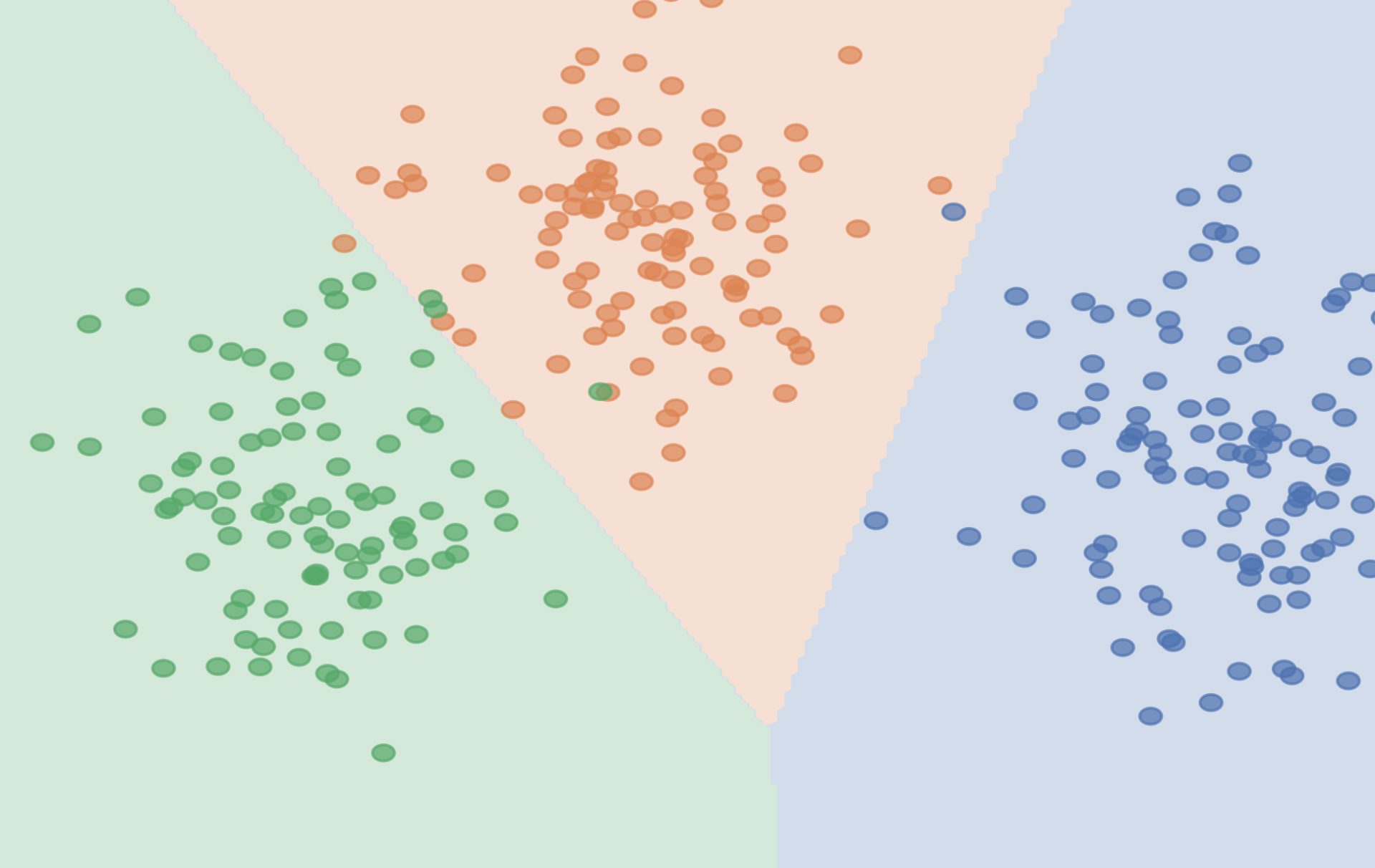
Simplify Complex Real Estate Data with Linear Discriminant Analysis
A real-estate dataset rarely gives you the luxury of clean, low-dimensional features. When classification tasks start drowning in noise, Linear Discriminant Analysis steps in to cut through the clutter. Applying LDA for dimensionality reduction sharpens class separation rather than just shrinking data. It's a practical reminder that reducing dimensions is about preserving what matters most for prediction. For those ready to push further into advanced modeling, our guide on distributed training offers a natural next step.

From Notebook to API: Making Your Churn Model Actually Usable
Training a churn classifier that performs flawlessly is one thing. Making it useful to the rest of your software is where the real work begins. This story follows that exact pivot: moving from a perfect model to a practical FastAPI service that other systems can actually call. It's a grounded, honest look at the gap between building and deploying. If you're wrestling with similar transitions, you might also appreciate our piece on navigating AI/ML job requirements.

Choose the right tool first, not just the AI default
Retrieval answers one kind of question, but it is not the whole toolkit. Classifying a request, matching free text to a reference list, or cleaning OCR noise each has a cheaper, more direct method. The real engineering is knowing which tool to reach for. That practical focus makes this a useful read for anyone feeling stuck in RAG's limitations. For a deeper look at how LLMs handle structure, explore our related piece on paragraph and token space.

Why Your Best Fraud Model Might Not Belong in Production
Six models trained for fraud detection, yet the one with the best metrics never made it to production. That's the honest hurdle this final-year project exposes: evaluation scores don't always translate into real-world deployment. It's a grounded lesson in how operational constraints, not just accuracy, shape what actually ships. For anyone moving from academic benchmarks to practical systems, this is a useful reality check.
When Grouping Classes in Multiclass Models Hurts More Than It Helps
Grouping rare classes into a catch-all category like "Other breed" feels practical, but it often forces the model to draw messy boundaries around visually dissimilar samples. That intuition is sound: the hyperplanes get distorted, and the model wastes capacity on artificial splits. Treating the long tail as out-of-distribution detection, as the original poster suggests, is a cleaner approach. Keep the well-represented classes, drop the rest, and let the model focus on meaningful distinctions.
Balancing the Unbalanced: Smarter Loss Functions for Medical AI
Three models collapsing toward BIRADS 1 is a familiar wall when a dataset leans that hard. The VinDr imbalance is likely steering your cross-entropy, even with class weights and center loss in the mix. You are not wrong to question the loss function, but the weights may need recalibration or a focal-style adjustment to resist the majority pull. Before abandoning the approach, audit your sampling strategy and weight initialization.

Unlocking Data Potential by Combining Labelled and Unlabelled Insights
Most of your data sits unlabeled, and that's not a problem to solve, it's an opportunity to leverage. Semi-supervised learning sits between the fully labeled and the entirely unlabeled, using a small amount of guidance to make sense of the larger, messier whole. This primer walks through the algorithms that make that possible and, just as importantly, where they stumble. It's a practical read for anyone who wants to get more from their data without drowning in annotation costs.

Automate PII extraction from emails with intelligent cloud processing
Email inboxes are messy, and the sensitive data they hold makes manual classification both tedious and risky. This walkthrough shows you how to build an intelligent document processing system on AWS that automates the extraction of personally identifiable information. It is a practical, cloud-native approach to reclaiming control over your data workflows. The focus stays on actionable steps, not abstract theory. For those ready to push further into modern AI infrastructure, our guide to distributed training algorithms offers a natural next step.

Explore how deep learning unlocks new insights in single-cell analysis.
A survey covering 25 deep learning methods across six subcategories for single-cell RNA sequencing analysis is a lot of ground to cover. The author of this paper didn't just list them; they organized each method by purpose, architecture, metrics, and, crucially, its specific novelty. That last part is what makes the survey genuinely useful for anyone trying to navigate the field. It's one thing to know a model works, another to understand why it was built differently.
Explore the EU AI Act structured for AI-native legal analysis
Most retrieval pipelines still slice legal text by character windows, which ignores how law is actually written. This release takes a smarter route. EU AI Act OpenRAG chunks by the Regulation's own legal structure, one chunk per article paragraph, recital, definition, and annex point, producing 933 pieces with BGE-M3 embeddings in a single SQLite file. The numbers hold up. Structural chunking lifts scenario recall from 0.449 to 0.541 and QA hits from 0.898 to 0.927.