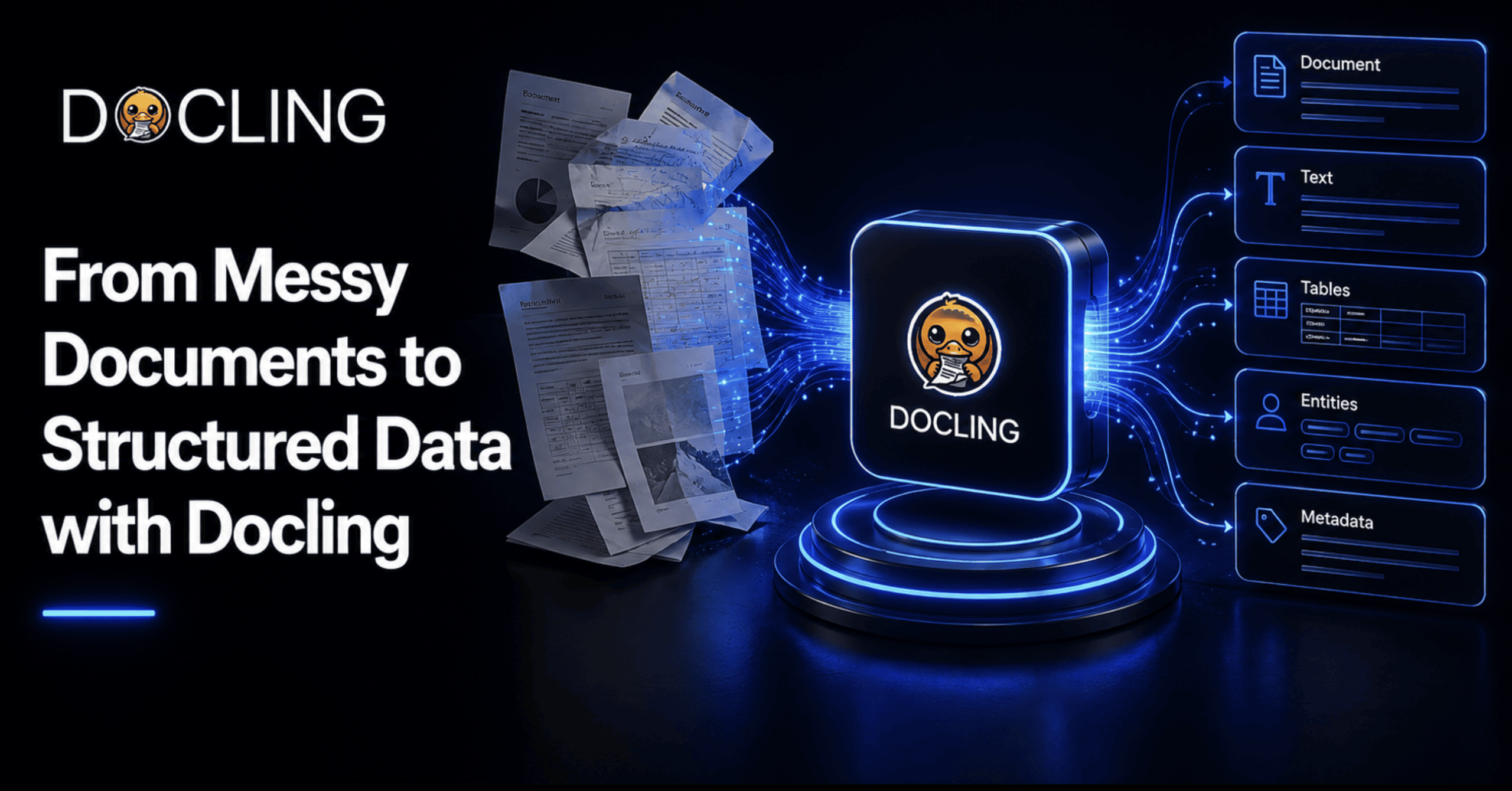
The quiet crisis in data work is not a lack of tools, but a lack of trust in what those tools produce. When a document arrives in a messy, inconsistent format, the immediate instinct is to extract text and call it a day, leaving every downstream system and human user to guess at what that wall of words actually means. Docling takes a different path, one we think is long overdue. It converts those messy documents into a single, unified, structured representation that both people and AI can rely on, without the guesswork. That is not a minor convenience; it is the difference between data that merely exists and data that is actually usable.
This matters because the real bottleneck in AI adoption has never been model intelligence. It is the garbage-in, garbage-out pipeline that precedes every analysis. We have seen this tension play out in adjacent work, such as Jev vs LLMs: Evaluating AI for Practical Decision-Making, where accuracy and calibration depend entirely on the quality of the inputs. Similarly, Parse 5 brings structure to complex documents with precision and clarity highlights how focused extraction models are becoming essential for enterprise workflows. Docling fits into this same emerging category, but its value proposition is broader: it does not just extract fields, it normalizes the entire representation of a document so that the structure itself is consistent. For teams drowning in PDFs, scanned invoices, or legacy exports, this is not a nice-to-have. It is the foundation for any reliable automation, and it directly addresses the trust gap that keeps many organizations from scaling their AI efforts.
The practical consequence for our readers is straightforward. If you are building systems that depend on clean, structured data, you no longer have to accept the fragility of raw text extraction or the burden of writing custom parsers for every format that crosses your desk. Docling shifts the burden from the user to the tool, which is exactly where it belongs. It also raises an important question about accountability: when a model makes a decision based on structured data that came from an unstructured source, who verifies that the structure was interpreted correctly? That is not a rhetorical point. It is a live issue, especially as AI labs' containment plans remain unclear as models grow more unpredictable and as the broader ecosystem wrestles with reliability. Docling does not solve that verification problem on its own, but by providing a consistent, auditable structure, it makes the problem tractable.
Here is the takeaway worth acting on. Adopting a tool like Docling is not about keeping up with a trend. It is about choosing to stop guessing. The next time you receive a messy document, the question is not whether you can extract something from it, but whether you can trust what you extract. Docling makes that trust possible by giving you a structure you can point to, question, and validate. That is the kind of progress we want to see more of, not because it is flashy, but because it is honest. Watch for how this approach to normalization evolves, because the real test will come when it has to handle the messiest, most ambiguous documents you can throw at it. That is when we will know if the structure holds.