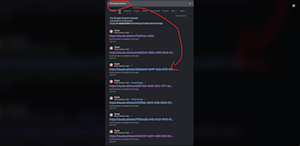
The news that shared Claude conversations and Artifacts have been surfacing in Google Search results should land like a cold splash of reality for anyone who has ever clicked "share" on an AI-generated document and assumed it would stay in the shadows. This is not a story about a rogue hacker breaking into Anthropic's servers or a mysterious vulnerability in the model itself. It is a story about the gap between what we mean when we say "shared by link" and what the open web actually does with that content. As we reported in Building A UX ROI Case That Survives The Boardroom, the clearest path to disaster is often a mismatch between user expectation and system behavior, and here we have that mismatch playing out in real time across thousands of enterprise dashboards and internal memos.
The facts are straightforward. Users intentionally made conversations and Artifacts shareable, Anthropic warned them in multiple dialog boxes, and Google indexed those public pages just as it indexes any other unauthenticated URL. VentureBeat independently confirmed that Artifacts were searchable and accessible, even if the specific examples circulating on Reddit and X may not represent the full scale of exposure. But the real issue is not whether this was a technical flaw or a user misunderstanding. The real issue is that Anthropic has been positioning Artifacts as a collaborative workspace for building software, dashboards, and business assets, not just a chatbot for answering questions. When you turn a tool into a platform for sensitive work, you inherit a responsibility to make the boundaries of that platform painfully obvious. The fact that this happened after similar episodes with ChatGPT and Google Bard suggests that the entire industry is still treating "share by link" as if it means "unlisted," when in practice it often means "publicly crawlable."
For enterprise leaders, this is not a moment to point fingers at Anthropic or to wait for a corporate blog post clarifying the situation. It is a moment to audit what your teams have already shared, and to ask a pointed question: does your organization actually understand the difference between a link that only the recipient can open and a link that Google can find? The answer, based on the panic spreading across social media this weekend, is likely no. Employees treat "Anyone with the link" the same way they treat an unlisted YouTube video, but the technical reality is closer to publishing a page on the public internet. That distinction matters more as AI platforms become the default place where teams build internal tools, financial models, and product roadmaps. In The Death Of The Button: Why The Best Interface Is No Interface, we argued that the future of software is about removing friction, but this episode shows that friction is sometimes the only thing standing between a prototype and a headline.
The takeaway here is not that you should stop using Claude or any other AI tool. The takeaway is that you should treat every share button as a publication button until proven otherwise. That means reviewing existing shared content, updating internal training to clarify what "share" actually does, and moving sensitive projects into authenticated enterprise workspaces where access is tied to identity rather than a URL. The specific thing to watch is whether Anthropic adds a `noindex` directive by default or introduces a setting that keeps shared content out of search engines entirely. If they do not, then the burden falls on you to assume that anything you share could end up in a Google query tomorrow. The question is not whether this will happen again. It will. The question is whether you will be the one explaining to your board why an internal dashboard became a public link.