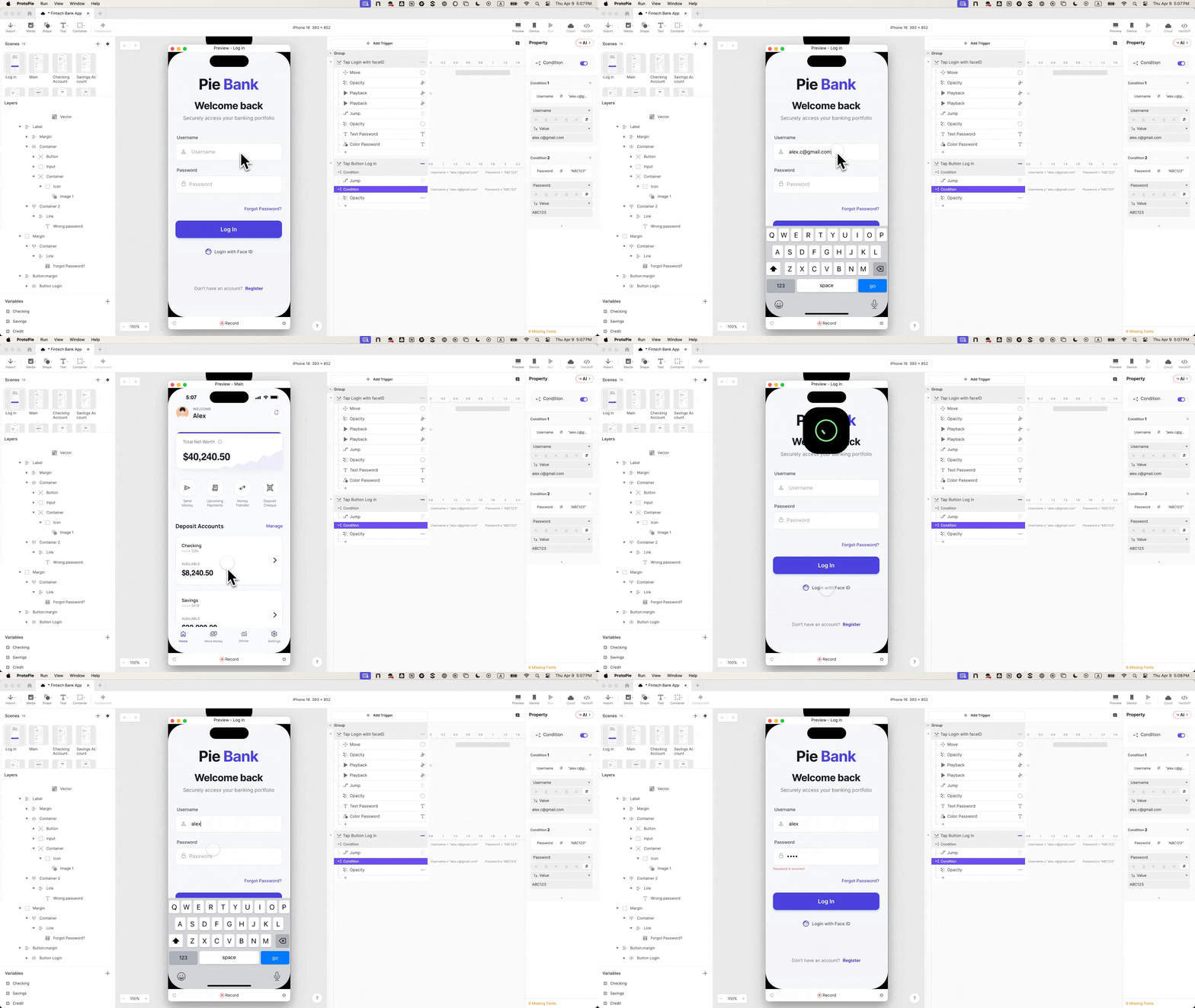
In the evolving landscape of product design, the authenticity of user interactions with prototypes is paramount. A critical issue is the disconnect that arises when users perceive a prototype as merely a simulation rather than a functional product. This moment of hesitation, particularly when users pause at a login screen, hints at a broader challenge in usability testing — one that can skew data collection and ultimately impact the final product's success. It's crucial for designers to recognize this phenomenon, especially in finance, where user trust and engagement are vital. Such insights resonate with recent discussions around automation and data management, as highlighted in articles like 10 Everyday Tasks You Can Automate with AI Today (With n8n Templates) and How to adjust column space between two data sets. Both explore the importance of clarity and user-centric design in enhancing productivity and user experience.
The implications of users doubting the authenticity of a prototype extend beyond mere data accuracy. When users feel uncertain about their interactions, their feedback becomes less reliable, leading to insights that may not truly reflect their needs or behaviors. This is especially critical in sectors like finance, where user confidence translates directly into product adoption and satisfaction. The challenge is to create an environment where users can engage with prototypes without the mental barrier of "is this real?" By addressing this issue, designers can foster genuine interactions that yield more valuable feedback, ultimately driving innovation and improving user outcomes.
To tackle this problem, several actionable steps are suggested for designers. First, it emphasizes the need for realistic interactions that mimic the final product closely. This includes not just visual fidelity but also functional elements that allow users to navigate and complete tasks as they would in the live application. Additionally, incorporating user feedback loops during the prototyping phase can enhance the authenticity of user experiences. As discussed in the Presentation: Realtime and Batch Processing of GPU Workloads, understanding user interactions within the context of their workflows is vital for creating solutions that resonate in a data-driven environment.
Looking ahead, the question remains: how can we further bridge the gap between prototype and product to ensure that user interactions are as authentic and insightful as possible? As technology continues to evolve, integrating AI-driven tools that simulate real-world interactions may offer a pathway for more effective prototyping. The ability to analyze user behavior in real-time could lead to more intuitive designs that cater to actual user needs. As we navigate this complex landscape, it is essential for designers and product teams to remain vigilant about the authenticity of their prototypes, ensuring that they not only meet technical specifications but also resonate genuinely with users. This focus on human-centered design will be pivotal in shaping the future of product development, fostering a more engaging and productive user experience.