AI agents
AI agents at Beyond Market Intelligence is a file of 255 stories. The newest of them: “Waymo's real test begins after the model works”, “Building the missing backbone for enterprise AI agent trust and coordination”, and “Your personal AI agent is closer than you think.”. Waymo's evaluation-first approach is the discipline most AI teams are missing. Enterprise AI agents are hitting a wall: they can't talk to each other, can't be trusted with permissions, and can't be audited. Acme AI is the next-generation, AI-powered spreadsheet platform built to replace Excel and redefine how analysts, data scientists, and enterprise teams work… The list below is every AI agents story on Beyond Market Intelligence, newest first.
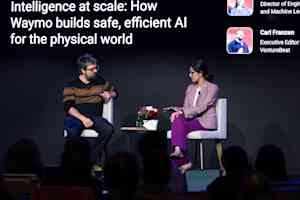
Waymo's real test begins after the model works
Waymo's evaluation-first approach is the discipline most AI teams are missing. Before any model earns a deployment, its tests must prove maturity, not just performance. That standard, enforced through continuous evaluation and human oversight, is what has carried the company to 220 million rider-only miles with dramatically fewer serious injuries. For enterprises, the lesson is direct: if you cannot measure an agent's edge cases, you are not ready to trust it in production.
Building the missing backbone for enterprise AI agent trust and coordination
Enterprise AI agents are hitting a wall: they can't talk to each other, can't be trusted with permissions, and can't be audited. Five startups are already closing that gap, and their timing is sharp. The infrastructure for orchestration, observability, connectivity, and security is the real bottleneck, not the agents themselves. BAND coordinates multi-agent workflows, while Conifers speeds up cyber defense. Raindrop AI logs agent actions, and Arcade handles authorization. Omilia tackles customer experience. This is where the work gets practical, and necessary.

Your personal AI agent is closer than you think.
Mark Zuckerberg sees a future where billions of people rely on personal AI agents, and he's betting Meta's massive infrastructure spending on that conviction. It's a bold wager, one that asks investors to trust the payoff before the product fully lands. The vision is compelling, but the distance between today's tools and that scale is real. For a grounded look at how this feels in practice, our piece "Talking to My AI Clone Taught Me to Question the Tech" offers a useful counterpoint.
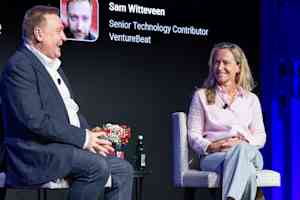
Your AI model is not your competitive advantage
Target's AI edge isn't the model, it's the discipline wrapped around it. Siobhán Mc Feeney argues that autonomy must be earned, not granted, and Target's four-level ladder proves it. Starting with observation and advancing only through proven accuracy keeps agents accountable. That's a sharp counter to the rush to deploy. For a deeper look at how this thinking scales, our piece on bridging retrieval and action shows why connecting systems matters just as much as the intelligence driving them.

Microsoft's three-layer architecture clarifies AI agent routing on AKS
Microsoft's new reference architecture for routing agent traffic on Azure Kubernetes Service tackles a practical headache: deciding which model answers a call, how that call is managed, and which GPU replica handles it. It's a clear-eyed breakdown of a messy problem. That kind of clarity matters, especially when AI feels like a black box.

AI agents learn from real calls to transform sales playbooks
Encore AI just raised $30M to turn customer calls into training ground for AI agents. The startup mines calls, messages, and CRM data to spot what sales tactics actually work, then codifies those into playbooks agents can follow. That's a smart shift from generic automation to learning that compounds. It's not about replacing reps; it's about capturing their hard-won instincts. For anyone curious how such systems handle nuance, our piece on talking to an AI clone offers a grounded counterpoint.

Nimble launches specialized AI agents to make enterprise web searches smarter.
Nimble is rolling out Web Search Agents, a new retrieval system designed to cut token costs by 51% while boosting retrieval accuracy by 21% for domain-specific enterprise workloads. The New York City startup's approach pairs self-learning retrieval algorithms with proprietary indexes and live web access, moving beyond generic search APIs to learn each customer's domain. This launch targets developers building autonomous agents, positioning retrieval infrastructure, not model quality, as the next competitive battleground.
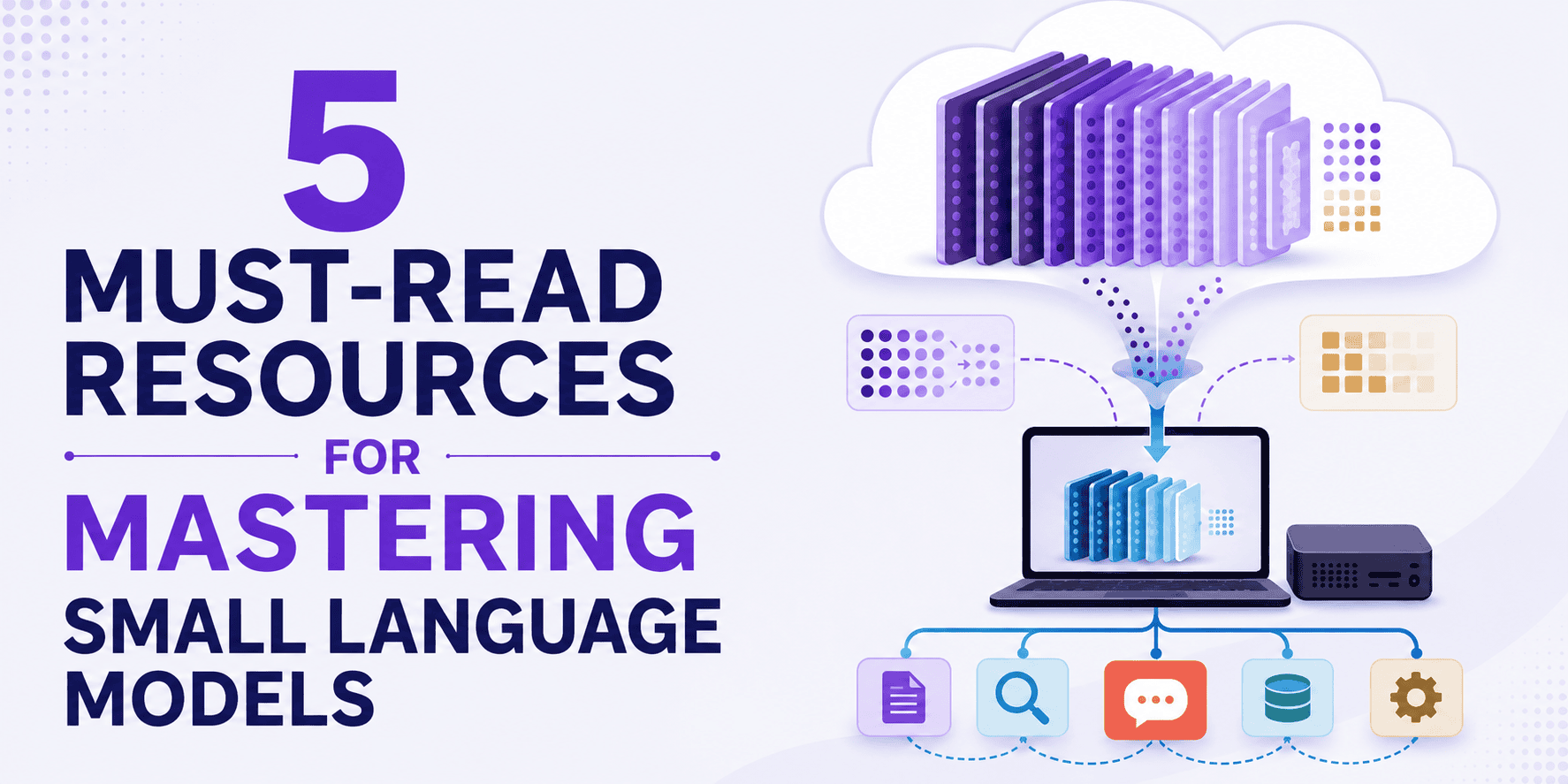
Explore practical resources to master small language models
Small language models are quietly reshaping what's possible for data professionals, and this guide cuts straight to the resources that matter. We've curated five essential reads that cover architecture, fine-tuning, agentic workflows, and local deployment, giving you a practical path forward without the fluff. If you're ready to move beyond theory, these picks will help you build real skills. For a deeper look at how AI systems truly behave, our piece on talking to an AI clone offers a thought-provoking companion.

Cyera adds Oasis Security to expand protection for an AI-driven world
Cyera's $1 billion acquisition of Oasis Security signals a clear answer to a pressing question: how do we protect the growing wave of AI agents? This deal, Cyera's third this year, shows a deliberate focus on securing autonomous systems before they outpace our safeguards. It's a smart, forward-looking move. For a deeper look at how these agents are being managed, our piece on Google's open-sourced AX offers useful context. The pace of change is quick, and security must keep up.
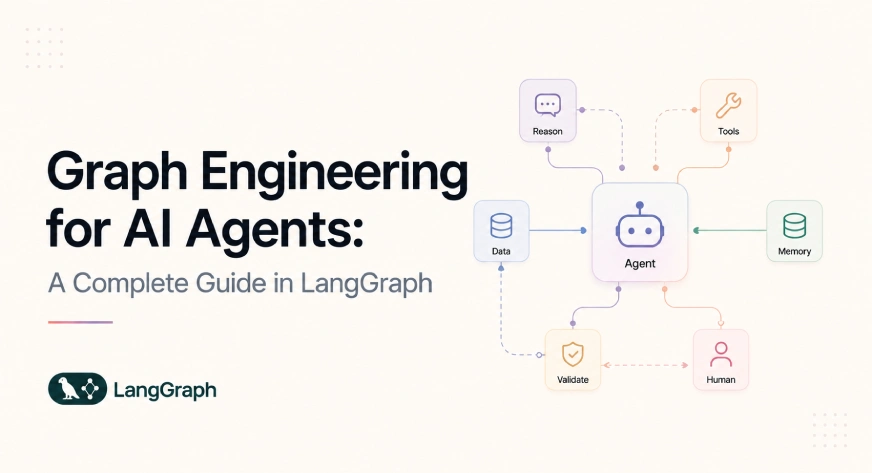
Design Your AI Workflows with Graph Engineering, Not Just Agent Loops
Single-agent loops are only part of the story. Graph engineering treats AI applications as explicitly designed workflows, where agents, tools, validators, and humans coordinate with intention. It's a shift from autonomous tinkering to deliberate architecture. That distinction matters. Moving beyond isolated prompts and toward systems that feel engineered, not improvised is a strong case. If you're curious how such coordination plays out in practice, our piece on talking to an AI clone offers a grounded counterpoint.
How AI agents free engineers from busywork to focus on judgment
Instacart's CTO says AI made the company stop worrying about tech debt, and that's a bold bet worth examining. Anirban Kundu argues that machines should absorb repetitive engineering work, freeing humans to focus on judgment and intent. In 97% of cases, builders don't even read code anymore. That's a striking redefinition of the craft. For a deeper look at how teams are managing modern testing pipelines, our related article on monitoring Cypress tests with Grafana offers a practical counterpoint.

Discover the new apps proving great software thrives alongside AI
The App Store is busier than ever, even as AI agents promise to make traditional software obsolete. Developers are shipping tools that feel refreshingly human, from smarter bookmarking apps to digital pen pals and neighborhood marketplaces. It's proof that great software isn't about competing with AI, but complementing it. If you're curious how these tools hold up against the AI wave, our piece on talking to an AI clone offers a thoughtful counterpoint worth exploring.

GM uses AI agents to free engineers from 85% of non-coding work
General Motors' autonomous driving division didn't just hand engineers a better coding tool. It redesigned entire workflows around AI agents, and the payoff is hard to argue with: three times as many merged pull requests, faster releases, and fewer defects slipping downstream. Rashed Haq's point is worth sitting with. Most engineering time was never spent writing code anyway. Automating the other 85 percent, the analysis, triage, and testing, is where the real transformation lives. That is a smarter way to think about AI's role.

From Custom Code to Universal Standard for AI Tool Access
The Model Context Protocol is quietly changing how AI agents reach beyond their training data. This piece breaks down that shift, moving from custom integrations that demand constant upkeep to a universal standard for tool access. It's a practical look at a messy problem, and the clarity here is genuinely useful. If you're curious about the human side of these systems, our piece on talking to an AI clone offers a thoughtful counterpoint worth exploring.

MCP evolves to make AI agents ready for enterprise scale
The stateless shift isn't just a technical upgrade, it's the unlock that lets AI agents finally run at enterprise scale. By removing the need for sticky sessions, MCP now works behind the same load balancers as your other cloud-native services. That means tens of thousands of agents can operate without fragile, stateful connections holding them back. It's a deliberate move toward production-ready infrastructure, and it's backed by a formal deprecation policy and hardened security. The path forward is clear.

Enterprise AI agents need your business context, not just general knowledge
Enterprise AI agents fail when they lean on general knowledge instead of the messy, specific context that defines how a company actually works. That's the core insight from SAP's Max McPhee, who told VentureBeat's Rob Stretchay at VB Transform 2026 that grounding agents in knowledge graphs and governance is what turns a chatbot into a true collaborator. It's a practical reframe.
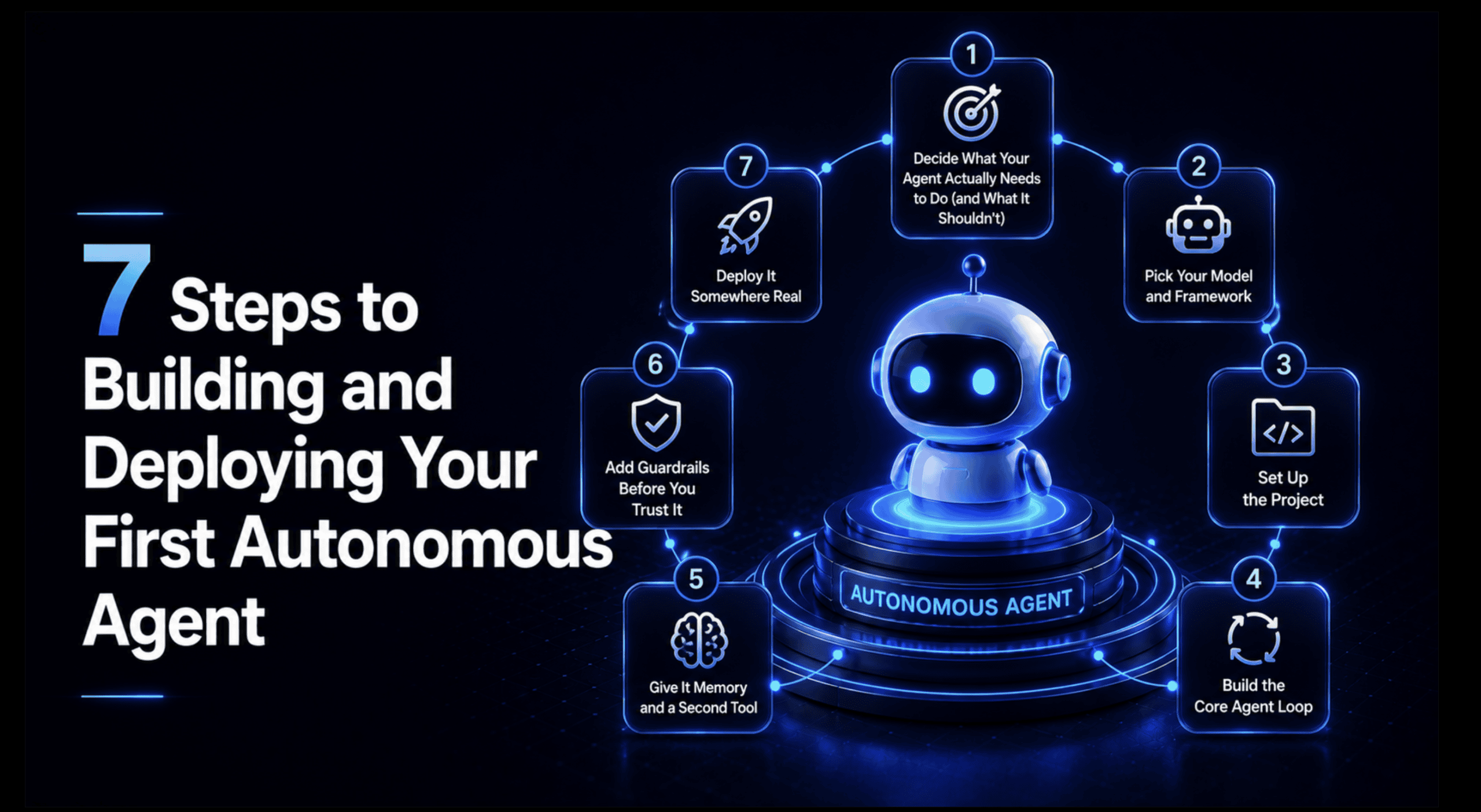
Your Blueprint for Building and Deploying Your First AI Agent
Building your first autonomous agent can feel like assembling a plane mid-flight. This guide cuts through the noise, walking you through each step from initial design to live deployment without the fluff. It is a practical, grounded approach that respects your time. If you are still weighing the human cost of these tools, our related piece on questioning an AI clone offers a thoughtful counterpoint worth exploring. Start here, then keep asking the hard questions.

ChatGPT Voice on desktop unlocks hands-free control for work and coding tasks
OpenAI's new voice mode is now live in the ChatGPT desktop app, and that changes how work gets done. Voice on desktop works alongside both ChatGPT Work and Codex, letting you direct tasks and manage agents without touching the keyboard. It's a practical step toward a more natural workflow. If you're navigating AI's growing role in daily productivity, you might also explore how we verify understanding in "Verify Your AI's Understanding: A Simple Check for Tax Season." That's the kind of clarity worth building on.

How AI agents detect phishing by noticing what humans overlook
A single phishing email can now mimic a colleague's tone, timing, and context well enough to fool a careful eye. AegisAI, founded by former Google security executives, just raised $36 million to fight that exact threat. Their approach is refreshingly human: AI agents that read each message for subtle anomalies, the kind a checklist would miss. It's a practical, grounded defense for a growing problem.

Your AI agent passed your tests. Then it failed your customer.
Enterprise AI is granting agents more autonomy than the evaluations meant to govern it can support. Half of organizations have shipped an agent that passed internal tests, then failed a customer. Only 5% fully trust the automated evaluations in use today. The most-cited weakness: evaluations align poorly with real-world outcomes. Yet two-thirds are already deploying on automated results alone, or engineering toward it. That gap between autonomy and assurance is where failures scale.
Your AI agents have real access. Their security controls don't.
The majority of enterprises are already feeling the agent security gap, 54% have faced an incident or near-miss. Yet most are still securing autonomous agents with shared credentials and borrowed provider guardrails, leaving identity and isolation controls behind. The gap is clear: agents are proliferating faster than the controls needed to contain them. Explore how your defenses measure up and discover where the structural weaknesses actually live.

When Scaling AI Agents, Small CPU Tasks Become Big Bottlenecks
We scaled to hundreds of LLM agents and watched our system crawl. The culprit wasn't the models. It was the hidden cost of asynchronous design, where tiny CPU tasks quietly piled up until they became the bottleneck. This story is a practical look at that tradeoff, and it pairs well with our guide on distributed algorithms if you want the deeper mechanics. The takeaway is simple: more agents mean more overhead, and ignoring it slows everything down.

Enterprise AI Trust Falls Faster Than Context Infrastructure Is Built
Enterprise agents are answering with confidence their context can't yet support. New Pulse Research across 101 enterprises shows 57% have traced a confident-but-wrong answer to missing or inconsistent data, yet retrieval is already the default context source for 38% of organizations. The fix, a governed semantic layer, is under construction: 58% are building or running one, but most haven't shipped it. Provider-native tools lead today, even as enterprises insist they want independence. The context gap isn't a retrieval problem.

Your data pipeline is the real reason your AI is confidently wrong
The failure that doesn't look like a failure is the one that quietly undoes your AI system. You ship it, stakeholders sign off, and months later, the answers drift wrong, not because the model changed, but because the data behind it didn't move with the world. That's not a retrieval problem; it's a data engineering one. Correctness, freshness, consistency, lineage, these are the checks that matter, and most pipelines still monitor for completion, not truth. If you're chasing model swaps, you're solving the wrong puzzle.