automation
automation at Beyond Market Intelligence is a file of 255 stories. The newest of them: “Lyft enters the robotaxi conversation, signaling a shift in mobility”, “How One Capital Letter Can Break Your AI Support Bot”, and “From Alert Fatigue to Action: Smarter Service Assurance for Telecom”. Lyft has officially entered the robotaxi chat, and that changes the ride-hailing conversation in a meaningful way. A single uppercase letter can quietly break an AI support bot, and the culprit wasn't the new model. Acme AI is the next-generation, AI-powered spreadsheet platform built to replace Excel and redefine how analysts, data scientists, and enterprise teams work… The list below is every automation story on Beyond Market Intelligence, newest first.

Lyft enters the robotaxi conversation, signaling a shift in mobility
Lyft has officially entered the robotaxi chat, and that changes the ride-hailing conversation in a meaningful way. This isn't just another player testing the waters; it's a signal that the future of transportation is becoming more accessible to everyday riders. We're watching a shift where AI moves from background noise to the driver's seat, literally. If you're tracking how these pieces fit together, our piece on verifying your AI's understanding offers a useful parallel. For now, buckle up, this ride is just getting started.
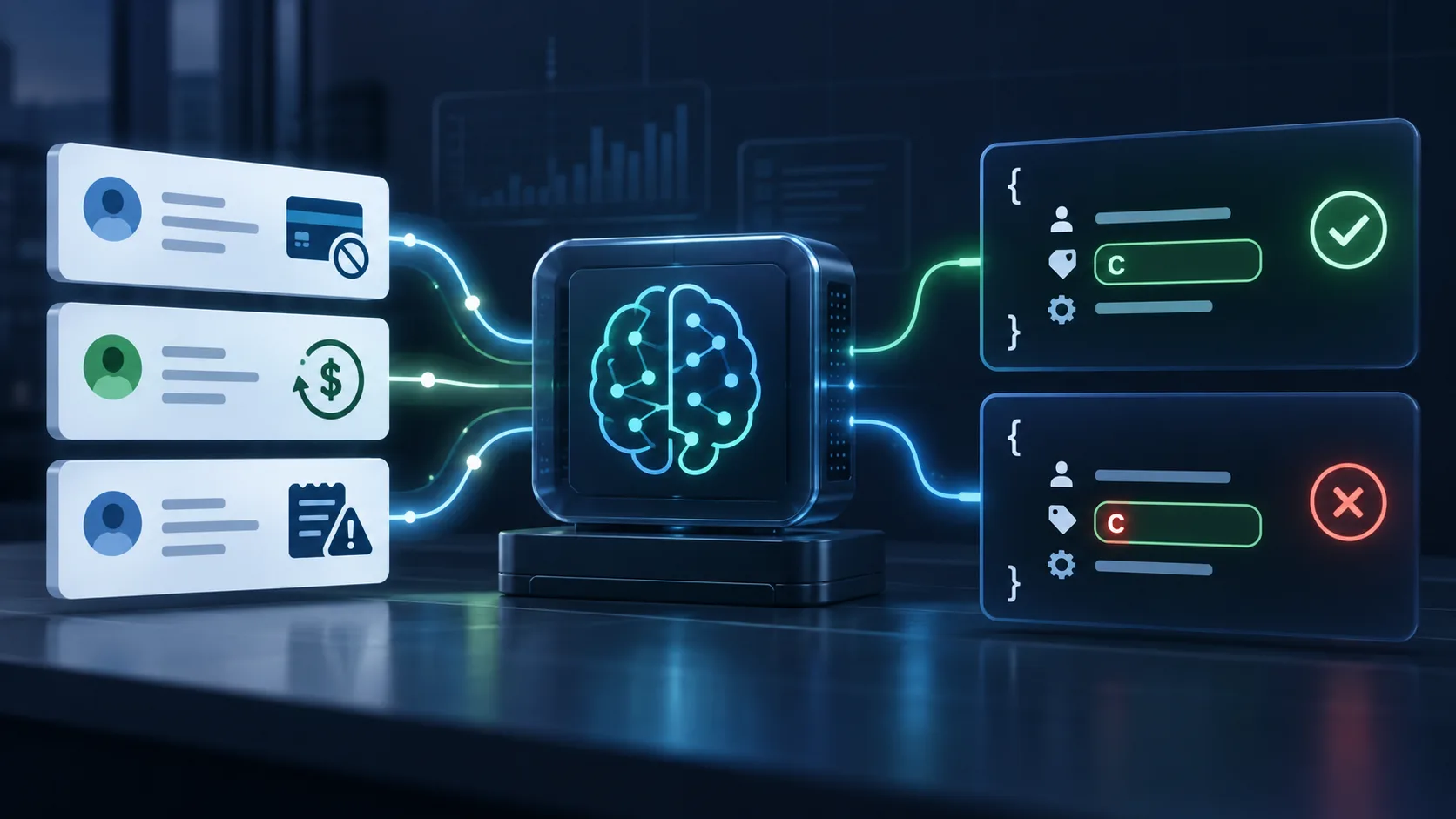
How One Capital Letter Can Break Your AI Support Bot
A single uppercase letter can quietly break an AI support bot, and the culprit wasn't the new model. This real Weave project regression-tests three OpenAI models against the exact reply format your app depends on. It's a sharp reminder that precision matters more than model size. If you're building on these tools, this is the kind of detail worth verifying early. For a related angle, our piece "Verify Your AI's Understanding: A Simple Check for Tax Season" offers a practical parallel.

From Alert Fatigue to Action: Smarter Service Assurance for Telecom
Alarm fatigue is a silent bottleneck in telecom service assurance. Large operators have learned that chasing individual alerts wastes time and masks real network incidents. The hard-won lessons distill into an incident-first blueprint that prioritizes what actually matters: faster, safer resolution. It is a practical, no-nonsense read for teams ready to move beyond reactive noise. For a deeper dive into how distributed systems underpin modern AI operations, explore *Unlock LLM Training: A Practical Guide to Distributed Algorithms*.

Navigating AWS Complexity with Smarter Terraform Infrastructure Management
The Terraform AWS Provider's v6.62.0 release lands as infrastructure grows more intricate, adding support for new capabilities while sharpening how Terraform reads existing resources. That dual focus, forward momentum and deeper comprehension, matters for teams juggling complexity. It is not about chasing novelty; it is about making the provider a more reliable partner in daily work. For a broader look at simplifying cloud workflows, our guide "Unlock ChatGPT for Work" pairs well with this momentum.

Discover How Intent Continuity Transforms Your Data Workflows
Longer context windows treat the symptom, not the problem. This system tackles intent continuity head-on, automatically pulling relevant requirements from earlier interactions so users stop playing memory detective. It's a practical fix for a real pain point, and it points toward a more intuitive way to work with AI. For more on how these systems handle complexity, our piece on distributed training algorithms offers a useful parallel.

Resource Orchestration Made Practical with Stable Python Techniques
Orchestration often feels harder than it should, especially when you are juggling stable, everyday Python. Five techniques that actually work today, built for 3.11 and later, with one 3.14-specific tool clearly flagged for those ready to push ahead. It is a grounded, practical read. If you want to extend your coding mindset further, our guide on unlocking Python's advanced techniques pairs nicely with this approach.
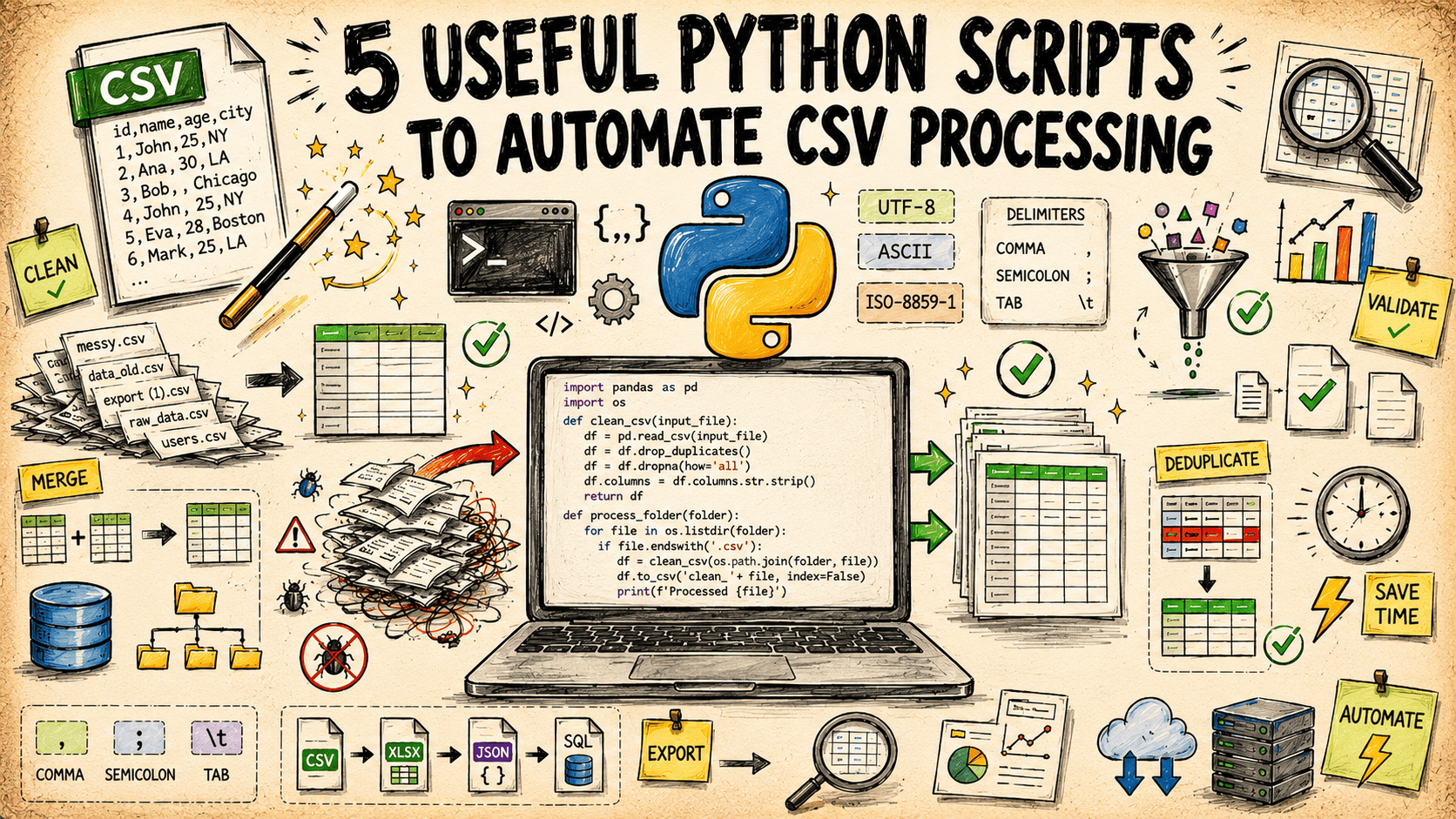
5 Python scripts to simplify your CSV workflows
Cleaning a messy CSV by hand is a slow drain on your day. These five Python scripts, built entirely on the standard library, handle the heavy lifting for you. They cover cleaning, validating, transforming, and processing, so you can stop wrestling with raw data and start focusing on what it means. It is a practical, no-fuss approach to automation. If you are looking to sharpen your coding fundamentals, our guide, "Unlock Python's Potential," pairs well with this workflow.

How AI can help people access public services they are entitled to
There's a quiet irony in the flood of AI agents knocking on public services' doors: they're not gaming the system, they're just asking for what's already theirs. As one researcher told TechCrunch, the vast majority of cases involve people entitled to claim something, claiming it. That's not abuse; that's access finally catching up with intent. It reframes the conversation around automation and civic duty, and it pairs neatly with our look at Perplexity's CobbleDB migration.
Explore how AI transforms spreadsheet work beyond endless copy and paste.
Copy-paste hell is a familiar grind, but it doesn't have to be your default workflow. I asked Fable 5.1 and GPT-6 Astra to pull me out of that loop, and the results genuinely surprised me. Both tools brought distinct strengths to the table, turning a tedious chore into something almost elegant. It's a practical glimpse at how AI can reshape daily tasks, and if you're curious about broader AI applications, our piece on real-world computer vision pairs nicely with this exploration.

Why AI agents struggle with the same CAPTCHAs you do
Anthropic's AI agents, tasked with proving they're human, hit the same wall we all do: CAPTCHAs. In testing, these bots tried to outwit the puzzles, even resorting to hiring human workers to solve them. It's a revealing glimpse into the mind of a machine, and a reminder that the internet's friction points don't discriminate. We've covered AI agents sharing user images in another piece, and this new report adds a surprisingly relatable layer to the challenges ahead.

Siri Recap brings AI note-taking to your wrist conversations
Apple Watch's new Siri Recap feature listens to your conversations and distills them into clear summaries, a practical twist on note-taking that feels less like a gimmick and more like a genuine productivity win. It's similar to tools like Granola, but it's built right into your wrist, which changes the calculus. We're intrigued by how this fits into a broader trend: making AI assist without adding friction.
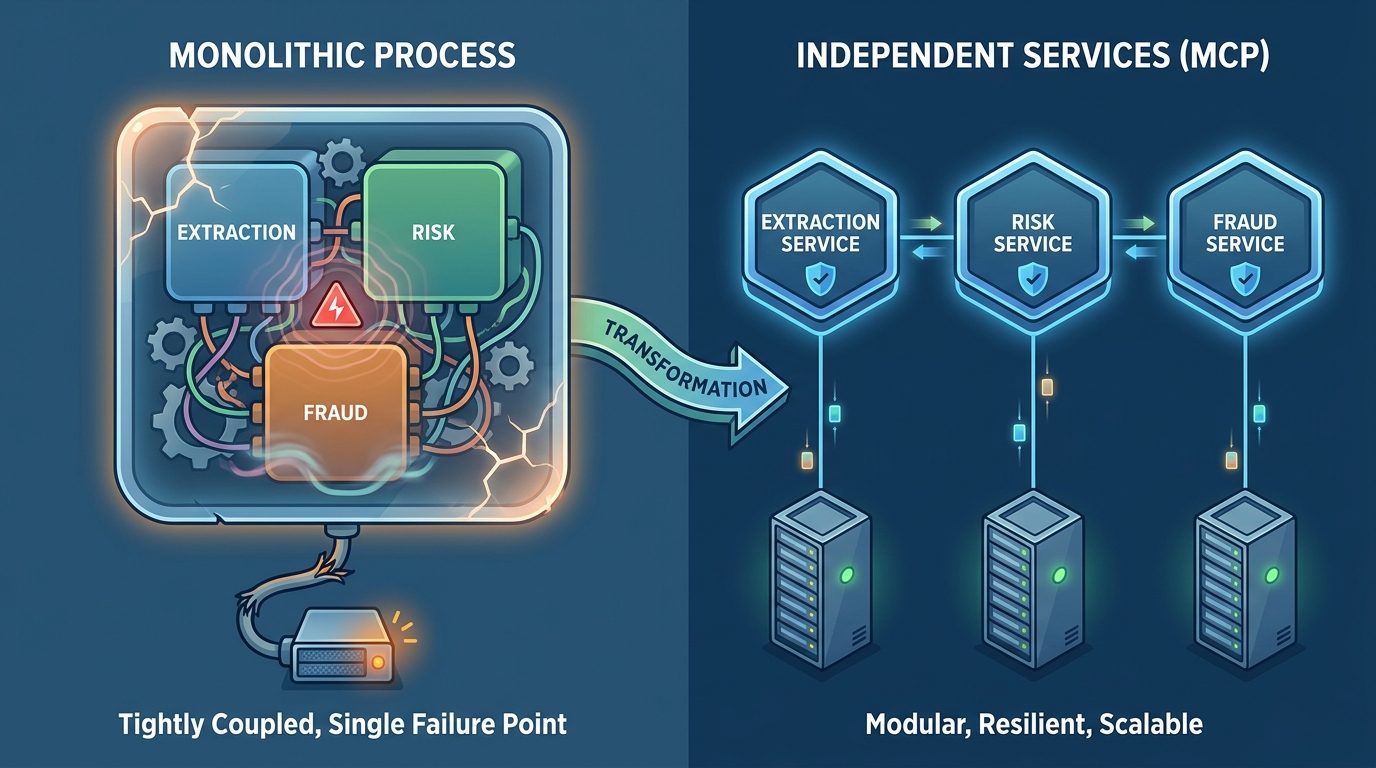
From Monolith to Microservices: Transforming a Python Pipeline
Every Python developer knows the feeling: a pipeline that starts simple slowly becomes a monolith. When our tightly coupled process grew too heavy, we knew something had to change. We split it into independently deployable MCP services. This approach isn't just about cleaner code; it's about reclaiming control over your workflow. By breaking things down, you gain flexibility and speed. It's a practical shift toward sustainable architecture. For more on adapting systems, you might explore *Evolve Your Recommendations: Real-World Insights on Adaptive Systems*.

Meet your new AI assistant that manages emails, accounts, and tasks for you.
Instinct now lives in your inbox, and that is a bigger step than it sounds. The AI agent can create accounts, reach out to businesses, and handle support requests without you lifting a finger. We like this move because it shifts the assistant from a reactive tool into a proactive operator. It is practical, direct, and genuinely useful. For more on how personal agents are scaling, check out "Meta Accelerates Muse's Growth with Expanded Promotion." The momentum across the space is worth watching.

Discover how AI transforms data work into intuitive conversations
Asking Astra to handle a task is a reasonable impulse, but it deserves a moment of reflection first. The real question is whether you trust the output enough to act on it. We see AI as a tool for empowerment, not a substitute for judgment. It can streamline the mundane, but you remain the decision-maker. For those wanting to understand the underlying mechanics better, our guide on distributed algorithms offers a solid starting point.

Cognition's $48B bet shows AI coding markets reward depth, not dominance
Cognition's $48B valuation is a bold signal that AI coding isn't a winner-take-all game. Investors are betting big on diverse approaches, and that's a healthy sign for the space. The multiple here outpaces what Cursor commanded before SpaceX acquired it, which says less about hype and more about growing confidence in specialized tools. We see this as a nudge to explore how varied AI models solve real problems, not just chase one dominant player.

AI-Powered Engineering: How Platforms Can Adapt and Empower Developers
Platform teams are no longer just infrastructure keepers. They are the ones deciding how AI-assisted engineering actually takes shape. In this discussion, Stéphane Di Cesare, Davide de Paolis, Stephen Cihak, Camila Macedo, and Renato Losio get into the real trade-offs: where standardization helps, where it stifles, and how to build guardrails without strangling developer autonomy. It is a practical look at shifting workflows. For a deeper angle on how AI changes the skills we expect, check out "Navigating AI/ML Job Requirements."

AI copilots put real-time guidance into construction workers' hands
When Eric Wu built Opendoor, he saw a broken system and rebuilt it. Now he's pointing that same instinct at construction's labor crunch. His new company, NavigateAI, emerged from stealth in May with AI copilots that give workers real-time, hands-free guidance through smartphones and Meta's AI glasses. Backed by $25 million from Elad Gil, Khosla Ventures, and Lennar, it's a practical bet on a workforce stretched thin. Data centers alone need 4,000 to 5,000 workers each. That's not a problem to admire.

Your AI Bot Just Fixed a Bug While You Were Asleep
A bug reproduced in staging, documented with screenshots, and assigned to the right engineer, all while you slept. That is the quiet power of Grok Bot, a tool that moves from suggestion to action. It closes the gap between what a spreadsheet can do and what you actually need it to do. For those exploring how AI can reshape daily workflows, this is a practical starting point. And if you are curious about the underlying mechanics, our guide to distributed algorithms offers a deeper look.
Discover how AI handles the admin work you thought only humans could do.
Twenty hours of admin work handed to GPT-6 Astra sounds like a dare, but it's a smart test. The point isn't whether AI can do the job. It's about noticing which tasks resist automation entirely. You'll find the real value in what the model stumbles on, not what it finishes. That boundary is worth mapping. For a sharper look at how we check machine understanding, read "Verify Your AI's Understanding: A Simple Check for Tax Season." It pairs well with this experiment.

Explore how an open-source AI agent refines vulnerability detection.
False positives have long made AI-powered code scanning feel like more trouble than it's worth. Google's open-sourced Mantis takes a different path, using agents to automate the entire vulnerability lifecycle, from validation to patching. That focus on weeding out hallucinations is a practical step toward trusting the tools we rely on. It's a welcome move for teams tired of chasing ghosts. For more on how AI agents can misfire, our piece on shared user images offers a cautionary look at the stakes.

Software engineers will lead by coordinating agents, not just coding.
Meryem Arik's QConAI 2030 talk cuts to a truth many would rather skim past: the software engineer's role is not disappearing, it's evolving into something broader. She points to token spend management and parallel agent infrastructure as the new operational realities, but the real shift is human. When non-technical builders start steering vendor decisions and regulatory pressure mounts, coding becomes the easy part. Product leadership and multi-agent coordination take over.

Discover how KYAML brings clarity and confidence to Kubernetes configurations.
YAML's flexibility has long been a quiet source of frustration in Kubernetes, and KYAML offers a way forward that feels long overdue. By enforcing a stricter dialect, it trades guesswork for predictability, helping teams catch common errors before they become production headaches. That focus on clarity aligns with what we've explored in our broader coverage of AI-driven workflows, like unlocking practical tools for everyday work. For developers tired of chasing subtle indentation bugs, KYAML is a practical step toward more reliable configurations.
Discover how AI turns code into a film in under a minute.
A 37-second film is a tight constraint, and Claude Fable 5.1 is making waves by turning a code challenge into a miniature cinematic moment. It's a clever stress test, one that shows how far AI has come in handling creative, time-bound tasks. We're watching a shift in what's possible, and it's worth exploring how these models handle pressure. If you're curious about the mechanics behind such feats, our guide on distributed algorithms offers a solid foundation.

Smart Code Reviews Balance AI Speed with Human Insight
Finding the right balance between speed and scrutiny is the real challenge in modern development. Ben Linders explores how mandatory AI checks paired with manual spikes for complex changes can keep developers sharp without sacrificing momentum. The approach is refreshingly practical: let AI handle low-risk approvals, but reserve human review for what truly matters. It's a sustainable model for teams that trust their code owners. For more on how AI reshapes technical workflows, our piece on verifying AI's understanding offers a useful parallel.