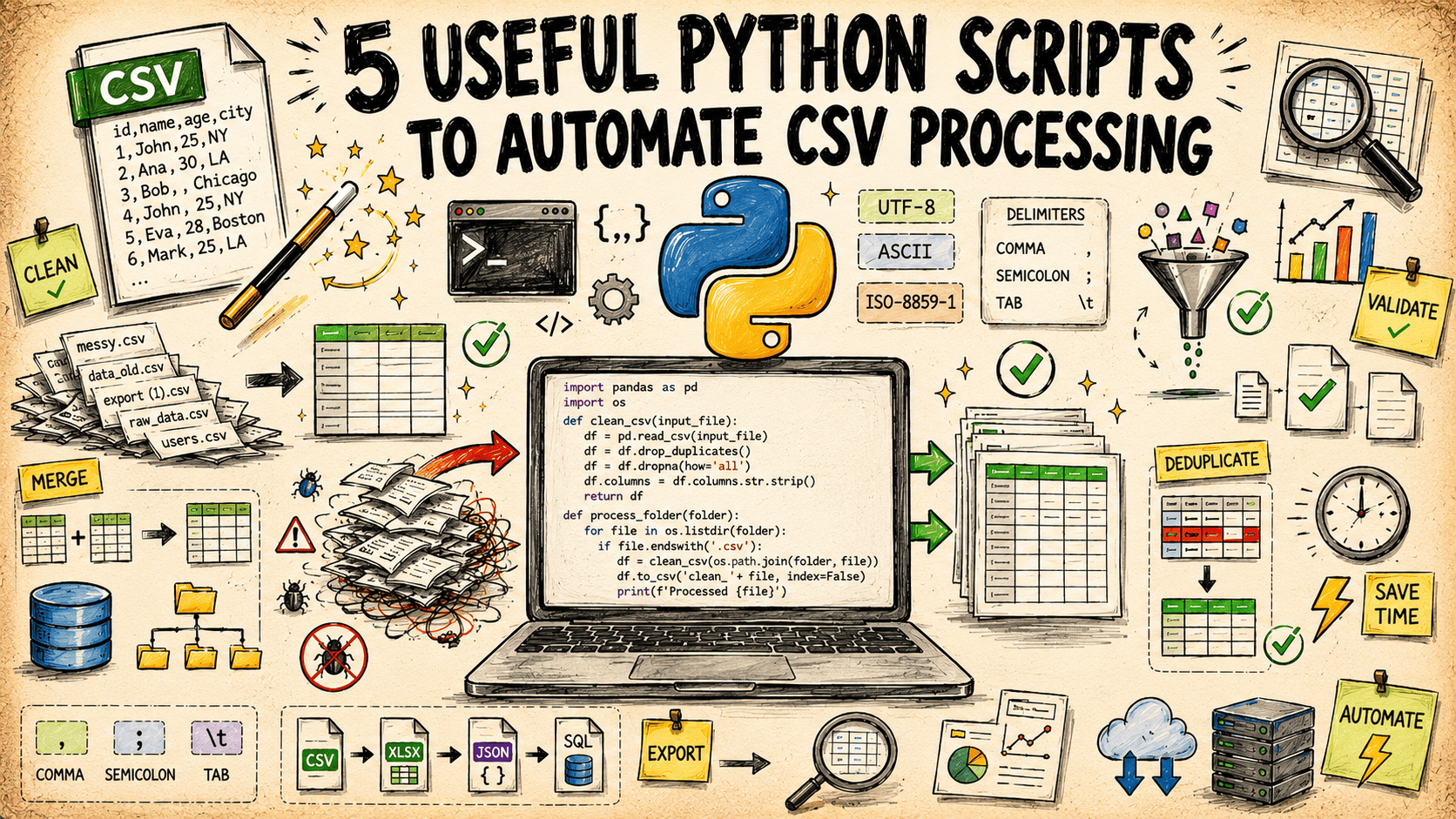
The humble CSV file is the workhorse of data work, yet it is also where so much time goes to die. The recent guide on automating CSV processing with five practical Python scripts is a useful reminder that the tools for liberation have been sitting in your terminal the whole time. It is not about learning a new, complex framework. It is about using the standard library to handle the cleaning, validating, and transforming that usually eats up a Tuesday morning. This approach aligns with a broader truth we have been circling: the future of productivity is not about buying shinier tools, but about wielding the ones you already own with more intention. As we noted in our piece on Unlock Python's Potential: Advanced Techniques for Smarter Coding, leveling up rarely means new syntax; it means learning what the language already promised you.
For our readers, this is not just a "how-to" moment; it is a strategic shift in how you approach repetitive work. If you are still opening a file, manually deleting blank rows, or dragging formulas down a column, you are not being productive, you are being a human macro. These scripts are a direct challenge to that status quo. They ask you to consider that the 20 minutes you spend on a mundane task is 20 minutes you are not spending on the analysis, the interpretation, or the decision-making that actually moves the needle. This is the same logic behind the automation we see in unexpected places, like the Improve Crop Yields with Automated Soil Aeration—No Robots Needed story, where a deceptively simple pod replaces manual effort. The principle is consistent: automation is not about hiring a robot army; it is about removing the friction that prevents good ideas from surfacing.
Our honest take is that the approach is right, but it does not go far enough. The scripts are a starting point, not a destination. They give you a clean dataset, but they do not tell you what to do with it. That is where the human element comes in, the judgment to ask the right questions. We would tell a reader who asked about these scripts to stop thinking of them as a magic bullet and start thinking of them as a baseline. Use them to get your data into a state where you can actually see it. Then, apply the logic from our piece on Navigating AI/ML Job Requirements: A Shift in Expected Skills, which shows that the market is rewarding people who can blend technical execution with broader problem-solving. The value is not in the code itself, but in the confidence that comes from knowing your foundation is solid.
The specific takeaway here is direct: if you write a Python script to automate a CSV task that you do more than twice a month, you have just bought back time you will never get again. That is the real metric. The question you should be asking is not "Can I write this script?" but "What else could I do with those saved hours?" The answer to that question is where your next promotion, your next project, or your next big idea lives. Watch how quickly the manual work disappears, and you will find that the only limit is your willingness to stop doing things the hard way.