data analysis tools
data analysis tools at Beyond Market Intelligence is a file of 223 stories. The newest of them: “Claude Opus 4.7 arrives, giving you a smarter, simpler path through complex data.”, “Explore how hyperagents bring self-improving AI to real-world tasks.”, and “The jagged frontier: Why AI reliability is the next enterprise hurdle”. Anthropic has unveiled Claude Opus 4.7, marking its most powerful large language model to date and retaking the lead in the competitive landscape of AI. Meta researchers have unveiled a groundbreaking framework called "hyperagents," designed to advance self-improving AI systems for non-coding tasks. Acme AI is the next-generation, AI-powered spreadsheet platform built to replace Excel and redefine how analysts, data scientists, and enterprise teams work… The list below is every data analysis tools story on Beyond Market Intelligence, newest first.

Claude Opus 4.7 arrives, giving you a smarter, simpler path through complex data.
Anthropic has unveiled Claude Opus 4.7, marking its most powerful large language model to date and retaking the lead in the competitive landscape of AI. This release surpasses OpenAI's GPT-5.4 and Google's Gemini 3.1 Pro in critical benchmarks, particularly in agentic coding and knowledge work. While Opus 4.7 excels in hard sciences and autonomous workflows, it requires careful prompting to maximize its capabilities. With enhanced self-verification and multimodal support, this model positions itself as a specialized powerhouse for enterprises seeking reliable AI solutions.

Explore how hyperagents bring self-improving AI to real-world tasks.
Meta researchers have unveiled a groundbreaking framework called "hyperagents," designed to advance self-improving AI systems for non-coding tasks. Unlike traditional models that depend on fixed improvement mechanisms, hyperagents autonomously rewrite and optimize their problem-solving logic. This innovative approach enables them to excel in dynamic environments, such as robotics and document review, by developing capabilities like persistent memory and automated performance tracking. By integrating self-referential learning, hyperagents promise to enhance adaptability, compounding improvements over time and reducing reliance on manual customization.

The jagged frontier: Why AI reliability is the next enterprise hurdle
According to Stanford HAI's ninth annual AI Index report, frontier models are struggling, failing in about one in three production attempts, a gap that poses significant challenges for IT leaders in 2026. This phenomenon, dubbed the "jagged frontier," highlights the disparity between AI capabilities and reliability. Despite impressive improvements in benchmarks, such as a 30% gain on Humanity's Last Exam, models still falter in basic tasks, underscoring the urgent need for better transparency and more effective evaluation methods in AI deployment.

Patch alone won't secure Copilot Studio from prompt injection risks.
Microsoft has assigned CVE-2026-21520 to a significant indirect prompt injection vulnerability in Copilot Studio, discovered by Capsule Security. This flaw, dubbed ShareLeak, exploits the interaction between SharePoint forms and the Copilot agent, allowing unauthorized data exfiltration even after patching. While Microsoft has acted swiftly, the incident underscores a broader issue with agentic systems and the need for enhanced security measures. As Capsule notes, this vulnerability class poses a new risk landscape for enterprises, emphasizing the importance of proactive audits and robust runtime security strategies.

The hidden cost of AI coding: Nearly half of generated code fails in production.
A recent survey from Lightrun reveals a pressing challenge in the software industry: 43% of AI-generated code changes require manual debugging in production, highlighting the struggle to ensure reliability after deployment. Conducted among 200 senior site-reliability and DevOps leaders, the findings indicate that even after passing quality assurance, AI-generated code often leads to increased engineering bottlenecks.

Claude Managed Agents simplifies enterprise AI orchestration, but lock-in looms.
Anthropic's recent launch of Claude Managed Agents presents enterprises with a streamlined solution for AI agent deployment, promising faster implementation and reduced complexity. By embedding orchestration within the AI model layer, organizations can deploy agents in days rather than weeks. However, this innovation raises concerns about vendor lock-in, as enterprises may relinquish control over their operations to Anthropic.

Discover a smarter way to clean data and predict missing fields with AI.
Introducing an innovative AI tool designed to streamline your data analysis process. Built using Streamlit, this tool intelligently fills missing values with machine learning models, predicts unknown columns using existing data, and detects anomalies. Additionally, it highlights correlations and feature importance, providing valuable insights for informed decision-making. Users can easily download the updated datasets for further exploration. I invite feedback on the model approach, accuracy, and potential improvements to enhance its effectiveness. Explore the tool on GitHub and share your thoughts!
Explore how AI agents streamline neurotech ML workflows with messy data.
In the evolving field of neurotechnology, agentic coding tools like Claude Code are increasingly essential for professionals working with brain-computer interfaces (BCIs), EEG analysis, and precision medicine. These tools simplify the complexities of machine learning, especially when dealing with messy patient data. I developed a skill called ClaudeEEG to streamline data processing and model iteration, enhancing consistency in EEG-related tasks. This domain-specific setup provides crucial context for effective analysis. You can easily install it with: npx skills add https://github.com/Krish-mal15/ClaudeEEG. Your feedback and ideas for improvement

From AI pilots to production: building agentic systems that perform.
In the rapidly evolving landscape of AI-driven enterprises, achieving measurable performance through agentic AI requires more than just innovative ideas. This presentation by Edgeverve delves into the critical transition from pilot programs to impactful, production-grade solutions. By establishing clear goals and data-driven workflows, organizations can harness the potential of semi-autonomous AI agents. This approach emphasizes the importance of integrating autonomy, governance, and observability while maintaining flexibility. Discover how to transform operational grey zones into streamlined processes that drive tangible results and enhance productivity.

When AI Models Seem to Lose Their Edge, Listen to the Users
Recent user complaints about Anthropic's Claude models, particularly Opus 4.6 and Claude Code, have sparked a heated debate within the AI community. Developers claim they are experiencing performance degradation, describing the coding model as less reliable and more prone to errors. Accusations of "AI shrinkflation" have emerged, suggesting users are paying the same price for diminished capabilities. While Anthropic denies intentionally downgrading the models, they acknowledge recent changes that may have affected user experience.

The local AI blind spot demands a new CISO data security strategy.
In a rapidly evolving landscape, the traditional CISO playbook for generative AI is becoming obsolete. As developers increasingly run large language models (LLMs) locally, the risks shift from data exfiltration to unmonitored inference on devices. This emerging trend—dubbed Shadow AI 2.0—poses significant challenges, as security teams struggle to maintain visibility and control over local operations. The focus now must shift to managing model artifacts, ensuring compliance, and maintaining data integrity at the endpoint, all while fostering an environment that encourages innovation and productivity.
Explore a smoother path to curve fitting with AI-assisted precision.
Introducing a new tool designed to streamline curve-fitting experiments, I aimed to alleviate the common frustrations of traditional workflows. As someone deeply involved in data analysis, I often faced hurdles such as writing repetitive code and blindly tweaking parameters without clear insight. This lightweight app allows users to upload CSV data, explore various fit functions interactively, and instantly visualize changes in fits.
Excel's staying power proves data's future is built on what works.
Welcome to this week’s recap of the /r/Excel community, covering highlights from April 4 to April 10, 2026. This week, discussions revolved around the enduring relevance of Excel, with a notable post questioning why some "experts" believe the tool is on the decline. Unsolved queries featured challenges like automating image sending from Excel to WhatsApp and creating specific chart types. Engaging comments emphasized the importance of simplicity in formulas and the ongoing need for Excel in data analysis.
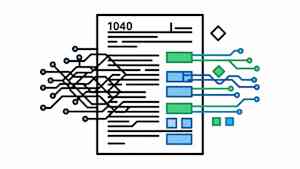
From 900 pages to hours: a compliance workflow built for speed and accuracy.
Intuit's TurboTax team tackled the challenge of the One Big Beautiful Bill, a complex 900-page tax document, by leveraging AI to streamline implementation from months to mere days. By employing large language models for document analysis and developing bespoke tools for coding and testing, they transformed a convoluted process into an efficient workflow adaptable to any regulated industry.
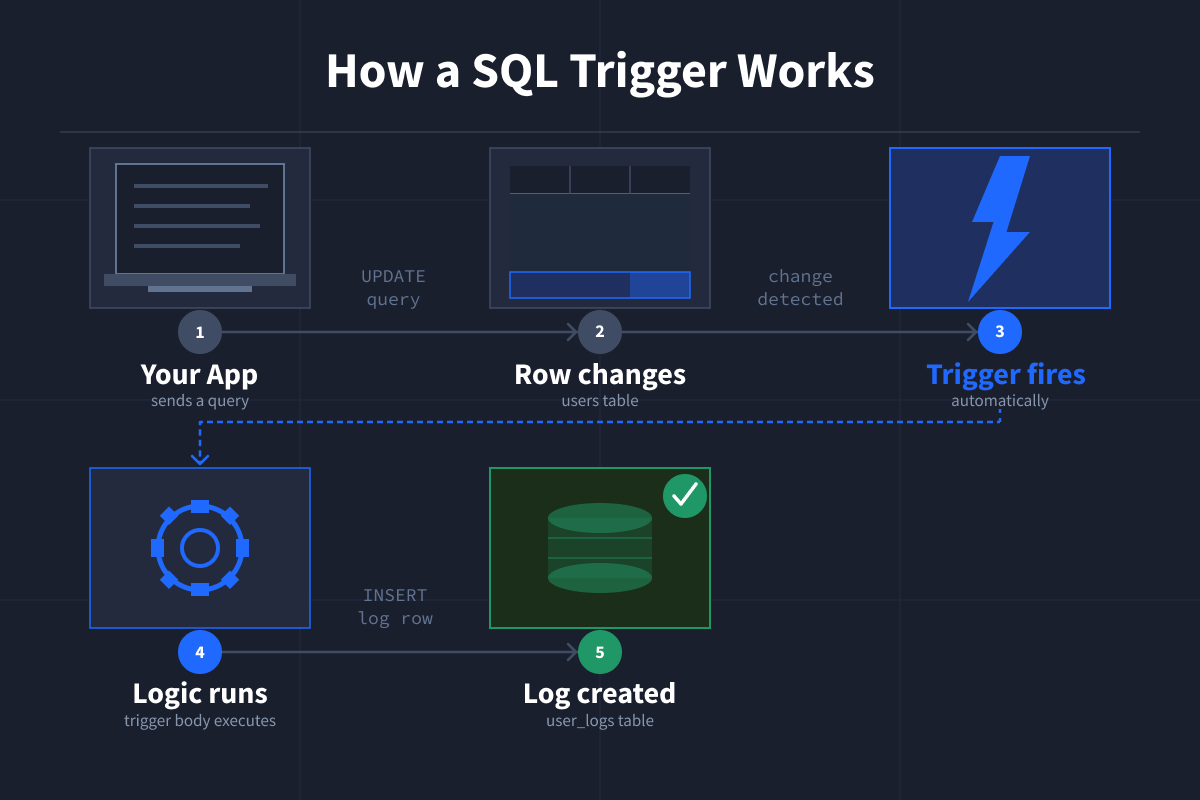
Automate Data Reactions: SQL Triggers That Work for You
SQL triggers are powerful mechanisms that automatically execute a predefined action in response to specific data changes within a database. These actions occur during INSERT, UPDATE, or DELETE events, allowing your database to react dynamically to modifications. For instance, you can log an entry when a new row is added or update a timestamp when a record changes. By leveraging triggers, you enhance data integrity and automate workflows, making your database more responsive and efficient in handling real-time data updates.

AI agents found in 27 years what human review missed.
The emergence of Anthropic's Mythos marks a pivotal shift in cybersecurity, revealing vulnerabilities that have persisted for decades without detection. This AI-driven tool autonomously identified critical flaws, including a 27-year-old bug in OpenBSD’s TCP stack, demonstrating a remarkable capability to uncover security risks that traditional methods overlooked. As security teams face an escalating threat landscape, the need for a new detection playbook becomes essential. With Mythos achieving a 90x improvement in exploit writing, organizations must adapt swiftly to enhance their defenses against increasingly sophisticated adversaries.
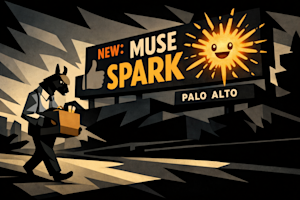
Meta's Muse Spark ushers in a new era of AI models beyond Llama.
Meta has unveiled Muse Spark, its first proprietary AI model since the formation of Meta Superintelligence Labs, signaling a significant shift from the open-source Llama family. Under the leadership of Chief AI Officer Alexandr Wang, Muse Spark is designed to support tool use, visual reasoning, and multi-agent orchestration, marking a leap in AI capabilities. Unlike its predecessors, Muse Spark aims to deliver "personal superintelligence," integrating visual data to enhance user interactions.

Open source AI accelerates as GLM-5.1 brings capable coding to everyone.
Today marks a significant milestone in artificial intelligence as Z.ai unveils GLM-5.1, an open-source large language model designed for eight-hour autonomous tasks. This model outperforms competitors like Opus 4.6 and GPT-5.4 on SWE-Bench Pro, showcasing its advanced capabilities in coding and engineering tasks. Released under a permissive MIT License, GLM-5.1 empowers enterprises to customize and utilize its features for commercial applications. As China re-emerges in the open-source AI landscape, GLM-5.1 positions Z.ai as a leader in
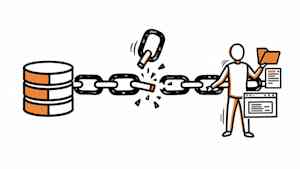
Amazon S3 becomes a native workspace for AI agents, ending file-object friction.
Amazon S3 Files revolutionizes the way AI agents interact with data by providing a native file system workspace that bridges the gap between object storage and file-based tools. This innovation allows agents to access data stored in Amazon S3 directly, eliminating the need for complex data duplication and sync pipelines. By integrating Elastic File System technology with S3, AWS enables seamless access to data as if it were part of the local file system.

Square's Managerbot turns proactive AI into a quiet business partner for sellers.
Block has unveiled Managerbot, a proactive AI agent integrated into the Square platform, designed to monitor sellers' businesses, identify potential issues, and propose actionable solutions without requiring prompts from users. This innovation marks a significant evolution from the previous reactive AI assistant, showcasing CEO Jack Dorsey's vision for AI's transformative role in business operations. By seamlessly managing inventory forecasting, employee scheduling, and marketing campaigns, Managerbot empowers small business owners to enhance their productivity and decision-making, reinforcing Square’s commitment to supporting sellers in their day-to-day commerce.
Trust Demands the Right Transparency at the Right Moment
In "Identifying Necessary Transparency Moments In Agentic AI (Part 1)," Victor Yocco delves into the critical balance between AI system behavior and the transparency of its actions. He argues that navigating the spectrum between opaque black boxes and overwhelming data dumps requires a more nuanced strategy. By mapping decision points, Yocco highlights how revealing the right moments can foster trust and clarity. This thoughtful approach emphasizes the importance of empowering users with understanding, ultimately enhancing their interaction with agentic AI technologies.
Agentic AI's reach: Mapping workflow displacement across 236 occupations.
In our latest analysis, we extend the Acemoglu-Restrepo task displacement framework to assess the impact of agentic AI—systems that can execute entire workflows—on 236 occupations across five major U.S. tech metros. Unlike previous models that treat tasks as independent, our approach reveals that high-credential roles, such as software engineers, face significant automation exposure. Key findings highlight a measurable adoption lag between regions, emerging job categories requiring no coding, and a prediction of widespread moderate exposure rather than catastrophic displacement.
Excel isn't going anywhere, and that's exactly the point.
Despite the annual emergence of so-called "Excel-Killers," Excel remains a cornerstone of data management, continually adapting and growing stronger. Features like Copilot and Python integration enhance its capabilities without replacing its core functionality. Excel’s unique advantage lies in its ability to export data from leading enterprise software while granting users full control over their analysis. As we look ahead, it’s clear that the familiar grid of cells will endure, proving that innovation can coexist with established tools rather than rendering them obsolete.
DAAF: Open-Source AI Workflow Accelerates Data Analysis Without Losing Rigor
Today, I'm excited to introduce DAAF, the Data Analyst Augmentation Framework. This open-source, extensible workflow for Claude Code empowers skilled researchers to enhance their data analysis capabilities by 5-10 times, all while upholding the scientific principles of transparency, rigor, and reproducibility. With just a 10-minute setup, you can leverage DAAF to transform your research process. By embracing the role of human researchers and providing essential guardrails, DAAF ensures that AI becomes a supportive tool, fostering collaboration and innovation in data analysis.