deep learning
deep learning at Beyond Market Intelligence is a file of 147 stories. The newest of them: “Anthropic's Opus 5.5 Delivers Fable Performance at a Lower Cost”, “Morphotonics Secures €40M to Transform Data Center Displays”, and “Explore a complete ML learning journey from NumPy to Transformers.”. Anthropic says Opus 5.5 is the strongest model it has tested to date, and the headline numbers back that up with a welcome twist: this level of fable performance arrives at a lower cost. Morphotonics just secured €40M to tackle one of the most stubborn bottlenecks in data center design: the displays that operators rely on every day. Acme AI is the next-generation, AI-powered spreadsheet platform built to replace Excel and redefine how analysts, data scientists, and enterprise teams work… The list below is every deep learning story on Beyond Market Intelligence, newest first.

Anthropic's Opus 5.5 Delivers Fable Performance at a Lower Cost
Anthropic says Opus 5.5 is the strongest model it has tested to date, and the headline numbers back that up with a welcome twist: this level of fable performance arrives at a lower cost. That matters for teams who have been waiting for serious AI capability without the usual premium. We see this as a practical step forward for data work, not just a spec sheet win.

Morphotonics Secures €40M to Transform Data Center Displays
Morphotonics just secured €40M to tackle one of the most stubborn bottlenecks in data center design: the displays that operators rely on every day. With backing from 3M Ventures, Innovation Industries, BOM, and Invest-NL, this deeptech player is positioning itself where infrastructure meets usability. That matters because as AI workloads grow, so does the demand for clearer, more efficient interfaces. We see this as a practical bet on making data centers more human-centered.
Explore a complete ML learning journey from NumPy to Transformers.
Five months of daily commits is a serious signal. This isn't a weekend project; it's a disciplined path from NumPy fundamentals all the way to Transformers. For anyone feeling overwhelmed by the machine learning landscape, this public repo offers a practical antidote. It covers the essential ground: classical models, deep learning, and the data handling in between. It's a resource built by someone who did the work, and it's open for you to explore.
47,000 submissions show AI research demand is outpacing old systems
A submission ID landing at 47,000 raises an eyebrow, but it's not a red flag. ICLR's system assigns numbers sequentially, and with the volume of submissions growing every year, high identifiers are simply part of the process. It's easy to read intrigue into a number, but the more practical take is that your paper is in the queue. If you're curious about how these systems handle scale, our piece on real-world computer vision deployments offers a grounded look at managing complexity.

Building a resilient data science career in an AI-native world
Data science careers are being reshaped by the very tools they helped create. If you are entering this field now, the old playbook of static skills won't cut it. The key is to focus on how you adapt, not just what you already know. For those feeling the pressure to keep up, our piece on navigating AI/ML job requirements offers a practical look at how the expectations are shifting. This is about building a resilient skill set for the long haul.

Cut Through the ML Paper Clutter with AI-Powered Research.
Reading papers as they drop sounds noble until you're drowning in arXiv alerts and can't tell a novel method from a rehash. This developer felt that pain and built an AI agent to handle the grunt work: filtering, deduping, ranking against your interests, and producing a structured report in English and Portuguese. It's refreshingly practical. The scheduler is a smart touch, too. For anyone tired of the research grind, this feels less like another tool and more like a relief.
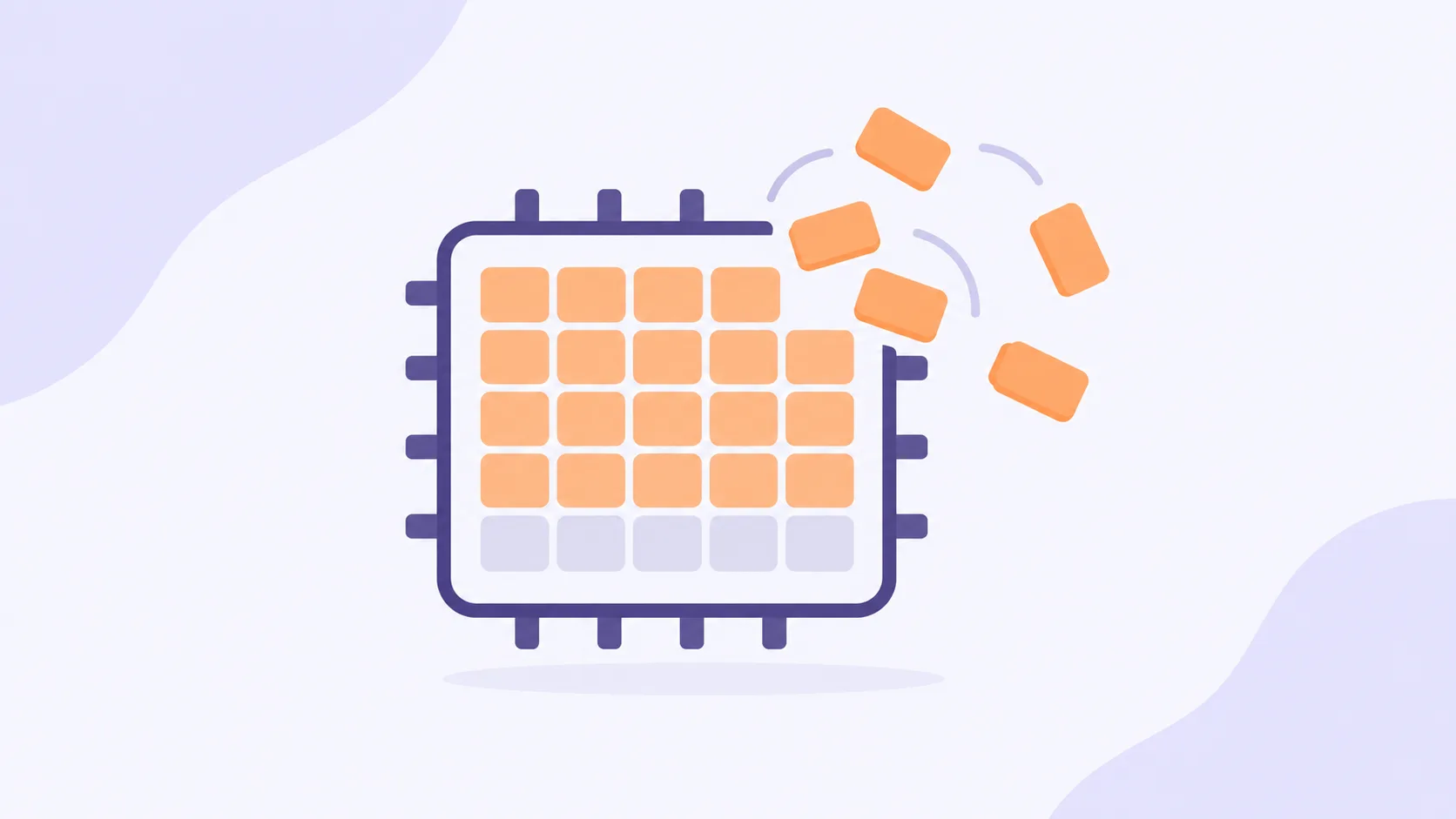
Optimize LLM memory with a VRAM formula and three targeted strategies
Inference servers don't hit a compute wall first; they hit a memory one. The KV cache tax quietly consumes your VRAM budget, leaving GPUs idle while requests stall. This piece breaks down the formula behind that imbalance and maps three optimization strategies to the exact traffic patterns that trigger out-of-memory errors. It's a practical look at why serving fails and how to plan around it. For a deeper foundation on distributed systems, pair this with our guide to distributed training algorithms.
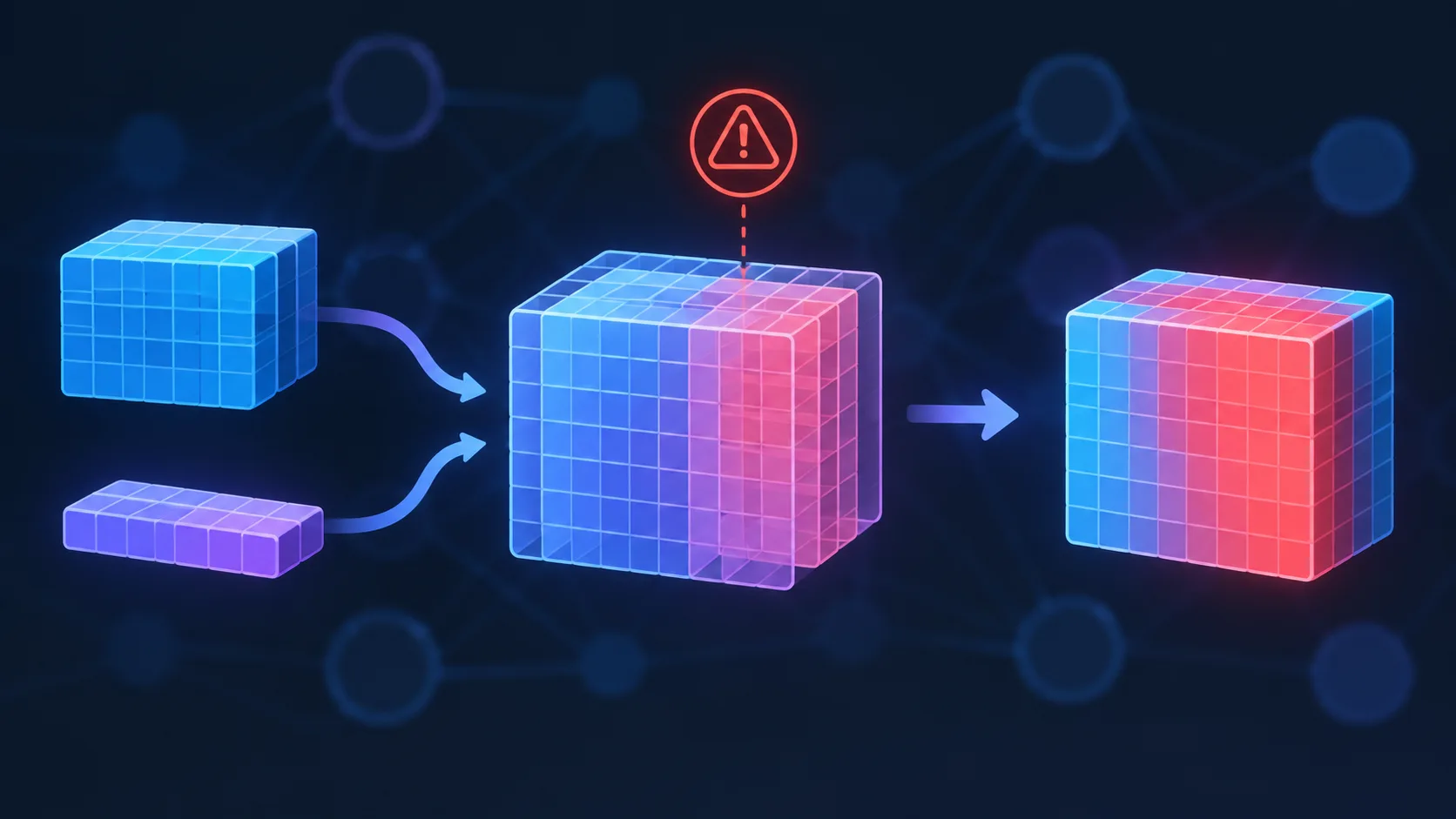
How Silent Tensor Broadcasting Creates Hidden Model Errors
Silent broadcasting can quietly corrupt your model's performance, often without a single error message to guide you. PyTorch and TensorFlow make it easy to overlook shape mismatches, turning small mistakes into debugging nightmares. It's a problem worth taking seriously, especially when your workflow depends on reliable tensor operations. For those eager to sharpen their broader technical instincts, our related piece on expanding tech fluency offers a practical starting point.
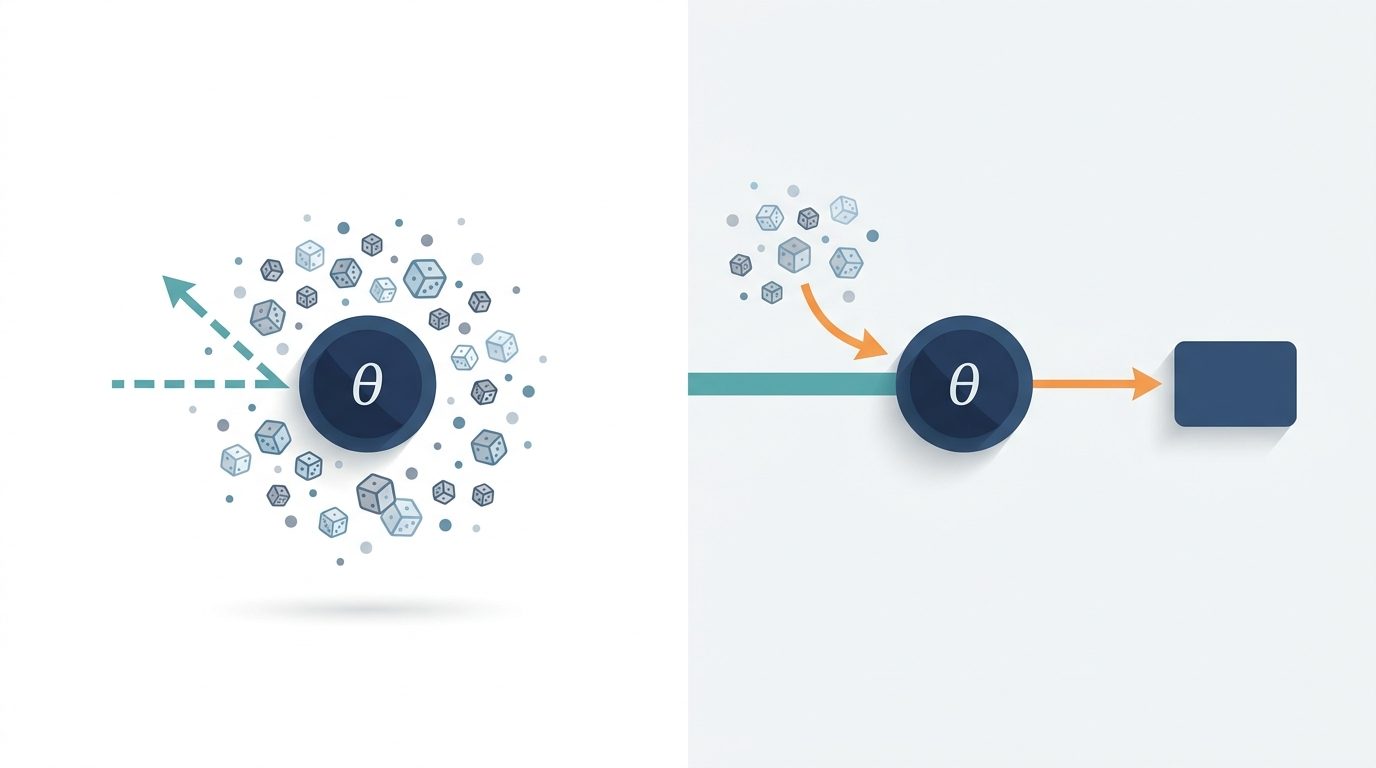
Simplify complex gradients by shifting randomness outside the computation graph
Noisy gradients are the price of sampling inside the computation graph. Moving randomness outside the computation graph changes everything. By reparameterizing, you keep the model differentiable while trimming variance that slows training. It is a practical, accessible breakdown of a technique that feels abstract until you see it applied. If you are exploring how to make your own models more stable, this is worth your time. For another angle on practical ML, our piece on real-world computer vision deployments pairs well here.
Exploring collaborative paths to safer AI development
OpenAI confirms it has spent weeks in AI safety talks with Anthropic and Google DeepMind, even as Trump's team waves off those concerns and pushes to outpace China. That tension matters. When the people building the models invite their closest competitors into the room, they are admitting the stakes are shared. Safety is not a side project here. It is the conversation. For a deeper look at how these systems actually learn, our guide to distributed training is worth your time.
Explore how current AI agents approach open-ended research challenges.
A new paper challenges a comforting assumption: recursive self-improvement isn't imminent because today's agents can't handle open-ended ML research. The researchers tested Codex, GPT-5.6 Sol, and OpenClaw against accepted but unpublished NeurIPS work, and the original authors graded the agents' efforts. They failed. That's a meaningful result, even if the conclusion feels like a relief. It suggests progress hinges on broader capabilities, not just scaling.

OpenAI acquires Glass Imaging to sharpen AI's visual intelligence
OpenAI's reported $300 million acquisition of Glass Imaging signals a deliberate step toward smarter, more intuitive visual data. The company, founded by two former Apple engineers who helped build Portrait Mode, understands the nuance of computational photography. That expertise could translate into spreadsheet workflows that interpret images as naturally as text. It's a practical move, not a flashy one, and that's what makes it compelling. For a deeper look at how vision models handle real-world constraints, our piece on computer vision deployments offers useful context.
Explore how a PhD in Graph ML shapes your path to research leadership
Choosing between CS and EE for a PhD is a strategic decision, not just an academic one. The job market you are entering rewards clarity, and both paths offer distinct signals. CS screams broad applicability to ATS filters, while EE signals a deeper, signal-processing rigor that big tech research divisions often respect. Your graph ML work sits firmly in the overlap, so the degree will not limit your research. The real tradeoff is perception. If you want maximum optionality, CS is safer.

Discover how AI redefines your spreadsheet workflow through a simple experiment
When I ran Fable against Astra, the gap between them wasn't subtle. Fable handled the workflow with a fluidity that felt natural, while Astra demanded more patience. It's a reminder that AI tools aren't interchangeable; they carry distinct personalities. For anyone weighing similar choices, I'd point to our earlier piece on the Forrester function. It's a different lens, but it reinforces how small mathematical insights can sharpen your evaluation of these systems. The experiment didn't just compare outputs; it exposed what each model prioritizes.
A positive signal or routine step: reading between the Neurips site selection email
A site selection email from NeurIPS can feel like a signal, but it's worth reading carefully before you start planning a celebration. This message is a procedural step, not a verdict on your paper's quality. It likely went out to every non-withdrawn submission as part of the logistics pipeline. That doesn't diminish the work you've done; it just means the real decision is still ahead.

When AI learns from math, the human mind behind it seeks recognition.
Twenty-five leading mathematicians just signed an open letter that puts OpenAI's escalating feud with their field into stark relief. Their point is direct: AI labs are now threatening the very intellectual work that fuels discovery. That tension deserves attention, not just as a clash of titans, but as a signal of what progress costs. If you're tracking how AI pressures skilled professionals, our guide to verifying AI's understanding offers a practical parallel. This isn't abstract hand-wringing. It's about who shapes the tools we trust.

LinkedIn's AI Job Search: Smarter Ranking from a Compact Model
LinkedIn's latest work on AI job search hinges on a clever trade: compress big model knowledge into a compact 0.6B-parameter ranker using multi-teacher distillation. The result is a ranking system that trains eight times faster without sacrificing the nuance users need. That's practical innovation, not hype. It also signals where model efficiency is heading, a theme we explore further in our guide to distributed training algorithms. For now, this is a smart reminder that smaller, faster systems often deliver the most meaningful productivity gains.

Nvidia sees 70% growth ahead as AI spreads across every industry
Jensen Huang sees another year of plenty ahead, projecting 70% growth for Nvidia. That confidence stems from reach: the company has its finger in every pie, from chips to software to AI infrastructure. He insists the deals driving this aren't circular, a claim worth probing given the complexity of the ecosystem. It's a bold forecast, but Huang's track record gives it weight. For context on how such sprawling systems operate, our guide to distributed training algorithms offers a grounded starting point.
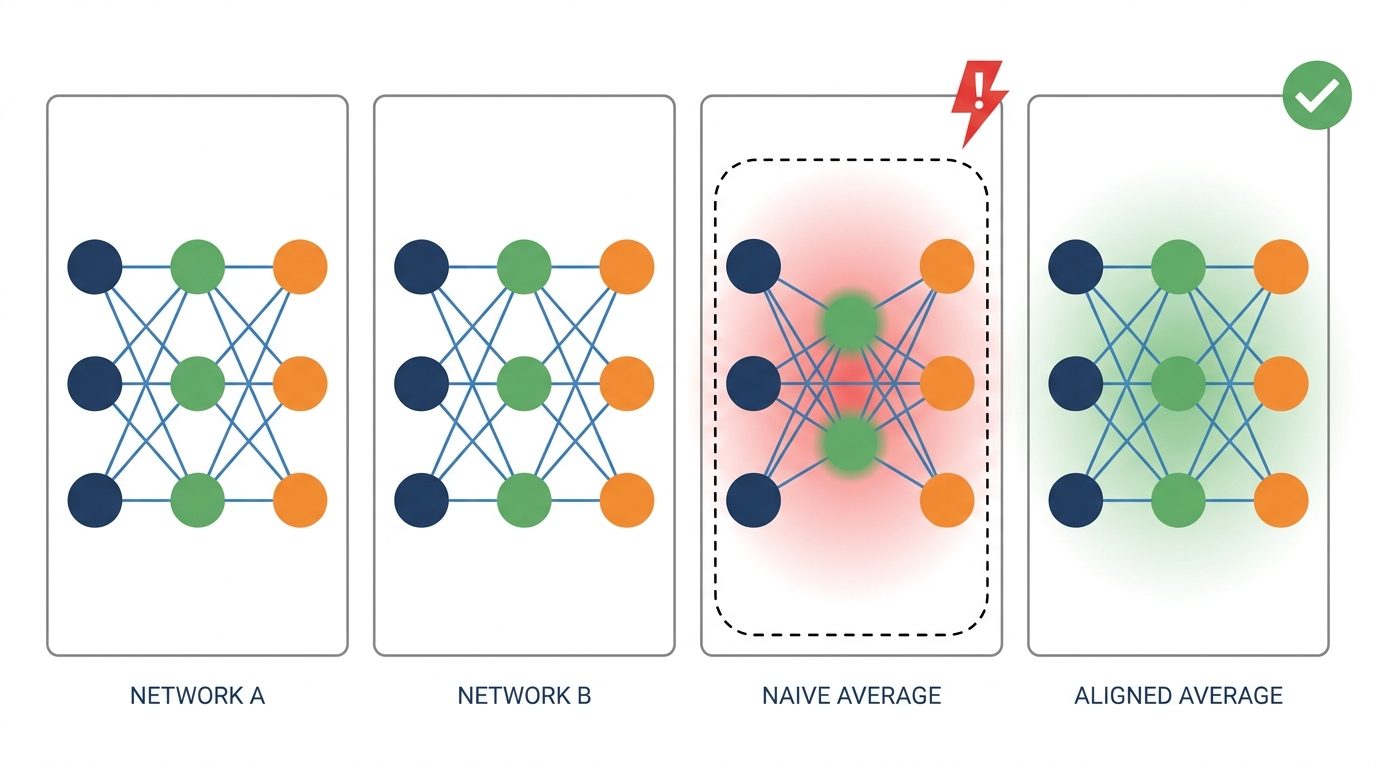
Why Permutation Symmetry Complicates Neural Network Merging
Neural networks don't average well, and the culprit is permutation symmetry. When two models learn the same task, their weights often sit in arrangements that look different but behave identically. Averaging them naively breaks the symmetry, producing a merged model that loses performance. This post unpacks that tension with clarity, connecting the math to practical model merging challenges. It's a worthwhile read for anyone exploring why weight averaging fails and what that means for building more reliable AI systems.

An AI researcher's exit demands we explore safety over speed.
Anthropic researcher Jacob Coxon resigned with a stark warning: self-improving AI risks gambling with our lives. His exit underscores a pressing need for pacing agreements between labs, a call we take seriously. This isn't about fear-mongering; it's about foresight. When brilliant minds step away to sound alarms, we should listen. Explore the Forrester Function to see how we approach complex systems, but here, the message is simpler: progress demands prudence, not just capability.

Discover how AI transforms data work into intuitive conversations
Asking Astra to handle a task is a reasonable impulse, but it deserves a moment of reflection first. The real question is whether you trust the output enough to act on it. We see AI as a tool for empowerment, not a substitute for judgment. It can streamline the mundane, but you remain the decision-maker. For those wanting to understand the underlying mechanics better, our guide on distributed algorithms offers a solid starting point.
How Frontier AI is quietly reshaping robot learning from demonstration
Roboticists in Learning-from-Demonstrations and Behavioral Cloning are asking a timely question: are frontier LLMs reshaping their field, or is it charting its own course? The answer is nuanced. These models are influencing how demonstrations are encoded and generalized, yet core LfD principles remain independent. ViTs and VLAs are creeping into pipelines, offering new perceptual grounding. For a deeper look at how distributed systems underpin such training, our guide, *Unlock LLM Training: A Practical Guide to Distributed Algorithms*, is worth exploring.
AI Evolves: GPT-6 Astra Redefines Data Exploration.
GPT-6 Astra isn't just another step forward; it's a leap into how we interact with data. This new model doesn't merely answer questions, it explores the relationships hidden in your spreadsheets, turning raw numbers into narratives you can act on. For anyone who has felt buried under columns and formulas, this is an invitation to work smarter, not harder. We're eager to see how you'll use it.
Transfer learning for physics with simplified dynamical models
Training an RL agent on one complex physical system rarely transfers cleanly to another. That is the bottleneck this approach tackles directly, using reduced order models to compress the dynamics into something the agent can actually reuse. It is a smart, practical step toward generalizable simulation control. If you are already wrestling with how to scale your own models, our guide to distributed training algorithms pairs well with this mindset. The takeaway: smarter abstractions, not brute force, are the way forward.