deep learning
deep learning at Beyond Market Intelligence is a file of 147 stories. The newest of them: “Why Top-Tier ML PhDs Face Rejection from Leading AI Internships”, “Explore machine learning in a focused math community, free for all”, and “Meta expands AI horizons with Muse Wonder, its first frontier model release”. A first-author NeurIPS paper and FAANG internships aren't opening doors at Nvidia or Waymo. Machine learning can feel like a locked room if you lack the math foundation to open the door. Acme AI is the next-generation, AI-powered spreadsheet platform built to replace Excel and redefine how analysts, data scientists, and enterprise teams work… The list below is every deep learning story on Beyond Market Intelligence, newest first.
Why Top-Tier ML PhDs Face Rejection from Leading AI Internships
A first-author NeurIPS paper and FAANG internships aren't opening doors at Nvidia or Waymo. That's a signal, and it's worth reading carefully. Industry internships, especially in AI, often chase teams building products around today's hyped areas, LLMs, robotics, multimodal systems. If your research sits outside those lanes, even a top-tier publication might not align. The rejection isn't about your skill; it's about timing and fit.

Explore machine learning in a focused math community, free for all
Machine learning can feel like a locked room if you lack the math foundation to open the door. This workshop, hosted on the (blue) Math Discord server, changes that. Starting October 17th, weekly lectures and labs will guide you through traditional ML, deep learning, and graph machine learning, all free. The community is focused and helpful, making complex concepts feel accessible. If you know Python and basic calculus, you are ready to join.

Meta expands AI horizons with Muse Wonder, its first frontier model release
Meta's Superintelligence Lab is stepping into the frontier model arena with Muse Wonder and Muse Wonder Full, the company's first release of this scale. These two models signal a deliberate move beyond incremental updates toward something more ambitious. If you're weighing how different AI assistants handle real analytical work, our comparison of ChatGPT, Claude, and Gemini for data science tasks offers a practical next step. The future of data management is being reshaped, explore what that means for your workflow.
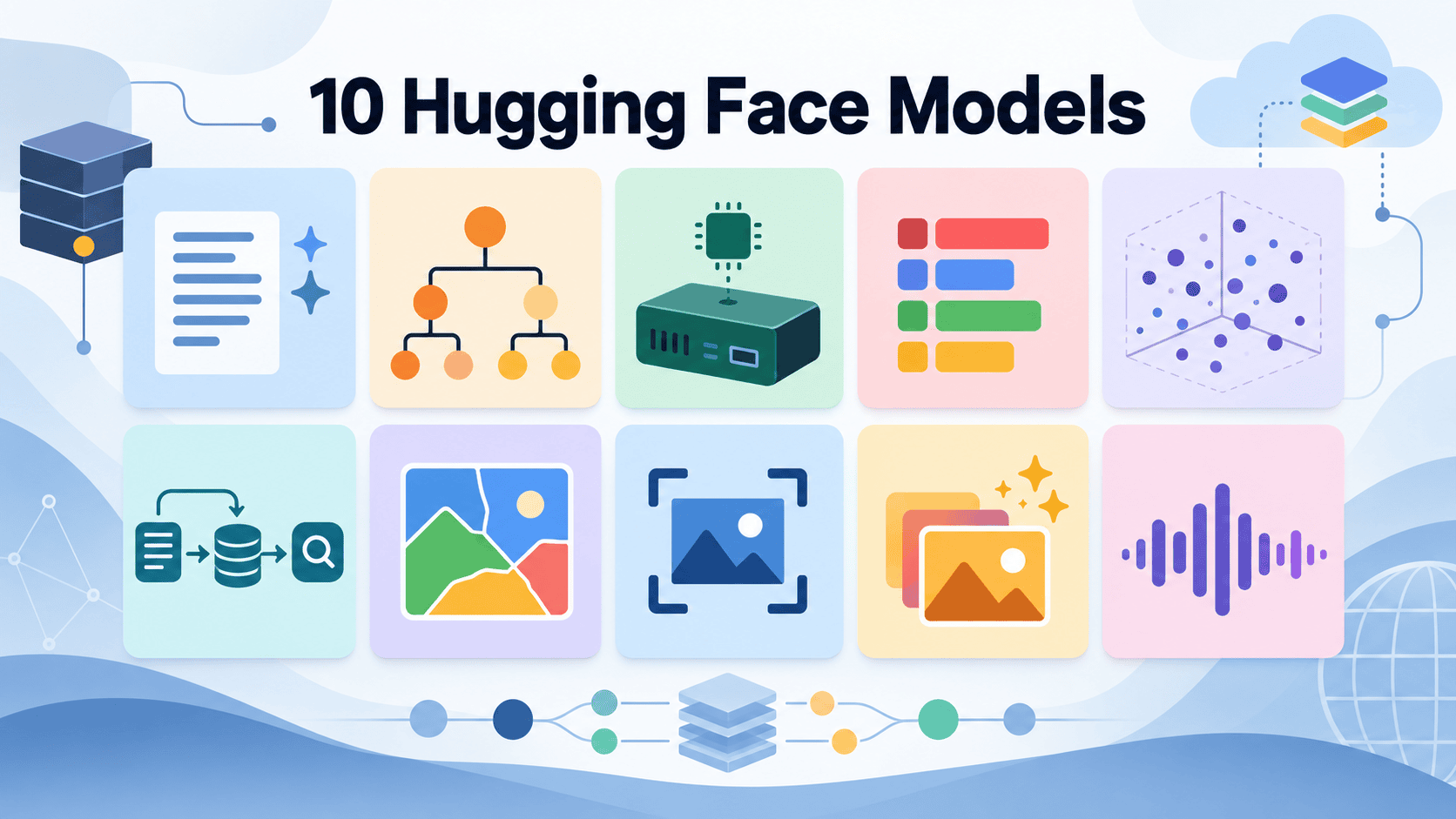
Ten Hugging Face Models Reshaping How Data Works in 2026
Ten Hugging Face models are quietly reshaping how data moves through text, vision, audio, and retrieval pipelines in 2026, and that shift is worth paying attention to. These aren't speculative projects, they're tools you can use today. If you've ever felt constrained by a tool that asks you to wait for answers a local model already knows, our related article "Stop Waiting for Answers Your Local Model Already Knows" explores that exact friction.
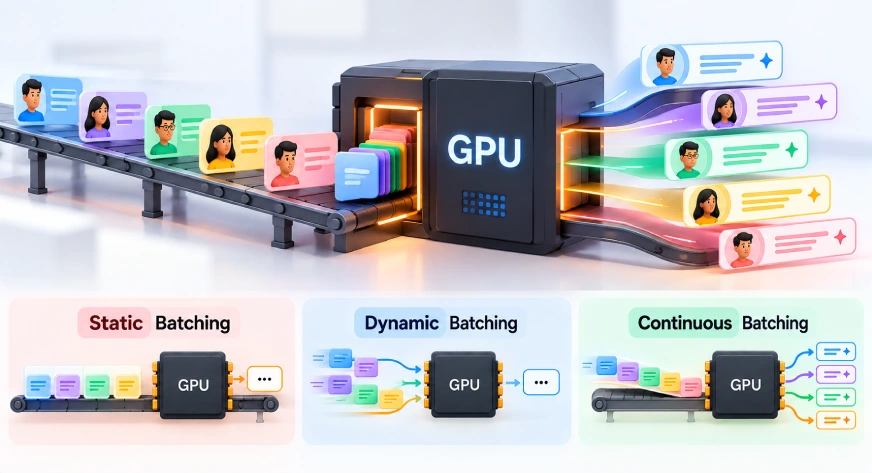
Smarter resource use: how batching transforms LLM performance
Four people heading to the same destination in separate taxis make four identical trips. Put them on a single bus, and everyone arrives together using far less fuel. That is the logic behind batching in large language models. Instead of processing one request at a time, the system groups them, sharing memory and compute across the batch. It is a smarter use of resources that makes AI faster and more efficient. For deeper coverage, explore how hierarchical routing cuts memory while preserving long-context accuracy.
Two AI approaches shift how machines learn from human action
Two approaches to machine learning from human action reveal a fundamental choice: do we teach AI by watching what people do, or by understanding why they do it? One method prioritizes behavioral mimicry, while the other seeks deeper intent. For those navigating these shifts, our piece on production RAG's missing piece offers a practical parallel, how confident answers require knowing when to refuse. The distinction matters more than most realize.

When AI Writes Faster CUDA Kernels Than PyTorch, Benchmarks Decide
AI agents are now writing CUDA kernels that beat PyTorch on speed, but proving those gains are real is the harder problem. I tested them on an NVIDIA DGX Spark and found that benchmark design matters as much as the code itself. When the hype machine sells you AI at every turn, a clear-eyed test like this cuts through the noise. For more on staying grounded, see our related piece on keeping your judgment amid the AI sales pitch.
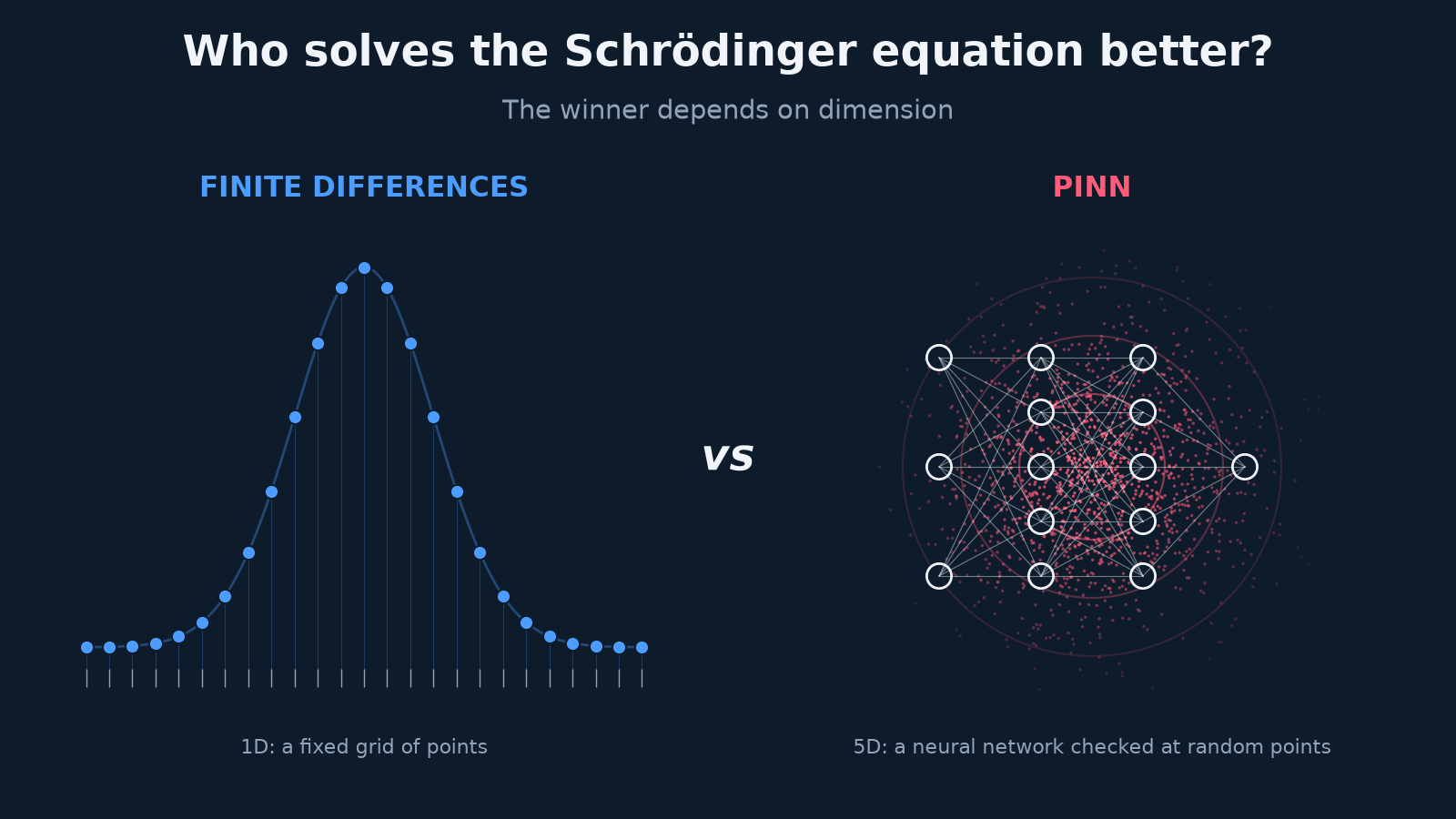
A 1D physics solver wins, but neural networks take the lead in 5D
A 1D physics solver wins; in 5D, neural networks take the lead. We put a physics-informed neural network against a plain finite-difference solver twice, and the winner changed. That shift tells us something important about when AI-powered methods actually outperform classical numerical approaches. It's not a blanket victory, it's conditional, and understanding those conditions matters. For more on how AI adapts to complex environments, see our piece on two AI copies keeping drones in sync with 94% less data.
A practical guide to diffusion models that balances deep math with clear insight
The balance between mathematical rigor and intuitive insight in *The Principles of Diffusion Models* is genuinely exceptional. It's a practical guide aimed at researchers and practitioners who already have basic deep learning knowledge, no prior specialization in diffusion models required. The dedicated appendices invite deeper dives into the math without overwhelming the main text. For readers exploring how AI models evolve, our piece on how small AI models closed the gap on a test built for humans offers a complementary perspective.
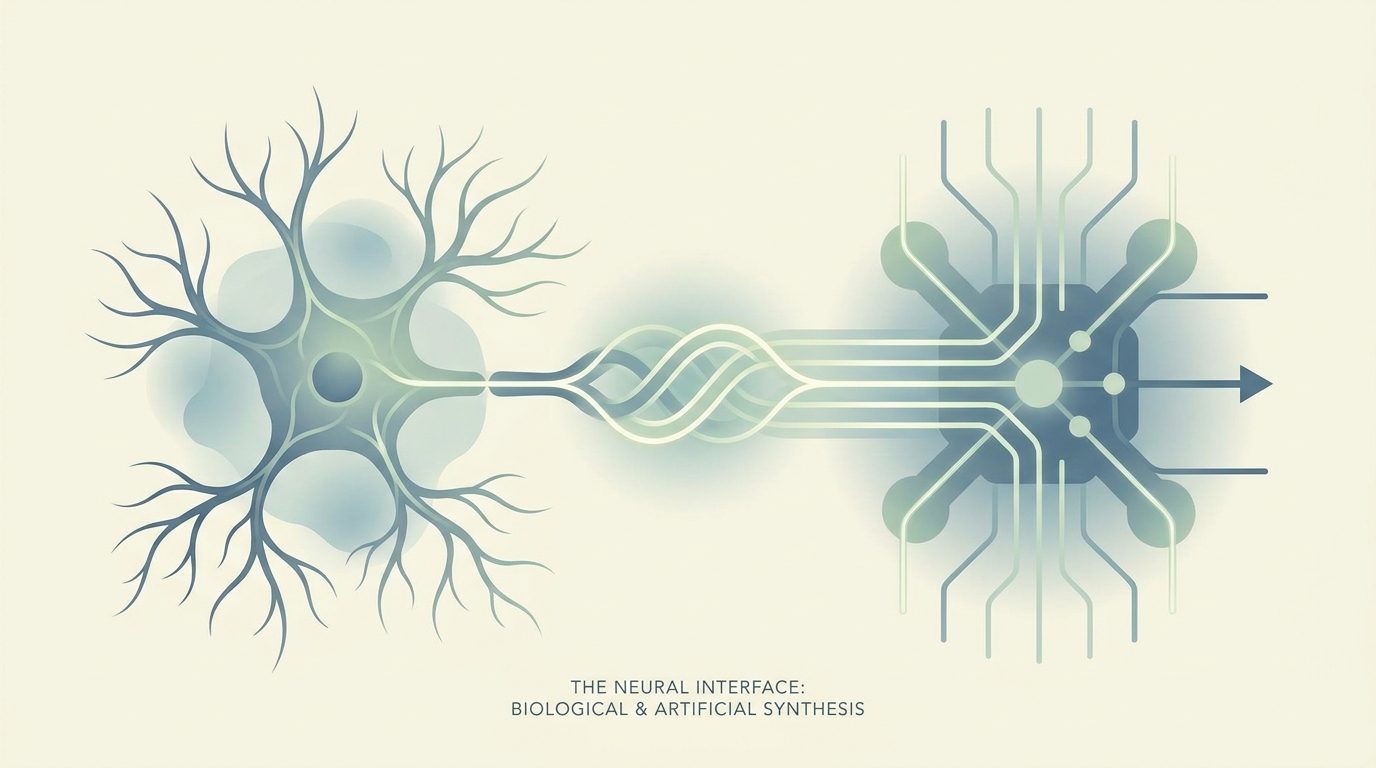
How the ReLU Shift Reshaped Our Understanding of Neural Networks
The ReLU activation function wasn't a fixed biological commitment, it was a working hypothesis revised under empirical pressure. That's the real story behind the shift. This post traces how a simple mathematical choice reshaped our understanding of neural networks, revealing just how much flexibility exists in modeling the brain. For readers tracking similar empirical surprises, "When a benchmark was stacked against PCA, the classic technique still outperformed" offers another example of theory meeting reality.
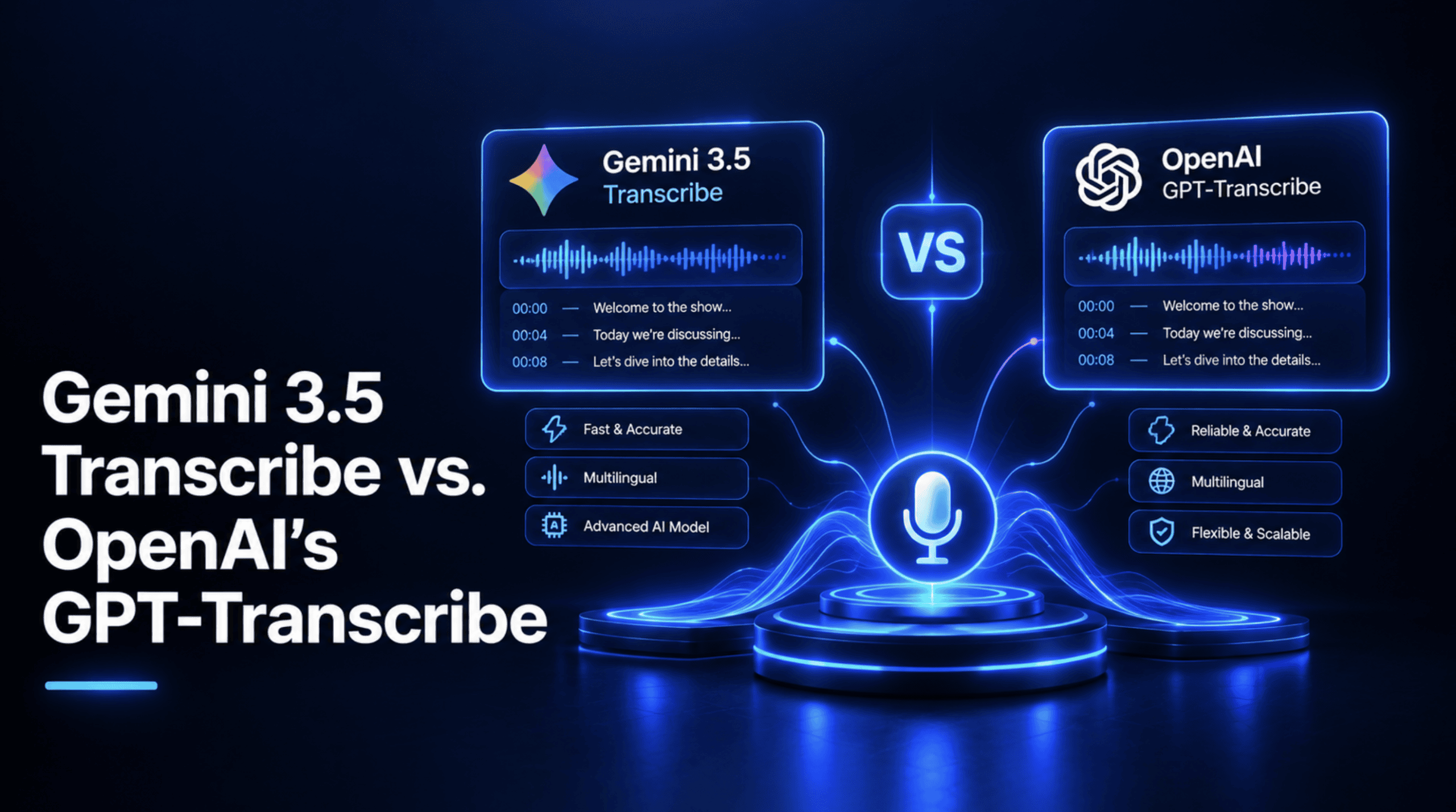
Two AI transcribers compared: real performance where the numbers count
You've read the benchmarks, but what happens when two AI transcribers face real-world data? We pushed them past marketing claims to see where the numbers actually land. The comparison walks through each model's background, a concrete use case with working code, and a side-by-side comparison of the metrics that determine productivity. If you appreciated our breakdown of Qwen3-VL's struggles with dates, this follow-up answers a practical question: which tool earns its place in your workflow?
Turning Your Industry ML Project Into a Publishable Paper
Turning an industry ML project into a publishable paper is a leap many practitioners want to take but hesitate to start. This data engineer, building engines at a manufacturing company, already has the raw material: real-world problems solved with machine learning. The challenge isn't capability, it's translation. Practical engineering work often contains the novelty reviewers seek, but framing it as a research question requires a shift in perspective. For those starting from scratch, begin by reading papers in your domain.

Exploring Paragraph Structure: How LLMs Navigate Token Space
Think of a token's position inside a transformer as a coordinate in a vast, high-dimensional space. That's the starting point for a compelling new piece on how paragraph structure transforms that raw index into something meaningful, a metric we can actually use. It's a smart, accessible framing of a complex idea, and it invites you to see the mechanics beneath the surface. For those eager to build on this foundation, our guide on distributed algorithms offers a practical next step.
NeurIPS Main Track: 7900 Submissions Accepted, 112 Oral Presentations
NeurIPS set a new bar this year: 7,900 accepted papers from 30,709 valid submissions, with 112 oral presentations and 292 spotlights. That's a steep funnel, and it reflects a field maturing fast. The sheer volume signals serious momentum in AI research, but the real story is selectivity. For practitioners, this isn't just a stat; it's a signal to pay attention to where the community is investing its energy. If you're tracking breakthroughs, our coverage of real-world computer vision deployments pairs well with this moment.
AAAI 2027: Phase 1 Results Released, Phase 2 Submissions Now Open
The Phase 1 results are out, and the path to Phase 2 is now clear for those who advanced. If your paper made the cut, the next submission window is officially open. This is where the work gets more focused, and the stakes feel a little higher. We're watching this cycle closely because it rewards persistence as much as insight. For a deeper look at how structured evaluation shapes complex problem-solving, explore the Forrester Function article we published. Now, get to work.
Finding a Publishing Venue to Complete Your AI Research Degree
Getting a fifth-year research paper accepted feels less like a milestone and more like a lock picking session in the dark. You have solid review scores, yet the top-tier doors stay shut, which is frustrating when all you need is a legitimate venue to cross the finish line. For efficient generative AI work, look beyond the NeurIPS crowd. Solid, respectable Elsevier journals or Springer's Applied Intelligence often value solid methodology over prestige. They accept quality work without the ego.
Explore Data Innovation at the Discovery Science Conference in Mainz
A small conference with a clear focus on applied data work, the Discovery Science Conference in Mainz is worth a look if you're tired of theory-heavy talks. From October 5-9, the agenda leans into practical outcomes, which feels refreshing for anyone who wants to see how data innovation actually lands in the real world. I'm presenting my paper there and would be glad to connect with fellow attendees. If you're on the fence about going, this is the kind of event where exploration meets execution.
Visualize Neural Network Training Directly in Your Browser
Watching neural networks train often feels like staring at a black box, but OpenTrainDNN changes that by putting the process directly in your browser. This open-source, client-side app visualizes backpropagation, activation flows, and weight updates in real-time, no servers or special hardware required. It's a practical way to see the mechanics behind deep learning, not just theorize about them. For those wanting to dig deeper into model behavior, our related piece on real-world computer vision deployments offers a useful companion perspective.

Build Your First World Model: A Practical Python Guide
Building a world model sounds abstract until you watch one learn to play CartPole by imagining the future. That's exactly what this practical guide delivers: a hands-on Python walkthrough for creating a model that daydreams its way through the environment, then shows you precisely when that illusion starts to crack. It's a smart, grounded introduction for anyone ready to move beyond static spreadsheets. For more on how AI behaves in real-world systems, explore "Exploring Real-World Computer Vision: Deployments, Edge Models, and Current Challenges."

Greece's PM: AI's Future Demands More Than Yesterday's Solutions
When Greek Prime Minister Kyriakos Mitsotakis sat down with us on his trade mission, he didn't just pitch his country. He admitted something refreshingly honest: no government is ready for what AI is about to do. That kind of candor stands out. It suggests we're all scrambling to keep pace, and that's okay. Acknowledging the gap is the first step toward building smarter policies.

Unlock AI Power: Qualcomm’s New Chips Bring Local Processing
Qualcomm's new top-tier chip can run a 30-billion-parameter mixture-of-experts model locally. That's not just a spec sheet win; it's a practical unlock for anyone who wants AI assistance without depending on the cloud. Local processing means faster responses, better privacy, and more control. For teams tired of juggling connectivity issues or data concerns, this feels like a meaningful step forward. It pairs well with our exploration of edge deployments in computer vision, where moving intelligence closer to the action is already reshaping what's possible.
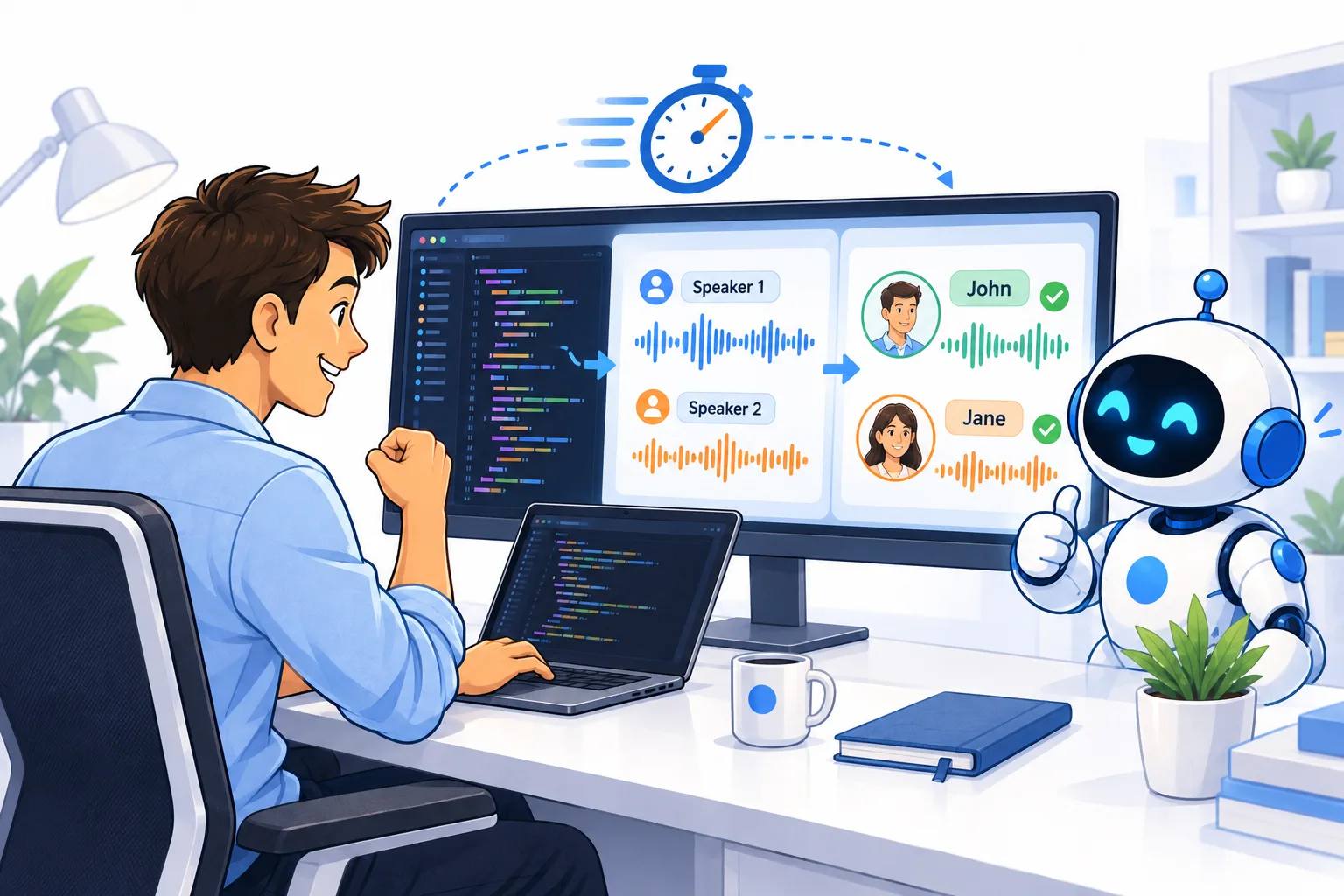
Code an Internal Speaker Recognition Tool with Claude
If you've ever wrestled with identifying who's speaking in a meeting recording, building a speaker-recognition tool from scratch can feel like a heavy lift. This guide walks through coding one internally with Claude, turning a complex audio challenge into a practical, hands-on project. It's a smart, accessible approach for teams ready to move beyond manual transcription. For a broader look at how AI handles real-world inputs, you might also enjoy *Exploring Real-World Computer Vision*, it pairs nicely with the concepts here.
Exploring OpenAI: How AI is Reshaping Data Ownership and Access
Data ownership used to feel like a settled argument, but AI is quietly rewriting the terms. As models learn from our spreadsheets and inputs, the question isn't just who holds the files, but who controls the insights hidden inside them. That shift deserves attention. We explore how OpenAI's tools are pushing this conversation forward, challenging old assumptions about access and authority.
Exploring Autograd: A High Schooler's C++ Machine Learning Project
Building a tensor library and autograd engine from scratch in C++ is no small feat, especially for a high schooler. That kind of hands-on exploration is how you truly internalize the mechanics behind machine learning, moving beyond black-box frameworks. This project shows genuine curiosity and a solid grasp of fundamentals. We appreciate the willingness to share it for feedback. For those interested in seeing how such foundational work connects to real-world applications, our piece on real-world computer vision deployments offers a useful perspective.