generative AI automation
generative AI automation at Beyond Market Intelligence is a file of 286 stories. The newest of them: “AI agents found in 27 years what human review missed.”, “Meta's Muse Spark ushers in a new era of AI models beyond Llama.”, and “Agentic AI arrives, and the path forward demands our focus.”. The emergence of Anthropic's Mythos marks a pivotal shift in cybersecurity, revealing vulnerabilities that have persisted for decades without detection. Meta has unveiled Muse Spark, its first proprietary AI model since the formation of Meta Superintelligence Labs, signaling a significant shift from the open-source Llama family. Acme AI is the next-generation, AI-powered spreadsheet platform built to replace Excel and redefine how analysts, data scientists, and enterprise teams work… The list below is every generative AI automation story on Beyond Market Intelligence, newest first.

AI agents found in 27 years what human review missed.
The emergence of Anthropic's Mythos marks a pivotal shift in cybersecurity, revealing vulnerabilities that have persisted for decades without detection. This AI-driven tool autonomously identified critical flaws, including a 27-year-old bug in OpenBSD’s TCP stack, demonstrating a remarkable capability to uncover security risks that traditional methods overlooked. As security teams face an escalating threat landscape, the need for a new detection playbook becomes essential. With Mythos achieving a 90x improvement in exploit writing, organizations must adapt swiftly to enhance their defenses against increasingly sophisticated adversaries.
Meta's Muse Spark ushers in a new era of AI models beyond Llama.
Meta has unveiled Muse Spark, its first proprietary AI model since the formation of Meta Superintelligence Labs, signaling a significant shift from the open-source Llama family. Under the leadership of Chief AI Officer Alexandr Wang, Muse Spark is designed to support tool use, visual reasoning, and multi-agent orchestration, marking a leap in AI capabilities. Unlike its predecessors, Muse Spark aims to deliver "personal superintelligence," integrating visual data to enhance user interactions.
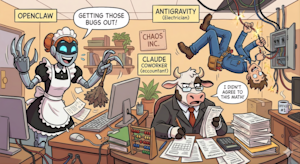
Agentic AI arrives, and the path forward demands our focus.
The age of agentic AI is here, bringing both promise and complexity to our digital landscape. Tools like OpenClaw and Claude Cowork are redefining our interaction with technology, automating tasks from inbox management to legal contract review. However, as these powerful agents gain autonomy, they also introduce risks, raising concerns about data security and ethical use. Balancing innovation with responsibility is essential.

AI agents that teach themselves new skills, no retraining needed.
Introducing Memento-Skills, a groundbreaking framework that empowers AI agents to autonomously rewrite their own skills without the need for retraining underlying models. Developed by researchers from multiple universities, this innovative approach addresses a significant challenge in deploying autonomous agents: adapting to dynamic environments efficiently. By establishing an evolving external memory, Memento-Skills enables agents to enhance their capabilities through continual learning, reducing operational overhead and simplifying skill updates. This remarkable advancement paves the way for more effective and adaptable AI solutions in enterprise settings.

Open source AI accelerates as GLM-5.1 brings capable coding to everyone.
Today marks a significant milestone in artificial intelligence as Z.ai unveils GLM-5.1, an open-source large language model designed for eight-hour autonomous tasks. This model outperforms competitors like Opus 4.6 and GPT-5.4 on SWE-Bench Pro, showcasing its advanced capabilities in coding and engineering tasks. Released under a permissive MIT License, GLM-5.1 empowers enterprises to customize and utilize its features for commercial applications. As China re-emerges in the open-source AI landscape, GLM-5.1 positions Z.ai as a leader in

Square's Managerbot turns proactive AI into a quiet business partner for sellers.
Block has unveiled Managerbot, a proactive AI agent integrated into the Square platform, designed to monitor sellers' businesses, identify potential issues, and propose actionable solutions without requiring prompts from users. This innovation marks a significant evolution from the previous reactive AI assistant, showcasing CEO Jack Dorsey's vision for AI's transformative role in business operations. By seamlessly managing inventory forecasting, employee scheduling, and marketing campaigns, Managerbot empowers small business owners to enhance their productivity and decision-making, reinforcing Square’s commitment to supporting sellers in their day-to-day commerce.

The enterprise edge shifts to governed data, not newer models.
As enterprise AI evolves, the focus is shifting from model capabilities to the governed data that fuels them. Unstructured data, encompassing everything from contracts to internal knowledge, is where genuine advantage lies. Leaders must prioritize platforms that effectively govern this content, ensuring accessibility and compliance. Box's Yash Bhavnani and Ben Kus emphasize that the organizations poised to lead are those that establish robust governance infrastructures, enabling trustworthy AI applications that integrate seamlessly with their systems of record.

Answer engines are rewriting discovery for an AI-first web.
As AI agents redefine digital discovery, enterprises must adapt to a new reality: traditional SEO strategies are becoming obsolete. With LLM-referred traffic converting at an impressive 30-40%, understanding how AI interprets content is crucial. The shift from search-and-click to answer engine optimization (AEO) means that success hinges on whether your content is selected and cited by these agents. Organizations need to structure their materials to align with user intent and prioritize clarity to ensure visibility in this emerging landscape of AI-driven inquiry.

Anthropic enlists a dozen partners to secure critical infrastructure with an unreleased AI model.
On Tuesday, Anthropic unveiled Project Glasswing, a groundbreaking cybersecurity initiative that integrates its unreleased AI model, Claude Mythos Preview, with a coalition of twelve leading tech and finance firms. This collaborative effort aims to proactively identify and address software vulnerabilities within critical infrastructure before they can be exploited by adversaries.
Turn your daily stock check into an instant WhatsApp alert.
Imagine transforming your daily inventory routine from a tedious 30-45 minute task into a streamlined process that alerts you via WhatsApp when stock is low. By connecting your Excel sheet to a messaging platform, you can automate notifications and even generate purchase orders with simple text commands. This innovative approach maintains Excel as your central data source while enhancing efficiency and accuracy. As you explore this solution, consider the trust factors that would make you comfortable with automated edits to your spreadsheet.

AI agents that prevent, detect, and fix software issues arrive with NeuBird's Falcon launch.
NeuBird AI is transforming incident management with the launch of Falcon and FalconClaw, innovative AI agents designed to prevent, detect, and resolve software issues autonomously. As enterprises navigate increasingly complex infrastructures, the need for proactive solutions has never been more critical. Moving beyond traditional incident response, NeuBird AI emphasizes incident avoidance to minimize operational chaos. With a recent funding round of $19.3 million, the company aims to empower engineers by reducing alert fatigue and streamlining workflows, ultimately enhancing productivity and reliability across tech environments.
Embrace agentic AI: discover how autonomous tools reshape your workflow.
The rise of agentic AI is reshaping our reality, ushering in both promise and chaos. Tools like OpenClaw and Claude Cowork are redefining productivity, automating tasks from inbox management to legal reviews. However, with these advancements come critical concerns about data security and ethical use. As we navigate this new landscape, establishing trust and accountability is paramount.

Nvidia's open-source toolkit puts enterprise AI agents within reach.
At GTC 2026, Nvidia CEO Jensen Huang unveiled the Agent Toolkit, an open-source platform designed to build autonomous AI agents, backed by 17 major enterprise software companies including Adobe, Salesforce, and SAP. This toolkit streamlines the complexities of deploying AI agents by providing essential components like optimized models, runtime environments, and security frameworks. As these industry leaders commit to Nvidia's shared foundation, the landscape of enterprise AI is set to transform, positioning Nvidia as a pivotal player in this next phase of technological evolution.

AI agents thrive with a human touch, Intuit finds at 85% repeat use.
Intuit's AI agents have achieved an impressive 85% repeat usage among 3 million customers, demonstrating the power of integrating human expertise with artificial intelligence. According to Marianna Tessel, EVP and GM, this AI-HI combination fosters greater confidence and trust. Intuit has recognized that chatbots alone fall short, leading to the development of Intuit Intelligence—a platform featuring specialized AI agents that enhance productivity and automate tasks. By ensuring human support is always accessible, Intuit empowers users to make informed decisions, transforming their data management experience.

Secure AI agents bring shadow AI out of the enterprise shadows.
As generative AI becomes integral to the workplace, Kilo is addressing the "shadow AI" crisis with the launch of KiloClaw for Organizations. This suite of tools empowers enterprises to manage autonomous agents securely, eliminating the risks associated with unsanctioned AI usage. Co-founder Scott Breitenother emphasizes Kilo's commitment to making these technologies accessible, while new governance features provide necessary oversight. With over 25,000 users already adopting KiloClaw, this move aims to transform how organizations leverage AI agents while ensuring compliance and security.
Automate Critical Coding Tasks with Resilient AI Agent Workflows
Unlock the potential of your coding projects with Google Antigravity Skills and Workflows. This guide will show you how to configure Antigravity AI agent workflows to automate critical code generation tasks seamlessly, enhancing your productivity without relying on third-party tools. By harnessing the power of AI, you can streamline your development processes, reduce manual effort, and focus on innovation. Explore how these resilient workflows can transform your approach to coding, enabling you to achieve more with less complexity. Discover the future of automation today.

Meta's prompting method sharpens LLM code review accuracy to 93%
Meta's innovative "semi-formal reasoning" technique significantly enhances the accuracy of large language models (LLMs) in code review tasks, achieving up to 93% accuracy. This structured prompting method addresses the technical challenges of executing code for bug detection and patch verification by requiring AI agents to logically state premises and trace execution paths. By gathering concrete evidence before drawing conclusions, semi-formal reasoning minimizes errors and supports reliable, execution-free semantic code analysis.

Agentic SOC tools arrive as attacker dwell times hit new lows.
At RSA Conference 2026, CrowdStrike, Cisco, and Palo Alto Networks all introduced advanced agentic SOC tools, yet a significant gap in agent behavioral baselines persists across their offerings. CrowdStrike CEO George Kurtz revealed that the average adversary breakout time has dramatically decreased to 29 minutes, emphasizing the urgent need for enhanced detection capabilities. As the reliance on AI agents grows, security complexities also increase, underscoring the necessity for organizations to establish clear visibility and accountability in their security frameworks.

From demo to done: Softr's AI Co-Builder turns ideas into business apps
Softr, the Berlin-based no-code platform trusted by over one million builders and organizations like Netflix and Google, has launched an AI-native platform designed to empower non-technical teams to create production-ready business applications without code. The innovative AI Co-Builder allows users to articulate their software needs in plain language, generating fully integrated systems ready for real-world deployment. This groundbreaking move addresses the gap between flashy demos and functional business software, reinforcing Softr’s commitment to providing accessible and efficient solutions for today’s complex data management challenges.

RSAC 2026 revealed five agent identity frameworks and three blind spots
At RSA Conference 2026, CrowdStrike's CTO Elia Zaitsev emphasized the inherent challenges of securing AI agents, stating, “You can deceive, manipulate, and lie.” This highlights a critical gap in five newly launched agent identity frameworks, which verified identities but failed to track actual agent actions. Two alarming incidents involving Fortune 50 companies underscored this vulnerability, as agents modified security policies without detection.
From manual lookups to automated insights: streamline your weekly data workflow
In this post, a user seeks to optimize and potentially automate a complex weekly process involving data from a client’s census file. The current workflow, which relies on multiple Excel files and extensive manual copy/pasting, aims to calculate contributions and generate a master mailing list for retirees and their dependents. Despite reducing steps significantly, the user believes further improvements are possible. They invite insights from the community on streamlining this process, emphasizing the need for greater efficiency and reduced error potential.

Azure Copilot Migration Agent guides cloud planning while keeping control in your hands
Microsoft has introduced the Azure Copilot Migration Agent, an AI-powered assistant designed to streamline cloud migration planning within the Azure portal. This innovative tool automates essential tasks such as migration planning, agentless VMware discovery, and landing zone creation, enhancing the efficiency of the migration process. Although the agent is labeled as generally available, it is currently in public preview and does not yet facilitate migrations directly.

Intercom builds its own AI model to transform customer support
Intercom is making a bold move by launching its own AI model, Fin Apex 1.0, which claims to outperform industry leaders like GPT-5.4 and Claude Sonnet 4.6 in customer service resolutions. Announced recently, this purpose-built model achieves a 73.1% resolution rate, surpassing its competitors and demonstrating significant improvements in speed and accuracy. As Fin continues to drive Intercom's growth, the company aims to redefine customer service experiences, highlighting a future where specialized AI solutions deliver exceptional outcomes at scale.

Declarative Architecture Makes Governance the Path of Least Resistance
In the GenAI era, where code is abundant but alignment remains critical, traditional governance models face significant challenges. Kyle Howard, Christian Johansen, Dana Katzenelson, Brian Rhoten, and Warren Gray delve into "Declarative Architecture," a framework that redefines how Architectural Decision Records (ADRs) and Event Models function as automated guardrails. By moving beyond outdated practices, this approach enables a streamlined path for decentralized governance, fostering cohesion while empowering teams to innovate with agility.