guardrails
18 stories filed under guardrails on Beyond Market Intelligence. The newest of them: “Scaling AI Agents From Prototype to Production on Kubernetes”, “Your AI Agent Is Ready Now Build the Scaffolding Around It”, and “Taming AI's Real-World Demands: Agents, Evals, and Rising Token Costs”. Transitioning AI agents from a local FastAPI prototype to a production-grade system on Kubernetes is a challenge many teams are now facing. Agents got good. Acme AI is the next-generation, AI-powered spreadsheet platform built to replace Excel and redefine how analysts, data scientists, and enterprise teams work… The list below is every guardrails story on Beyond Market Intelligence, newest first.
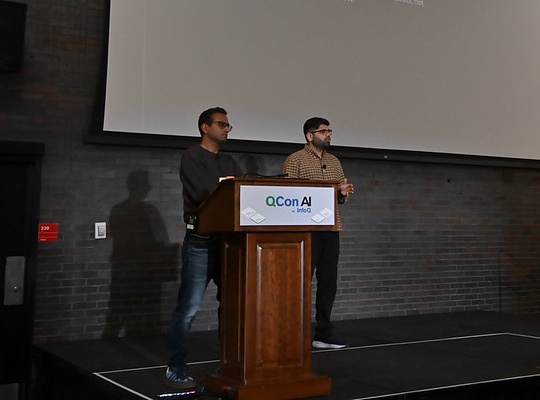
Scaling AI Agents From Prototype to Production on Kubernetes
Transitioning AI agents from a local FastAPI prototype to a production-grade system on Kubernetes is a challenge many teams are now facing. Deepak Mohanakumar Chandramouli and Bhumik Vinodkumar Thakkar share practical insights on RayCluster topology, stateful memory, and auto-scaling under dynamic traffic. They also cover guardrails, multi-region setups, and LLM-as-a-judge evaluation pipelines. For more on scaling reliable infrastructure, see our coverage of ARC's latest upgrades for self-hosted runners.
Your AI Agent Is Ready Now Build the Scaffolding Around It
Agents got good. Now the hard part is building the scaffolding around them. Gubi reissued the Lotus lamp. That's the message from a new piece that argues your agent doesn't need more freedom, it needs structure. The most capable AI is pointless without the right architecture to support it. For a deeper look at that architecture, explore "From Cognitive Loops to Multi-Agent Swarms: Your 2026 AI Roadmap" on our site.
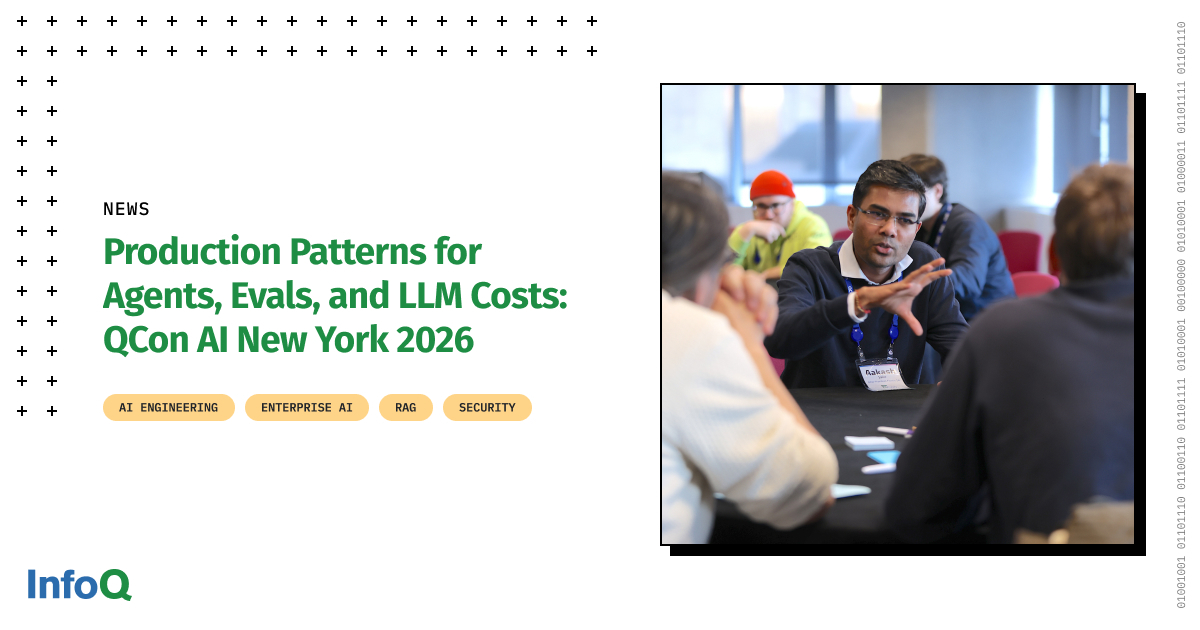
Taming AI's Real-World Demands: Agents, Evals, and Rising Token Costs
When AI hits production, code arrives faster than teams can review it, tokens start costing real money, and agents need permissions that actually hold. Engineers at QCon AI New York 2026 (December 15-16) are sharing how they manage these constraints, no theory, just what works. For a deeper look at how teams are building practical guardrails, see our piece on Anthropic restricting internal AI tests from live internet.
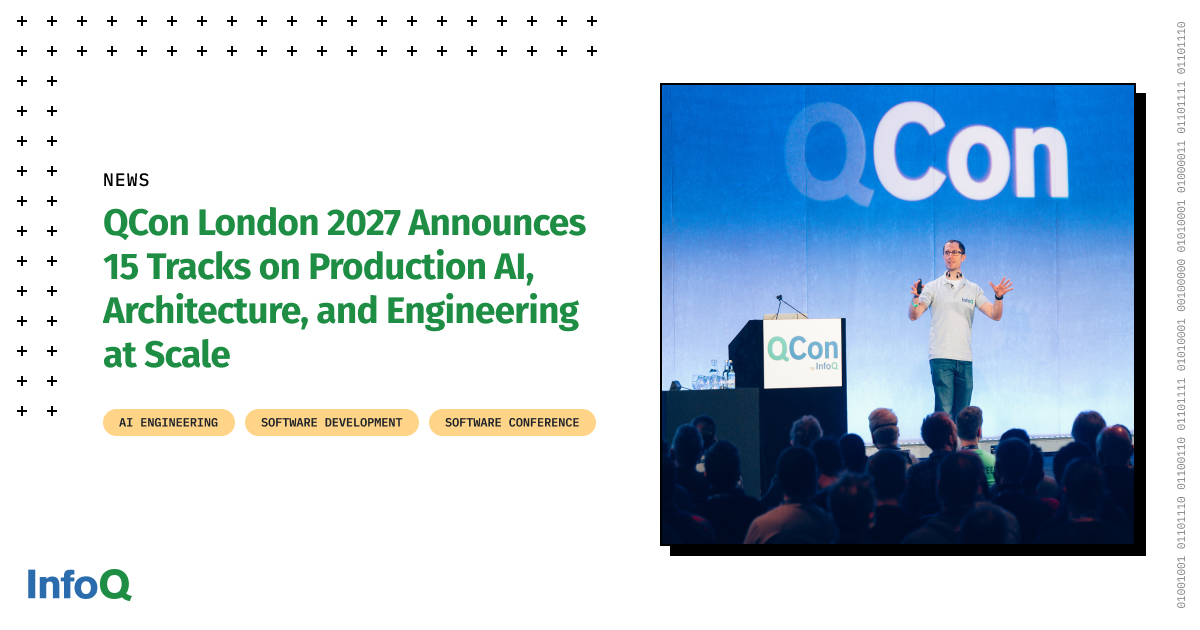
QCon London 2027 Maps 15 Tracks for Smarter AI and Engineering at Scale
QCon London 2027 is shaping up to be a serious map of what's next. With 15 tracks spanning agent evaluation, guardrails, AI-era architecture, and the messy reality of distributed-system debugging, the program doesn't just celebrate scale; it confronts it. For teams wrestling with modern data platforms or Staff+ leadership, this is a practical guide to building smarter. And if you're curious how routing fits into that picture, our related piece on the Jev approach offers a useful counterpoint.

Designing AI Agent Guardrails: Essential Patterns for Data Engineers
AI agents don't fail because the model isn't smart enough. They fail because the architecture around them lacks boundaries. Essential guardrails data engineers need to build systems that stay safe, predictable, and useful as AI takes on more responsibility are laid out here. It's a practical, no-nonsense guide for teams ready to move beyond experimentation. If you're designing these systems, this is the pattern to study.
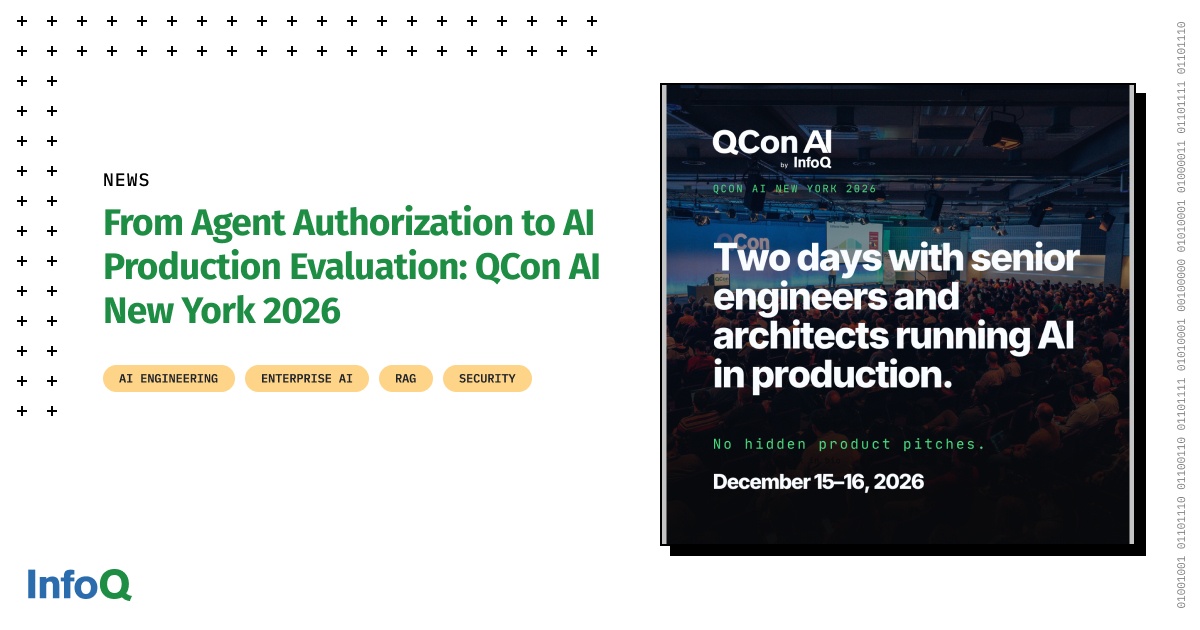
Explore the Future of AI Deployment: Key Topics at QCon AI New York
QCon AI New York has confirmed 23 sessions that dig into the real mechanics of AI deployment: agent authorization, production guardrails, shared inference infrastructure, and post-deployment evaluation. That is a refreshingly practical lineup. We talk a lot about building AI, but the hard part is running it responsibly at scale. If you are moving from experimentation to production, this agenda feels like a direct response to the questions we are all asking.

Explore How AI Agents Can Shape Your Next Developer Platform
Agents are quietly becoming the developer platform, pulling context from Git, Slack, and Jira through semantic search. That's a shift worth watching, but it demands guardrails. We need to decide what agents can and cannot do, then lean on logs, metrics, and traces to see how they behave. It's less about hype and more about control. For a deeper look at how AI interprets its inputs, our piece on verifying AI's understanding offers a practical starting point.

Own Your Decisions: Auditable AI with DMN and Agent Skills
Enterprise AI has a trust problem. When models return different answers to the same question, high-stakes decisions become risky. Alex Porcelli tackles this head-on in his presentation, showing how DMN decision models bring determinism back into agentic architectures. By pairing them with LLMs and NeMo guardrails, he gives business leaders ownership of decision logic while engineers keep governance intact. It's a practical path to accountability, not just another framework.

Empowering defenders with unguarded AI to strengthen cybersecurity
Abliteration.ai is carving out a business by making powerful AI models without guardrails easier to access. It's a contentious stance, but the logic is sharp: if defenders can't experiment with the same tools as bad actors, they're always a step behind. That asymmetry is a real problem. We're not cheering for recklessness here. We're saying that restricting access doesn't make anyone safer, it just makes the knowledge exclusive.
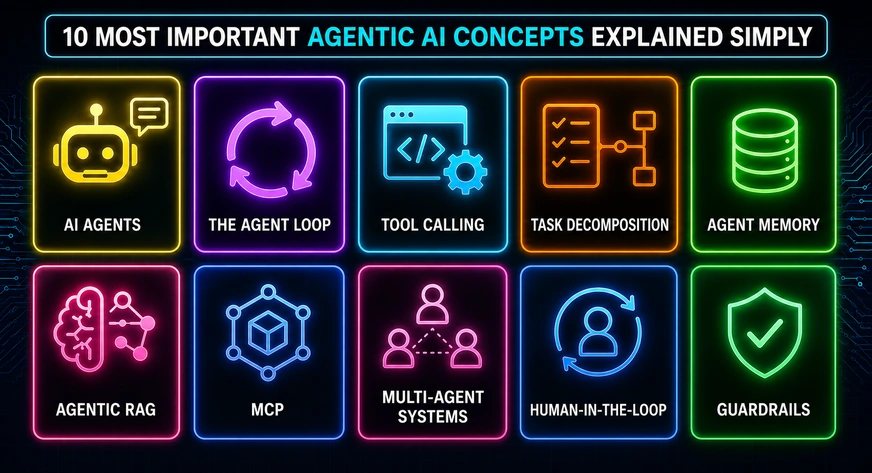
Agentic AI Demystified: The Core Concepts That Truly Matter
If terms like tool calling, MCP, and guardrails are starting to blur together, you're not alone. Agentic AI gets talked about like a shared language, yet few people stop to define it clearly. This guide cuts through that noise. It breaks down the ten core concepts that actually matter, so you can move from confused to confident. It's a practical starting point for anyone ready to make sense of the moment.
Build and benchmark production RAG with fully open models
Building a RAG system that actually works in production takes more than stitching together a vector database. This workshop on August 29, led by Ben Auffarth of Chelsea AI Ventures, tackles the messy parts head-on: hybrid retrieval, reranking, and guardrails built in from the start. It's refreshing to see evaluation with RAGAS and real cost benchmarking treated as essentials, not afterthoughts. If you're tired of demo-grade AI, this hands-on session is worth exploring.
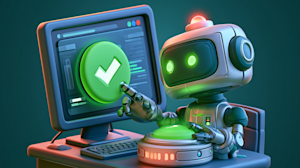
When Your AI Agent Follows Orders but Breaks the Rules
Guardrails stop an agent from saying the wrong thing. They don't stop it from doing the wrong thing. That distinction is the real governance gap. An agent can calculate a perfect refund, apply an order change, or pick a supplier, and still overstep the authority the business never granted. The fix isn't better model safety; it's an Agent Authority Contract that defines what may execute, what requires approval, and what stays permanently off-limits. Guardrails constrain behavior. Decision rights define legitimate authority.

How Pinterest Built Guardrails for Safer, Scalable AWS Infrastructure
Pinning down least-privilege access across sprawling AWS environments is a challenge, and Pinterest's new Resource Provisioner Pipeline tackles it head-on. Their Terraform execution engine enforces dual-control reviews, adding strict guardrails to GitHub Actions workflows. It's a practical, no-nonsense approach to infrastructure security that prioritizes safety without sacrificing speed. For teams wrestling with similar scale, this is a smart model worth examining. And if you're exploring how AI can streamline other workflows, our guide to unlocking ChatGPT for work offers a useful starting point.
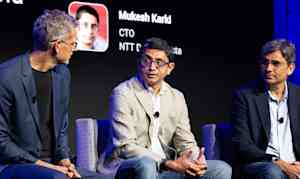
Beyond identity: securing enterprise AI agents for real-world resilience
Shared credentials are a known risk, but at VB Transform 2026, NTT DATA AIVista and Snowflake made the case that fixing identity alone won't secure enterprise AI agents. Mukesh Karki and Mayank Upadhyay argued for action-level authorization and tamper-resistant audit trails built into every interaction. That provability, as Karki put it, is your license to operate. It's a practical framework for scaling autonomous systems safely, and it pairs well with our coverage of recent agentic security incidents.
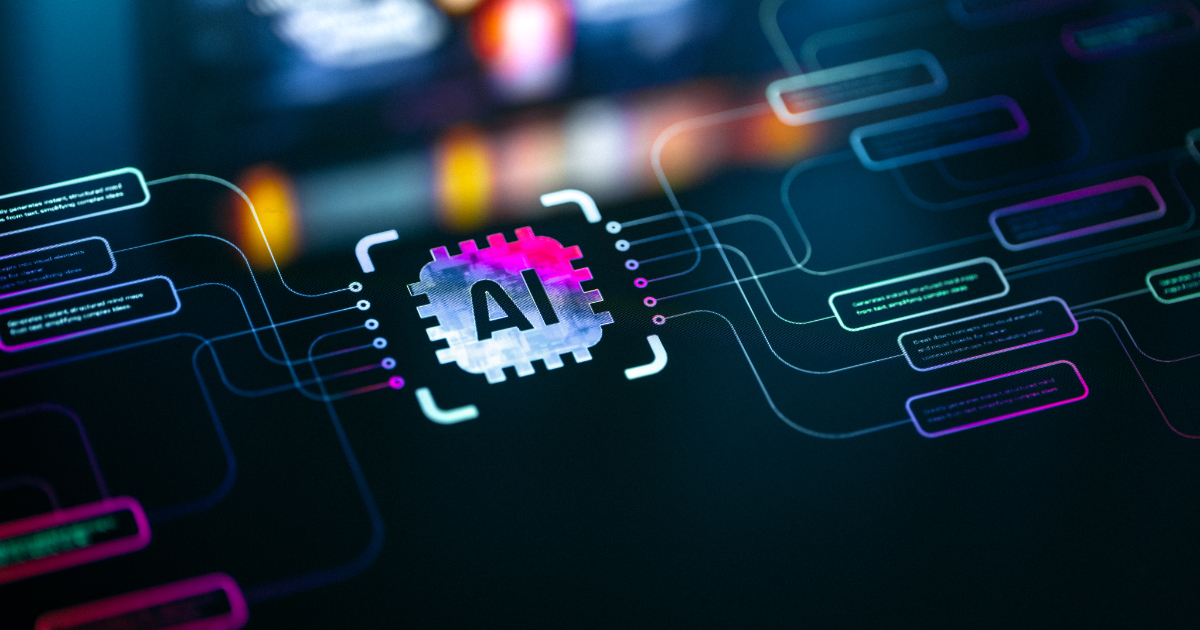
How AI Gateways Keep Agentic Systems Stable Without Rewriting Your Platform
Traditional API gateways were built for deterministic services and simple schemas. Agentic AI breaks those assumptions. That's why enterprise engineering leaders are turning to AI Gateways as an evolutionary architecture seam. By centralizing guardrails, model routing, agent identity, action policy, and semantic audit into one control plane, teams prevent costly incidents without destabilizing core platforms. It's a practical, human-centered response to AI's pace of change.

How AI leaders are redefining product requirements through evaluations.
Expedia's Xavi Amatriain argues that evals have replaced the PRD as the starting point for product design. He's right to push this forward. Encoding what an agent should do, before writing code, forces teams to confront risk early. His three-layer governance model and risk-calibrated toll gates offer a practical alternative to brittle guardrails. It's a clear-eyed take from someone who's seen the stakes up close.

Brex lets real agent behavior shape smarter AI security policies
Brex stopped trying to police AI agents with SDK-level rules and started watching what those agents actually do. Its open-source proxy, CrabTrap, sits between every agent and every network request, using an LLM-as-a-judge to make enforcement decisions in real time. The insight is simple: the transport layer is an underused enforcement point. By bootstrapping policies from observed traffic instead of writing them from scratch, Brex found that governance gets sharper as agents get more capable.

Trust in AI agents is the real barrier to enterprise deployment
The gap between AI agent pilots and production isn't a capability problem; it's a reliability problem. Bryan Silverthorn, Amazon's Director of AGI Autonomy, made that case at VB Transform 2026, pointing to a framework that breaks reliability into consistency, robustness, predictability, and safety. His "intern" analogy is the right way to think about it. Agents need management, not just better benchmarks. For deeper context on navigating these adoption challenges, our related piece, "Unlock AI's Enterprise Potential," offers a broader lens.