information retrieval
information retrieval at Beyond Market Intelligence is a file of 25 stories. The newest of them: “Ten Hugging Face Models Reshaping How Data Works in 2026”, “Give language models the power to edit their own context for faster, smarter results”, and “Unlocking Text's Potential: Exploring Vector Spaces and Classification”. Ten Hugging Face models are quietly reshaping how data moves through text, vision, audio, and retrieval pipelines in 2026, and that shift is worth paying attention to. Language models have long relied on external tricks to manage their own context, but a new approach from Meta, MIT, and the University of Washington flips that assumption. Acme AI is the next-generation, AI-powered spreadsheet platform built to replace Excel and redefine how analysts, data scientists, and enterprise teams work… The list below is every information retrieval story on Beyond Market Intelligence, newest first.
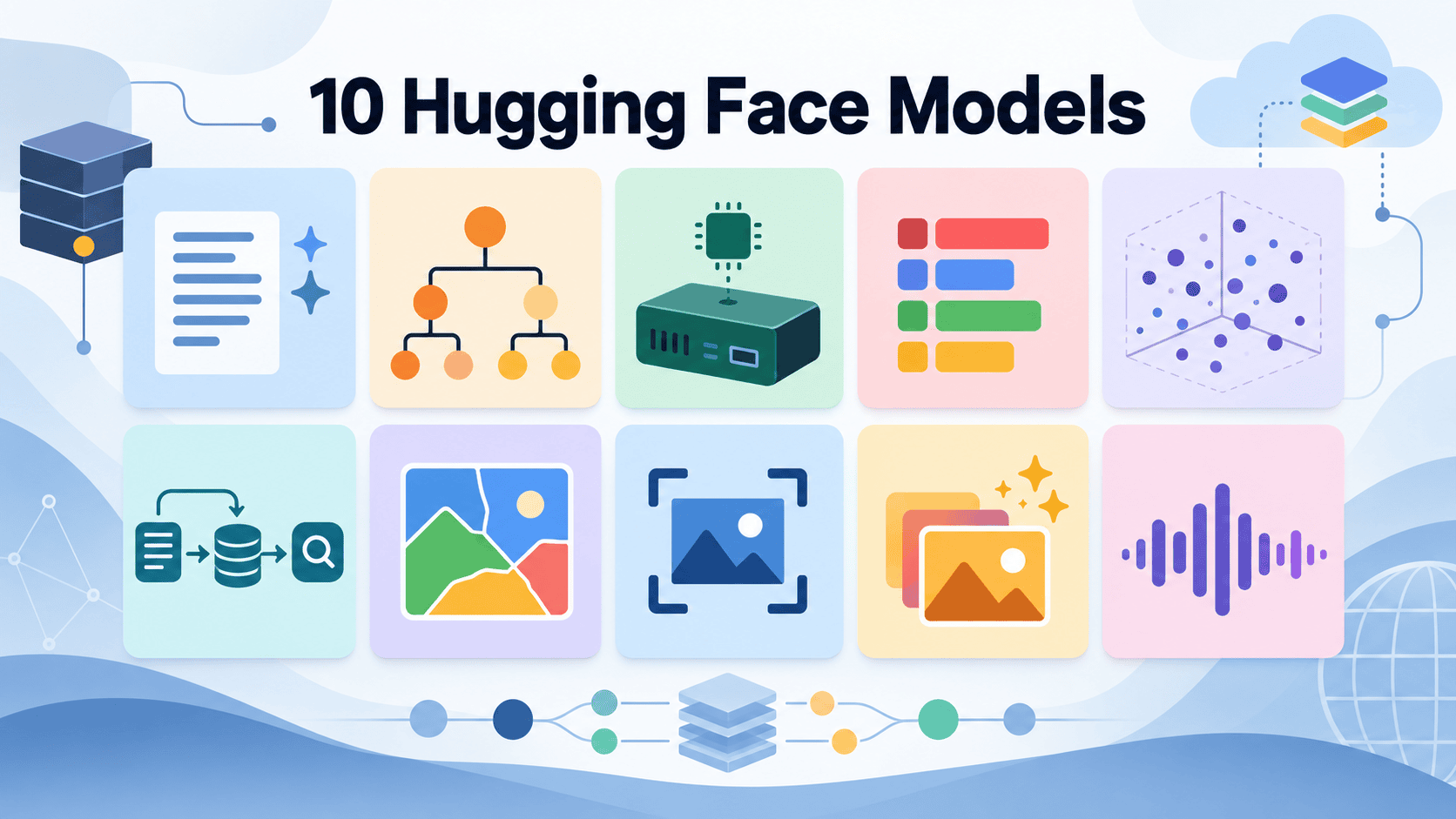
Ten Hugging Face Models Reshaping How Data Works in 2026
Ten Hugging Face models are quietly reshaping how data moves through text, vision, audio, and retrieval pipelines in 2026, and that shift is worth paying attention to. These aren't speculative projects, they're tools you can use today. If you've ever felt constrained by a tool that asks you to wait for answers a local model already knows, our related article "Stop Waiting for Answers Your Local Model Already Knows" explores that exact friction.

Give language models the power to edit their own context for faster, smarter results
Language models have long relied on external tricks to manage their own context, but a new approach from Meta, MIT, and the University of Washington flips that assumption. Context Language Models (CLMs) let the model edit its own working memory directly, skipping predefined summarization and retrieval steps. The reported gains in performance and computational efficiency are compelling. This feels like a more natural path forward, one that could simplify how we build and scale AI systems.

Unlocking Text's Potential: Exploring Vector Spaces and Classification
Text classification only works when words become numbers. That transition, from raw text into vector space, is where the real thinking happens. TF-IDF and the mechanics of turning language into something a model can actually use are walked through. It's a clear, grounded explanation of a step most people skip. If you're ready to move past the basics, this is a solid next stop. And for a different angle on machine learning, check out "Exploring Real-World Computer Vision" for more hands-on lessons.

Uncover Retrieval Weaknesses: Test Your RAG Pipeline Now
Your evaluation set has a blind spot, and it's costing you. A small adversarial test set can expose retrieval failures your standard checks never touch, revealing exactly where your RAG pipeline stumbles under real-world pressure. This approach isn't about adding more data; it's about testing smarter. We think that's a practical, necessary step for anyone serious about reliability. For a deeper dive into how these systems hold up, our guide, "Verify Your AI's Understanding: A Simple Check for Tax Season," offers a useful parallel.
Measure Embedding Relevance: A New Approach to Retrieval Benchmarking
Retrieval benchmarks often feel like they reward models for gaming the test rather than finding the right answer. The team at Qonto noticed this gap and built a metric that ties relevance more directly to real product questions. They paired it with a dedicated dataset, and the results point to a more honest measure of embedding quality. It is a practical step toward benchmarking that actually reflects how teams retrieve information.
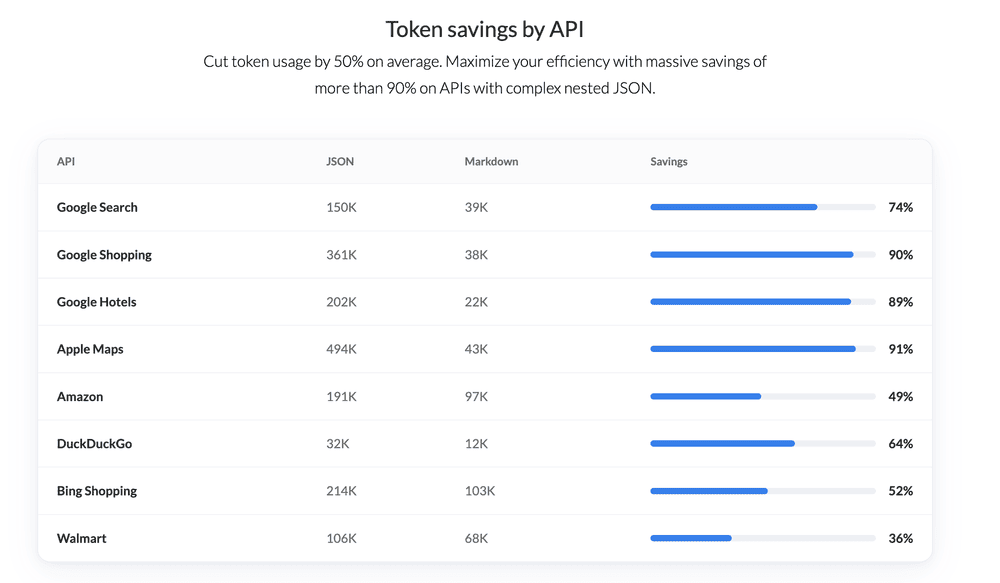
Reduce Search Result Tokens by 74% with Smarter Data Structuring
A single search result can quietly consume thousands of tokens, and that weight adds up fast when you're paying for every call. SerpApi's Markdown output tackles this directly, trimming usage by up to 74% by stripping away the noise and keeping only what matters. That's a meaningful reduction in context-window overhead and agent costs. It's the kind of practical efficiency that pairs well with the broader optimization thinking in our guide to distributed training.
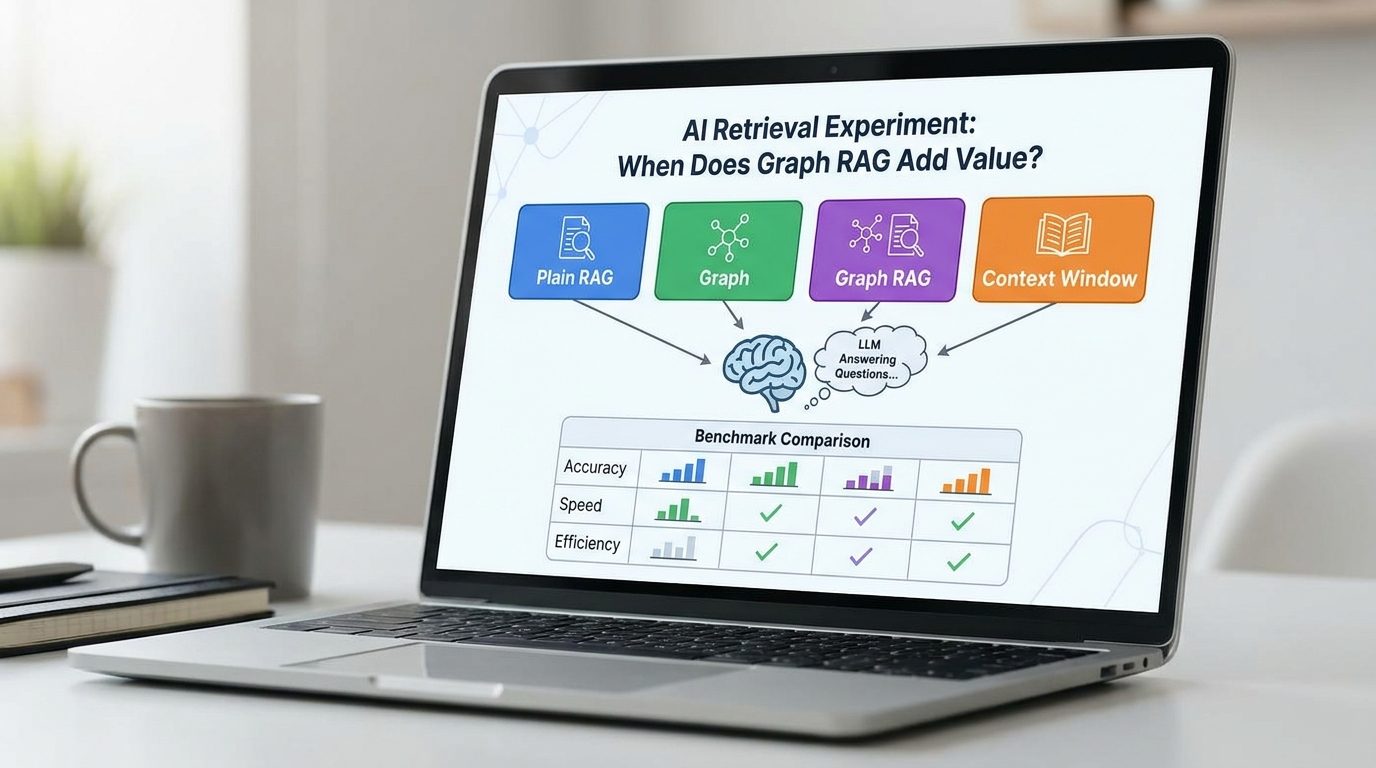
Four AI Retrieval Methods Benchmarked for Real-World Trade-offs
Four retrieval architectures, one laptop, and a single set of documents. That's the setup for this hands-on experiment, which benchmarks plain RAG, graph RAG, and a frontier model's context window against the same questions. The results offer a practical look at when graph RAG earns its complexity. For those exploring how AI structures understanding, our related piece on verifying AI comprehension in tax season is a natural next step. The trade-offs here are worth your attention.

LinkedIn's AI Job Search: Smarter Ranking from a Compact Model
LinkedIn's latest work on AI job search hinges on a clever trade: compress big model knowledge into a compact 0.6B-parameter ranker using multi-teacher distillation. The result is a ranking system that trains eight times faster without sacrificing the nuance users need. That's practical innovation, not hype. It also signals where model efficiency is heading, a theme we explore further in our guide to distributed training algorithms. For now, this is a smart reminder that smaller, faster systems often deliver the most meaningful productivity gains.

Build an AI Agent That Captures Real Expertise, Not Just Data
Meta's approach to AI agents shifts the focus from retrieving information to embedding the logic of domain experts themselves. By designing an "organizational second brain" for compliance, Meta shows how an agent can capture decision-making processes, not just documents. That distinction matters. It suggests a path toward systems that truly think alongside us in fields like security and finance. For a deeper look at how conversational agents are evolving, our related coverage in "Meta's Muse AI Agent Gains Ground in Conversational Performance" is worth exploring.
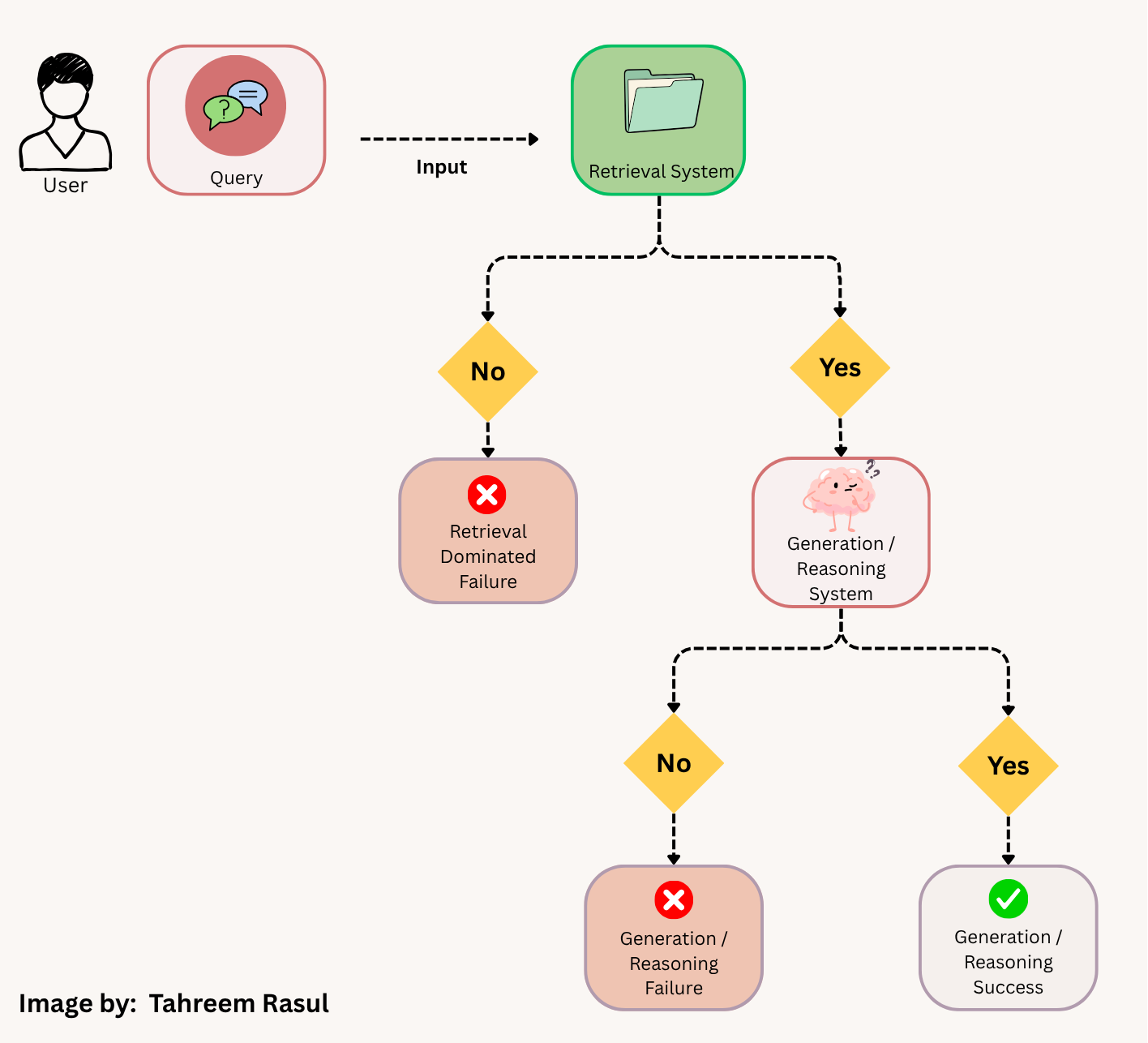
Building Smarter RAG Pipelines That Earn Their Complexity
Most teams add complexity to RAG pipelines before they've earned it. This framework flips that instinct, introducing advanced techniques only when observed failures demand them. Starting with lexical and hybrid search, then moving to reranking and agentic information seeking, the approach keeps systems lean and understandable. It's a disciplined counter to the temptation of overbuilding. For readers tracking how retrieval evolves into action, the related piece on bridging retrieval and action offers a useful follow-up.

Why Embeddings Outperform Classical Spell-Check on Noisy Data
Three sources of noisy text plague enterprise RAG: user typos, transcription slips, and OCR character errors. Classical spell-check catches only the first, leaving embeddings to absorb the rest. That gap matters more than most teams realize, because retrieval quality hinges on how well your system tolerates imperfection. This piece breaks down the problem clearly, and it pairs well with our guide on paragraph structure and token space. Both explore how LLMs actually process the messiness we feed them.

Google's AI Mode transforms search into a travel planning partner
Google's AI Mode is stepping up its travel game, now tracking flight prices and helping book hotels directly. That's a clear move beyond answering questions toward actually handling parts of the trip-planning process. We're watching this shift closely, as it signals a practical, hands-on role for AI in everyday tasks. For more on how AI is reshaping practical decision-making, our guide on using ChatGPT for work offers a useful parallel. It's a natural evolution, and we're curious where it lands next.

From a Million Files to One Clean Table: Structured Extraction for Real Queries
Two people, one hour, six to ten fields. That is the entire setup for turning a single document type into a million structured rows, and the two signals that define a real column are the ones that keep a filter from breaking later. It is a focused, practical read. If you want to see how paragraph structure guides an LLM through token space, our related piece on that topic pairs well here.

Build a Knowledge Layer Where Every Query Traverses a Living Graph
Most retrieval systems treat query wording as the failure point, but this approach argues otherwise: retrieval quality should be a property of the system, not the question's phrasing. By rebuilding the knowledge layer with graph traversal on every query, bitemporal edges, and two-threshold entity resolution, the architecture shifts the burden from user precision to systemic design. It's a pragmatic, future-focused move. For a deeper look at how structure shapes AI navigation, our related piece on paragraph structure in LLMs pairs well here.

DynamoDB Unifies Data and Vector Search Without a Separate Database
DynamoDB now lets developers store embeddings right alongside their application data and run approximate nearest-neighbor queries without spinning up a separate vector database. That's a meaningful simplification for teams building semantic search features. Filtered similarity searches and configurable indexes make it practical, not just theoretical. It's the kind of move that reduces operational overhead while keeping workflows familiar. If you're exploring how far native database capabilities can stretch, this is worth a look.
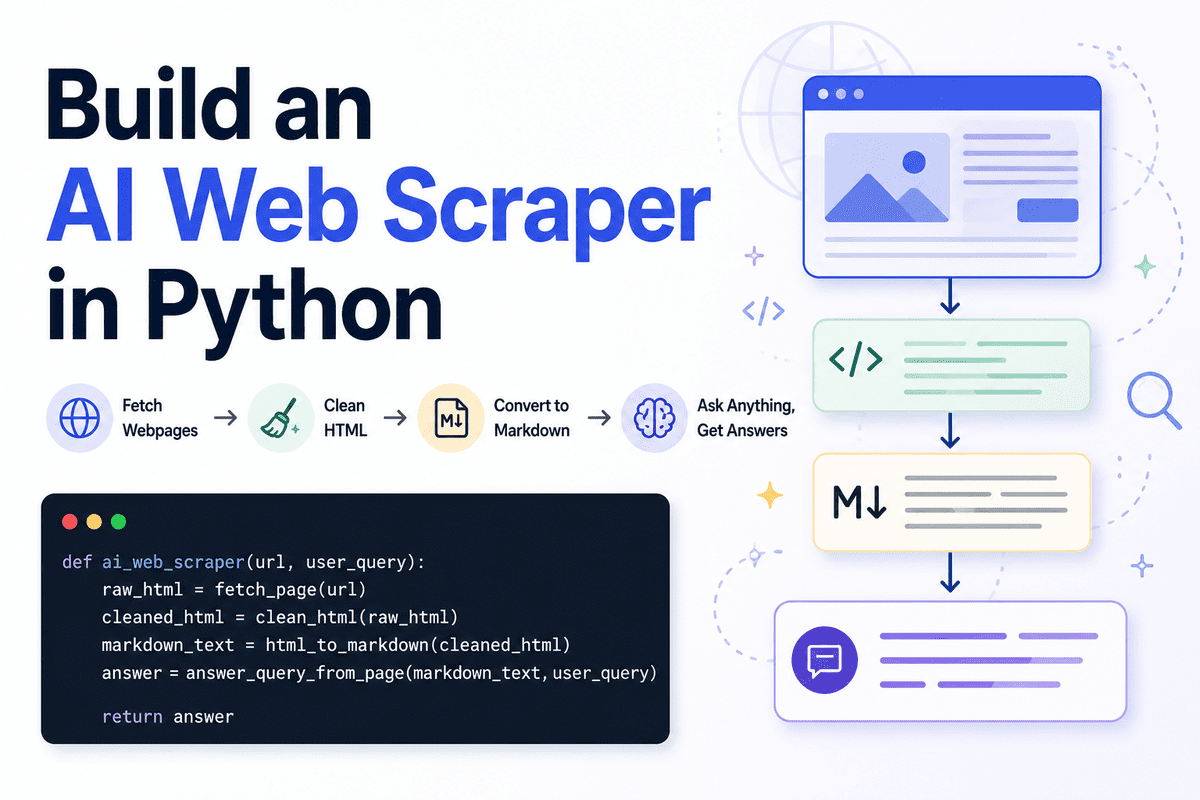
Turn Web Pages into Smart Q&A Engines with AI
Most tutorials make web scraping sound harder than it needs to be. This one strips away the noise: clean the HTML, convert it to Markdown, and let an LLM answer focused questions. The payoff is real, especially when you want answers without burning through tokens on messy page structures. It's a practical, no-nonsense approach that respects your time and your budget. If you're tired of wrestling with raw scraped data, this method feels like a quiet win.

When Every Passage Holds the Answer, RAG Needs a New Shape
Most RAG pipelines retrieve a single top passage and call it a day. But some questions don't work that way. Listing questions demand every relevant passage, not just the highest-scoring one. This pipeline walks through that silent failure point and the pipeline shape that actually handles it. It's a practical look at a real limitation, and the reasoning is clear. For readers who want to go deeper, "Exploring Paragraph Structure: How LLMs Navigate Token Space" offers a useful follow-up on how token coordinates shape retrieval.

When your document says "see Section 7.2," AI can now follow the link.
A "see Section 7.2" answer is a dead end, not a destination. When a retrieval system points elsewhere instead of answering directly, the pipeline breaks trust. This piece tackles that exact failure with a loop-based fix: fetch the linked context, then return the real answer. It's a practical, human-centered solution for a frustrating problem. We appreciate the focus on user outcomes over technical spectacle. For more on how LLMs handle structure, explore *Exploring Paragraph Structure: How LLMs Navigate Token Space*.
Explore smarter web crawling tools to empower your data workflows
Web crawling keeps getting smarter, and this roundup of the best tools and APIs for 2026 proves how far the field has come. It focuses on practical collection, clean data generation, and powering AI agents, which is exactly where the real value sits. For anyone tired of wrestling with messy scraped content, this guide cuts through the noise. If you are also curious about how these systems connect to broader AI workflows, our piece on bridging retrieval and action offers a useful follow-up.

Smarter Context, Not More Context, Unlocks Smarter Coding Agents
Most coding agents drown in the very context meant to help them. They gather more files, add more data, and hope the model sorts it out. It doesn't work. Irrelevant code competes for attention, and when the window fills, agents compress their own memory mid-task. That's not forgetting; that's degraded context. Treat prompt construction like a compiler, deciding what to keep, reduce, or discard. It's a practical, human-centered fix.

From Scattered Knowledge to an AI-Ready Company Brain
Building a context layer sounds straightforward until you try to move beyond a demo. This piece cuts through the hype to show what it actually takes to turn scattered company knowledge into something an LLM can reliably use. The polished demo is only about five percent of the real work. The rest is messy, unglamorous, and essential. If you are weighing whether your team is ready for this, it is a sobering and useful read.

Three Retrieval Baselines Tested on a Standard Laptop
Reproducing BM25, dense retrieval, and SPLADE on a 16GB MacBook sounds like a rite of passage until the first out-of-memory crash. This practical walkthrough tracks the real stumbles, the fixes that followed, and the score checks that actually matter for RAG systems. It's a grounded look at what breaks when resources are tight, and what holds up. For readers ready to connect retrieval fundamentals to broader AI workflows, the related piece on bridging retrieval and action offers a natural next step.

Explore how Attie turns social data into answers you can act on.
Attie, Bluesky's AI assistant, now steps beyond simple replies to become an open social research tool. Users can pose questions about news, trends, and conversations unfolding across Bluesky and other AT Protocol apps. It's a practical move toward making network insights more accessible, and we're here for it. If you're curious about the limits of such interactive tech, our piece on talking to an AI clone offers a thoughtful counterpoint. Explore what Attie surfaces, but keep asking sharp questions.

Turn One Messy Question Into Four Clear Signals for Smarter RAG
A single messy question string hides a lot of structure. This piece breaks down how question parsing turns that raw input into four typed fields, each one feeding a distinct downstream call for retrieval and generation. It is a practical, grounded look at making RAG systems less brittle and more intentional. If you are still wrestling with vague prompts, this is worth your time. For more on how LLMs navigate structure, explore our related piece on paragraph structure.