LLM
LLM at Beyond Market Intelligence is a file of 161 stories. The newest of them: “Anthropic's Opus 5.5 Delivers Fable Performance at a Lower Cost”, “Unlock Advanced RAG: 6 Architectures for Semantic Search & LLMs”, and “Navigating JMLR submissions with a cross-disciplinary advisor”. Anthropic says Opus 5.5 is the strongest model it has tested to date, and the headline numbers back that up with a welcome twist: this level of fable performance arrives at a lower cost. Basic graph retrieval only gets you so far. Acme AI is the next-generation, AI-powered spreadsheet platform built to replace Excel and redefine how analysts, data scientists, and enterprise teams work… The list below is every LLM story on Beyond Market Intelligence, newest first.

Anthropic's Opus 5.5 Delivers Fable Performance at a Lower Cost
Anthropic says Opus 5.5 is the strongest model it has tested to date, and the headline numbers back that up with a welcome twist: this level of fable performance arrives at a lower cost. That matters for teams who have been waiting for serious AI capability without the usual premium. We see this as a practical step forward for data work, not just a spec sheet win.

Unlock Advanced RAG: 6 Architectures for Semantic Search & LLMs
Basic graph retrieval only gets you so far. This guide walks through six production-oriented architectures that pair semantic search with knowledge graphs and LLM reasoning, giving practitioners a practical route beyond simple vector lookups. It's a grounded, no-nonsense read for teams ready to move past toy demos. For a deeper look at how LLMs handle structure internally, pair it with our piece on paragraph structure and token space. The ideas complement each other well.
Navigating JMLR submissions with a cross-disciplinary advisor
A PhD student's supervisor is pushing for a JMLR submission based on tenure incentives, not fit. That tension is real. The student's experience with conferences mirrors what many face: reviewers asking for impossible proofs, with ACs unable to judge math. JMLR may offer better quality control, but the risk of a three-year review ending in rejection is valid. For applied stats work, it is worth checking scope carefully. If you are navigating similar pressure, our piece on practical AI deployment might offer perspective.

Cut Through the ML Paper Clutter with AI-Powered Research.
Reading papers as they drop sounds noble until you're drowning in arXiv alerts and can't tell a novel method from a rehash. This developer felt that pain and built an AI agent to handle the grunt work: filtering, deduping, ranking against your interests, and producing a structured report in English and Portuguese. It's refreshingly practical. The scheduler is a smart touch, too. For anyone tired of the research grind, this feels less like another tool and more like a relief.

Explore how a compact AI model could reshape everyday data work
PrismML is betting that smaller can be smarter. The AI lab's tiny LLM is designed to shift how we interact with artificial intelligence, and if you haven't been paying attention, now is the time to start. It's a focused approach that strips away unnecessary complexity, putting practical power back into your hands. We see this as a natural next step in making AI more accessible, much like the thinking behind our piece on verifying your AI's understanding.
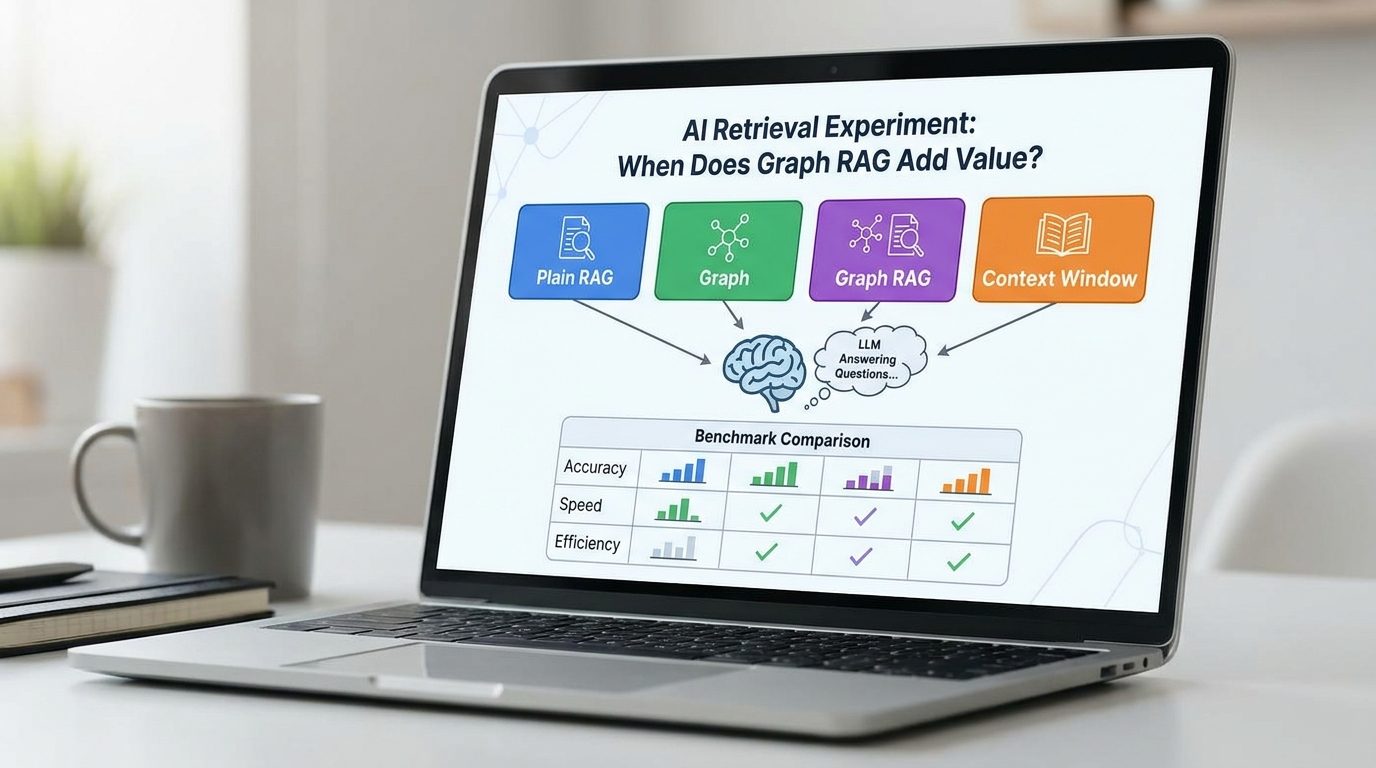
Four AI Retrieval Methods Benchmarked for Real-World Trade-offs
Four retrieval architectures, one laptop, and a single set of documents. That's the setup for this hands-on experiment, which benchmarks plain RAG, graph RAG, and a frontier model's context window against the same questions. The results offer a practical look at when graph RAG earns its complexity. For those exploring how AI structures understanding, our related piece on verifying AI comprehension in tax season is a natural next step. The trade-offs here are worth your attention.

Ground LLMs in Code: Reliable DSL Generation with Typed Languages
LLMs don't just struggle with code; they confidently invent syntax that looks right. Irakli Betchvaia tackles this head-on with Typed Domain Grounding, embedding DSLs inside mainstream typed languages so compilers catch errors before they reach users. His kUML benchmarks and infrastructure-as-code examples show a generate-compile-repair loop that turns unreliable output into validated artifacts. It's a pragmatic, human-centered fix that prioritizes trust over flash. For more on how LLMs structure their output, explore our earlier piece on paragraph structure.

AI helps Microsoft patch thousands of vulnerabilities, but can teams keep up
Microsoft's September 2026 Patch addressed more than 950 vulnerabilities, pushing the year's total past 2,750. That's a staggering number, and AI-assisted discovery deserves credit for the surge. But here's the tension: finding flaws faster doesn't automatically mean organizations can evaluate, prioritize, and deploy fixes at the same pace. The real bottleneck isn't detection; it's execution. For teams feeling the pressure, understanding how AI structures its reasoning, as explored in "Exploring Paragraph Structure: How LLMs Navigate Token Space," might offer useful perspective.
Smaller model, sharper reasoning: 44M parameters trained from scratch on CPU
Three weeks ago, SHADOW-250M proved a 60 MB model could retrieve records from disk. Now, SHADOW-50M pushes the same idea further: 44M parameters, 19.8 MB, and roughly 1,900 tokens per second on a laptop CPU. It reasons over what it retrieves, runs arithmetic through a fixed circuit, and answers from memory without re-reading source text. It loses to larger models on standard benchmarks, and the author says so plainly.

From Two Weeks to One Hour: Grab's Framework Simplifies AI Agent Deployment
Two weeks to one hour. That's the compression Grab achieved by standardizing its AI agent deployment with LLM-Kit, a framework now powering over 500 internal services. This isn't just about speed; it's about centralizing the messy parts of production, from secret handling to runtime tool discovery, so teams can focus on outcomes. We think that's a practical, human-centered approach to scaling intelligence. For a deeper look at how AI understands structure, explore our piece on how LLMs navigate token space. It's a natural next step.

Choosing the Right AI Agent Shape for Your Data Work
Choosing between a single model and a team of agents isn't about picking a winner. It's about matching the shape of the tool to the shape of the problem. Codex fits cleanly when the problem is well-defined, Claude Code makes more sense for open-ended exploration, and splitting five specialist agents across dense AI capacity work handles complex, multi-step tasks. It's a practical, grounded look at decision-making that most teams face too early. If you're weighing similar trade-offs, this offers a clear framework worth exploring.

How One Capital Letter Can Break Your AI Support Bot
A single uppercase letter can quietly break an AI support bot, and the culprit wasn't the new model. This real Weave project regression-tests three OpenAI models against the exact reply format your app depends on. It's a sharp reminder that precision matters more than model size. If you're building on these tools, this is the kind of detail worth verifying early. For a related angle, our piece "Verify Your AI's Understanding: A Simple Check for Tax Season" offers a practical parallel.

Discover how AI redefines your spreadsheet workflow through a simple experiment
When I ran Fable against Astra, the gap between them wasn't subtle. Fable handled the workflow with a fluidity that felt natural, while Astra demanded more patience. It's a reminder that AI tools aren't interchangeable; they carry distinct personalities. For anyone weighing similar choices, I'd point to our earlier piece on the Forrester function. It's a different lens, but it reinforces how small mathematical insights can sharpen your evaluation of these systems. The experiment didn't just compare outputs; it exposed what each model prioritizes.

Explore adaptive model routing to make multi-agent AI more efficient
Static model assignment is the default in multi-agent systems, but it is also the most expensive. Assigning every task to a frontier model, regardless of complexity, inflates inference costs without improving output quality. Adaptive model routing changes that by matching each task to the right LLM at the moment it arrives. It is a smarter, more accessible approach to cost control. For teams already wrestling with distributed systems, this practical strategy is worth exploring.
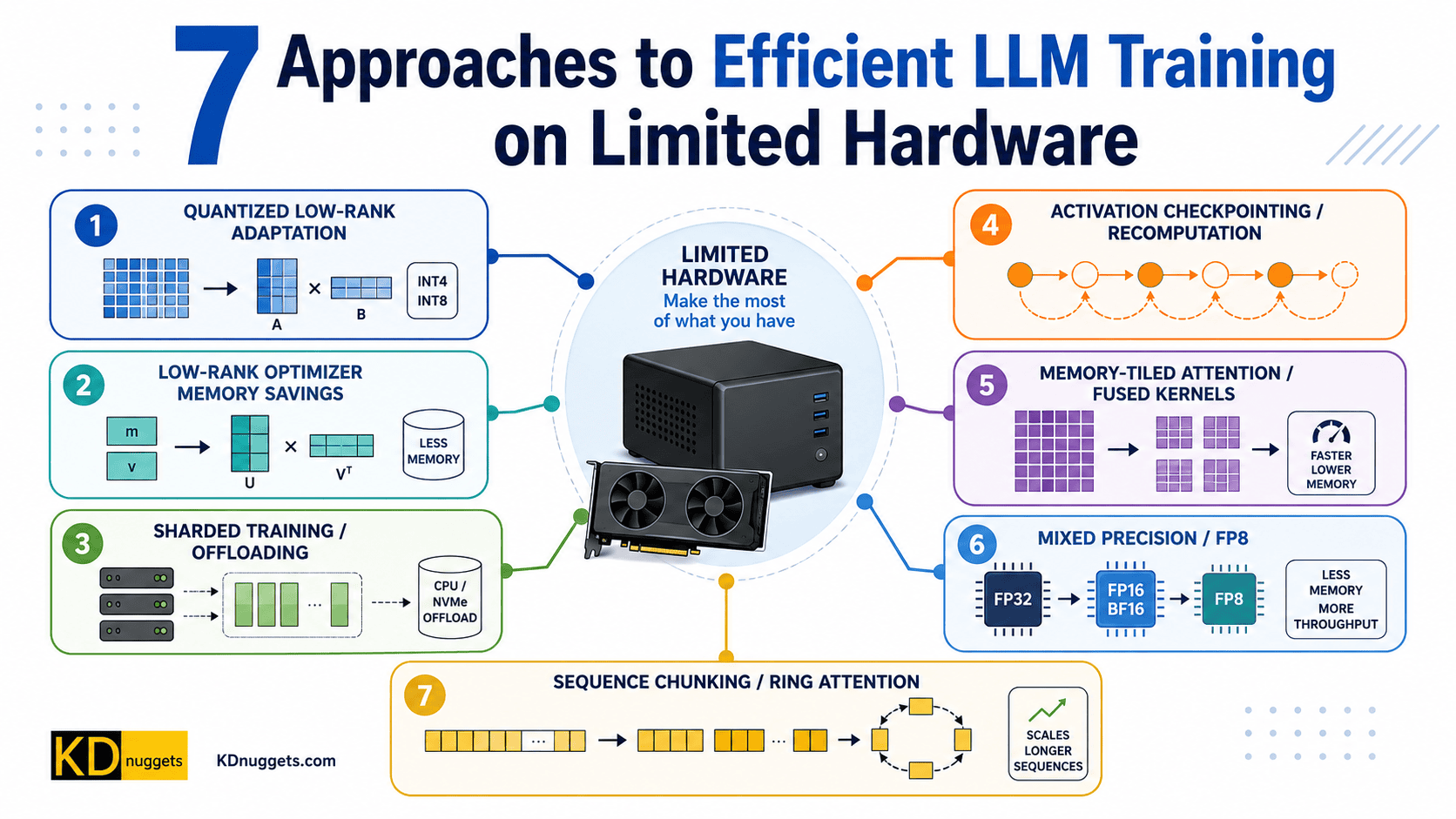
Seven Techniques to Train LLMs on Consumer Hardware
Training a large language model used to mean renting a server farm or settling for someone else's API. This guide challenges that assumption with seven practical engineering techniques for consumer GPUs, proving that memory limits are a constraint to design around, not a wall. It's a grounded, hands-on read for builders who want the control of training their own models.

Discover how AI transforms data work into intuitive conversations
Asking Astra to handle a task is a reasonable impulse, but it deserves a moment of reflection first. The real question is whether you trust the output enough to act on it. We see AI as a tool for empowerment, not a substitute for judgment. It can streamline the mundane, but you remain the decision-maker. For those wanting to understand the underlying mechanics better, our guide on distributed algorithms offers a solid starting point.

Protect your Claude account from unauthorized token theft
A Claude user recently watched his account burn through tokens while he wasn't even working. That's not a glitch; that's a breach. Anthropic has since warned subscribers that hackers are actively stealing credentials, a quiet but urgent reminder that AI access is now a target. This isn't about paranoia, it's about protecting your workflow. If you're managing sensitive data, this should push you to lock down your access now.
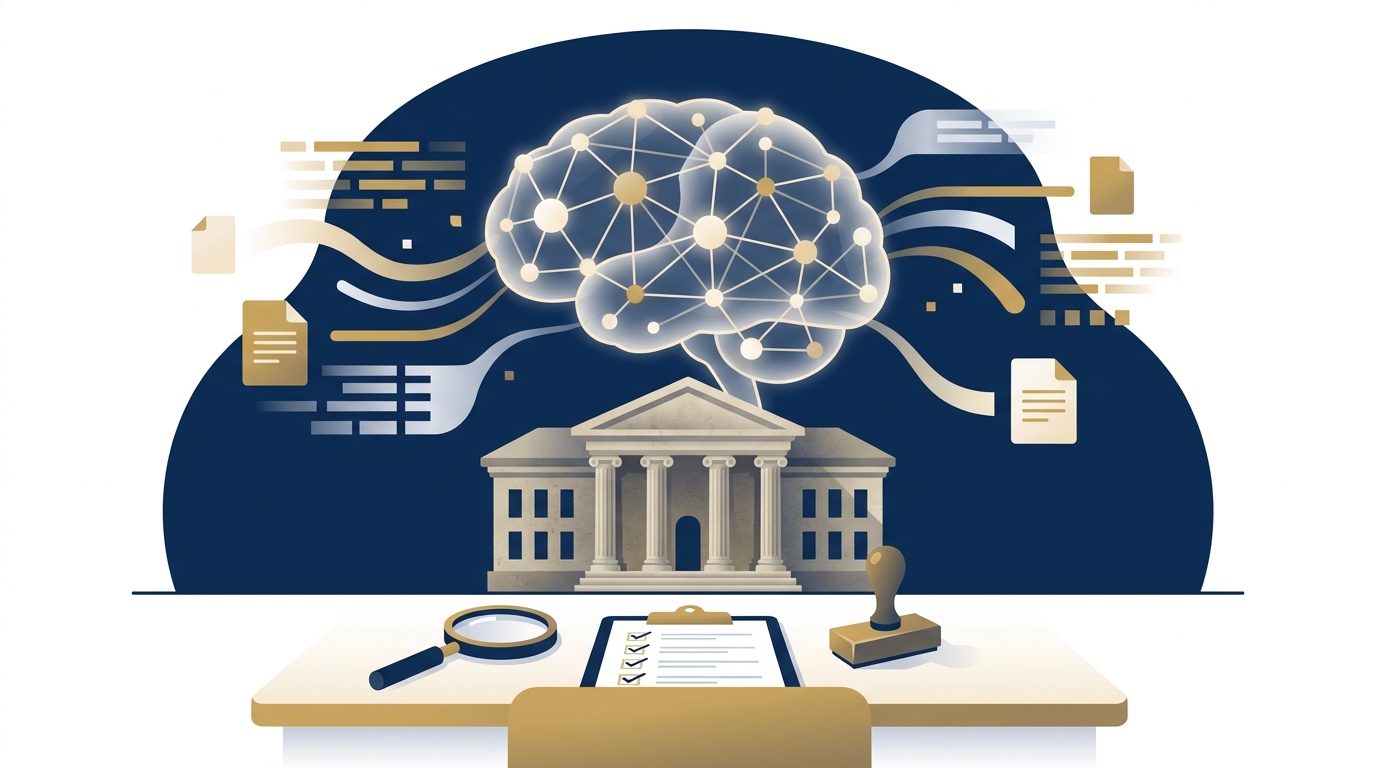
Validating LLMs: What Banking Model Rules Teach Us About AI Testing
Banks have spent decades refining model validation, but large language models don't fit neatly into those established frameworks. This piece examines what actually breaks when the rules shift from statistical models to generative systems, and more importantly, what survives the transition. It's a practical look at testing output quality where traditional assumptions no longer hold. For anyone wrestling with AI governance, this offers a grounded starting point.
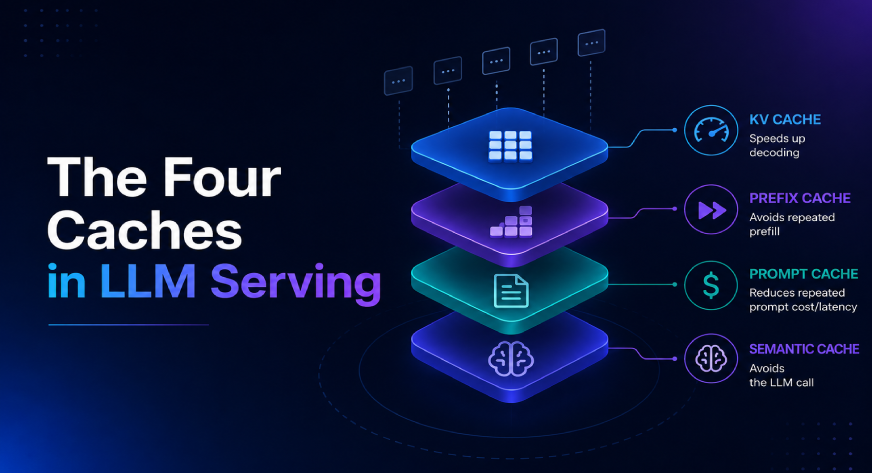
Smart Caching: Optimizing LLM Performance and Reducing Costs
Every request your LLM handles may carry millions of tokens, yet much of that data repeats across calls. Reprocessing it wastes time and drives up compute costs. Smart caching targets exactly this waste, and the new piece breaks down the four cache layers that make serving faster and cheaper. It's a practical read for anyone tired of paying twice for the same work. For a deeper look at distributed systems, our guide to distributed algorithms pairs well with this one.
LLM-guided evolution unlocks new best solutions for circle packing
Ten of the best-known circle-packing solutions on the Packomania csqv benchmark just got better, and an LLM did the improving. The approach didn't solve the packing problem directly. Instead, it evolved the solver itself: a seed algorithm proposed changes, a scoreboard tracked what worked, and an independent verifier discarded the failures. The results are concrete, a 2.4 to 5.4% gain across N=101 to 114 for under $28 in compute. That's a practical, repeatable method worth exploring.
A prompt exploit reveals how quickly AI models can be challenged.
A jailbreak landed on GPT-6 Astra within 24 hours of its release. The researcher behind it, who broke GPT-5 in under an hour last year, had to rework the original minimal TIP attack. This time, they combined the Task-in-Prompt method with four unnamed techniques to hide the harmful objective inside a decoy task like solving a cipher. Instead of publishing the exploit, they reportedly shared the details privately with OpenAI.
Exploring how KV cache transforms LLM inference into an interactive runtime
Most LLM agents feel reactive because they move token by token, pausing for the model to catch up. Our team has been exploring a different path: modifying the model's inference state, the KV cache, to make it a true runtime. This approach, outlined in a post by our researchers, powers more interactive systems. We see this as a key axis for agent capability, sitting between costly model changes and abstract harnesses.
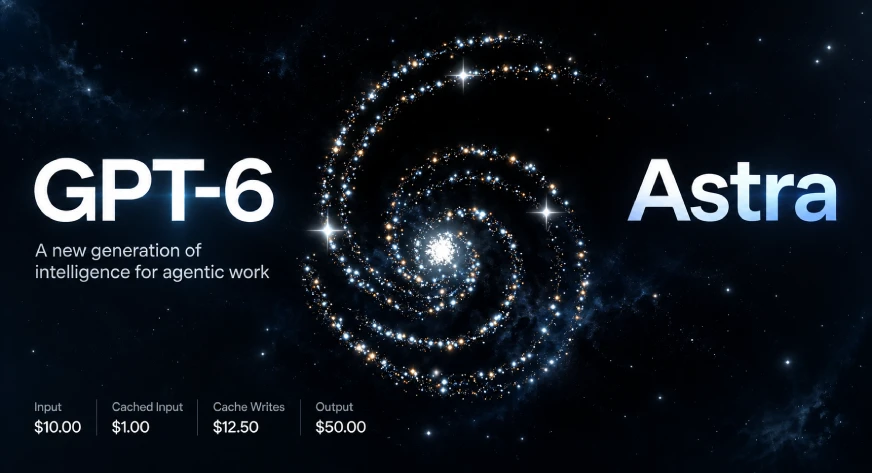
OpenAI's GPT-6 Astra Does More Than Just Answer Questions
OpenAI's GPT-6 Astra arrives barely a week after Anthropic's Claude Fable 5.1, yet its claim is bolder than a release date. OpenAI calls it the world's most intelligent and aligned model, but the real shift is simpler: Astra is built to do more, not just answer more. That distinction matters if you're tired of tools that talk well but act limited. For deeper context on how models handle real-world tasks, our piece on computer vision deployments pairs well here.
Discover how AI turns code into a film in under a minute.
A 37-second film is a tight constraint, and Claude Fable 5.1 is making waves by turning a code challenge into a miniature cinematic moment. It's a clever stress test, one that shows how far AI has come in handling creative, time-bound tasks. We're watching a shift in what's possible, and it's worth exploring how these models handle pressure. If you're curious about the mechanics behind such feats, our guide on distributed algorithms offers a solid foundation.