model
model at Beyond Market Intelligence is a file of 108 stories. The newest of them: “Test your model's foundation before trusting its results”, “Why Permutation Symmetry Complicates Neural Network Merging”, and “Smart Caching: Optimizing LLM Performance and Reducing Costs”. Every model leans on assumptions, but how often do we pause to check if they still hold? Neural networks don't average well, and the culprit is permutation symmetry. Acme AI is the next-generation, AI-powered spreadsheet platform built to replace Excel and redefine how analysts, data scientists, and enterprise teams work… The list below is every model story on Beyond Market Intelligence, newest first.

Test your model's foundation before trusting its results
Every model leans on assumptions, but how often do we pause to check if they still hold? This piece tackles that question head-on, arguing that reliability isn't a one-time achievement but a habit of revisiting what we take for granted. It's a sharp reminder that data work rewards curiosity over complacency. If you're building systems, this is worth your attention. For a deeper look at how similar principles apply in practice, our related article on real-world computer vision deployments offers a fitting follow-up.
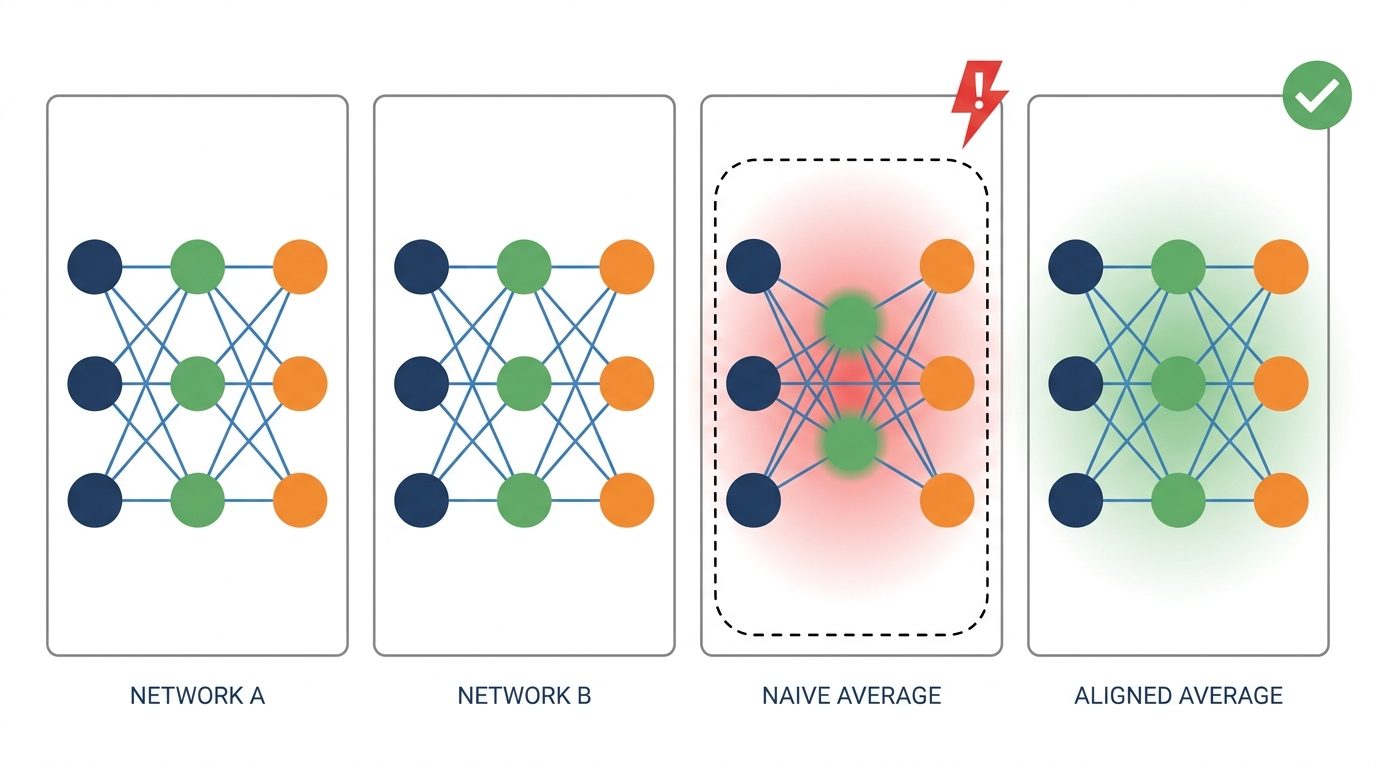
Why Permutation Symmetry Complicates Neural Network Merging
Neural networks don't average well, and the culprit is permutation symmetry. When two models learn the same task, their weights often sit in arrangements that look different but behave identically. Averaging them naively breaks the symmetry, producing a merged model that loses performance. This post unpacks that tension with clarity, connecting the math to practical model merging challenges. It's a worthwhile read for anyone exploring why weight averaging fails and what that means for building more reliable AI systems.
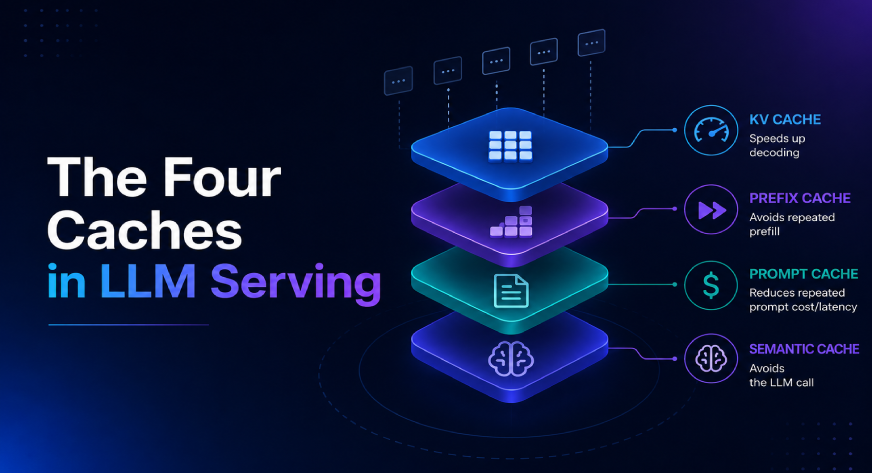
Smart Caching: Optimizing LLM Performance and Reducing Costs
Every request your LLM handles may carry millions of tokens, yet much of that data repeats across calls. Reprocessing it wastes time and drives up compute costs. Smart caching targets exactly this waste, and the new piece breaks down the four cache layers that make serving faster and cheaper. It's a practical read for anyone tired of paying twice for the same work. For a deeper look at distributed systems, our guide to distributed algorithms pairs well with this one.
Exploring how KV cache transforms LLM inference into an interactive runtime
Most LLM agents feel reactive because they move token by token, pausing for the model to catch up. Our team has been exploring a different path: modifying the model's inference state, the KV cache, to make it a true runtime. This approach, outlined in a post by our researchers, powers more interactive systems. We see this as a key axis for agent capability, sitting between costly model changes and abstract harnesses.
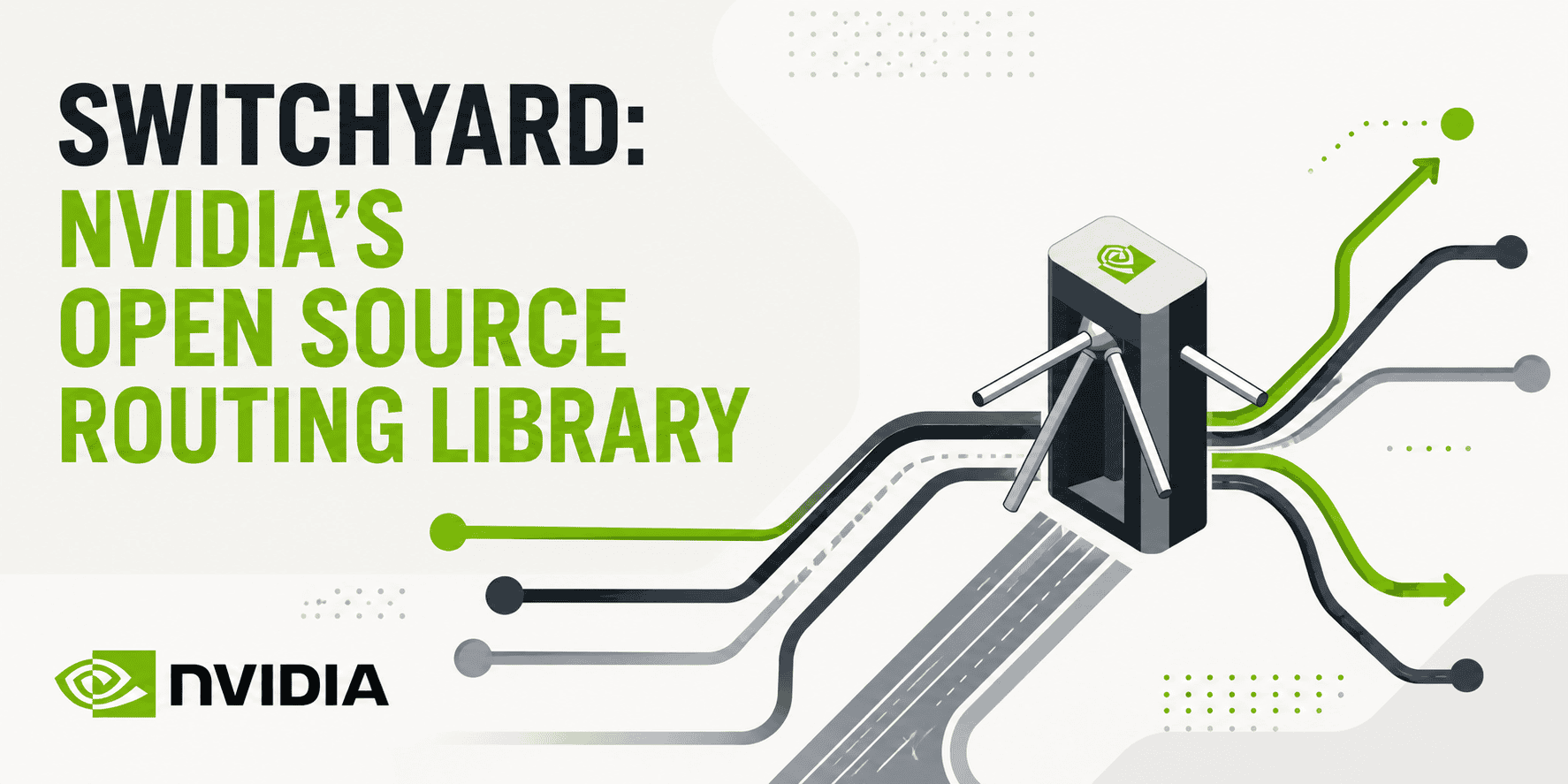
Intelligent routing reduces AI costs without sacrificing quality.
Not every AI request needs the full power of your most expensive model. Switchyard, NVIDIA's open-source routing library, offers a smarter approach: route simpler queries to lighter models, saving cost and latency without a major drop in quality. It's a practical shift toward efficiency. For those building distributed systems, our guide on distributed algorithms explores the foundational concepts that make routing like this possible. Explore Switchyard and see how intelligent routing changes the math.

Explore how OpenAI's Astra redefines speed and safety in browser use
OpenAI says Astra marks "a new frontier on computer and browser use," promising speed, accuracy, and safety. That is a bold claim, especially given how much trust we place in AI handling everyday tasks. The potential is real, but so is the skepticism. We have covered similar ground in our exploration of real-world computer vision, where deployment challenges often temper the hype. Astra deserves attention, but we should watch how it performs beyond the demo.

From Notebook to API: Making Your Churn Model Actually Usable
Training a churn classifier that performs flawlessly is one thing. Making it useful to the rest of your software is where the real work begins. This story follows that exact pivot: moving from a perfect model to a practical FastAPI service that other systems can actually call. It's a grounded, honest look at the gap between building and deploying. If you're wrestling with similar transitions, you might also appreciate our piece on navigating AI/ML job requirements.

Explore the architecture that makes OpenCode a smarter choice for AI coding.
OpenCode has outgrown the conversation about model choice. That freedom matters, but it's no longer the headline. What draws us in is the architecture underneath, and the deliberate trade-offs that shape how it works, especially if you're coming from Claude Code. This isn't just another agent. It's a different way to think about building. If you're also exploring how distributed systems power modern AI, our guide to distributed training offers a useful parallel. For now, let's look at what makes OpenCode's design genuinely different.

OpenAI readies Astra, a powerful AI that tests the limits of system security
OpenAI previewed Astra, its newest LLM, with a striking admission: the model is remarkably adept at breaking into computer systems. That honesty is refreshing. As AI grows more powerful, responsible deployment matters as much as capability. The company is outlining its precautions, which is wise. But this also underscores a broader reality: smarter tools demand smarter defenses. For a deeper look at how AI is reshaping everyday productivity, see our piece on how Meta's AI turned dull tasks into real savings.

Anthropic's Fable 5.1 lowers costs while easing model safeguards
Anthropic's Fable 5.1 release takes a meaningful step toward removing the friction that often comes with advanced AI. By cutting token costs and easing false-positive restrictions, the update directly addresses two frustrations that slow down real work. That is a practical move, and a welcome one for teams who want capability without constant guardrails. It pairs nicely with our coverage of Anthropic's broader infrastructure bets, like the Akamai deal, showing a company thinking about both scale and usability.

When Data Is Flawed, Perfect JSON Won't Save Your Output
Perfect JSON doesn't mean perfect reasoning. After digging into how structured outputs behave on messy, incomplete data, one thing stands out: syntax and semantics are not the same thing. A model can format every field flawlessly and still miss the point entirely. That gap matters. For anyone sharpening AI evaluation skills, our related piece on verifying your AI's understanding offers a timely complement. The takeaway? Structure is a tool, not a verdict.
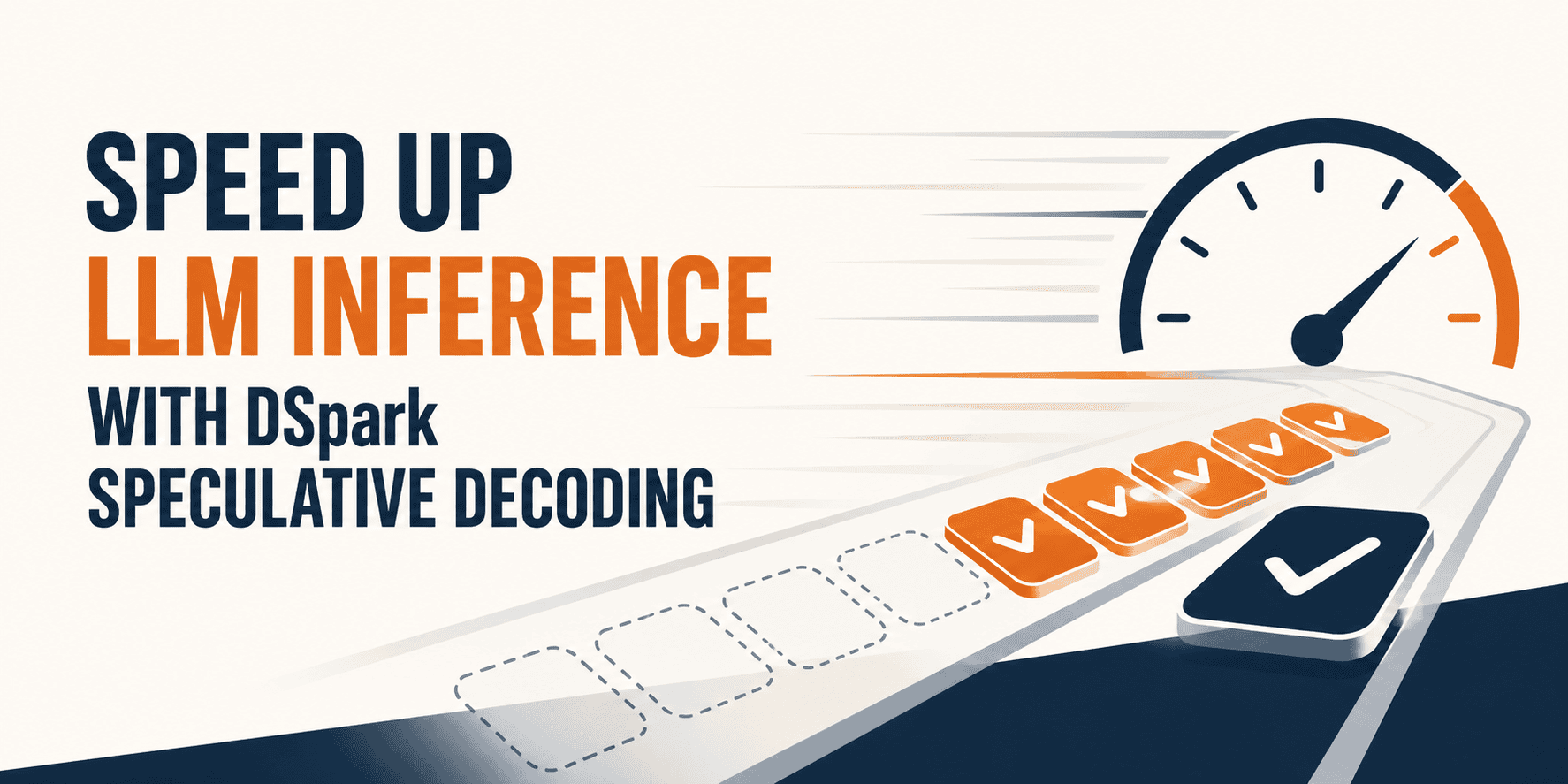
Unlock faster local LLM inference with DSpark speculative decoding
Waiting for the local model to generate its next token can feel like watching paint dry. DSpark speculative decoding changes that. By using a smaller draft model to propose candidates and the larger Qwen3-8B to verify them, it accelerates generation on the same GPU. We appreciate that this works directly with llama.cpp and CUDA, making it practical for your own hardware. It is a straightforward approach to reclaiming speed. For more on the broader concepts, our guide to distributed training is a helpful companion.
Let your spreadsheet define done before your data makes the choice.
Most of us assume our AI agent knows what we want. It does not. It will happily define success for you, often in ways you never intended. We build these systems to be efficient, yet we skip the one step that matters: clarity. If you are tired of guessing why your agent made a call, you will find this exploration of unspoken assumptions essential. It is a practical look at a problem we all share.

Understanding AI Code Estimates for Better Communication
If you've leaned on Claude for coding, you've likely noticed its time estimates can miss the mark. That's not a flaw to fix; it's a signal about how LLMs process complexity. We think that gap actually makes you a sharper communicator, pushing you to clarify scope and break work into smaller steps. It's a practical lesson in collaboration. For more on building that technical foundation, our guide to distributed training algorithms pairs well with this mindset.
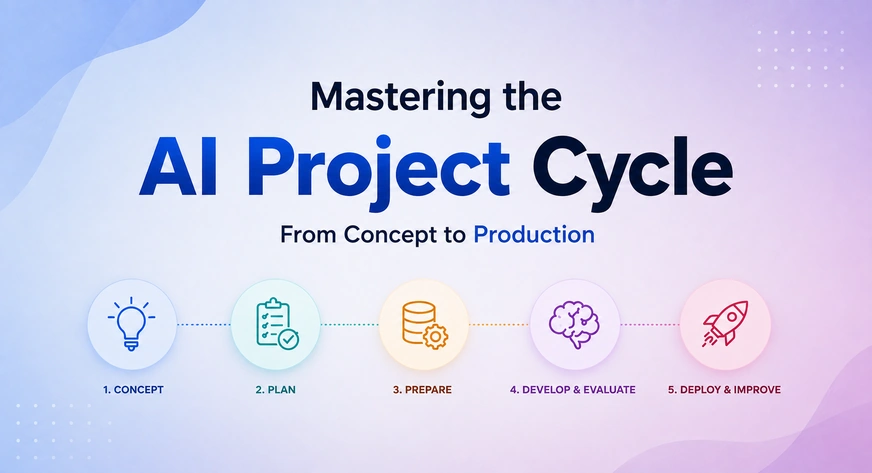
From Problem to Production: Navigating the AI Project Lifecycle
Picking a model and feeding it data is only the beginning. Real AI projects demand a structured path, one that starts with the right problem and carries through to deployment, monitoring, and refinement. That journey is the AI Project Cycle, and this piece breaks it down clearly. We appreciate how it frames the process as an accessible roadmap rather than a maze. If you are ready to go deeper, our guide to distributed algorithms offers a practical next step for those scaling their efforts.

The Equation That Reveals Bagging's Limits and Why Randomness Matters
Bagging has a ceiling, and no amount of trees will break it. The equation explains why random forests need that extra layer of chaos to keep improving. It's a sharp reminder that more isn't always better when the mechanism stalls. The experiment makes the point concrete, turning theory into something you can see. If distributed systems intrigue you, *Unlock LLM Training* pairs well with this mindset, though it stands firmly on its own.

What data scientists miss about rerankers and why it reshapes your RAG architecture
Ask a data scientist what a RAG reranker actually does under the hood, and you'll get a pause before an honest answer: it's not magic, it's a focused relevance filter. That honesty matters more than any architecture diagram, because it forces hard decisions about where your enterprise RAG pipeline spends its compute. We think that clarity is the real unlock. For teams already wrestling with distributed systems, this piece pairs well with our practical guide to distributed algorithms.

Jalapeño delivers faster inference with greater energy efficiency
OpenAI's Jalapeño chip isn't just fast; it's fast where it counts. Tested on SemiAnalysis' InferenceX benchmark, it delivered more tokens per user and higher throughput per kilowatt than any currently available model. That's the kind of efficiency that turns experimental AI into practical tooling. We're eager to see how this reshapes deployment decisions, especially for teams tired of trading speed for cost. For a closer look at how AI performance impacts real-world judgment, our piece on questioning an AI clone offers a useful counterpoint.
Exploring transparent AI watermarking through a practical, educational lens
Watermarking isn't about visible markers or injected ads. It's a subtle statistical fingerprint woven into how a model picks its tokens, invisible to the reader but detectable by design. This developer took that concept and built a minimal, educational version of SynthID-Text, simplifying parts to keep the core idea clear. It's a smart, hands-on way to demystify a topic that's about to shape every AI response you see. If you're curious how provenance might work quietly behind the scenes, this is a solid starting point.
Stop rewriting the same spreadsheet logic. Let AI handle the pattern.
The developer's instinct to cut setup time from three days to one is smart, but the real insight here is the question they're circling: why are we still writing code at all? Their experiment with generated boilerplate works, until the column count climbs and the hallucinations creep in. That's the trade-off. Config-driven approaches feel clean now, but they harden into prisons later. The middle ground isn't a tool, it's judgment. If you're wrestling with this, you're not behind. You're just early.

Fine-Tune Large Language Models for Real-World Results
Fine-tuning an LLM often feels like stepping into a black box, but this guide opens it up. It walks you through the entire process, from preparing data to deployment, with a clear focus on practical, real-world application. We appreciate how it cuts through the complexity, giving you a path to follow rather than abstract theory. If you are curious about the broader challenges of training these models, our related piece on distributed algorithms is a useful next step.
Precision in preprocessing: refine your camera frames for accurate AI predictions.
Your model aced training, but the gap between those clean validation images and your live camera feed is where accuracy goes to die. The culprit is rarely the model itself, it's the preprocessing pipeline. Your YUV-to-RGB conversion looks solid, but the real suspect is the tensor scaling. TFLite models typically expect normalized float inputs in a specific range, like [0,1] or [-1,1], not raw 0-255 integers. Feeding raw pixel values into MobileNetV3 will skew the learned feature maps significantly.

Blinded Tests Reveal When Long Context Beats RAG on Quality
A 127,000-token prompt can beat a top-5 RAG pipeline on the same 12 questions, graded blind for correctness, completeness, and grounding. That's the claim this controlled comparison puts to the test, and it's a useful one. Most teams assume retrieval is the only way to manage cost and latency, but Kimi K3's 1M token context window challenges that reflex. The tradeoffs are real, and the data here gives you a clearer lens on when full-context wins.
Give your AI agents new skills without retraining the model
Ever wondered how ChatGPT and Gemini pull off PDFs and PowerPoints when an LLM is all they have? The trick isn't a smarter model; it's skills, instructions an agent loads only when needed. That's a clever, accessible idea, and seeing it applied through LangChain makes it feel actionable. We like how this reframes capability as context, not complexity. For a deeper take on how agents learn by editing context rather than weights, check out our piece on Agentic Context Learning. It's a natural next step.