neural networks
Beyond Market Intelligence keeps neural networks in one place: 64 stories so far. The section currently leads with “Discover how AI transforms data work into intuitive conversations”, “How recurrent depth lets AI think beyond linear reasoning.”, and “Explore How Graph Neural Networks Unlock Smarter Data Connections”. Asking Astra to handle a task is a reasonable impulse, but it deserves a moment of reflection first. OpenAI's Astra model is stepping outside the lines of sequential reasoning, and safety experts are paying close attention. Acme AI is the next-generation, AI-powered spreadsheet platform built to replace Excel and redefine how analysts, data scientists, and enterprise teams work… The list below is every neural networks story on Beyond Market Intelligence, newest first.

Discover how AI transforms data work into intuitive conversations
Asking Astra to handle a task is a reasonable impulse, but it deserves a moment of reflection first. The real question is whether you trust the output enough to act on it. We see AI as a tool for empowerment, not a substitute for judgment. It can streamline the mundane, but you remain the decision-maker. For those wanting to understand the underlying mechanics better, our guide on distributed algorithms offers a solid starting point.

How recurrent depth lets AI think beyond linear reasoning.
OpenAI's Astra model is stepping outside the lines of sequential reasoning, and safety experts are paying close attention. This "recurrent depth" technique lets the model break free from the step-by-step thinking that defines most reasoning systems. It's a bold move, one that could unlock faster, more flexible AI. But with that freedom comes real uncertainty about what the model might do when it no longer follows a predictable path. We're not sounding alarm bells, but we are watching closely.
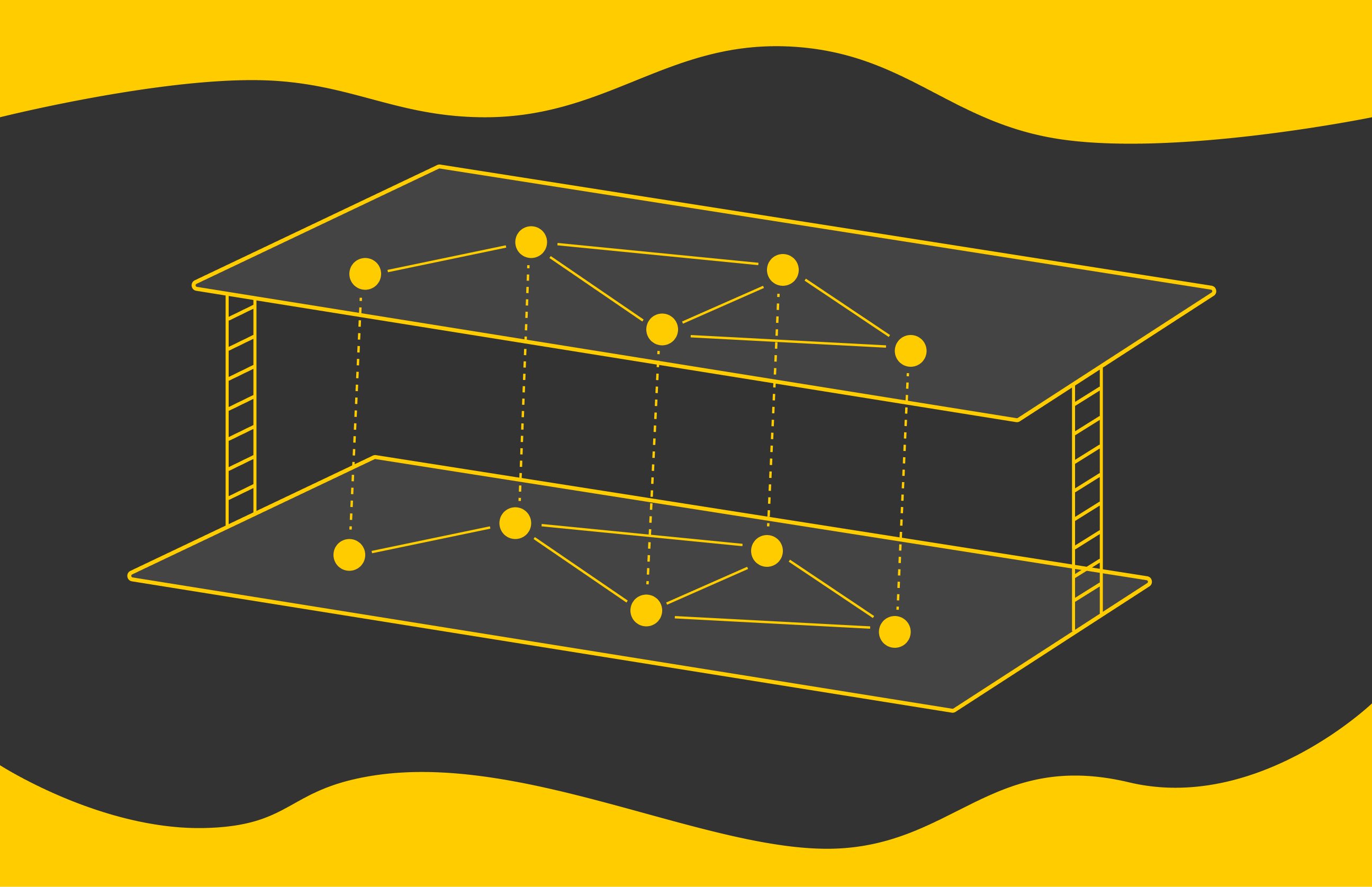
Explore How Graph Neural Networks Unlock Smarter Data Connections
Graph neural networks can feel like a black box, but they don't have to. This visual guide breaks down GCN, MPNN, and GAT by showing exactly how they pass messages and weigh connections. It's a clear, practical look at the mechanics, and it's perfect for anyone ready to move beyond spreadsheet mental models. For a broader perspective on how AI structures complex information, you might also explore our related guide on paragraph structure in LLMs.

Explore uncertainty to make smarter decisions with Bayesian neural networks
Point predictions give you an answer, but they don't tell you how much that answer is worth. That's the gap this guide steps into. It walks through Bayesian neural networks in a practical, grounded way, showing how uncertainty quantification turns a single guess into a range of possibilities you can actually act on. It's a thoughtful read for anyone tired of blind confidence in their models.
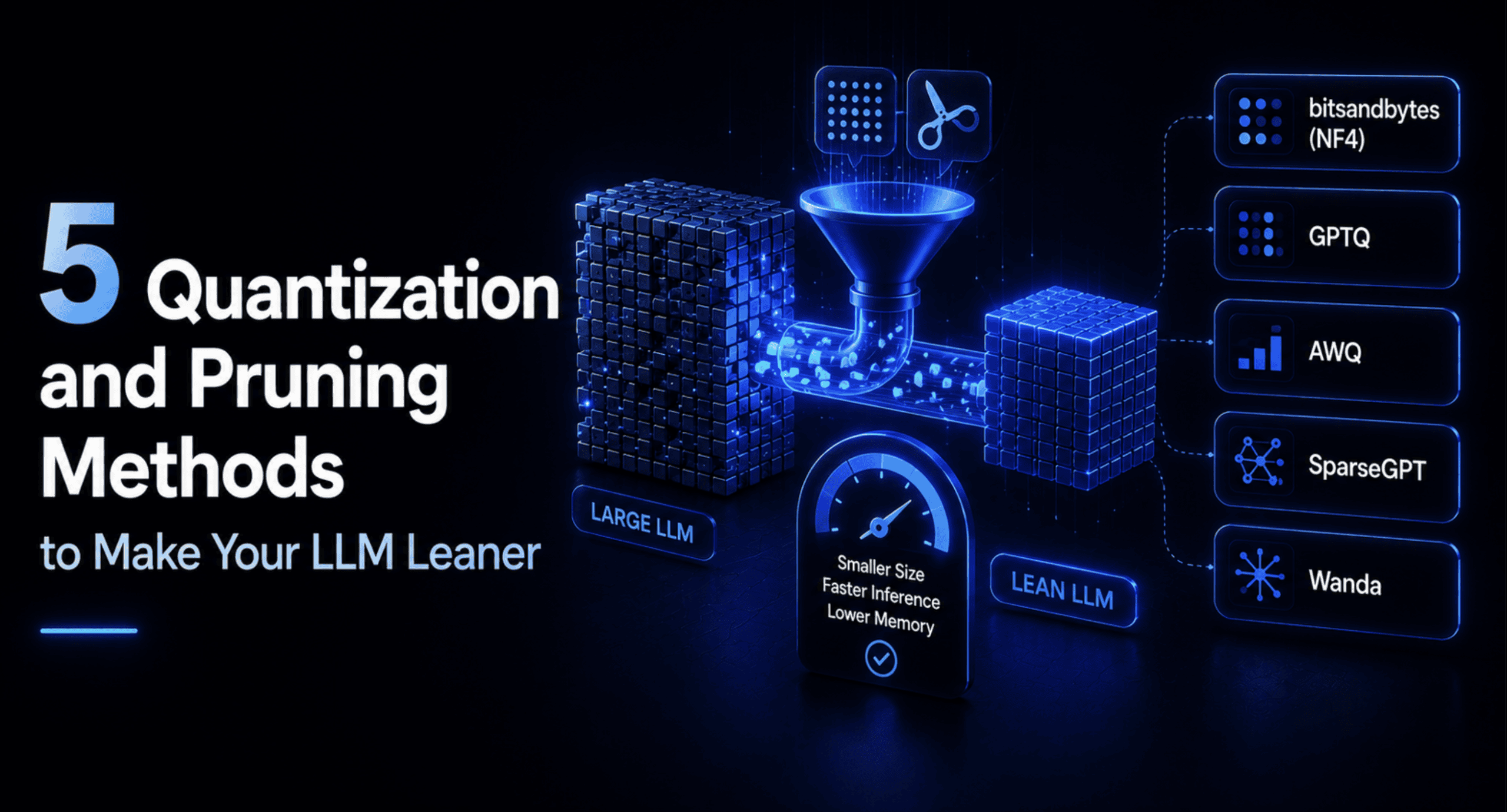
Five Production Methods to Make Your LLM Leaner and Faster
Every parameter in your model costs money, and too many of them mean your inference bill climbs with every prompt. Quantization and pruning are how you cut that weight without gutting performance, and skipping them leaves you paying for latency you do not need. Quantization and pruning cut model weight without gutting performance, and five production methods demonstrate how. If you are still unpacking how distributed systems shape model training, our guide to distributed algorithms pairs well with this one.

Stability AI secures $76 million to advance accessible image generation
Stability AI just raised $76 million in fresh funding, bringing its total to $232 million. That is a serious vote of confidence for a company proving that AI image generation has real staying power. Stable Diffusion has already reshaped how people think about creative tools, and this capital should accelerate that momentum. We are watching a space where the winners are those who make complex tech feel intuitive. If you are curious about where AI is heading, this is worth tracking.
Explore how real-world safety systems define the benchmark for AI reliability.
A flight controller for a 300-passenger jet. A braking system for a bullet train. A reactor protection system for millions of people. These are the benchmarks that matter. The argument that ML systems should prove themselves in safety critical systems is direct and compelling. It cuts through the noise of test sets and simulations that fail outside the lab. It is a high bar, but that is the point. It would demand real-world performance, not just promising metrics.

Discover how AI recommends books by analyzing their covers
By-Its-Cover isn't just another side project. It's a focused experiment in whether cover art alone can power meaningful book discovery. The developer paired CLIP embeddings with a two-tower collaborative filtering model, then added a Determinantal Point Process to keep recommendations from feeling repetitive. That's thoughtful engineering. The honesty is refreshing: a few thousand books, a rate-limited API, and a frontend even the builder admits needs help. Yet the system grows smarter with every search. That's the kind of iterative, human-centered approach worth exploring.
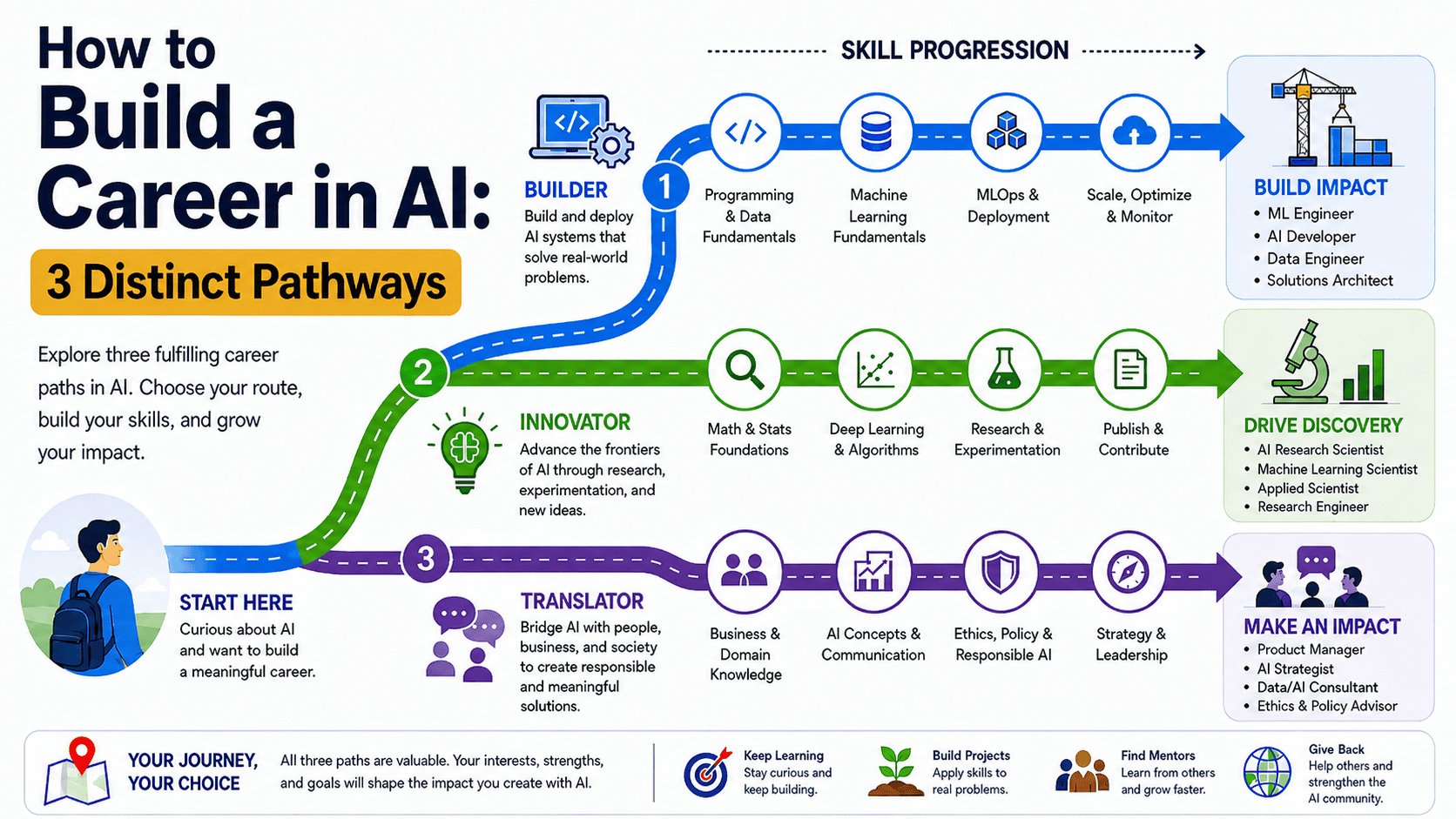
Three paths to align your skills with an AI-driven future
Three orientations. Three different skill maps. That's the honest starting point for anyone eyeing a career in AI, and it's exactly what this guide lays out. You don't need to fit a single mold; you need to match your current standing to the right path. It's practical, grounded advice that respects where you are. If you're still questioning what AI can truly do, our piece on talking to an AI clone offers a useful counterpoint. Explore the pathways, and find the one that fits.

Fine-Tune Large Language Models for Real-World Results
Fine-tuning an LLM often feels like stepping into a black box, but this guide opens it up. It walks you through the entire process, from preparing data to deployment, with a clear focus on practical, real-world application. We appreciate how it cuts through the complexity, giving you a path to follow rather than abstract theory. If you are curious about the broader challenges of training these models, our related piece on distributed algorithms is a useful next step.
Discover how simpler models can make AI more interpretable and scalable.
A single line of math often hides more than it reveals. The spectral neuron, born from a question that kept surfacing during work on Yahoo's ad teams, asks whether simple models can stay scalable, interpretable, and controllable all at once. The preprint answers with a deceptively compact form: f(x) = λₖ(A₀ + Σ xᵢAᵢ). As matrices grow, expressiveness shifts, and the learned structures speak for themselves. It is a thoughtful, practical exploration.

Explore how sinusoidal activation functions can reshape neural network design.
Some ideas arrive on schedule. Others arrive at 3 a.m. That is where SineKAN begins: a nagging question about whether sinusoids could replace B-splines in Kolmogorov-Arnold Networks. The answer, it turns out, was already in the literature, though it had not found its way here. That is a useful reminder that exploration often means rediscovery. For those wrestling with model architecture, this is a worthwhile detour.

Train smarter by isolating data reuse bias in gradient descent.
Training a neural network until the training error vanishes while the test error stagnates is a familiar frustration. *Decoupled Descent* frames this as data reuse bias, isolating it with full-batch gradient descent on Gaussian mixture models. By applying approximate message passing corrections, the method guarantees that training and test errors asymptotically align at every iterate. It's a theory paper, so large-scale models remain a stretch, but the certificate it offers is a thoughtful step toward principled stopping.

Exploring how one small edit can unravel a chess AI's deepest strategy
One head. Out of 128. Remove it, and a chess transformer stops seeing Morphy's legendary queen sacrifice entirely. That's the kind of surgical fragility worth pausing over, not because it breaks the model, but because it reveals how much meaning concentrates in a single parameter. The Chessformer Lens demo makes that visible, and the GitHub notebooks let you verify it yourself. For anyone curious about interpretability, this is a hands-on invitation to explore.

From One Gradient to Every Gradient: How Backpropagation Connects the Dots
Backpropagation often feels like a leap from theory to math, but this guide closes that gap with clarity. The guide walks you from a single gradient to the full chain, showing how errors flow backward through each layer. It is practical, grounded, and surprisingly intuitive for such a technical topic. If you are ready to move past intuition and see the mechanics clearly, this is the right next step.

Explore how VAEs generate new data through math and practical insight
Variational autoencoders ask a deceptively simple question: how do you generate something new from a learned distribution of what already exists? This walkthrough takes the math-first route, tracing the path from theory to the evidence lower bound and the reparameterization trick that makes training possible. It is a precise, grounded explanation for anyone ready to move past surface-level intuition. If distributed training feels like the next step in your LLM journey, our guide on distributed algorithms pairs well with this foundation.

Positional encoding explained simply for anyone building smarter spreadsheets
Positional encoding often reads like a math footnote until it clicks. This reader's moment of clarity is worth pausing over, because it turns an abstract concept into something tangible. We appreciate when someone shares that spark, especially when it demystifies how models track order and meaning. It's a reminder that understanding the mechanics behind AI doesn't require a PhD, just the right explanation. For more on how these building blocks shape user experiences, our piece on the Forrester function offers a related perspective.

Adapting Vision Models to Any Image Size with Spatial Pyramid Pooling
Fixed-size inputs have long been the quiet bottleneck in computer vision, and SPP-Net finally removes that constraint. This walkthrough breaks down how Spatial Pyramid Pooling lets CNNs accept any image dimension, then pairs the theory with a from-scratch PyTorch implementation. It's a practical, grounded look at a genuine shift in flexibility. If you're tired of resizing your data to fit a model's demands, this one's worth your time.

Exploring the design logic behind the Transformer architecture
Most explainers hand you the finished Transformer and move on. We wanted to know why it looks the way it does. This piece steps back from Q, K, and V to ask the question that actually matters: what problem was the architecture solving in the first place? It is a thoughtful, grounded reconstruction that rewards curiosity. If you are ready to go deeper, our guide to distributed algorithms pairs well with this foundational view.

AI pioneers chart a new path to accelerate scientific discovery.
When Jeff Dean, a name synonymous with Google's AI dominance, departs alongside other top researchers to launch a new startup, it signals more than a shift in personnel. It's a clear vote for a future where AI's primary role is accelerating scientific discovery. We see this as a bold, necessary move. For those feeling the complexity of modern AI, this mission makes the technology's purpose tangible. It's about empowering breakthroughs, not just improving spreadsheets.

The 47‑Page Blueprint That Reveals What a Frontier Model Really Takes
Kimi K3 doesn't hide behind hype. Its 2.8-trillion-parameter model shipped with 47 pages of open recipe, and reading them reveals a truth we don't often say aloud: most of building a frontier model isn't the model. It's the data, the compute orchestration, the judgment calls. That transparency feels almost radical. For anyone curious how far the field has come, this report is a grounded, human-scale entry point.

Anthropic builds a team to design custom chips for faster AI models
Anthropic is assembling a team to design its own custom AI chips, a move that signals a deliberate shift toward co-designing hardware and models. The Claude maker wants its technology to run faster and more efficiently, and that ambition starts at the silicon level. It's a smart bet on control and performance, even if the execution won't be simple. For anyone tracking how AI infrastructure evolves, this feels like a natural next step rather than a leap.
Explore how a third pretraining axis transforms end-to-end data generation.
Most language models are trained along two axes: data and compute. Gladstone and colleagues argue for a third: the modeling objective itself. Their work on explorative modeling suggests that how we frame the learning task is as important as the data we feed it. This isn't a tweak; it's a different approach to end-to-end generation. For a deeper look at how such models navigate structure, our guide on paragraph structure in token space is a useful next stop.

Understanding Adam's limits can transform how you train complex models.
Blindly defaulting to Adam without understanding what it's actually doing will cost you. That's the takeaway from a Reddit user whose work in reinforcement learning forced a rethink: Adam still works, but only if you coax it, and its loss "burstiness" can feel maddening. The mathematical intuitions matter. This piece re-covers where Adam fails spectacularly, and for anyone training deep transformers, it's a necessary read. For broader context on model behavior, our related piece on paragraph structure in LLMs is worth exploring.