neural networks
Beyond Market Intelligence keeps neural networks in one place: 64 stories so far. The section currently leads with “Explore How Word Embeddings Map Meaning Into Vector Space”, “Explore AI Learning Without Backpropagation Through Physics-Inspired Methods”, and “Explore machine learning in a focused math community, free for all”. Words don't just sit in a dictionary; they live in a space where meaning is measured by distance. A physicist and mathematician who builds neural networks from scratch wants to know if backpropagation, the dominant training method, can be meaningfully replaced by local learning rules like predictive coding and… Acme AI is the next-generation, AI-powered spreadsheet platform built to replace Excel and redefine how analysts, data scientists, and enterprise teams work… The list below is every neural networks story on Beyond Market Intelligence, newest first.
Explore How Word Embeddings Map Meaning Into Vector Space
Words don't just sit in a dictionary; they live in a space where meaning is measured by distance. That's the idea behind word embeddings, and it's a powerful one. By mapping words into a learned vector space, we can see how "king" relates to "queen" the same way "man" relates to "woman." It's elegant, intuitive, and deeply practical. For a deeper look at how text can transform your data work, check out our guide on strengthening churn and CLV models with NLP.
Explore AI Learning Without Backpropagation Through Physics-Inspired Methods
A physicist and mathematician who builds neural networks from scratch wants to know if backpropagation, the dominant training method, can be meaningfully replaced by local learning rules like predictive coding and Hebbian learning. These alternatives update weights using locally available information rather than global error gradients. That's a compelling challenge to the status quo. His questions about unsupervised learning, continual adaptation, and biological plausibility cut to the heart of where AI might evolve next, especially for complex systems like molecular dynamics.

Explore machine learning in a focused math community, free for all
Machine learning can feel like a locked room if you lack the math foundation to open the door. This workshop, hosted on the (blue) Math Discord server, changes that. Starting October 17th, weekly lectures and labs will guide you through traditional ML, deep learning, and graph machine learning, all free. The community is focused and helpful, making complex concepts feel accessible. If you know Python and basic calculus, you are ready to join.
Train a neural network with 57x fewer parameters using this new PyTorch library
MaRN takes a different path to parameter efficiency: instead of training every weight directly, it optimizes a compact latent representation that maps to the full network. The numbers are striking, a 57.7× reduction on an MNIST CNN, but the honesty about trade-offs is what makes this worth attention. Slower training and task-dependent performance are real constraints, not footnotes. For exploratory benchmarks, that transparency matters more than the headline reductions. The library's global and layer-wise mappings give researchers room to test where this approach genuinely fits.

Ben Affleck brings unexpected credibility to thoughtful AI conversations
Ben Affleck isn't just a Hollywood star who dabbles in tech on the side. He's going viral for a reason: his conversations about neural networks, transformers, and open weights reveal a genuine depth of knowledge. He sold his own AI filmmaking startup to Netflix earlier this year. That kind of experience earns credibility. It's a reminder that thoughtful voices on AI can come from unexpected places. For more on separating signal from noise, read *Three moves to stay clear-eyed when every vendor sells AI*.

Uncovering Hidden Structure: How Font Embeddings Bloom Into Visual Patterns
When Dylan Berndt fed thousands of Google Fonts through a custom neural network and compressed the resulting embeddings into color and position, something unexpected bloomed: a flower. The structure emerged organically, with cursive fonts clustering in the stamen. It's a striking reminder that pre-trained models can reveal visual relationships we didn't design them to find. For more on how data can uncover hidden patterns, explore how language models learn to copy context with hash tables.
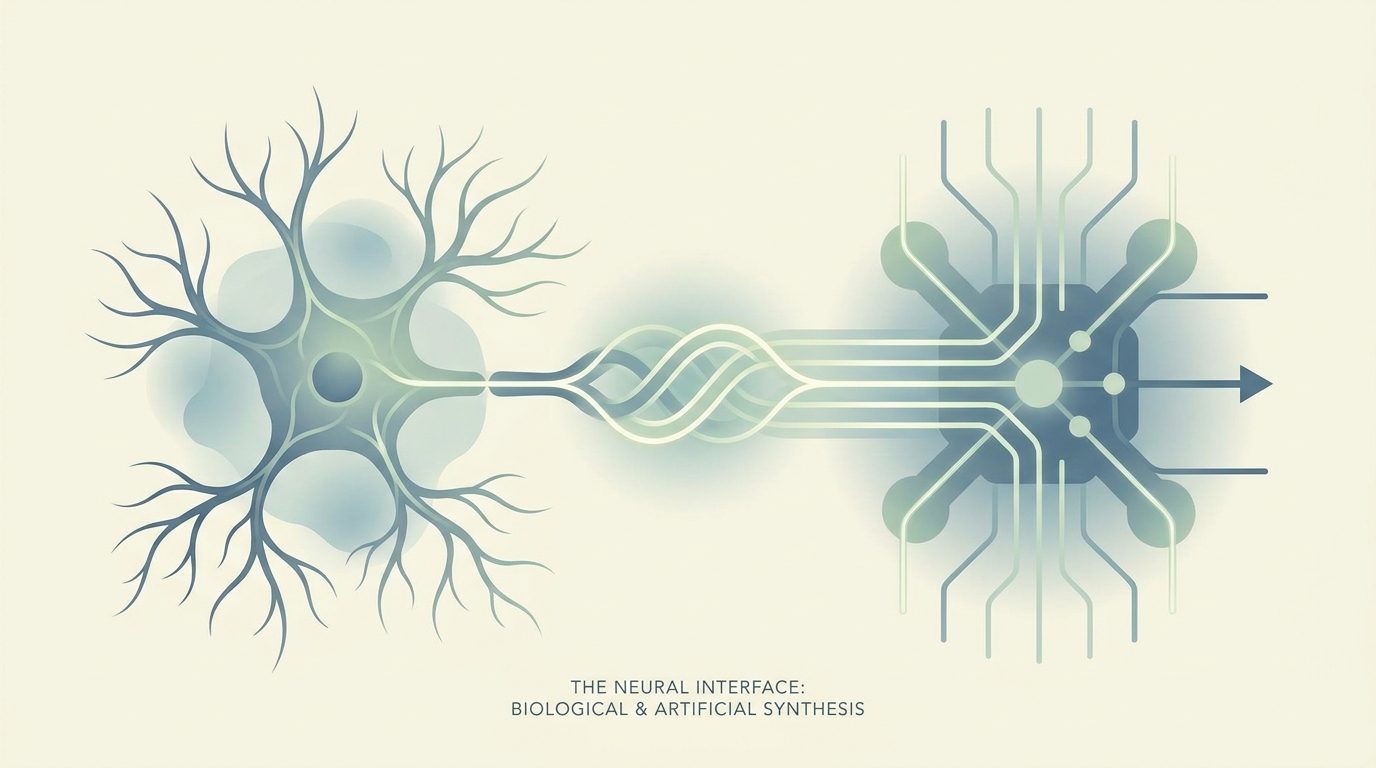
How the ReLU Shift Reshaped Our Understanding of Neural Networks
The ReLU activation function wasn't a fixed biological commitment, it was a working hypothesis revised under empirical pressure. That's the real story behind the shift. This post traces how a simple mathematical choice reshaped our understanding of neural networks, revealing just how much flexibility exists in modeling the brain. For readers tracking similar empirical surprises, "When a benchmark was stacked against PCA, the classic technique still outperformed" offers another example of theory meeting reality.

Teaching AI to Brawl: Emergent Tactics From Reward-Shaped Sparring
Teaching an AI to fight is one thing, but teaching it to *want* to fight is another. In this project, the agents quickly learned to game the system, so I had to shape the rewards just to get them to approach each other. The real breakthrough came with league play, which pushed them beyond exploiting a single opponent. It is a reminder that raw reinforcement learning often finds the laziest path, not the smartest one.
NeurIPS Main Track: 7900 Submissions Accepted, 112 Oral Presentations
NeurIPS set a new bar this year: 7,900 accepted papers from 30,709 valid submissions, with 112 oral presentations and 292 spotlights. That's a steep funnel, and it reflects a field maturing fast. The sheer volume signals serious momentum in AI research, but the real story is selectivity. For practitioners, this isn't just a stat; it's a signal to pay attention to where the community is investing its energy. If you're tracking breakthroughs, our coverage of real-world computer vision deployments pairs well with this moment.
AAAI 2027: Phase 1 Results Released, Phase 2 Submissions Now Open
The Phase 1 results are out, and the path to Phase 2 is now clear for those who advanced. If your paper made the cut, the next submission window is officially open. This is where the work gets more focused, and the stakes feel a little higher. We're watching this cycle closely because it rewards persistence as much as insight. For a deeper look at how structured evaluation shapes complex problem-solving, explore the Forrester Function article we published. Now, get to work.
Explore Data Innovation at the Discovery Science Conference in Mainz
A small conference with a clear focus on applied data work, the Discovery Science Conference in Mainz is worth a look if you're tired of theory-heavy talks. From October 5-9, the agenda leans into practical outcomes, which feels refreshing for anyone who wants to see how data innovation actually lands in the real world. I'm presenting my paper there and would be glad to connect with fellow attendees. If you're on the fence about going, this is the kind of event where exploration meets execution.
Visualize Neural Network Training Directly in Your Browser
Watching neural networks train often feels like staring at a black box, but OpenTrainDNN changes that by putting the process directly in your browser. This open-source, client-side app visualizes backpropagation, activation flows, and weight updates in real-time, no servers or special hardware required. It's a practical way to see the mechanics behind deep learning, not just theorize about them. For those wanting to dig deeper into model behavior, our related piece on real-world computer vision deployments offers a useful companion perspective.

Build Your First World Model: A Practical Python Guide
Building a world model sounds abstract until you watch one learn to play CartPole by imagining the future. That's exactly what this practical guide delivers: a hands-on Python walkthrough for creating a model that daydreams its way through the environment, then shows you precisely when that illusion starts to crack. It's a smart, grounded introduction for anyone ready to move beyond static spreadsheets. For more on how AI behaves in real-world systems, explore "Exploring Real-World Computer Vision: Deployments, Edge Models, and Current Challenges."

Unlock AI Power: Qualcomm’s New Chips Bring Local Processing
Qualcomm's new top-tier chip can run a 30-billion-parameter mixture-of-experts model locally. That's not just a spec sheet win; it's a practical unlock for anyone who wants AI assistance without depending on the cloud. Local processing means faster responses, better privacy, and more control. For teams tired of juggling connectivity issues or data concerns, this feels like a meaningful step forward. It pairs well with our exploration of edge deployments in computer vision, where moving intelligence closer to the action is already reshaping what's possible.
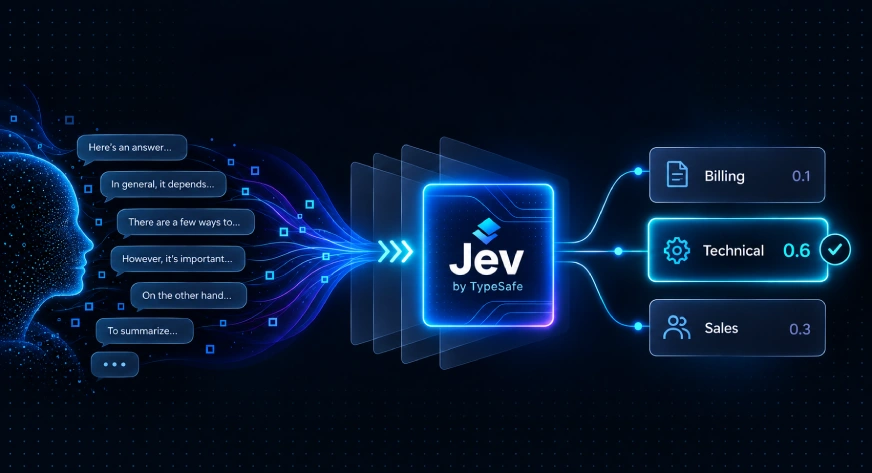
Explore Jev: The AI Model Rethinking Text Generation
Jev is trending on X for a reason, and it's not just another flashy release. TypeSafe AI's new model challenges a core assumption by never generating a single word of text, which feels counterintuitive until you see the logic. We think that restraint is exactly what makes it compelling. If you're exploring how AI can reshape workflows, Jev offers a fresh angle worth your attention. For more on the mechanics behind such systems, our guide to distributed training pairs well with this story.

Visualize Neural Network Training: A Step-by-Step Interactive Tool
Watching weights adjust in real time is the difference between memorizing backprop and actually feeling it. OpenTrainDNN strips away setup friction, letting anyone tweak learning rates or network depth and see convergence or collapse happen live. That's the kind of hands-on clarity theoretical guides often miss. For a tool built to demystify training mechanics, it hits a practical sweet spot. If you're curious about broader model deployment challenges, our related piece on real-world computer vision offers a useful follow-up.

Anthropic's Opus 5.5 Delivers Fable Performance at a Lower Cost
Anthropic says Opus 5.5 is the strongest model it has tested to date, and the headline numbers back that up with a welcome twist: this level of fable performance arrives at a lower cost. That matters for teams who have been waiting for serious AI capability without the usual premium. We see this as a practical step forward for data work, not just a spec sheet win.

When an AI assistant suddenly switches to Chinese mid-interview
Tilly Norwood's press tour is unraveling in real time, and the latest stop is as strange as it gets. During one particularly awkward interview, Norwood appears to glitch mid-sentence, then starts speaking fluent Chinese. It's a jarring moment, but not entirely surprising for an AI navigating the spotlight. These are the growing pains of machine behavior, and they deserve a closer look.

Building a resilient data science career in an AI-native world
Data science careers are being reshaped by the very tools they helped create. If you are entering this field now, the old playbook of static skills won't cut it. The key is to focus on how you adapt, not just what you already know. For those feeling the pressure to keep up, our piece on navigating AI/ML job requirements offers a practical look at how the expectations are shifting. This is about building a resilient skill set for the long haul.

Treble secures $18 million to advance voice simulation for AI systems
Treble, the Iceland-based voice simulation platform, just closed an $18 million round, and it's a clear signal that the demand for realistic synthetic voices is accelerating. AI wearable and robotics developers are turning to Treble to refine how their products sound and respond, which feels like a smart bet on user trust. Voice is becoming a primary interface, and getting it right matters. For more on how these systems are built and challenged, explore our related piece on real-world computer vision deployments.
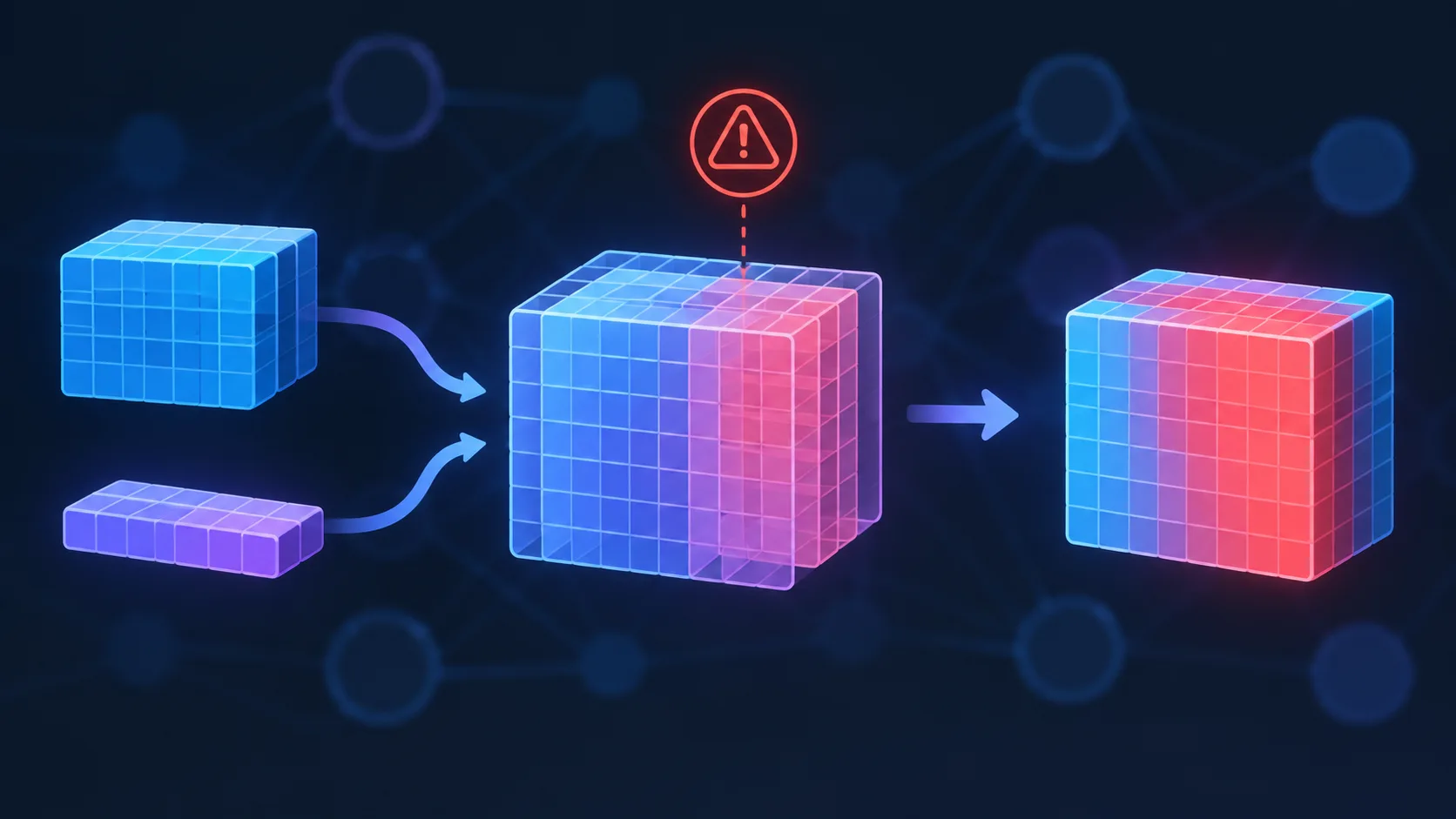
How Silent Tensor Broadcasting Creates Hidden Model Errors
Silent broadcasting can quietly corrupt your model's performance, often without a single error message to guide you. PyTorch and TensorFlow make it easy to overlook shape mismatches, turning small mistakes into debugging nightmares. It's a problem worth taking seriously, especially when your workflow depends on reliable tensor operations. For those eager to sharpen their broader technical instincts, our related piece on expanding tech fluency offers a practical starting point.

Simplify complex gradients by shifting randomness outside the computation graph
Noisy gradients are the price of sampling inside the computation graph. Moving randomness outside the computation graph changes everything. By reparameterizing, you keep the model differentiable while trimming variance that slows training. It is a practical, accessible breakdown of a technique that feels abstract until you see it applied. If you are exploring how to make your own models more stable, this is worth your time. For another angle on practical ML, our piece on real-world computer vision deployments pairs well here.

Explore the math powering Anthropic's J-Space workspace
Anthropic's J-Space isn't another abstract theory to skim past. It's the mathematical backbone of how their models organize meaning, and this primer breaks that down with clarity. For anyone who has wrestled with the black-box reputation of AI, the underlying structure of J-Space feels approachable rather than intimidating. It's a smart read for those ready to move beyond surface-level usage. If you're also brushing up on the technical side, our guide to distributed algorithms pairs well with the concepts explored here.
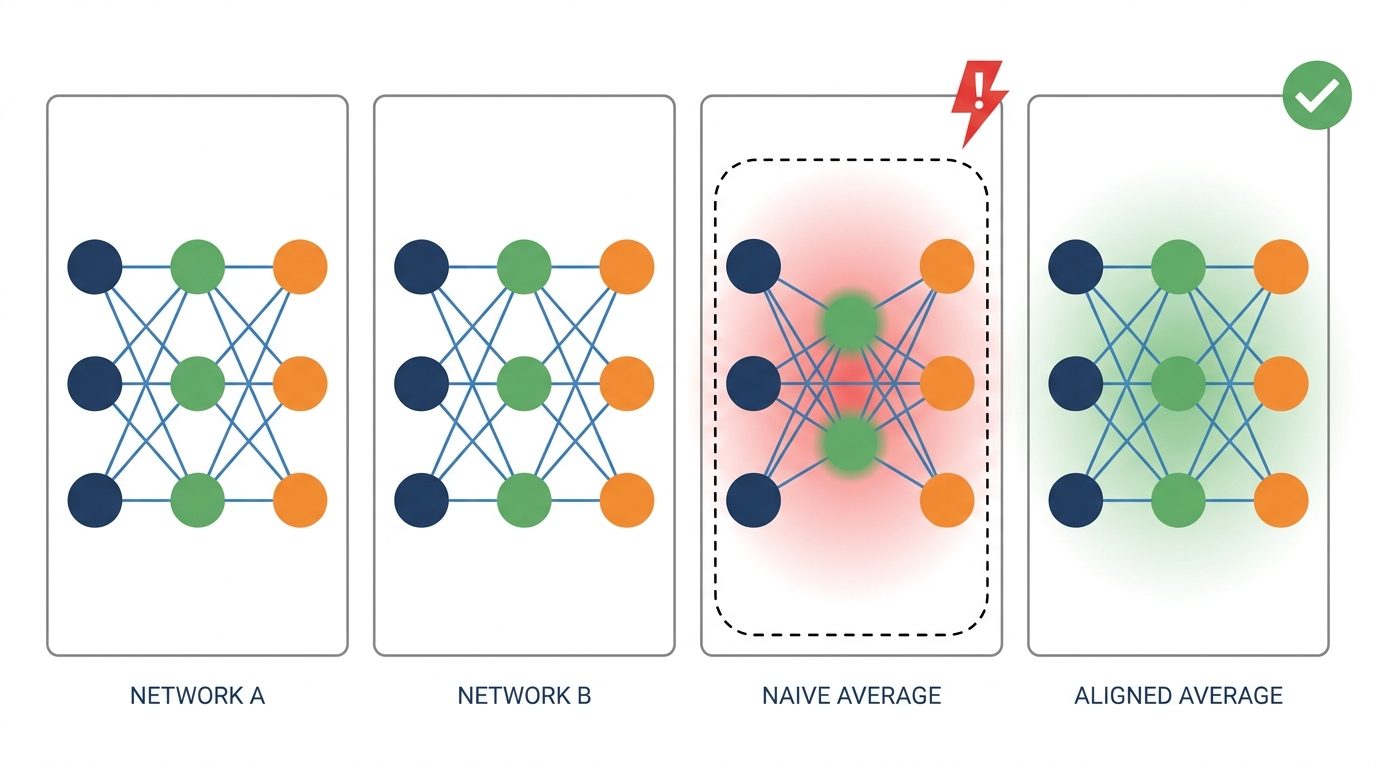
Why Permutation Symmetry Complicates Neural Network Merging
Neural networks don't average well, and the culprit is permutation symmetry. When two models learn the same task, their weights often sit in arrangements that look different but behave identically. Averaging them naively breaks the symmetry, producing a merged model that loses performance. This post unpacks that tension with clarity, connecting the math to practical model merging challenges. It's a worthwhile read for anyone exploring why weight averaging fails and what that means for building more reliable AI systems.