optimization
Beyond Market Intelligence keeps optimization in one place: 106 stories so far. The section currently leads with “AI Memory: Lessons Learned from a Large, Uneaten Pizza”, “Simplify complex gradients by shifting randomness outside the computation graph”, and “Active Compute Fabric cuts GPU idle time, reshaping AI infrastructure.”. A large pizza ordered and left uneaten is more than a waste of good food. Noisy gradients are the price of sampling inside the computation graph. Acme AI is the next-generation, AI-powered spreadsheet platform built to replace Excel and redefine how analysts, data scientists, and enterprise teams work… The list below is every optimization story on Beyond Market Intelligence, newest first.
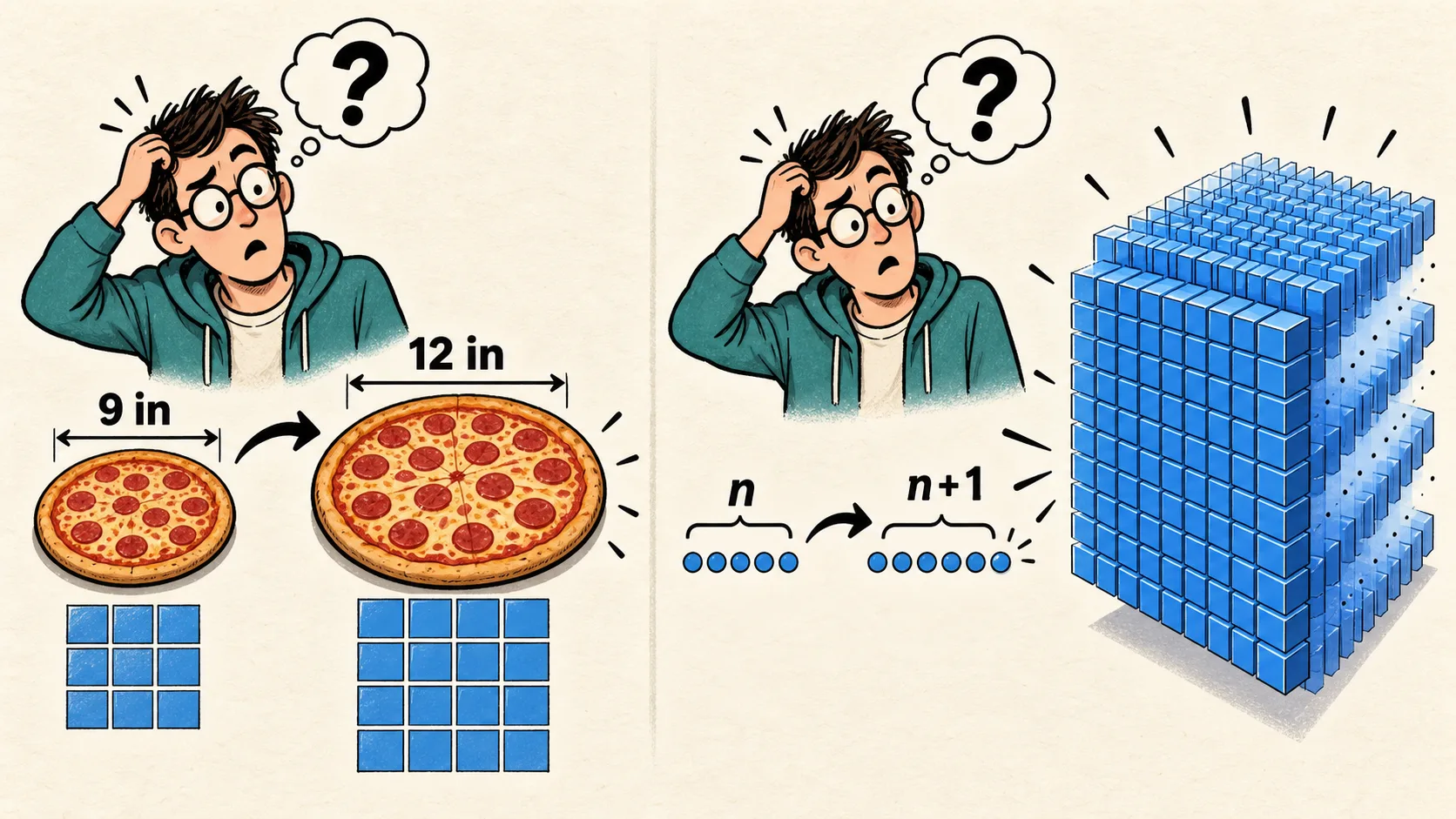
AI Memory: Lessons Learned from a Large, Uneaten Pizza
A large pizza ordered and left uneaten is more than a waste of good food. It is a perfect metaphor for how machine learning models handle memory. The post, "The N Squared Pizza Problem," draws a sharp parallel between that oversized order and the inefficiencies lurking in AI memory management. We appreciate the clever framing because it makes a complex topic feel immediate and relatable.
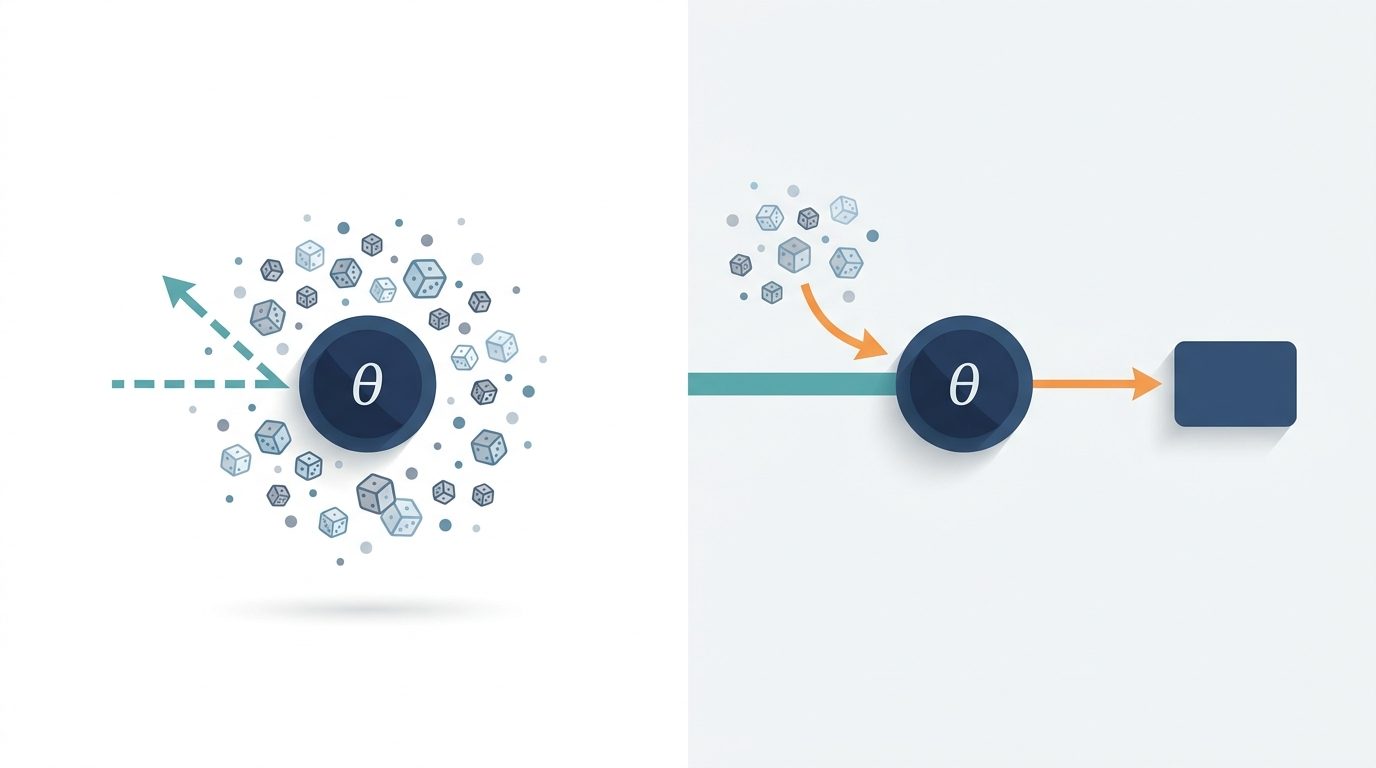
Simplify complex gradients by shifting randomness outside the computation graph
Noisy gradients are the price of sampling inside the computation graph. Moving randomness outside the computation graph changes everything. By reparameterizing, you keep the model differentiable while trimming variance that slows training. It is a practical, accessible breakdown of a technique that feels abstract until you see it applied. If you are exploring how to make your own models more stable, this is worth your time. For another angle on practical ML, our piece on real-world computer vision deployments pairs well here.

Active Compute Fabric cuts GPU idle time, reshaping AI infrastructure.
Cornelis just raised $205 million, and the message is clear: Nvidia's grip on AI infrastructure isn't untouchable. The company's Active Compute Fabric targets a quiet but costly problem, the wasted GPU cycles spent waiting on data. That's where efficiency lives, and that's where Cornelis is aiming. It's a smart, grounded challenge to the status quo, one that speaks to a future where hardware works smarter, not just faster. For more on how systems handle real-world demands, our piece on adaptive recommendation systems offers useful context.

Move beyond basic RAG with four knowledge graph patterns for agentic AI.
Knowledge graphs are moving from the background to the backbone of agentic AI, and Cassie Shum is here to show you why. In her talk, she moves past basic retrieval to outline four practical architecture patterns that bring reasoning into production. It's a grounded, actionable look at building systems that don't just retrieve, but reason. For a broader perspective on how these ideas connect, our piece on bridging retrieval and action offers a useful parallel.

SnapStart for container images removes the packaging tradeoff for serverless teams
For years, teams building on Lambda faced a frustrating tradeoff: pack a large container image for dependency headroom, or squeeze into a zip archive for sub-second startups. AWS has now extended SnapStart to container functions, which can hold up to 10 GB. That is a meaningful unlock. We saw the cost of that old constraint in a Reddit thread, where developers were stripping whitespace from packages just to fit. It is good to see that particular workaround become unnecessary.

Resource Orchestration Made Practical with Stable Python Techniques
Orchestration often feels harder than it should, especially when you are juggling stable, everyday Python. Five techniques that actually work today, built for 3.11 and later, with one 3.14-specific tool clearly flagged for those ready to push ahead. It is a grounded, practical read. If you want to extend your coding mindset further, our guide on unlocking Python's advanced techniques pairs nicely with this approach.

Trace AI agent failures with session logs and cost guardrails
When an AI agent fails, the problem often isn't the model itself but the trail it leaves behind. Session traces and cost controls are emerging as practical observability tools, helping teams catch tool-call loops and runaway spend before they spiral. Preserving execution context for post-incident debugging is the real win here. It's a grounded, human-centered approach to a messy problem. For more on how AI systems can misstep, our piece on verifying understanding during tax season pairs well with this.

Explore adaptive model routing to make multi-agent AI more efficient
Static model assignment is the default in multi-agent systems, but it is also the most expensive. Assigning every task to a frontier model, regardless of complexity, inflates inference costs without improving output quality. Adaptive model routing changes that by matching each task to the right LLM at the moment it arrives. It is a smarter, more accessible approach to cost control. For teams already wrestling with distributed systems, this practical strategy is worth exploring.

Replace Python bottlenecks with Rust through incremental, low-risk refactoring.
Rewriting a working system from scratch is a gamble most teams don't need to take. Lily Mara's approach is more pragmatic: swap out Python bottlenecks for Rust piece by piece, using PyO3 to bridge the gap. The result is function-level speedups that compound, without the operational weight of microservices. It's a measured path to performance that respects what already works. For more on how databases handle similar pressure, our piece on Perplexity's CobbleDB migration offers a useful parallel.
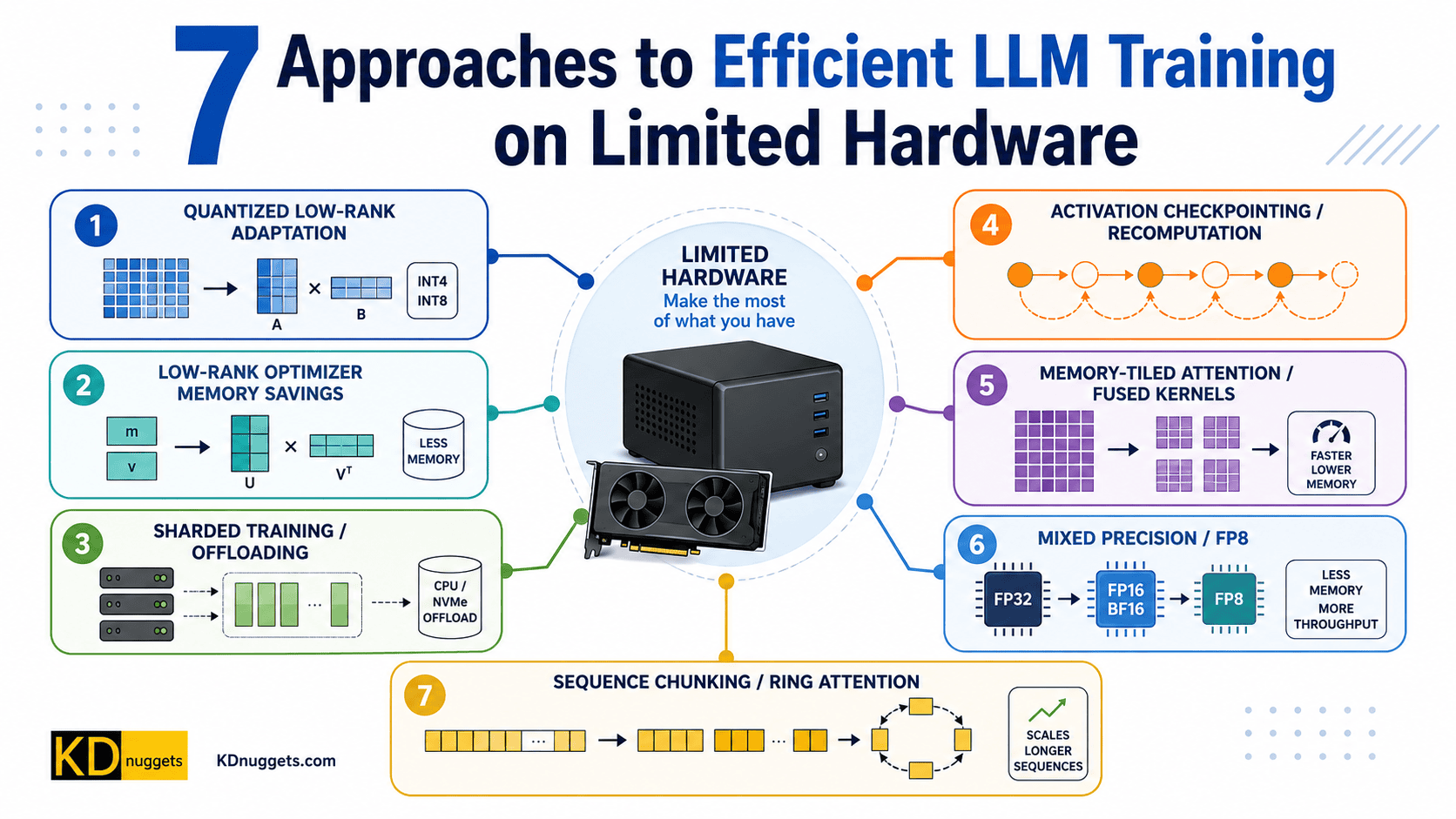
Seven Techniques to Train LLMs on Consumer Hardware
Training a large language model used to mean renting a server farm or settling for someone else's API. This guide challenges that assumption with seven practical engineering techniques for consumer GPUs, proving that memory limits are a constraint to design around, not a wall. It's a grounded, hands-on read for builders who want the control of training their own models.

Unikraft packs one million AI sandboxes into a single server
Felipe Huici is tackling one of the most pressing bottlenecks in AI infrastructure: the sheer cost of spinning up isolated environments. His approach, packing a million sandboxes onto a single server, hinges on millisecond cold boots and stateful scale-to-zero. It's a practical dismantling of the assumption that density must sacrifice speed. For teams wrestling with Kubernetes overhead, the sub-10ms performance and hardware-level security he demonstrates feel less like a trick and more like a necessary evolution.
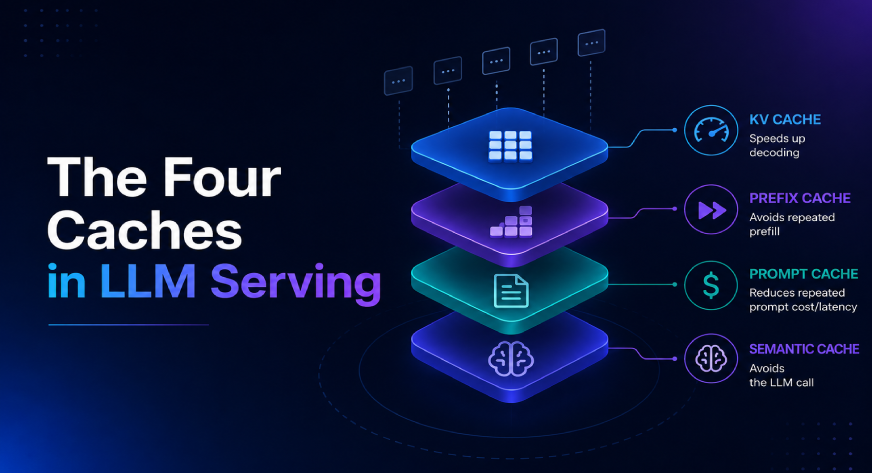
Smart Caching: Optimizing LLM Performance and Reducing Costs
Every request your LLM handles may carry millions of tokens, yet much of that data repeats across calls. Reprocessing it wastes time and drives up compute costs. Smart caching targets exactly this waste, and the new piece breaks down the four cache layers that make serving faster and cheaper. It's a practical read for anyone tired of paying twice for the same work. For a deeper look at distributed systems, our guide to distributed algorithms pairs well with this one.

Explore Rustuna, a faster, memory-efficient Optuna built in Rust.
If you've ever felt the weight of Python dependencies or memory overhead in your optimization workflow, Rustuna is worth a close look. This new Rust-based implementation of Optuna keeps the familiar API you already know while stripping away the bloat. The team's focus on zero Python dependencies and a smaller memory footprint speaks directly to real pain points, especially around supply chain security. It's a thoughtful, practical step forward for teams who want speed without sacrificing reliability.

From Engineer to Empire: How One Solopreneur Built a $2M Puzzle Franchise
Joe Cassavaugh traded the corporate engineering ladder for a solo career building puzzles and stories. His journey from software engineer to a $2M+ indie franchise owner is a masterclass in applied leverage. He scaled to 10 games in 5 years by adopting Unity for a 4-6x velocity boost and optimizing his content pipelines. For senior devs, his key takeaway is sharp: the trade-offs between corporate life and solopreneurship are significant, but the velocity gains are real. It's a practical look at refactoring your own career.
Transfer learning for physics with simplified dynamical models
Training an RL agent on one complex physical system rarely transfers cleanly to another. That is the bottleneck this approach tackles directly, using reduced order models to compress the dynamics into something the agent can actually reuse. It is a smart, practical step toward generalizable simulation control. If you are already wrestling with how to scale your own models, our guide to distributed training algorithms pairs well with this mindset. The takeaway: smarter abstractions, not brute force, are the way forward.
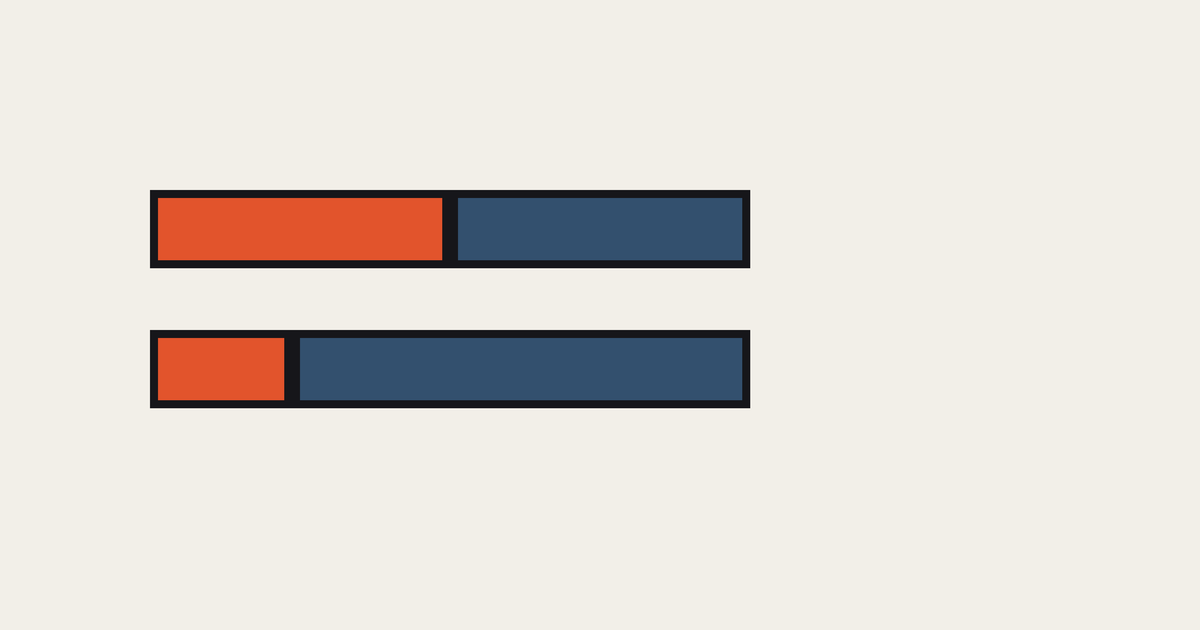
Optimize A/B tests by allocating traffic based on variant cost, not tradition
The default 50/50 traffic split assumes equal cost per variant. That assumption breaks when your treatment costs more than your control. This post tackles the math behind optimal allocation under heterogeneous variant cost, showing how cost-based sampling weights correct the imbalance. It's a practical fix for anyone running experiments where budget constraints matter. For readers interested in how similar efficiency principles apply beyond experimentation, our piece on the Forrester function explores a related mathematical tool for machine learning.
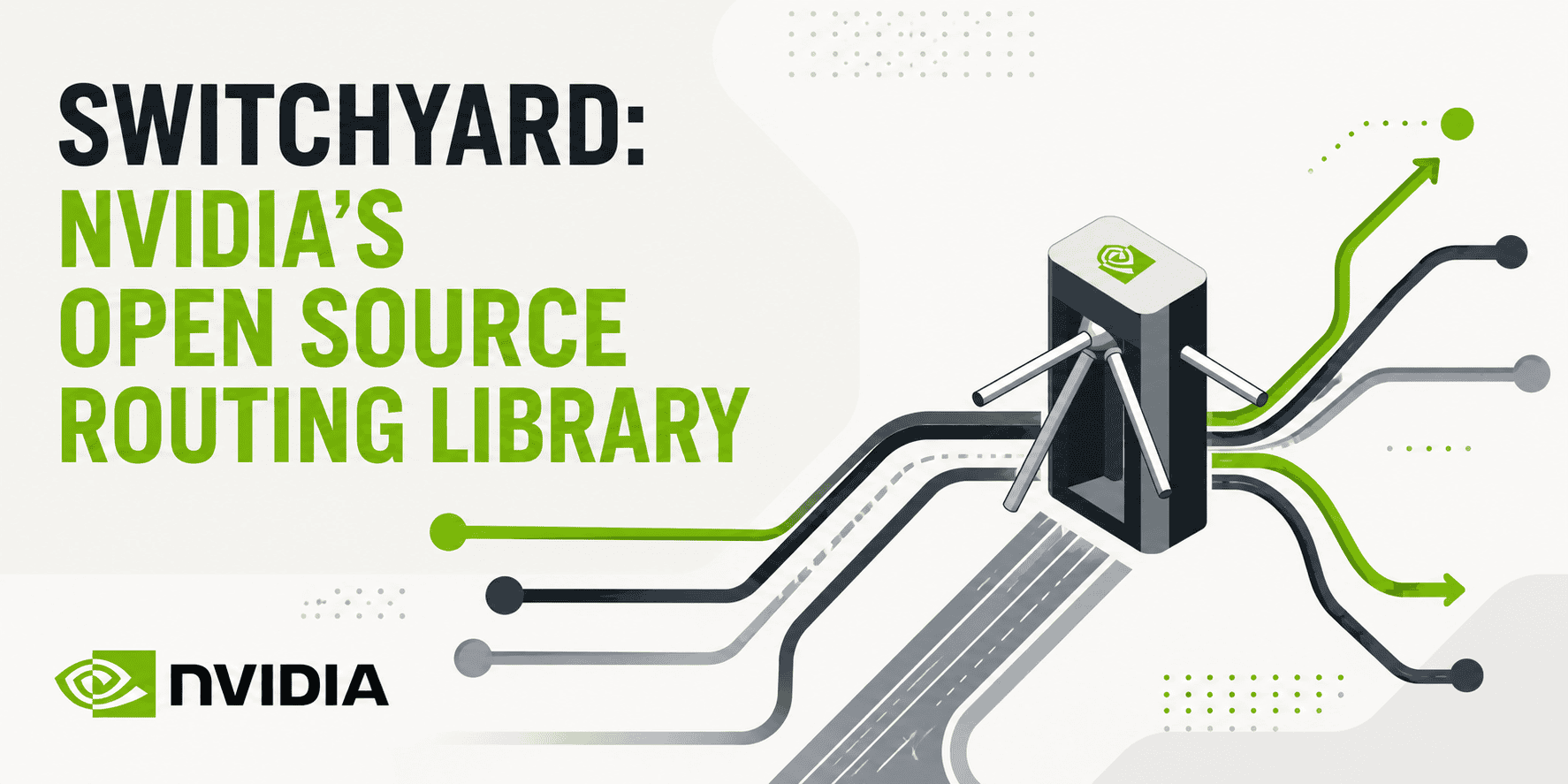
Intelligent routing reduces AI costs without sacrificing quality.
Not every AI request needs the full power of your most expensive model. Switchyard, NVIDIA's open-source routing library, offers a smarter approach: route simpler queries to lighter models, saving cost and latency without a major drop in quality. It's a practical shift toward efficiency. For those building distributed systems, our guide on distributed algorithms explores the foundational concepts that make routing like this possible. Explore Switchyard and see how intelligent routing changes the math.

Shopify's Gisting Technique Compresses AI Prompts for Faster Inference
Shopify's engineering team has introduced gisting, a technique that compresses long LLM prompts into a smaller set of learned tokens. The result? Better throughput and lower inference costs without sacrificing performance. That's a practical step toward making AI more accessible, especially for teams wrestling with unwieldy system prompts. We see this as a meaningful move for developers who want efficiency without complexity.

Explore how Triton simplifies custom GPU kernels for faster ML workflows.
Triton shines when the bottleneck is memory-bound rather than compute-bound. Operations like element-wise fusions, reductions, or attention that stall on data movement are prime candidates for custom kernels. Harshwardhan Fartale's early-access book gets this right: it focuses on practical acceleration, not theory. If you're stuck waiting on a stubborn layer, that's the signal to explore. For those new to kernel work, pairing this with broader distributed training context, like the guide on LLM training algorithms, helps frame when optimization matters most.
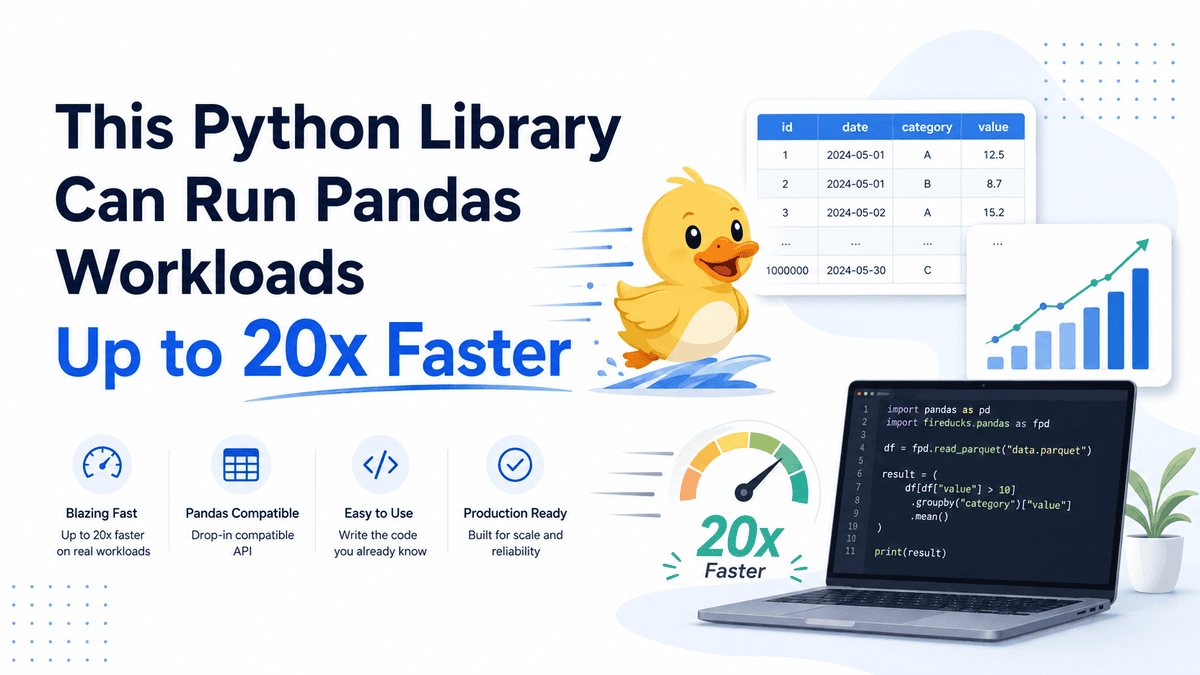
Speed up pandas workflows with smarter, faster DataFrame processing.
If you've ever watched a pandas script crawl through a DataFrame, you know the frustration. FireDucks takes that same workload and runs it up to 20 times faster. It achieves this through lazy execution, compiler optimization, and multithreaded processing, turning what feels like waiting into near-instant results. We find that shift genuinely exciting. For those ready to push their Python skills further, our guide on advanced coding techniques pairs perfectly with what FireDucks makes possible. Explore the benchmark and see the difference for yourself.
Unlock faster local LLM inference with DSpark speculative decoding
Waiting for the local model to generate its next token can feel like watching paint dry. DSpark speculative decoding changes that. By using a smaller draft model to propose candidates and the larger Qwen3-8B to verify them, it accelerates generation on the same GPU. We appreciate that this works directly with llama.cpp and CUDA, making it practical for your own hardware. It is a straightforward approach to reclaiming speed. For more on the broader concepts, our guide to distributed training is a helpful companion.

Explore how FreeToken brings powerful AI inference to everyday hardware.
Mixture-of-Experts models hold real promise, but their size has kept them off most local devices. FreeToken, built by researchers at UC Berkeley and MIT, tackles that head-on with a dynamic scheduling policy that trims weight overhead and speeds up decoding. It is an open-source engine designed for consumer hardware, not data-center luxuries. That focus on execution efficiency makes self-hosted reasoning far more practical. For a broader look at how distributed methods underpin such systems, our guide to distributed algorithms is a solid next stop.

How AI taught itself to reduce misaligned behaviors across ten tests
Ten benchmarks. Ten wins. An Anthropic researcher just walked us through self-improving AI that fixed every targeted misaligned behavior without sacrificing overall performance. That is not incremental tinkering; that is the kind of progress worth paying attention to. It suggests we can build systems that actively refine their own judgment, not just follow static rules. For anyone tired of brittle tools, this is a signal to explore where the field is heading.

Focus human attention where it drives real data outcomes
Reviewing every AI action is a luxury most teams can't afford. In this piece, the author tackles a familiar bottleneck: how to keep humans in the loop without turning oversight into a full-time job. The answer isn't more checkpoints, it's routing attention to the moments that genuinely need it. We appreciate this practical take on balancing control with momentum. It pairs well with our guide on distributed training, where similar trade-offs between efficiency and oversight come into play.