performance
performance at Beyond Market Intelligence is a file of 135 stories. The newest of them: “Unlock Faster AI by Running Small Language Models on Your Own Hardware”, “When Milliseconds Matter: Teaching LLMs to Forget on Purpose”, and “Fine-tuning shapes smarter AI agents, even from modest models”. Local small language models let you run capable AI without sending your data anywhere. Most LLM runtimes treat memory as an endless resource, but this one treats it as a deadline. Acme AI is the next-generation, AI-powered spreadsheet platform built to replace Excel and redefine how analysts, data scientists, and enterprise teams work… The list below is every performance story on Beyond Market Intelligence, newest first.
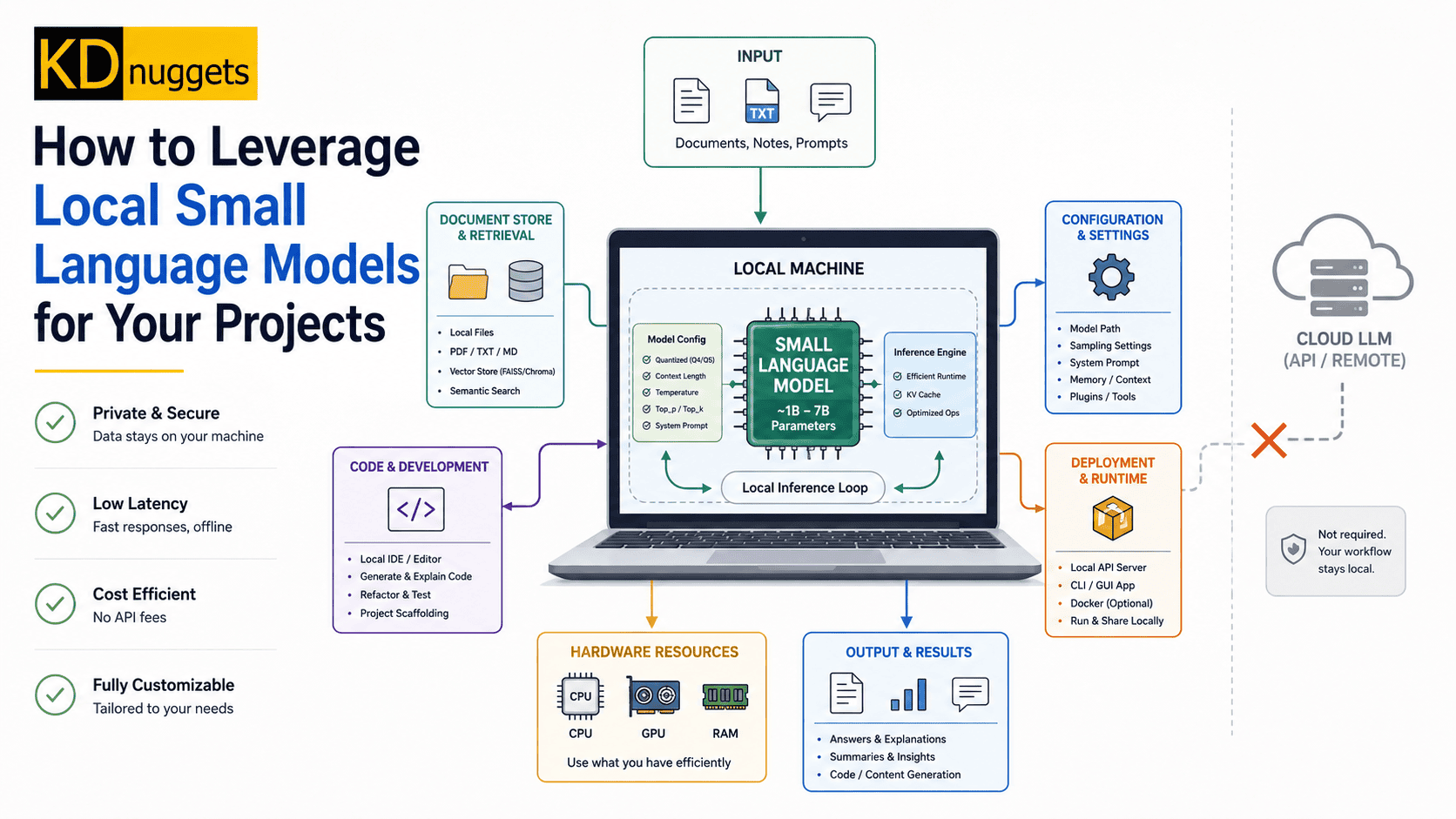
Unlock Faster AI by Running Small Language Models on Your Own Hardware
Local small language models let you run capable AI without sending your data anywhere. That is the practical appeal: privacy, lower cost, and direct control over your own hardware. This guide walks through the real steps to get them working, and we think the payoff is worth exploring. If you are curious about the broader challenges of distributed systems, our piece on unlocking LLM training offers a useful companion. For now, start compact, stay efficient, and see what you can build.

When Milliseconds Matter: Teaching LLMs to Forget on Purpose
Most LLM runtimes treat memory as an endless resource, but this one treats it as a deadline. It refuses admission rather than miss a 33ms robot control cycle, evicting KV cache by meaning instead of age, all in hand-written CUDA. That's a sharp rebuke to the bloat most of us accept. It's a focused, practical stand for precision, and it makes you wonder what else we're letting slip.

Fine-tuning shapes smarter AI agents, even from modest models
Nvidia's latest research flips the spotlight from the model to the harness, and that's a shift worth noticing. Their work shows that fine-tuning the surrounding framework can keep AI agents on track, even when the underlying model isn't particularly strong at the task. It's a refreshingly grounded take, suggesting that clever engineering around the model matters as much as raw capability. For anyone wrestling with AI's unpredictability, this points to a more practical path forward.

Enhanced Games' $60 million loss shows steroids are no shortcut to success
The Enhanced Games promised a bold, steroid-fueled future for sports, but the market just delivered a $60 million reality check. That's a steep price for a vision that clearly isn't landing with the public or investors yet. We admire the audacity, but transformation requires more than defiance; it requires a solution people actually embrace. While we cover ambitious tech bets elsewhere, like Cloudflare's Blog finding performance gains with EmDash, this particular experiment shows that challenging convention without a viable path forward is a gamble.

Fine-Tune Large Language Models for Real-World Results
Fine-tuning an LLM often feels like stepping into a black box, but this guide opens it up. It walks you through the entire process, from preparing data to deployment, with a clear focus on practical, real-world application. We appreciate how it cuts through the complexity, giving you a path to follow rather than abstract theory. If you are curious about the broader challenges of training these models, our related piece on distributed algorithms is a useful next step.
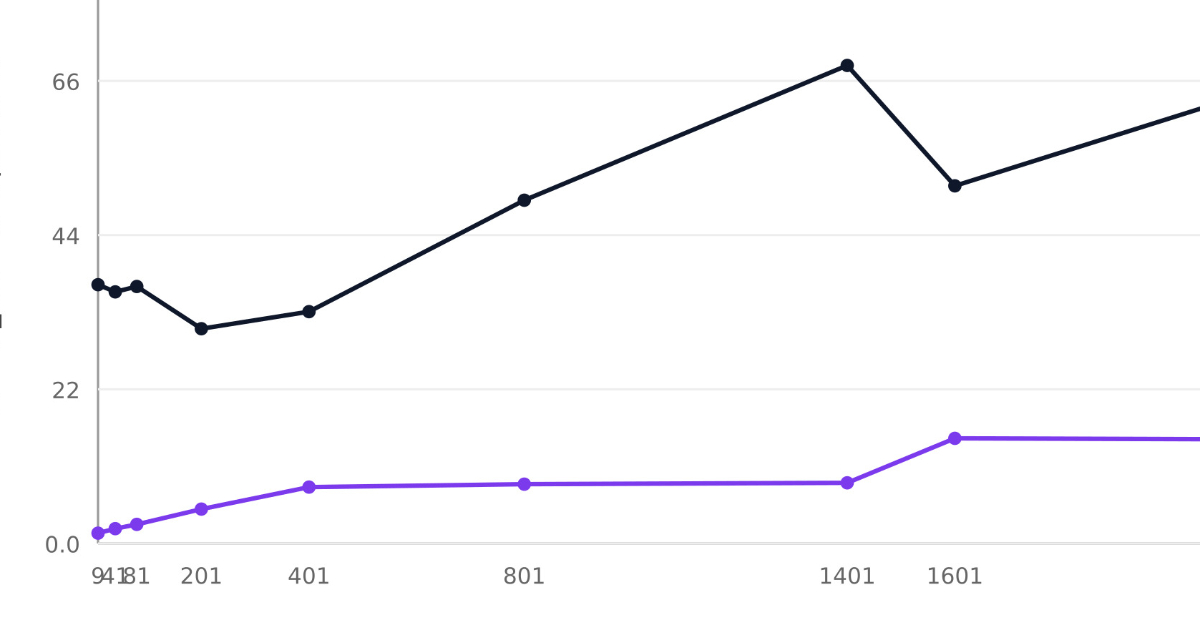
Single runtime outperforms multi-system stacks for live data workloads
Harper is pushing back on the multi-system stack, and the argument is hard to ignore. By keeping application code and data together in a single runtime, the database platform reports notably better performance on live, personalized workloads compared to a Vercel-based setup. Version 5.2 adds a record cache and greater throughput per node. That is a practical step toward less complexity. For readers tracking how modern architectures evolve, our related piece on Cloudflare's CMS migration offers another angle worth exploring.
Restoring Speed to Your Spreadsheet Error Fixes
If your weekly Excel files keep arriving as text, the error fix button was likely your quiet savior. Now, watching that same fix take 10 to 15 seconds after an AI update feels like a step backward, especially when colleagues still have the original two-second option. You are not alone in wanting that control back. While a direct toggle to revert the feature isn't always available, manually reformatting cells to "Number" often works.

Next.js 16.3 makes development faster with smarter memory and instant navigation
Next.js 16.3 cuts development memory usage by up to 90% and speeds up builds, which is exactly the kind of relief developers have been waiting for. Vercel's Instant Navigations deliver client-like speed without sacrificing the server-rendered architecture that keeps things solid. That balance matters. We appreciate the honest note about gradual adoption, since new power always comes with caveats. For teams juggling AI workflows, pairing this with our look at scaling AWS deployments through the Stateless Model Context Protocol could round out your optimization playbook.

Docker Rebuilds Its Desktop Foundation for a Faster Container Workflow
Docker's new virtualization layer is a smart move for developers who feel the drag of third-party components they can't tune. By rebuilding the VMM in-house for Docker Desktop 4.86, Docker takes direct control over container workloads, promising a performance boost that feels less like a patch and more like a deliberate step forward. It's available now in public beta on Mac and Windows, so you can test its edge without waiting for a formal release.

Scaling from 500 to 8,000 Events Per Second Without Sacrificing Accuracy
When an integration pipeline grows from 500 to 8,000 events per second, the temptation is to let correctness slide. This production account shows how one team scaled without sacrificing the two guarantees that matter most. It's a practical, grounded look at trade-offs, written for anyone who has felt the pressure of rapid growth. If you're curious about how performance and precision can coexist, this is the read for you. For a related take on turning complex systems into approachable tools, explore the Forrester Function piece.

Hollow-core fiber brings 30% faster data to modern networks
Relativity Networks just closed a $22 million round to push hollow-core fiber into data centers, a technology that moves data 30% faster than conventional fiber. It's a rare bet on a design that swaps glass for air, and the payoff is speed where milliseconds matter. We're watching this space closely, especially as AI workloads strain infrastructure. For more on how data centers are evolving, our piece on Crusoe shifting focus from Boom turbines offers useful context. This is practical innovation, not hype.

Why Smarter Agent Networks Use Fewer Connections
More connections don't automatically mean better outcomes. In a controlled experiment across 50 runs, recovery held steady even as relationship density climbed from 20% to 100%. What shifted was behavioral: the share of edges actually used dropped sharply. That gap between configured and used connectivity is where the real insight lives. It's not about building denser graphs; it's about designing for the connections that matter.

AI Watermarking Takes Hold: Navigating the EU AI Act's New Requirements
The EU AI Act's watermarking mandate lands on August 2, 2026, and it's already reshaping how vendors build. Statistical methods that subtly influence natural language generation are the early favorite, prized for keeping performance intact. What stands out is the friction this creates for open-source developers, who now weigh compliance against exposing vulnerabilities. It's a practical test of innovation under regulation. For a deeper look at how such systems manage complexity, our guide to distributed algorithms offers useful groundwork.
Build and benchmark production RAG with fully open models
Building a RAG system that actually works in production takes more than stitching together a vector database. This workshop on August 29, led by Ben Auffarth of Chelsea AI Ventures, tackles the messy parts head-on: hybrid retrieval, reranking, and guardrails built in from the start. It's refreshing to see evaluation with RAGAS and real cost benchmarking treated as essentials, not afterthoughts. If you're tired of demo-grade AI, this hands-on session is worth exploring.

Agentic traffic demands a smarter approach to autoscaling.
Autoscaling used to follow a predictable arc: manual rules, then reactive thresholds, then predictive models. Each generation assumed traffic patterns that resemble human behavior. Autonomous agents broke that assumption. They spawn bursts of activity that don't map to any prior curve, so two decades of capacity planning logic stops holding up. We need a new mental model, one that treats agentic bursts as first-class citizens rather than anomalies. It's a sharp, practical read.

Smarter retrieval reduces inputs by 4-5x while improving chat accuracy
Automatic budget selection in chat retrieval is a puzzle many of us know well, and this user's experience at 25% accuracy is telling. They are seeing results that rival benchmarks, yet the system still grabs too much context far too often. It is smart to question whether CELF is the right tool for the job. Exploring a keyword-based trie feels like a practical step toward sharper, more intentional retrieval. This is the kind of iterative problem-solving that makes AI feel genuinely useful.
Theory guided machine learning: A practice worth rediscovering.
The gap between machine learning theory and practice has never been wider, and the confusion is understandable. Many of the field's most famous guidelines, like avoiding overfitting or trusting only certain optimizers, started as narrow mathematical results but became rigid folklore. We now know breaking these rules often works better, yet no one formally retracts the old lessons. This leaves practitioners questioning whether any theoretical guidance still holds, or if empirical trial-and-error is the only honest approach.

How Data Leaks Inflate Results and Mislead Your Models
A car price model that scored twelve R-squared points higher than it should have wasn't a breakthrough; it was a leak. A preprocessing pipeline let the model peek at the test set before the exam, and the inflated results masked a deeper problem. That kind of shortcut doesn't just distort one metric, it erodes trust in the entire evaluation. It's a sharp reminder that data hygiene is part of model integrity, not a side note.

Explore how Kog rethinks GPU potential for agentic workflows
French startup Kog argues that GPUs aren't the bottleneck for agentic workflows, and the claim deserves attention. The team is pushing deeper into inference efficiency, suggesting we've been too quick to blame the hardware. That's a refreshing counterpoint to the usual narrative. If true, it could reshape how we think about scaling AI agents. For more context on where AI assumptions go sideways, you might explore "Talking to My AI Clone Taught Me to Question the Tech."
Explore how Grok Bot simplifies AI setup for $200
Grok Bot asks a fair question: is an AI agent you simply install worth $200? For anyone who has wrestled with spreadsheets, the appeal is obvious. It promises to handle the tedious work directly, removing the setup friction that stalls so many promising tools. We think that is a compelling pitch. The real test is whether it delivers on that ease.
Discover how AI agents can execute routine tasks faster with Nemotron Lightning.
Long-running AI agents often spend most of their time on routine execution rather than difficult reasoning. After making a plan, they might handle hundreds of tool calls, file reads, or validations. Using a frontier reasoning model for every step becomes slow and expensive. NVIDIA's Nemotron 3.5 Lightning targets this directly, offering a more efficient path for those repetitive actions. It's a practical reminder that smarter execution matters as much as smarter planning.

Route easy queries around the model to cut latency and cost
Every question in an enterprise RAG pipeline doesn't deserve a full model call. The pipeline from Article 9 proves that simple keyword matches can skip the LLM entirely, saving about two seconds per query. That's not a small win; it's a direct cut to latency and cost without sacrificing accuracy. Buying faster hardware isn't the only answer. Routing easy questions around the model is smarter. For more on questioning AI's assumptions, check out "Verify Your AI's Understanding: A Simple Check for Tax Season."

Exploring how one small edit can unravel a chess AI's deepest strategy
One head. Out of 128. Remove it, and a chess transformer stops seeing Morphy's legendary queen sacrifice entirely. That's the kind of surgical fragility worth pausing over, not because it breaks the model, but because it reveals how much meaning concentrates in a single parameter. The Chessformer Lens demo makes that visible, and the GitHub notebooks let you verify it yourself. For anyone curious about interpretability, this is a hands-on invitation to explore.

Explore how AI personalizes your creative workflow in the new Creator Studio app.
Facebook's standalone Creator Studio app is here, and it brings an AI assistant straight into the creative workflow. The tool studies your content style, performance, and audience engagement to offer personalized recommendations that actually match your goals. That's a practical step toward reducing guesswork, not a flashy gimmick. For creators juggling multiple formats, this feels like a thoughtful upgrade.