Beyond Market Intelligence

Acme AI is the next-generation, AI-powered spreadsheet platform built to replace Excel and redefine how analysts, data scientists, and enterprise teams work with data. Read more

Page 59

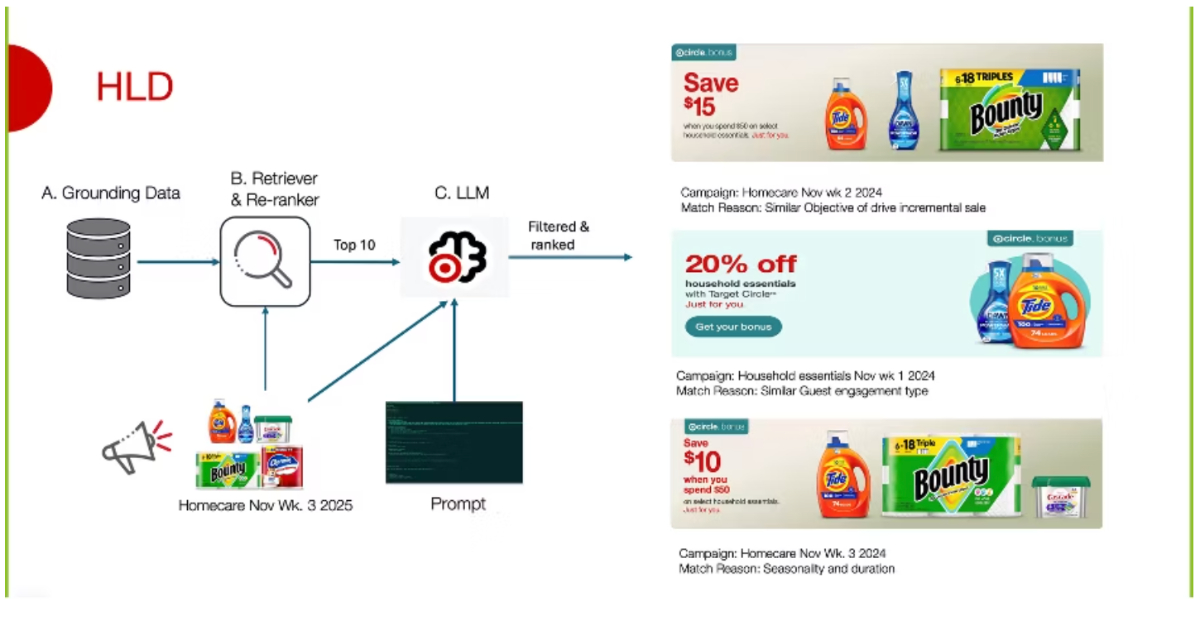
Inside Target’s LLM-Based System for Semantic Matching in Marketing Forecast Pipelines
InfoQ

Inside Target’s LLM-Based System for Semantic Matching in Marketing Forecast Pipelines

Target has transformed its marketing campaign forecasting with a novel generative AI system, replacing complex rule-based workflows. This innovative solution leverages embeddings, vector search, and large language model (LLM) ranking to retrieve and rank similar historical campaigns, achieving impressive results: 75% top-1 and 100% top-3 coverage. The system demonstrably reduces manual effort, enhances forecasting consistency, and incorporates feedback loops refined by campaign outcomes. For deeper insights into production diagnostics, explore "Eliya 25 Brings a JVM-Level Diagnostic Profile to OpenJDK 25 LTS."
Cursor now has a mobile app for guiding your coding agent on the go
TechCrunch

Cursor now has a mobile app for guiding your coding agent on the go

Stay connected to your coding agent, wherever you are. Cursor now offers a mobile app, providing remote oversight and guidance for your AI-powered workflows on the go. This empowers developers to maintain control and optimize performance, ensuring seamless collaboration between human expertise and automated assistance. For those grappling with the complexities of retrieval-augmented generation, consider exploring our article, "Your RAG Pipeline Is Probably Useless. Here’s a Better Alternative," for a more robust approach. Download the app today and experience a new level of coding agility.
Pocket raises $11M in bet on rising demand for AI note-taking devices
TechCrunch

Pocket raises $11M in bet on rising demand for AI note-taking devices

Pocket, a company pioneering AI-powered note-taking, has secured $11 million in funding to meet growing demand for its innovative device. The puck-shaped gadget, designed to attach to smartphones, provides users with unlimited recording, transcription, and to-do list capabilities. This investment underscores a shift towards more accessible and intuitive data capture solutions. Pocket’s approach contrasts with traditional methods, offering a streamlined experience for managing information on the go. For further insights into AI-driven innovation, explore our recent piece on Proception and their $11 million raise.
WhatsApp now lets you reserve usernames
TechCrunch

WhatsApp now lets you reserve usernames

WhatsApp is introducing a new era of personalization: reserved usernames. Now, alongside your phone number, you can choose a custom username—a simple identifier between 3 and 35 characters—to connect with contacts. This offers an accessible alternative, particularly useful when sharing your profile with new connections. It’s a future-focused step toward streamlining communication and expanding how you're recognized on the platform. For more on WhatsApp's evolving landscape, explore "Meta launches Instagram, Facebook, and WhatsApp subscriptions."
I Completed Five Years in Analytics Consulting: 5 Lessons That Changed How I Work
Towards Data Science

I Completed Five Years in Analytics Consulting: 5 Lessons That Changed How I Work

After five years immersed in analytics consulting, a few core truths have emerged about the evolving data landscape. While the tools and technologies have shifted dramatically—often surprising in their rapid change—the fundamental questions driving any analytics project remain remarkably consistent. This reflection explores five key lessons learned, highlighting how to navigate the complexities of modern data analysis and maintain a focus on impactful insights. For a deeper dive into the fragility of even seemingly stable AI systems, consider "Prompt Engineering Fails Quietly."
🐈Machine Learning
Machine Learning

ECCV 2026 Final Decisions after Provisional Acceptance [D]

Following provisional acceptance notifications for ECCV 2026, a common question arises: when will final decisions be released? Confusion exists regarding the timeline for receiving formal acceptance after the initial notification. Several users are actively seeking clarification on this process. If you're encountering similar uncertainty, you are not alone. For those exploring related AI advancements, consider the discussion surrounding Recursive Self Improvement, as highlighted in a recent ICLR workshop, which may offer valuable perspectives on future research directions.
Arena, the AI leaderboard everyone uses, is now a $100M business
TechCrunch

Arena, the AI leaderboard everyone uses, is now a $100M business

Arena, the widely-used AI leaderboard, has achieved a significant milestone, now operating as a $100 million business. Launched commercially just last September, Arena provides a critical platform for evaluating and comparing AI models. Its popularity stems from offering a free, accessible resource for the AI community. The rapid growth underscores the demand for transparent and reliable AI performance benchmarks. For those interested in the broader implications of AI advancement, consider our discussion of recursive self-improvement, explored in a recent article.
The attack that hijacked Claude Code came through Sentry. Datadog, PagerDuty, and Jira have the same exposure.
VentureBeat

The attack that hijacked Claude Code came through Sentry. Datadog, PagerDuty, and Jira have the same exposure.

A single, crafted error report—sent through a publicly exposed credential—hijacked Claude Code in controlled testing, revealing a systemic vulnerability now classified by the Cloud Security Alliance as a major risk. This “agentjacking” attack, demonstrated by Tenet Security, bypassed every layer of defense, including EDR, WAF, and firewalls, exposing live AWS secrets. With 2,388 organizations potentially vulnerable, organizations should immediately audit Sentry DSNs and consider how runtime detection could prevent similar breaches—a lesson echoed by CrowdStrike’s recent focus on securing agents at runtime.
🐈Machine Learning
Machine Learning

What do you think of Recursive Self Improvement ? [D]

The recent ICLR workshop on Recursive Self Improvement presents a compelling area for PhD exploration. This innovative approach focuses on AI systems iteratively refining their own architectures and algorithms—a significant departure from traditional methods. While complex, the potential for transformative advancements in AI capabilities warrants serious consideration. Researchers interested in pushing the boundaries of AI should explore the workshop materials.
Flipper Device’s new Busy Bar is a customizable display for productivity
TechCrunch

Flipper Device’s new Busy Bar is a customizable display for productivity

Flipper Device introduces the Busy Bar, a customizable productivity display designed to streamline your workflow. Priced at $249, this innovative device empowers users to prioritize tasks and information at a glance. Forget cumbersome notifications – the Busy Bar offers a focused, accessible alternative. Explore a new level of efficiency and discover how it can transform your daily routine. For more on the evolving landscape of personal productivity devices, see our recent article on Pocket and their AI note-taking puck.
Trump administration threatens 92 GW of new electricity supply with red tape
TechCrunch

Trump administration threatens 92 GW of new electricity supply with red tape

The Trump administration’s recent regulatory actions pose a significant threat to the nation's energy transition, potentially delaying or halting 92 gigawatts of planned electricity supply. This impacts an estimated $121 billion in new solar and wind power projects – the dominant sources of new U.S. capacity. These moves risk slowing the adoption of increasingly accessible renewable energy and underscore the need for future-focused policy. For a deeper understanding of alignment and values in the AI landscape driving these shifts, explore our “LLM Personality Quiz.”
🐈Machine Learning
Machine Learning

Google's Agentic Peer-Reviewer Handled ~10K Papers at ICML/STOC — Formal Research Paper Now Out [R]

Google has demonstrated a significant advancement in AI-assisted scientific review, deploying an agentic peer-reviewer across ICML and STOC—handling approximately 10,000 papers with a remarkably swift 30-minute turnaround. A newly released research paper details the system's capabilities, revealing it identifies 34% more mathematical errors than zero-shot prompting alone. This establishes a precedent for AI-automated review at conference scale, now formally documented. For further insights into related infrastructure challenges, explore "Presentation: Million PDFs," detailing modern document infrastructure solutions.
Podcast: Architectural Patterns: Moving Beyond Cloud-Native to Local-First - Insights from Adam Wiggins
InfoQ

Podcast: Architectural Patterns: Moving Beyond Cloud-Native to Local-First - Insights from Adam Wiggins

Unlock a future where data ownership and collaborative agility converge. This episode of our podcast, "Architectural Patterns," features a compelling argument from Adam Wiggins, co-founder of Heroku and Ink & Switch, advocating for a 'local-first' architecture. Wiggins explores how reconciling cloud collaboration with local software benefits performance and control, delving into CRDTs and version control. Considering a hybrid AI future, he examines how local models can empower core productivity—a concept further explored in our article, "GraphRAG vs Vector RAG."
AI Tools Accelerates Coding, but Not Overall Software Delivery, GitLab Research Finds
InfoQ

AI Tools Accelerates Coding, but Not Overall Software Delivery, GitLab Research Finds

GitLab’s 2026 AI Accountability Report reveals a compelling paradox: while 78% of developers report accelerated coding speeds thanks to AI tools, overall software delivery hasn't followed suit. Our research indicates that downstream testing, code review bottlenecks, and emerging enterprise governance challenges are offsetting these gains. This highlights a critical shift—AI empowers individual developers, yet optimizing the entire software delivery lifecycle requires a more holistic approach. Explore deeper insights into architectural patterns that address this evolving landscape, as discussed in our recent podcast with Adam Wiggins.
5 AI Coding Subscription Plans That Give Developers the Best Value
KDnuggets

5 AI Coding Subscription Plans That Give Developers the Best Value

Navigating the landscape of AI coding subscriptions can be overwhelming. This guide presents five plans offering exceptional value for developers, ranging from token-based models to comprehensive coding-agent ecosystems. We’ve evaluated each option based on cost, functionality, and overall impact on productivity. Discover solutions designed to streamline your workflow and empower your coding journey. For further context on the impact of AI on development cycles, explore our recent article, "AI Tools Accelerates Coding, but Not Overall Software Delivery, GitLab Research Finds."
Article: Virtual panel: Security in the Machine Age: Expert Insights on AI Threat Evolution
InfoQ

Article: Virtual panel: Security in the Machine Age: Expert Insights on AI Threat Evolution

The machine age presents evolving security challenges, demanding proactive strategies for AI systems. Join us for "Security in the Machine Age," a virtual panel featuring leading AI security experts—Claudio Masolo, Elham Arshad, Sabri Allani, Vijay Dilwale, and Igor Maljkovic—as they examine emerging threats like prompt injection and agent abuse. This discussion explores incident response hurdles and necessary shifts for security teams navigating increasingly autonomous AI. For a deeper dive into retrieval methods, explore our article, "GraphRAG vs Vector RAG."
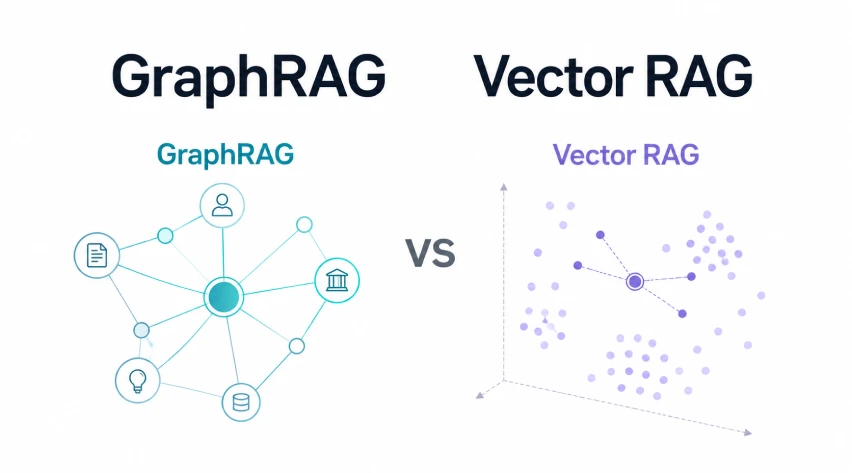
GraphRAG vs Vector RAG: Which Retrieval Method is Best?
Analytics Vidhya

GraphRAG vs Vector RAG: Which Retrieval Method is Best?

Choosing the right retrieval method is critical for effective LLM applications. This post directly compares GraphRAG and Vector RAG, two powerful techniques for feeding information to large language models. Vector RAG excels with straightforward queries, retrieving relevant chunks based on semantic similarity. GraphRAG, however, introduces structural understanding by mapping entities and relationships, proving superior when context spans multiple documents. Discover which approach best aligns with your data and application needs—explore the full analysis on Analytics Vidhya.
🐈AI News & Strategy Daily | Nate B Jones
AI News & Strategy Daily | Nate B Jones

Is the junior developer pipeline collapsing? #AI #SoftwareDevelopment #Coding #JobMarket

The junior developer pipeline faces a critical juncture. Emerging data indicates a significant slowdown in entry-level hiring across the software development landscape, potentially signaling a collapse. While AI tools are reshaping coding workflows, they aren't yet replacing experienced engineers, creating a bottleneck for aspiring developers. Explore how companies can adapt training programs and recruitment strategies to navigate this shift and ensure a future-focused talent pool. #AI #SoftwareDevelopment #Coding #JobMarket
🐈Machine Learning
Machine Learning

Evaluating long-term memory limits in stateless LLM chatbots — feedback needed [D]

Evaluating the long-term memory capabilities of stateless LLM chatbots presents a crucial research challenge. This project seeks to rigorously assess whether these models reliably retain information across extended conversations, a limitation impacting real-world usability. The proposed methodology—introducing key facts, injecting numerous unrelated messages, and then testing recall—offers a direct approach. Feedback is welcomed on the validity of this method, potential benchmarks, and metrics to enhance rigor. For further exploration of LLM capabilities, consider "MathFormer," which investigates reasoning versus pattern matching in symbolic math.
🐈Machine Learning
Machine Learning

Built an LLM training framework that actually runs on older GPUs without crashing [P]

Frustrated by the hardware dependencies hindering LLM training on older GPUs? Picotron, a clean-room rewrite of Nanotron, resolves this issue, enabling broader access to AI development. This framework eliminates mandatory GPU-specific imports, running seamlessly on virtually any PyTorch-compatible GPU—automatically adjusting to FP16 or BF16 as needed. It intelligently integrates FlashAttention-2 when available and offers configurations for GQA/MLA, ZeRO-1, and more. Explore Picotron and bypass CUDA dependency challenges; see details at [https://github.com/Syntropy-AI-Labs/picotron](https://github.com/Syntropy-AI-
🐈Machine Learning
Machine Learning

Showcase: Building ML models that "watch" MMA fights and label events and positional changes making these moments all searchable on a timeline [P]

Dive into the intersection of AI and combat sports with Cagesight.ai, a project transforming how we analyze MMA and BJJ. Leveraging AI models, Cagesight "watches" fights, identifying and labeling key events – from positional changes to knockdowns and takedowns – and presenting them on a searchable timeline. Built by an experienced MMA fighter and AI specialist, this innovative tool empowers deeper tactical analysis. Explore the future of fight breakdown and discover how AI can unlock new insights; check it out at https://cagesight.ai.
🐈Machine Learning
Machine Learning

I silently break training codes or configs so I made pybench [P]

Ensure statistical metric integrity with pybench, a novel benchmarking tool akin to pytest, specifically designed for detecting regressions in statistical tests. This accessible command-line interface streamlines tedious tasks like seed management and baseline tracking, automatically sampling seeds and flagging pass/fail results. Pybench simplifies regression testing, allowing teams to confidently manage model performance—a critical function explored further in our article, "Built an LLM training framework that actually runs on older GPUs without crashing." Explore the project and documentation at the provided links.
Ford rehires ‘gray beard’ engineers after AI falls short
TechCrunch

Ford rehires ‘gray beard’ engineers after AI falls short

Ford's recent reversal—re-engaging experienced, veteran engineers—underscores a critical lesson in AI implementation. Executives admitted they prematurely believed AI alone could guarantee product quality, stating, “Mistakenly we thought that by just introducing artificial intelligence … that would produce a high-quality product.” This highlights the enduring value of human expertise, particularly when navigating complex engineering challenges. The need for a balanced approach, integrating AI with seasoned professionals, is increasingly apparent, as explored further in our article, "Prompt injection is exploiting enterprise AI's biggest design flaws."
Hiding messages in the least significant mantissa bits of fine-tuned ONNX model weights [P]
Machine Learning

Hiding messages in the least significant mantissa bits of fine-tuned ONNX model weights [P]

Hiding data within machine learning models presents a unique challenge, and our latest project, ONNXStego, explores a novel approach. This proof of concept leverages the subtle modifications inherent in fine-tuning ONNX models, specifically embedding messages within the least significant bits of the model weights. The goal was to create a steganographic method difficult to detect, avoiding the pitfalls of earlier techniques.
California law targeting loud streaming ads takes effect on July 1
TechCrunch

California law targeting loud streaming ads takes effect on July 1

California is poised to reshape the digital advertising landscape. Effective July 1st, a new state law directly addresses the escalating issue of excessively loud streaming advertisements. This legislation mandates that the volume of streaming ads aligns with the program they accompany, preventing jarring and disruptive listening experiences. Users can anticipate a more seamless transition between content and advertising, reflecting a future-focused approach to digital media consumption. Explore this transformative shift and discover a more balanced streaming experience.
🐈Machine Learning
Machine Learning

MathFormer: Testing whether symbolic math is pattern matching or reasoning [D]

Recent research explores a compelling question: is symbolic math pattern matching or genuine reasoning? The MathFormer project, a remarkably small (4M parameter) sequence-to-sequence model, achieves ~98.6% accuracy on symbolic math tasks – a surprising result given its lack of explicit math knowledge. This suggests the model learns structural token transformations, potentially illuminating why large language models appear to reason mathematically, possibly through large-scale pattern completion. Further investigation considers how reinforcement learning might reshape this paradigm within the attention-based architecture.
🐈Machine Learning
Machine Learning

Late Submission of NeurIPS Review [R]

As a first-time NeurIPS reviewer facing a late submission—approximately six hours past the deadline—it’s natural to question potential repercussions for your own submission. While early communication with the Area Chair (AC) is commendable, the lack of response doesn’t guarantee immunity. Late reviews can trigger automated processes, potentially impacting reviewer rankings and, consequently, your submission’s visibility. Consider exploring related discussions, such as "Do we still need to study algorithms now that AI writes most of our code?
🐈Machine Learning
Machine Learning

Do we still need to study algorithms now that AI writes most of our code? [D]

The rise of AI coding assistants sparks a vital question: does deep algorithmic study still hold value? While AI can now generate code, explain complexity, and even optimize implementations, the core principles remain foundational. Understanding data structures and algorithms empowers engineers to critically evaluate AI-generated solutions and guide their application effectively.
NagaTranslate: Building a translation and voice pipeline for low-resource Nagaland creoles (Whisper, VITS, LLMs) [P]
Machine Learning

NagaTranslate: Building a translation and voice pipeline for low-resource Nagaland creoles (Whisper, VITS, LLMs) [P]

Introducing NagaTranslate, a project focused on building a translation and voice pipeline for the underserved Nagaland creoles—Nagamese, Ao, and Sema—in India. Facing a significant challenge due to limited parallel data, we’ve architected a system leveraging commercial LLMs, a fine-tuned VITS model for speech synthesis, and Whisper for speech recognition, all deployed within resource constraints. We’re actively exploring a transition to self-hosted open-weights models, similar to the approaches explored in "MathFormer," to enhance independence and reduce costs.
🐈Machine Learning
Machine Learning

I shrank a transformer until every number fitted on the screen and made the weights editable [R]

Delve into the inner workings of Large Language Models with a uniquely accessible demonstration. Software engineer Daniel MoGo has meticulously constructed a complete, albeit compact, transformer model within a spreadsheet—and then rendered it as a shareable web page. This innovative approach shrinks a transformer to its essential elements, showcasing every calculation from word embeddings to final probabilities within a single, editable view. As one article recently explored, like "I Pitted XGBoost Against Logistic Regression," understanding foundational models is critical for navigating the evolving AI landscape.
TechCrunch Mobility: All eyes on Tesla FSD
TechCrunch

TechCrunch Mobility: All eyes on Tesla FSD

Welcome back to TechCrunch Mobility, your essential resource for the future of transportation—and the accelerating role of AI. Currently, all eyes are on Tesla’s Full Self-Driving (FSD) system, as it navigates both technical hurdles and public scrutiny. We’ll be tracking developments closely, providing insights into the evolving landscape of autonomous vehicles. For a broader perspective on technology's impact, explore Ian Bogost’s "The Small Stuff," which questions whether Silicon Valley is prioritizing the right innovations. Stay tuned for ongoing coverage.
🐈AI News & Strategy Daily | Nate B Jones
AI News & Strategy Daily | Nate B Jones

GLM 5.2 Is Free And Beats Claude On Most Work. So Why Can't Companies Switch?

GLM 5.2 has arrived, and its free availability presents a compelling opportunity for data professionals. Independent evaluations consistently demonstrate that GLM 5.2 outperforms Claude across a significant majority of tasks. Despite this clear advantage, widespread adoption within companies remains surprisingly limited. This analysis explores the reasons behind this hesitancy, examining factors ranging from integration complexities to organizational inertia, ultimately questioning why companies aren’t embracing this powerful, accessible AI tool.
Writer Ian Bogost says ‘The Small Stuff’ can help us reclaim our lives from dematerialization
TechCrunch

Writer Ian Bogost says ‘The Small Stuff’ can help us reclaim our lives from dematerialization

Ian Bogost’s compelling new book, *The Small Stuff*, argues that reclaiming our lives requires focusing on the tangible, everyday experiences often overlooked in our increasingly digital world. Bogost challenges the Silicon Valley ethos of constant dematerialization, suggesting we’ve prioritized building the wrong things. This shift in perspective resonates with the ongoing discussion around technology's impact on productivity—as explored in our recent article, "AI didn't make you faster. It just hid the real bottleneck.
Why Wall Street thinks US memory maker Micron is the next Nvidia
TechCrunch

Why Wall Street thinks US memory maker Micron is the next Nvidia

Wall Street's search for the next Nvidia has led investors to focus on Micron Technology, a leading US memory maker. Driven by the surging demand for AI infrastructure, analysts see Micron poised for significant growth as a key supplier of high-bandwidth memory (HBM) critical to AI accelerators. While challenges remain, the potential for Micron to capitalize on this trend has generated considerable excitement. For broader insights into the intersection of AI and technology, explore "AWS Previews FinOps Agent for Cost Analysis and Optimization."
I Pitted XGBoost Against Logistic Regression on 358 Matches. The Boring Model Won.
Towards Data Science

I Pitted XGBoost Against Logistic Regression on 358 Matches. The Boring Model Won.

In a surprising outcome, a straightforward Logistic Regression model outperformed a complex XGBoost implementation when predicting outcomes across 358 matches. This practical experiment delivers a valuable bias-variance lesson: sometimes, the simplest model achieves the best cross-validated fit. Discover why opting for a smaller model can yield superior results and learn how to discern when more complexity is genuinely warranted. For further insights into reliable agentic workflows, explore "Tail Control."
Govee’s smart nugget ice maker makes every iced drink feel like a luxury
TechCrunch

Govee’s smart nugget ice maker makes every iced drink feel like a luxury

For those who consider ice an essential element of refreshment, Govee’s Smart Nugget Ice Maker Pro delivers a premium experience. Priced at $500, this smart home gadget focuses on producing "the good ice"—those delightfully soft, chewable nuggets that elevate any beverage. Govee has designed this ice maker to transform the everyday iced drink into a small luxury. Interested in how AI is impacting the broader tech landscape? Explore "TechCrunch Mobility: All eyes on Tesla FSD" for additional insights.
Tail Control: The Counterintuitive Engineering of Reliable Agentic Workflows
Towards Data Science

Tail Control: The Counterintuitive Engineering of Reliable Agentic Workflows

Reliable agentic workflows hinge on a surprisingly simple truth: consistent usability demands variance control, not just speed. Behind every customer-facing API, a high-quality response is only half the battle; timely delivery is paramount. "Tail Control" explores the counterintuitive engineering required to achieve this consistency, demonstrating that predictable outputs are built through nuanced adjustments, not brute force. For those grappling with agent reliability, consider this essential reading—especially given the escalating concerns around prompt injection, as highlighted in our recent article.
Prompt injection is exploiting enterprise AI's biggest design flaws by targeting agents, RAG pipelines and model routers
VentureBeat

Prompt injection is exploiting enterprise AI's biggest design flaws by targeting agents, RAG pipelines and model routers

Prompt injection poses a critical and escalating threat to enterprise AI deployments. Over the past two years, as businesses integrate large language models (LLMs) across operations, malicious actors have exploited fundamental design flaws, targeting agents, RAG pipelines, and model routers. Ranked as LLM01 by OWASP, prompt injection is demonstrably effective, evidenced by real-world incidents like data exfiltration from Slack and zero-click exploits against Microsoft 365 Copilot. Organizations must treat LLMs as untrusted components to mitigate this pervasive risk.
Swift 6.4 Brings New Language Features and Swift Testing/XCTest Interop
InfoQ

Swift 6.4 Brings New Language Features and Swift Testing/XCTest Interop

Swift 6.4, now in beta within Xcode 27, delivers significant advancements for developers. This release prioritizes enhanced C interoperability and streamlined OS availability checks, alongside fine-grained warning control and expanded async support. Notably, Swift 6.4 achieves up to 4x faster URL parsing and introduces efficient iteration for non-copyable types. Furthermore, it strengthens interoperability between Swift Testing and XCTest, empowering more robust and integrated testing workflows.
AWS Previews FinOps Agent for Cost Analysis and Optimization
InfoQ

AWS Previews FinOps Agent for Cost Analysis and Optimization

Amazon’s public preview of the AWS FinOps Agent marks a significant step toward streamlined cost analysis and optimization. This managed service automates key FinOps workflows, enabling rapid investigation of cost anomalies and correlating spending changes with AWS activity. The agent intelligently routes findings to resource owners via integrations with tools like Slack and Jira, empowering teams to take proactive action. Discover how this innovative solution can transform your cloud cost management—a topic explored further in our recent article, "Swift 6.4 Brings New Language Features."
Indian payments chief thinks AI will be heavily involved in next era of digital payment growth
TechCrunch

Indian payments chief thinks AI will be heavily involved in next era of digital payment growth

Dilip Asbe, CEO of India's National Payments Corporation, anticipates significant AI integration shaping the next phase of digital payment growth. He suggests emerging UPI applications, leveraging AI, could establish sustainable commercial models and enhance competitiveness. This shift promises to reshape the landscape, moving beyond simple transaction processing. Asbe’s perspective highlights a future where AI optimizes payment systems and unlocks new value. For a deeper look at how AI impacts productivity, explore our article, "AI didn't make you faster. It just hid the real bottleneck."
🐈AI News & Strategy Daily | Nate B Jones
AI News & Strategy Daily | Nate B Jones

AI didn't make you faster. It just hid the real bottleneck. #Productivity #FutureOfWork

AI adoption often creates the illusion of speed, but the reality is it frequently masks underlying productivity bottlenecks. Simply automating tasks doesn't address the core issues of workflow design and strategic thinking. We’ve seen this firsthand – Anthropic’s recent shift towards hiring more product managers, as detailed in "Claude Code turned every engineer into three," highlights the growing need for product-centric expertise alongside AI tools. It’s time to shift focus from mere automation to building truly future-focused, data-driven systems. #Productivity #FutureOfWork
Claude Code turned every engineer into three. Now companies need more product thinkers
VentureBeat

Claude Code turned every engineer into three. Now companies need more product thinkers

The rise of AI coding assistants like Claude Code isn't just about faster code generation; it's fundamentally reshaping software engineering. Anthropic's recent shift, hiring more product managers to manage this amplified output, signals a broader industry trend. Engineers are effectively tripling their output, shifting the bottleneck from coding to strategic decision-making. To thrive, developers must now prioritize reviewing AI-generated code, understanding customer needs, and defining what’s truly worth building—a skill set increasingly vital for success.
SoftBank’s CEO isn’t the only one with questions about Elon Musk’s orbital data center hype
TechCrunch

SoftBank’s CEO isn’t the only one with questions about Elon Musk’s orbital data center hype

Skepticism is growing around Elon Musk’s ambitious plans for orbital data centers, echoing concerns recently voiced by SoftBank's CEO. While the concept promises transformative potential, not all industry observers are convinced. This vision faces significant technical and economic hurdles. Explore the complexities of this emerging technology and consider how advancements in AI are reshaping data management—as demonstrated in our recent article, "How to Build a Powerful LLM Knowledge Base." We’ll continue to analyze the evolving landscape of AI infrastructure and its practical implications.
Instagram is testing more ways to customize ‘Your Algorithm’
TechCrunch

Instagram is testing more ways to customize ‘Your Algorithm’

Instagram is expanding ways to personalize your feed with upcoming tests to ‘Your Algorithm.’ Users can anticipate greater control over the content they see, fine-tuning their experience to prioritize specific interests. This move reflects Instagram's ongoing commitment to empowering users within their platform. For deeper insights into Meta’s broader strategy, explore our article, "Mark Zuckerberg wants Meta to launch its own prediction market," and discover how these shifts will shape the future of social media consumption.
Apple Vision Pro exec is reportedly leaving for OpenAI
TechCrunch

Apple Vision Pro exec is reportedly leaving for OpenAI

A significant shift is underway in the AI landscape: Paul Meade, Apple’s Vice President overseeing the Vision Pro headset, is reportedly joining OpenAI’s hardware team. This move signals a deepening commitment from OpenAI to build its own hardware capabilities, potentially reshaping the competitive dynamics of spatial computing. The news follows recent developments, including OpenAI's response to government requests regarding GPT-5.6, underscoring the complex interplay of innovation and regulation.
How to Build a Powerful LLM Knowledge Base
Towards Data Science

How to Build a Powerful LLM Knowledge Base

Unlock the full potential of your Large Language Models with a robust knowledge base. This post explores a powerful, future-focused approach: leveraging coding agents to automate construction and maintenance. Move beyond static documents and discover a dynamic system that intelligently organizes and retrieves information. We’ll guide you through building a knowledge base that adapts and evolves alongside your data, empowering more accurate and insightful LLM responses.
The fittest founder in the room got cancer. Here’s how he used AI to fight back.
TechCrunch

The fittest founder in the room got cancer. Here’s how he used AI to fight back.

Facing a daunting cancer diagnosis, serial entrepreneur Connor Christou didn’t just fight—he leveraged AI. Recognizing the power of data, Christou meticulously fed his comprehensive health regime—blood results, scans, wearable data, and personal journal entries—into Claude, an advanced AI model. This innovative approach allowed him to identify patterns and optimize his treatment strategy. Discover how this founder utilized AI to personalize his fight, showcasing a future-focused approach to healthcare.
We Built a Routing Layer to Cut Our AI Costs. It Broke the Product.
Towards Data Science

We Built a Routing Layer to Cut Our AI Costs. It Broke the Product.

Optimizing AI costs is a critical pursuit, but aggressive strategies can backfire. Our team learned this firsthand when a routing layer designed to halve inference expenses ultimately degraded product quality and diminished customer satisfaction. This post explores the pitfalls of cost-optimization routing layers—a Pareto trap—and introduces a detection methodology to identify these issues within days, rather than months. Learn how to avoid this common mistake, a lesson echoed by innovators facing complex challenges, like those detailed in “The fittest founder in the room got cancer.
AWS Introduces Workload Credentials Provider for Automated Certificate and Secret Management
InfoQ

AWS Introduces Workload Credentials Provider for Automated Certificate and Secret Management

AWS has introduced the Workload Credentials Provider, an open-source tool designed to streamline certificate and secret management for applications. This innovative solution automatically delivers and refreshes these critical components, minimizing the need for custom automation and proactively preventing outages caused by expirations. Functioning seamlessly across both AWS and non-AWS environments, the Provider offers a future-focused approach to security. For deeper insights into related challenges in AI agent memory, explore our article, "New agentic memory framework uses 118K tokens per query."