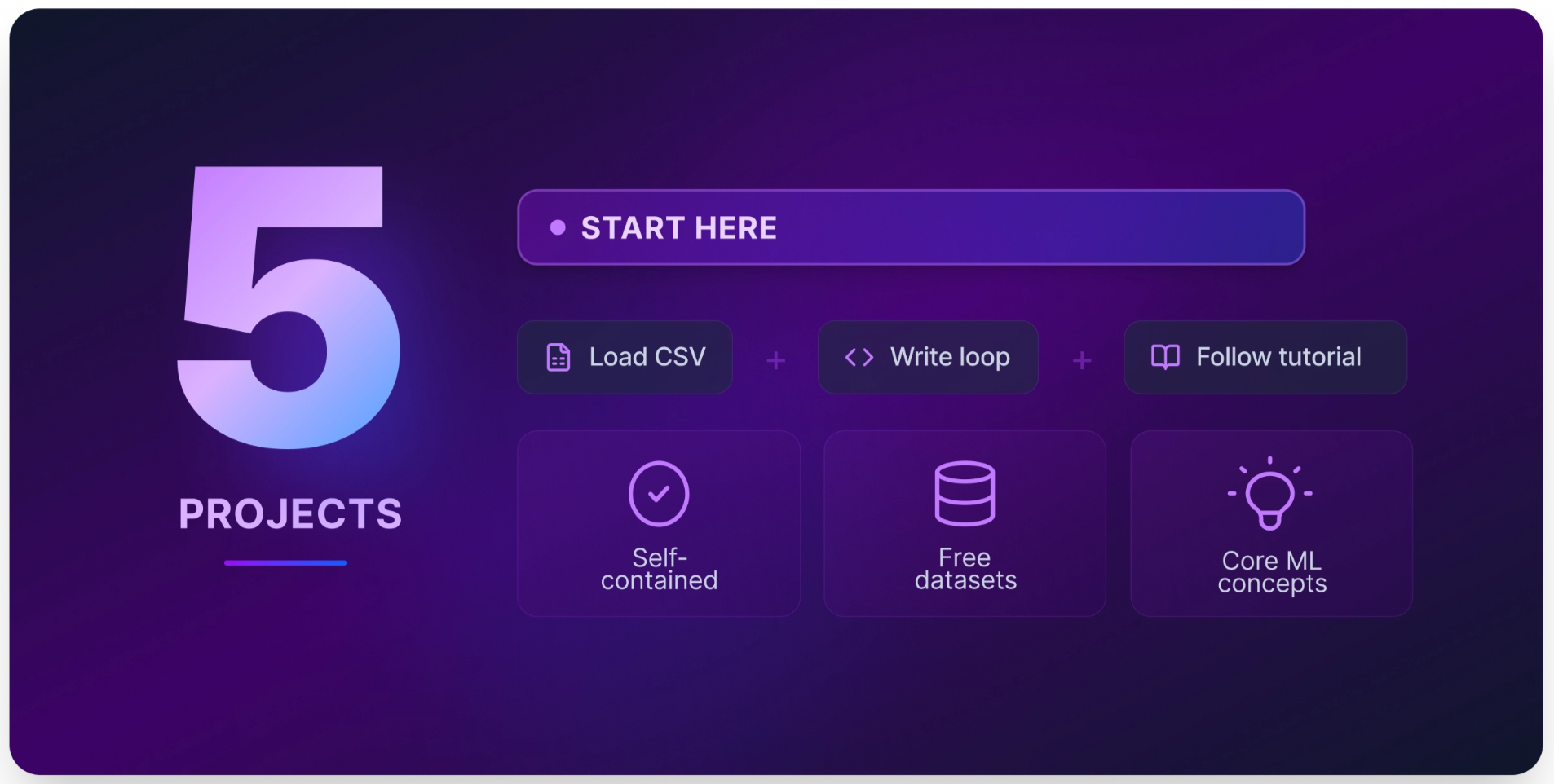
Most curated project lists are designed to make you feel productive while you scroll. This one is different, and that difference matters. The authors have done something deceptively simple: they organized fourteen machine learning projects by difficulty, provided free datasets and starter code, and included time estimates and portfolio advice. What sounds like a routine roundup is actually a quiet challenge to the way most people try to learn ML, by consuming tutorials that teach syntax but never force you to solve a real problem. This list assumes you want to build something hiring managers can actually evaluate, not just another Jupyter notebook that follows a guide step by step.
For anyone who has ever closed a "best ML projects" article feeling more stuck than when they opened it, this is the practical alternative. The structure matters. Grouping projects by difficulty means you can start where you actually are, not where the internet tells you to be. The inclusion of time estimates is a small but honest detail: learning takes hours, not hashtags. And the emphasis on transferable skills, rather than just accuracy scores or model complexity, signals that the authors understand what hiring managers actually look for. They want to see that you can frame a problem, clean data, iterate on a model, and explain your choices. That is exactly what these projects teach, provided you treat them as starting points, not checklists.
The editorial opinion here is plain: this list is worth your time because it refuses to pretend that more projects equal more skill. The curation is the value. Fourteen projects is not an overwhelming number; it is a manageable one. The authors trust you to pick three or four, build them properly, and turn each into a concrete portfolio piece. That is a more honest path than chasing twenty projects and finishing none. If you have been stuck in tutorial purgatory, this list offers a way out, not because the projects are flashy, but because they are designed to be finished. And finishing is what separates a learner from a practitioner.