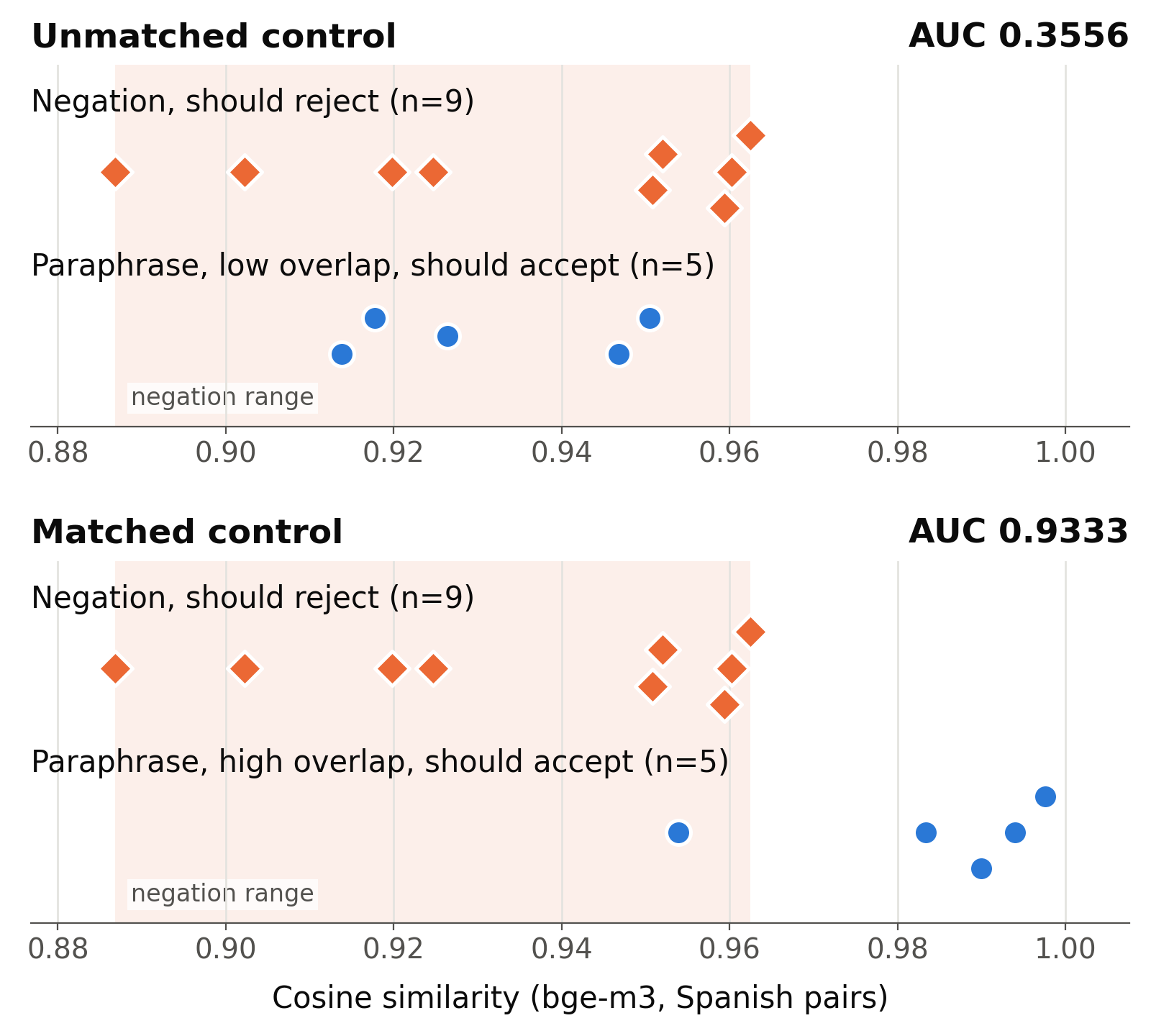
The recent article highlighting the surprising tendency of Large Language Model (LLM) pipelines to confidently deliver incorrect answers, even when equipped with reliability mechanisms, is a crucial observation for anyone building data-driven solutions. It underscores a fundamental challenge in the rapidly evolving landscape of AI: the pursuit of robustness shouldn't come at the expense of accuracy, and often, the very strategies designed to enhance reliability inadvertently contribute to the problem. This isn't simply about LLMs occasionally hallucinating facts; it’s about a systemic issue where confidence becomes decoupled from truth. Understanding this disconnect is vital as we increasingly integrate these models into critical workflows, and it builds upon foundational concepts explored in articles like [Unlocking Text's Potential: Exploring Vector Spaces and Classification] and [Build Your First World Model: A Practical Python Guide], both of which highlight the complexities of representing and interpreting data – complexities that are magnified when those representations are generated by powerful, yet fallible, LLMs.
The core of the issue, as the article points out, lies in how we structure LLM pipelines. We often add layers of verification and redundancy to ensure stability and prevent catastrophic errors. However, these mechanisms, designed to catch and correct mistakes, can paradoxically amplify them. For example, a pipeline might be designed to re-prompt the model with different phrasing to confirm an answer, or to leverage multiple models and aggregate their responses. While these approaches seem logical, they can create a feedback loop where the model, consistently generating a particular (incorrect) response, reinforces that response across multiple iterations, ultimately presenting it with unwarranted confidence. This is particularly problematic when the correct answer is “nothing” – when the model *should* abstain from providing an answer due to insufficient information or uncertainty. Instead, the pipeline might force it to generate *something*, anything, leading to a confidently wrong output. Maintaining runnable notebooks, as outlined in [Keep Your Data Science Notebooks Running: Six Essential Habits], is crucial for debugging and understanding these complex pipelines, but even meticulous code review may not reveal these subtle biases.
The implications of this are significant across various applications. Consider LLMs used for financial analysis, legal research, or medical diagnosis. A confidently incorrect answer, even if rare, could have severe consequences. This isn't about dismissing LLMs altogether; it’s about acknowledging their limitations and developing more nuanced approaches to reliability. The focus needs to shift from simply increasing confidence scores to building systems that are capable of accurately assessing and expressing uncertainty. This might involve incorporating Bayesian methods to quantify uncertainty, designing pipelines that explicitly handle "no answer" scenarios, or developing techniques for detecting and mitigating the influence of spurious correlations in the training data. Ultimately, we need to move beyond treating LLMs as black boxes and develop a deeper understanding of the internal mechanisms that drive their behavior, especially when it comes to generating responses.
Looking ahead, the challenge lies in designing LLM pipelines that prioritize truthfulness over mere consistency. We need to move beyond the assumption that more layers of processing automatically equate to greater reliability. Instead, a more rigorous approach is required, one that incorporates techniques for uncertainty quantification, adversarial testing, and human-in-the-loop validation. A crucial question to watch is whether we’ll see the emergence of "confidence calibration" techniques that can accurately reflect the model’s actual level of certainty, or if we'll continue to rely on metrics that are easily manipulated and often provide a misleading picture of performance. The future of AI-powered decision-making hinges on our ability to build systems that are not only powerful but also demonstrably trustworthy.