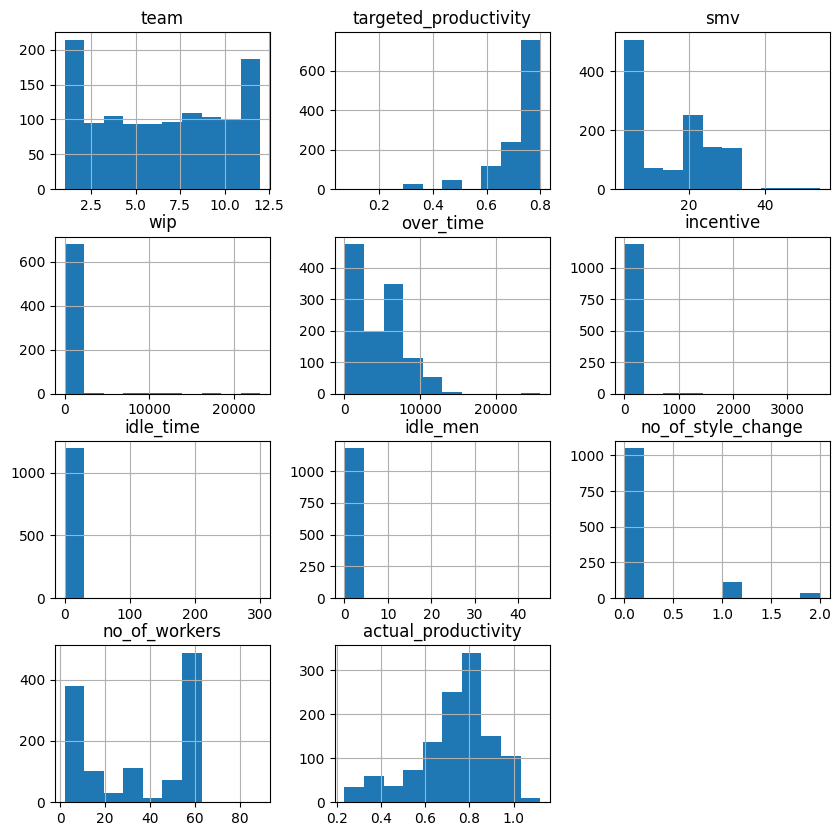
Traditional spreadsheets give factory managers plenty of data, but they rarely answer the real question: *Will today be productive?* This project walkthrough shows exactly why that gap matters and how AI can close it. The team here isn't chasing abstract metrics, they're building a machine learning model that predicts whether a given workday in a garment factory will be productive or not, based on team-level conditions. That's not a theoretical exercise; it's a practical tool for people who need to make decisions before the first shift bell rings.
What stands out is the focus on identifying the *key conditions* that drive performance on the floor. Most productivity analysis stops at reporting what happened yesterday. This approach shifts the question forward: What factors, measurable at the start of the day, signal a high-probability productive shift? For factory management, that changes the conversation. Instead of reacting to missed targets, they can adjust staffing, material flow, or scheduling based on what the model flags. It's a move from hindsight to foresight, and it doesn't require a data science degree to act on.
The practical implication is straightforward. If a factory manager knows, before lunch, that today's conditions match patterns of low productivity, they can intervene. Maybe a team is short two people. Maybe material arrived late. The model doesn't replace their judgment, it sharpens it by surfacing patterns that might otherwise stay buried in rows of static numbers. For data scientists working with operational teams, this is the kind of project that builds trust. It proves that AI can be accessible, not abstract.
Our take is simple: predictive models belong on the factory floor, not just in dashboards. The value here isn't in the algorithm itself; it's in giving a shift supervisor a clear, actionable signal before the day slips away. That's the real transformation, turning data into a tool that empowers people to act, not just report.