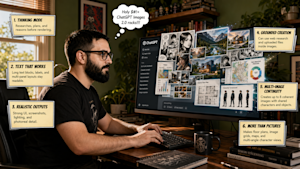
The image model wars have reached a new plateau, and for once, the leap forward is not just about prettier pictures. With ChatGPT Images 2.0, OpenAI has moved beyond the novelty of generating a single striking visual and into something more substantive: the ability to treat images as structured, information-dense documents. That shift from decoration to utility is what makes this update worth paying attention to, not just for designers or marketers, but for anyone who has ever wrestled with a messy spreadsheet or a convoluted data set.
For too long, the conversation around AI imagery has been dominated by aesthetic wins, a photorealistic face, a convincing landscape. But the real test of a tool isn't whether it can paint a pretty sunset; it's whether it can help you communicate. By mastering multilingual text, infographics, and even floor plans, this update signals a move beyond decoration. It's about turning raw ideas into visual systems that can actually be used, shared, and understood. That is a shift we can get behind, not because it's flashy, but because it's practical.
The timing matters, too. Google's recent foray into dense text-in-image generation shows the direction the entire industry is heading. But OpenAI appears to have pulled ahead in one critical area: fidelity to real-world interfaces and the ability to produce coherent sets of images. That's not just a feature win; it's a signal that these tools are moving from novelty generators to production-ready instruments.
Of course, the deeper question isn't just about what these models can do, but how they'll be used. The ability to generate realistic screenshots, floor plans, and character sheets is genuinely impressive, but it also raises familiar questions about authenticity and misuse. We're already seeing the rise of synthetic media that looks indistinguishable from the real thing, and the potential for deception is real. OpenAI's response, emphasizing watermarking and content provenance, is a step in the right direction, but the broader industry will need to keep pace.
The real takeaway here is about capability and responsibility. This isn't about whether AI can create a convincing infographic or a realistic portrait; it's about the new standard being set for what image generation can do, and what it means for the people building with it. For professionals, this is a tool that collapses the distance between idea and execution. For the rest of us, it's a signal that the line between human and machine creativity is about to get a lot blurrier. The question isn't whether you'll use this. It's whether you'll recognize the moment you do.